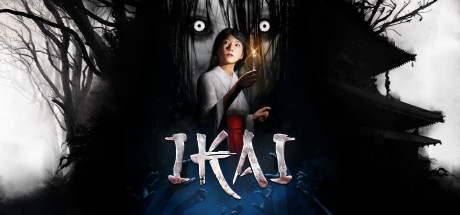
Fear and anxiety prevail after the darkest tales from Japanese folklore come to life in this first-person psychological horror game. Set in a feudal era, Ikai revolves around the priestess of a shrine struggling to defeat the spirits of her past and her present.
Modeled estimate, not a reported figure. How we estimate →
Discounts
Every price cut of more than 20% we have observed, in each market that quoted one, with this game's chart position on either side of it. These are episodes, not a model: a sale is one event, and one event cannot tell you what the next one will do.
Reviews, worldwide (the counter carries no country): 0/day in the week to Sep 14 → 0/day in the week after.
For scale, across Steam · Top Sellers · Brazil over the last 30 days: the 26 chart moves that followed a price cut of more than 20% went a median of 7 places towards #1, and the 2,400 moves with no price cut behind them went 2 away. One store, one chart, one country — it is the only place we have enough observations to say even that.
Prices outside the United States have been collected since 6 August 2026 and chart positions since 19 July 2026, so a cut older than that has no market to compare and a market that joined later has no history yet. Nothing here is converted between currencies.
About

Sums Steam only; PlayStation, Xbox, Nintendo publish no volume signal, so the true total is higher by an unknown amount.
| Store | Price | Audience | Score | Chart | Est. revenue |
|---|---|---|---|---|---|
SteamYou are here | $7.49−50% | 267reviews | 80% | — | $68.4K |
| $14.99 | 186ratings | 74% | — | not modelled | |
Engagement
Reviews
Themes across 42 recent reviews and how positive each mention is. A keyword signal, not full sentiment analysis.
Reviews
excelente juego corto pero muy entretenido.
if u wanna play japan themed horror game, play fatal frame instead and grab this one only at high discount rate
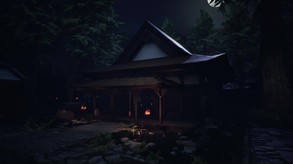
Ikai is a first-person horror experience that builds its unease not through spectacle, but through the slow tightening of atmosphere. Set in a secluded Shinto shrine during a time of growing unrest, the game places you in the role of Naoko, a young shrine maiden suddenly left alone when her uncle leaves to investigate rumors of dark forces nearby. This isolation becomes the foundation of the game’s tension. What begins as an ordinary evening of routine tasks gradually devolves into a night where the thin boundary between the physical world and the realm of spirits erodes. Ikai uses this shift delicately—never rushing to reveal its horrors, but allowing strange sounds, fleeting shadows, and subtle environmental changes to hint at an oncoming supernatural threat rooted in Japanese folklore. At its core, Ikai is an exploration-driven title with light puzzles, stealth moments, and a handful of chase sequences. It never gives you a weapon, a way to fight back, or much room for physical resistance. Instead, it emphasizes vulnerability: the fear of being watched, the anxiety of moving through unfamiliar silence, and the tension of knowing something is lurking nearby. One of the game’s most unique mechanics involves drawing protective seals by hand. These moments require you to slowly trace kanji characters with precision, creating a striking contrast between calm ritual and the fear of what might be closing in around you. This mechanic does more than add variety—it ties the gameplay directly into the shrine maiden’s role, grounding the experience in cultural authenticity while making you feel personally involved in warding off the encroaching spirits. The setting is where Ikai shines most brightly. Its environments are richly atmospheric, from the creaking wooden floors of the shrine to the dim lantern-lit paths outside. The world is small but meticulously crafted, embracing the natural darkness and clutter of traditional architecture. Shadows stretch long across sliding doors, wind rattles paper screens, and distant footsteps echo across empty corridors. The design of the yokai—twisted hands, masklike faces, distorted human forms—draws inspiration from centuries-old folklore rather than contemporary horror tropes. This gives the game a distinct identity, one that feels deeply connected to its cultural roots rather than borrowing generic scares. Sound design enhances this effect brilliantly, using sparse audio cues to imply movement and presence without ever revealing too much. While the atmosphere is consistently strong, Ikai’s mechanical execution is more uneven. The puzzles range from clever and thematically cohesive to vague and obtuse, occasionally breaking the flow when solutions feel arbitrary. The chase and stealth sequences can be tense, but their mechanics are sometimes stiff, creating moments where fear comes more from control limitations than from design intent. The game’s short length also works as both strength and weakness. On one hand, it keeps the experience tight, preventing the atmosphere from wearing thin. On the other, players seeking a more substantial narrative arc or deeper gameplay systems may find that the story ends just as it begins to establish interesting threads. Some emotional beats feel underdeveloped, and the narrative wraps up abruptly without fully exploring the themes it introduces. Despite these shortcomings, Ikai succeeds at what it most clearly sets out to do: evoke the quiet, creeping dread of a haunting rooted in tradition rather than modern shock tactics. It understands the power of suggestion—of a half-glimpsed figure behind a screen, of a whispered voice just beyond a door, of rituals performed more out of desperation than faith. It invites players into a world where fear feels intimate and personal, not because of relentless threats, but because of the slow realization that familiar spaces are no longer safe. For players who appreciate atmospheric horror and are drawn to folklore-inspired settings, Ikai offers a compact but memorable experience. It may not provide long-term replayability or mechanical depth, but its world is rich, its tone is distinctive, and its most effective moments linger long after the credits roll. It is the sort of horror game that draws its power from quiet moments—not from overwhelming intensity, but from the delicate, unsettling feeling that something ancient is watching from the dark. Rating: 7/10
Media

Related
Related
Price dynamics, follower growth, revenue and sales trajectories with interactive tooltips
This and every other Pro feature is free until October 20, 2026. A free account is all it takes.
Genres
Stats
All-time low is the lowest price we've recorded for this game since we started tracking it.
Languages: English*, Spanish - Spain, French, Italian, German, Japanese*, Traditional Chinese, Catalan*languages with full audio support
| $14.99 |
| 51ratings |
| 64% |
| — |
| not modelled |
| $14.99 | — | — | — | not modelled |
Matched by title — a reused name can pair the wrong games. * is a critic aggregate. Prices and positions are each store's United States storefront; Epic charts worldwide. Audience and Score too, except Steam's, which is worldwide.
Hours played at review time, across 42 reviews with recorded playtime.
positive critical· bar length = how often the theme comes up
nice lil game, some jumpscares. although some parts are a bit hard to understand
Good, *for what it is*. What it is is a short, spooky, "period piece"(?) game that takes 3 hours to play through, with probably another couple hours for achievements, if ya into that kinda thing. The spooks are fine - a little reliant on jump scares, but the atmosphere and mood are set well with the sound design and the general layout of the main map. I was surprised at how easily I oriented myself inside the map. It was fun moving through the game and feeling like I'm actually combatting demonic entities through spiritual faith (as opposed to rip n tear). Couple disappointments are with the demons themselves, and how fighting them did not relate to the journal pages/entries *about* the demons. One of the first scares in the game is the big giant head (Tsurube Otoshi, I think?) dropping down, but in a contrary way to what the journal entry told me it would do, for example. That felt disappointing. There were a couple puzzles that really didn't make sense to me, possibly as a Westerner? I'll say one of the puzzles I had to look up and the solution is NOT something I would have ever known because it was based on a game that just is not played in America. That would fine, except I think the game could have done a little more to prompt the player towards the solution, or the rules of the board. But, no regret playing or purchasing. Solid, short, spooky fun!
Exorcisme low-cost Après avoir enchaîné Ad Infinitum (2023) et Ikai (2022), si je devais en garder un seul, ce serait probablement Ikai. Pourtant, son scénario est bien moins développé que celui du jeu d’Hekate, mais en termes de frissons, il m’a quand même un peu plus accroché. Disons que Ikai triche un peu, en abusant des effets de sursaut pour générer la peur à moindre effort. Ça fonctionne par moments, mais ce n’est pas non plus l’angoisse du siècle. Sur le trouillomètre, je lui mets un 5,5/10, soit légèrement au-dessus d’Ad Infinitum. Côté réalisation technique, on est sur du service minimum. Le jeu n’est ni beau ni moche, juste lambda. Ce qui le sauve, c’est son univers et son ambiance. Incarner une prêtresse dans un Japon médiéval hanté, où l’on croise tout un bestiaire issu du folklore nippon. J’ai apprécié cet aspect car à défaut d’avoir un jeu marquant par ses mécaniques ou sa mise en scène, j’ai au moins appris deux ou trois trucs sur les légendes japonaises. C’est toujours ça de pris. Autre point positif : le jeu ne s’éternise pas. Ikai se boucle en moins de trois heures, et j’ai terminé l’aventure avec 75 % des succès. Durant ce laps de temps, on affronte différents esprits vengeurs en accomplissant ce qui ressemble à des rites d’apaisement. Contrairement à certains simulateurs de marche où l’on avance sans risque, ici, on peut mourir. En effet, chaque fantôme ou piège peut vous envoyer ad patres, ce qui ajoute une tension bienvenue. Il vous faudra comme d’habitude se faufiler et avancer à tâtons pour ne pas se faire croquer. Quelques énigmes parsèment la progression histoire de diversifier le gameplay, mais rien de bien complexe. La particularité numéro une d’Ikai est votre capacité à écrire des idéogrammes. A différents stades du jeu, il vous faudra peindre à l’aide de la souris ou du joystick des idéogrammes afin de chasser les esprits malins. Petite spécificité sympathique mais un peu chiante car il faut être ultra précis pour finaliser l’exécution. En revanche, là où ça coince, c’est la fin. L’aventure se termine de manière abrupte, sans réelle explication, comme si les développeurs avaient décidé d’expédier la conclusion en vitesse. Honnêtement, je pense que la fin du jeu a été bâclé pour des raisons que j'ignore mais la manière dont se conclue l'aventure est très suspect. Bref, Ikai est un petit jeu d’horreur sympa, porté par son cadre japonisant original davantage que par ses mécaniques. Il ne révolutionne rien, mais il propose quelques sensations agréables avant une conclusion en eau de boudin. Je recommande surtout aux bandeurs du Japon, et Dieu sait qu’ils sont nombreux.
Not necessarily a bad game. Way too simple and dry for my taste.
it's really a lot of fun, the atmosphere is very well done, the yokai are very well realized and also well explained by the texts, graphically the game is also super made, only some puzzles were too complex and some didn't really seem logical to me without a guid I would have been completely lost, the control of the brush and the shadow object was terrible with the mouse, so I recommend either controller or drawing pad, otherwise I would be very happy to see more from the developers in this direction. TTV/kamuiredmoon
This was a very interesting game. I wasn't expecting it to be this intense and scary, The sound design was done perfectly well and you never really knew if it was just ambience or one of the many yokai that was about to chase you. You were feeling helpless during the entire game, Either running, hiding or nervously attempting to draw a seal to banish the evil. Also I liked the graphics, story and many collectibles that thaught you interesting facts from Japanese folklore. This game was highly enjoyable. I'll play again for achievement hunting. Also I didn't encounter any bugs. The voice acting was nice too. I actually have nothing negative to say about this beautiful little horror experience. 10/10 for me!
Ikai me dejó una sensación bastante agridulce. No puedo decir que no me haya gustado, pero tampoco me terminó de convencer. Es un juego corto, con una ambientación interesante basada en el folclore japonés, y tiene momentos donde la atmósfera funciona bien. El inicio, con la protagonista sola en el santuario y esa rutina antes de que anochezca, está bien planteado y genera expectativa. El problema aparece cuando empiezan a introducir los yōkai. En teoría son invocados por la antagonista principal, pero en la práctica se sienten más como obstáculos que como parte real de la historia. El primero es sencillo, el segundo se vuelve excesivamente tedioso (gran parte del juego gira alrededor de esa sección), y el tercero apenas se percibe. No aportan al desarrollo narrativo y dan la sensación de estar ahí para alargar la experiencia más que para enriquecerla. Otro punto que me irritó bastante fue el sistema de dibujo de sellos. La precisión que exige es exagerada: si fallás un trazo al final, tenés que empezar desde cero. Entiendo la lógica dentro del mundo del juego, pero en términos de jugabilidad termina rompiendo el ritmo y generando frustración innecesaria. La historia principal, una vez que avanza más allá de esos enfrentamientos, tiene coherencia, pero es bastante simple. No es mala, solo se siente básica y poco profunda. Vi comparaciones con Project Zero (Fatal Frame), pero personalmente no me parecen acertadas. En esa saga, incluso los fantasmas secundarios tienen un trasfondo y están ligados al lugar y al conflicto central. Aquí, los yōkai no llegan a tener ese peso. Sí es cierto que los fantasmas más recurrentes de Project Zero sólo son víctimas de la maldición del lugar y su función es que puedas juntar puntos para mejorar la cámara. En resumen, es un juego con buena ambientación y una idea interesante, pero irregular en su ejecución. Me gustó a medias y me dejó algo insatisfecha. No es una mala experiencia, pero tampoco siento que pueda recomendarlo con total seguridad.
Selling now
See how fast this game is selling right now — estimated copies and revenue per day from recent review growth.
Players by region
Where this game's players are, estimated from review languages.
Related
| Game | Estimated lifetime revenue | Reviews | Review score | Price |
|---|---|---|---|---|
| $25.3K | 220 | 73% | $3.99 | |
| $11.1K | 62 | 82% | $7.99 | |
| $2.7K | 26 | 62% | $2.99 | |
| — | 0 | — | — | |
| — | 0 | — | — | |
| $471.9K | 1.4K | 85% | $19.99 |
Related
| Game | Estimated lifetime revenue | Reviews | Review score | Price |
|---|---|---|---|---|
| $68.4K | 288 | 89% | $14.99 | |
| $68.3K | 324 | 65% | $9.99 | |
| $68.4K | 108 | 51% | $19.99 | |
| $68.4K | 2.2K | 93% | $0.79 | |
| $68.4K | 394 | 93% | $9.99 | |
| $68.4K | 309 | 88% | $9.99 |