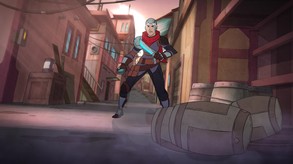
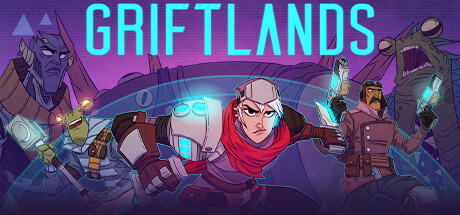
Griftlands is a deck-building roguelite where you negotiate, fight, steal or otherwise persuade others to get your way. Every decision is important, be it the jobs you take, the friends you make, or the cards you collect.
Modeled estimate, not a reported figure. How we estimate →
Prices
Each in the currency that store quoted — not converted: the gap between two rows is the publisher's pricing, not an exchange rate.
About
Sums Steam only; PlayStation, Epic publish no volume signal, so the true total is higher by an unknown amount.
| Store | Price | Audience | Score | Chart | Est. revenue |
|---|---|---|---|---|---|
SteamYou are here | $19.99 | 14.5Kreviews | 94% | — | $4.7M |
| $7.99−60% | 315ratings | 88% | — | not modelled | |
Updates
Build ids and update times come straight from Steam's PICS — the same source SteamDB reads. Patch history grows as we record new builds.
Engagement
Reviews
Themes across 838 recent reviews and how positive each mention is. A keyword signal, not full sentiment analysis.
Reviews
Reviewing (mostly) every game (or DLC) in my library, part 248: ⭐️⭐️⭐️⭐️⭐️⭐️☆☆☆☆ (6/10) Ngl, this one hurts. I love Klei Entertainment. I think [i] Don't Starve[/i] is one of the standout original survival games; [i] Invisible Inc.[/i] and [i] Mark of the Ninja[/i] are both masterpieces in stealth; and[i] Oxygen Not Included[/i] is a well-thought out base builder. I expected [i]Griftlands [/i]to follow suit, and in many ways, it does! It looks great. The UI is clean. The writing is sharp. The mechanics are clever. It has heart. But it’s also confused. It wants to be a branching narrative RPG and a replayable roguelite, and the end result is a gorgeous, stiff experience where story and mechanics betray each other. 💔 [b]Pros:[/b] [list] [*] The art is stunning. [i]Griftlands [/i]is visually gorgeous. Character portraits are expressive, with distinct designs that pop on-screen. Backgrounds are richly illustrated. The sci-fi world of Havaria feels colorful and lived-in, even if it never fully breathes. [*] Negotiation vs. combat. One of [i]Griftlands’ [/i]most distinctive features is its split between two separate decks: one for physical combat, and one for social negotiation. This mechanic lets you approach problems in radically different ways—either by talking your way out or fighting through. The decks aren’t just cosmetic either; they follow unique rules, have their own status effects, and require different strategies to master. While the depth doesn’t always hold up in later runs, the mechanic is fresh and thematically resonant with the game’s world of mercenaries, double-crosses, and politics. [*] No typos, clean writing. It’s clear care was taken with the dialogue. The grammar is tight, and the prose occasionally sparkles. The tone is playful but capable of depth. [*] A ton of heart. You can feel the love behind this. Every card interaction, every character sprite, every in-world term—it’s clear the devs cared. [/list] 🪫 [b]Cons:[/b] [list] [*] Faux roguelite structure. At its heart, [i]Griftlands [/i]just doesn’t work well as a roguelite. The structure demands you replay character campaigns again and again, but the game doesn’t evolve in return. Characters say the same things. Plotlines don’t branch enough. Factions behave predictably. Even with procedurally generated events and random encounters, it feels like a game trying very hard to pretend it’s dynamic while being secretly on rails. [*] Dialogue bloat with little payoff. The game has a lot of text. That’s not inherently bad; this is a Klei game, and the writing is competent, stylish, even funny at times. But it rarely feels reactive. Dialogue choices often lead to the same result, and no matter how many times you interact with a character like Fssh or Borrat, their lines barely change. The game expects you to replay it over and over, yet does little to reward that repetition. After two runs per character, the dialogue becomes something you endure rather than enjoy. [*] Weak meta progression. Between runs, you earn points to unlock new perks: +3 health, +15 starting gold, a single card from a slightly different pool. It’s barebones and uninspired. The biggest incentive to replay—the character story arcs—don’t change. So when the mechanical rewards are boring and the narrative replayability is non-existent, what’s left to motivate another run? [*] Run length and pacing issues. A single campaign can take 2–3 hours, often stretching across multiple play sessions. That’s long for a roguelite—especially when there’s little variation on repeat runs. And pacing is weirdly structured: you're regularly told by questgivers to "go do some jobs until I’m ready," which forces you into a loop of mandatory filler. You’re not really deciding what to do next: the game is. Which jobs. Which faction events. When the next plot point will trigger. It's a strange hybrid of narrative RPG and roguelite, where neither side really satisfies. [*] Story-driven game with no real branching. You do get some binary choices—siding with one faction or another, choosing to betray someone—but their consequences are rarely long-lasting or surprising. There are only a few endings per character, and your route through the story is generally fixed. In a roguelite, you’d expect to uncover new branches, new outcomes, new combinations. Here, you mostly get minor flavor changes and maybe a new boss. The rigidity suffocates the sense of adventure. [*] "Replayability” in name only. [i]Griftlands [/i]constantly implies you should play it again. It tracks unlocks. It offers daily challenges. It gives you perks to tweak. But nothing meaningful changes. You’ll visit the same shops. Meet the same personalities. Take the same job types. Fight the same enemies. The illusion wears thin fast, and you realize replayability here doesn’t mean branching storylines or new strategies; it means doing the same story again with slightly different numbers. [*] Underbaked systems. There’s a pet system. A graft system. Companion loyalty. Randomized map events. Influence stats. None of these are bad, but most feel like half-implemented features: introduced with promise, then left to rot. Your pet gets a few stat boosts, then sits on the battlefield. Companion loyalty can matter, but rarely affects dialogue or plot. [/list] [hr] If you enjoyed this review, please check out my curator page to find more: [url=https://store.steampowered.com/curator/45814768-Verdict-Play-or-Pass/]Verdict: Play or Pass. [/url] Also, please leave a like and visit [url=https://steamcommunity.com/groups/Indie_Gems]IndieGems[/url] and our YouTube channel for more reviews like this one. [/hr]
Media

Related
Related
Price dynamics, follower growth, revenue and sales trajectories with interactive tooltips
This and every other Pro feature is free until October 20, 2026. A free account is all it takes.
Every market we collect.
Genres
Stats
All-time low is the lowest price we've recorded for this game since we started tracking it.
Languages: English, Simplified Chinese, Traditional Chinese, French, German, Japanese, Korean, Polish, Portuguese - Brazil, Russian, Spanish - Spain
| $19.99 |
| — |
| 96% |
| — |
| not modelled |
Matched by title — a reused name can pair the wrong games. * is a critic aggregate. Prices and positions are each store's United States storefront; Epic charts worldwide. Audience and Score too, except Steam's, which is worldwide.
Hours played at review time, across 844 reviews with recorded playtime.
positive critical· bar length = how often the theme comes up
A good deckbuilder needs strong variety and long term replayability, and this is where Griftlands falls short. The core gameplay loop loses its spark too quickly, and both its combat and negotiation decks start to feel repetitive after a handful of runs. Compared to Slay the Spire or Monster Train, which constantly push you to experiment with new synergies, Griftlands’ card pools and upgrade paths just don’t offer the same depth or long term hooks. That said, the game absolutely shines in its storytelling and character driven structure. Each campaign feels like a self-contained narrative arc, and the jobs, heists, and faction relationships add a layer of immersion most roguelike deckbuilders never try to reach. There’s real appeal in doing “just one more run” to see how different choices unfold, and the branching moral decisions whether you take a pacifist path or go full mercenary give each playthrough a strong identity. But once I completed my ideal genocide and pacifist routes, I found myself with little motivation to keep replaying. The narrative variety is great, but the mechanical variety just isn’t strong enough to sustain the roguelike grind. Griftlands is memorable for its world, characters, and writing, but as a long term deckbuilder, it runs out of gas faster than its peers.
[h1]Griftlands — рогалик, який вирішив прикинутися RPG (або навпаки)[/h1] [b]Графіка і артдизайн[/b] Klei Entertainment знову показали, що робити красиві ігри вони вміють. Арт тут чудовий: яскравий, деталізований і дуже впізнаваний. Персонажі виглядають харизматично, а світ має власне обличчя. Не той випадок, коли через годину забуваєш, як виглядала гра. [b]Атмосфера[/b] Всесвіт Griftlands вийшов цікавим. Тут вистачає бандитів, найманців, шахраїв, дивних істот і морально сумнівних особистостей. Тобто практично всі мешканці планети викликають бажання перевірити, чи не лежить гаманець ще в кишені. Світ відчувається живим, а завдяки системі відносин персонажі реально реагують на ваші дії. [b]Геймплей[/b] Гра позиціонує себе як картковий роуглайт, але якщо ви очікуєте щось у стилі Slay the Spire, то вас чекає сюрприз. Один повний забіг тут займає близько [b]6 годин[/b]. Для рогалика це, на мою думку, вже перебір. Через це Griftlands сприймається швидше як [b]карткова RPG з елементами роуглайта і метапрокачкою[/b]. Головна фішка — у вас є [b]дві окремі колоди карт[/b]. Одна для бійок. Друга для переговорів. Так, тут можна не тільки набити комусь пику, а й професійно винести мозок аргументами. Причому діалоги часто перетворюються на такі ж напружені карткові баталії, як і звичайні бої. Ідея працює чудово та додає різноманіття навіть через десятки годин. [b]Сюжет і персонажі[/b] У грі є [b]три повністю окремі кампанії[/b] зі своїми героями, сюжетами, механіками та наборами карт. І це не просто різні скіни одного персонажа. Кожен герой грається по-своєму і має власну історію. Сюжет не геніальний, але хороший. Діалоги написані якісно, гумор присутній і, що важливо, він реально працює. Персонажі запам'ятовуються, а вибори часто мають наслідки. Також тут вистачає розвилок і кількох кінцівок, тому проходити кампанії повторно є сенс. [b]Саунддизайн і музика[/b] Музика добре підтримує атмосферу пригод і космічного криміналу. Без якихось шедеврів на рівні «слухати окремо в Spotify», але свою роботу виконує відмінно. Саунддизайн теж без нарікань. [b]Висновок[/b] Griftlands — дуже хороша гра, але я б не радив купувати її лише тому, що вам подобаються карткові рогалики. Насправді це більше [b]карткова RPG з виборами, сюжетом і метапрокачкою[/b], ніж класичний роуглайт. Красивий арт, цікаві персонажі, три великі кампанії та класна ідея з двома колодами карт роблять гру унікальною. Єдина проблема — забіги тут настільки довгі, що іноді встигаєш забути, що взагалі грав у рогалик.
[h2]I really tried to like this game.[/h2] Watching the promotional materials, everything looked genuinely great- and it still does. The visual style is really well done and has a lot of appeal. However, the story, as well as the combat and negotiation systems, are just boring. The first impression is particularly bad. The starting cards are overly complicated, and the player has to carefully read each one to understand it due to the overwhelming number of mechanics being thrown at them right from the start. It shouldn't be this way - the success of games like Slay the Spire or Hearthstone proves that. The narrative also fails to engage. There’s no proper introduction, you’re just thrown into some missions that feel completely uninteresting and disconnected. If you fix these issues in the next game while maintaining the same strong visual style, the reception will likely be much, much better.
[h1]Not my cup of tea[/h1] As fan of roguelike deckbuilder, i have played many other similar genre game that tried to mix various other genres to spice up the game. This game kinda mix it with some RPG elements and dual negotiation / battle deck building. It was intriguing at first, but kinda annoying to go for another run. I cleared 1st difficulty with 1st character then i decided the game is just not for me. I think the problem maybe boiled down to the run length. Even with speed up animations, 1 successful run took me like 2 hours and half. You cant simply skip every dialogue either since there was 1 quest that i failed because i didnt read the objective properly. Other factor is probably the lacked RNGesus factor that finally you have everything lined up. You only have limited amount of graft slots, limited upgrades for each card, most card are boring (need alot of unlocks), most meta-progression are gradual super small increase that probably need hundred of hours to max out. You do kinda have unique perks system from having positive / negative relationship with some NPCs, but most of them are quite boring. Not terrible game per say, but definitely not something Im willing to invest more time. Achievements also atrociously hard that only 5% of people cleared each of them. It just too many factors that I dislike for roguelike deckbuilder. *Also im not in mood to read too many wall of text for stories. Claimed from humble bundle monthly.
デッキ構築ゲーとしては中の下ぐらい?バランスがあまり良くない。解禁要素ありだがゴミカードが多い為、解禁しない方が良いデッキになる(のだが強制解禁。解禁された要素をロックしてのプレイもできるが、その場合はStSにおけるより高いアセが解禁されなくなる)。3キャラそれぞれに用意されてるストーリーは分岐もあって面白いが、3キャラ目は分岐がどこにあるのかよく判らなかった為、1つしかエンディングは見なかった。10点中7点ぐらい。
Жаль, что игра не нашла популярности и не создала фандома, так как история мира в котором происходит игра - просто изумительна и очень хотелось бы расширения лора.
进包了补一下我的评测好了,抬头一看我去,我竟然玩了40小时,huh? 将RPG与DBG玩法融合的剧情卡牌游戏,并且二者的占比几乎是64开的一款游戏。三位可选主角,有女主有人外,各自有不同的故事体验,丰富的选择取向和配音满足喜欢看剧情的玩家;两种卡牌对战机制,协商或战斗随机应变,用谈话的方式那就是话疗!(但是协商在最终boss战不起作用这点实在是,一周目疯狂话疗一点没升级战斗打我个措手不及)。 缺点是流程通关后,对比纯DBG来说欺诈之地的游戏过程,操作都显得繁琐,因此重玩性并不是很高。 考虑到游戏整体内容的丰富度,对于50块不到的定价来说确实性价比不错,比较适合轻度卡牌玩家游玩,对中毒卡牌玩家特别是杀戮尖塔佬来说可能会有点无聊了。[b]特别是不喜欢看字只喜欢打牌的,别买,买了又退款你也嫌麻烦,要么给差评游戏也冤枉啊。[/b]
I recommend this game to anyone who enjoys roguelite deckbuilders or people who are intrigued with a different type of card game that has more story and some friend/foe dynamics. I wasn't sure at first what to make of the game with limited updates after its Steam release, but with how well it runs it must've been really polished in early access on another PC store. Here is what you need to know: ?There are 3 primary modes: Story, Brawl, and daily challenges. ?Story limits proc gen to occasional random encounters when moving between locations, rare limited time events, and non-death card drops. Story elements get told through dialog with characters based on the quests and choices made. ?Brawl is like story mode, but no map movement, and a fixed number of combats. ?Challenges are a shorter version of brawl with a mutator and a scoring system. +Combat takes one of two card based forms: Battle or negotiation. Battle is decent typical card based combat with synergies. Negotiation is very unique in that each combatant can have multiple arguments that modify things or cause damage, and one core argument each that serves as health. ?Negotiation had a considerable learning curve, but once I understood how to make synergies for it, I enjoyed it. -There are very basic tutorials that only scratch the surface of some mechanics, not even half. +Klei style hand drawn animation is great as usual, the fake jibberish voices work fine as do SFX. +Plenty of progression within and between runs, as well as prestige/difficulty levels to unlock. +Each of the 3 player characters to pick from have their own story and region. ?The proc gen elements are limited to occasional random encounters while traveling to/from quests & shops. -Music could be more varied. ?After beating the story for two characters, beating one brawl, and a few daily challenges, I was done playing. The additional prestige levels weren't for me.
还不错。不过我本以为卡牌与剧情的比例是1:1,如果是那样的话,游戏会更有意思。但是故事没有有趣到值得阅读,我很快就不愿意读支线故事了。可一旦移除了故事,我又发现卡牌并没有想象中有趣。重复游玩的价值没有想象中高。
Active players
Estimated daily and monthly active players (DAU/MAU) modeled from peak concurrency.
Players by region
Where this game's players are, estimated from review languages.
Players also reviewed
The games this title's players most often review too — audience affinity.
Related
| Game | Estimated lifetime revenue | Reviews | Review score | Price |
|---|---|---|---|---|
| $3.4K | 11 | 36% | $13.99 | |
| — | 0 | — | — | |
| — | 0 | — | — | |
| $25.6K | 57 | 93% | $14.99 | |
| $0 | 188 | 82% | Free | |
| — | 0 | — | — |
Related
| Game | Estimated lifetime revenue | Reviews | Review score | Price |
|---|---|---|---|---|
| $4.7M | 9.5K | 87% | $19.99 | |
| $4.7M | 10.6K | 95% | $13.99 | |
| $4.7M | 49.1K | 88% | $4.79 | |
| $4.7M | 15.9K | 77% | $11.99 | |
| $4.7M | 9.4K | 76% | $21.99 | |
| $4.7M | 17.3K | 83% | $9.99 |