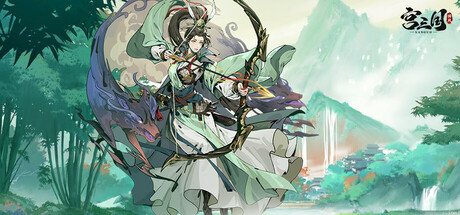
宫三国 is a free-to-play strategy card RPG inspired by the legendary heroes and conflicts of the Three Kingdoms period. It combines character collection, squad development, tactical formation building, and idle-style progression within a highly stylized interpretation of ancient China. The developer and publisher are both listed as 宫三国. Instead of attempting to recreate the era as a historically accurate simulation, the game embraces fantasy and colorful character presentation, making it more approachable for players interested in collecting recognizable warriors and experimenting with different combat combinations.
The foundation of the experience is building a roster of generals and turning those individual characters into an effective fighting force. Familiar figures associated with the Three Kingdoms setting appear throughout the roster, including Liu Bei, Guan Yu, Zhang Fei, Zhao Yun, Zhuge Liang, Cao Cao, Lü Bu, Zhou Yu, Sun Quan, and Diaochan. Their importance goes beyond simply giving the game recognizable names. Different heroes are designed around offensive, defensive, healing, support, control, and other specialized functions, so successful progression depends heavily on understanding how their abilities complement one another.
Team composition is consequently one of the strongest aspects of the game. There is less emphasis on discovering a single lineup capable of dominating every situation and more encouragement to adjust formations according to available characters and tactical requirements. Beginners can rely on relatively balanced teams that combine frontline durability, damage output, and healing, while more developed accounts can gradually transition toward specialized strategies. This creates a satisfying sense that acquiring a new general can change more than the numerical strength of the roster; it can potentially open an entirely different approach to combat.
Several formation concepts help demonstrate the depth of this system. Some teams concentrate on survivability, resurrection mechanics, healing, and characters capable of benefiting from sacrifice or prolonged engagements. Others focus on generating rage quickly so powerful abilities can be activated more frequently. Aggressive formations can prioritize rapid elimination of vulnerable opponents, while defensive combinations attempt to survive the opening stages of combat before stronger late-battle characters take control. These different approaches encourage experimentation instead of simply placing the highest-level heroes into every available slot.
Damage-over-time strategies provide another interesting possibility. Burn-focused formations can combine sustained fire damage with control, support, and healing, allowing opponents to be gradually overwhelmed rather than defeated through immediate burst damage. Conversely, single-target formations concentrate offensive power against one enemy at a time, which can be particularly useful when eliminating dangerous targets quickly. As additional heroes become available, these concepts can be expanded with ranged attackers, crowd-control specialists, tanks, and support units. The resulting variety gives character collection a practical strategic purpose.
Combat also distinguishes itself by incorporating real-time competitive elements rather than depending entirely on a conventional turn-based structure. Much of the player's influence comes from preparation: selecting generals, developing their strength, understanding their functions, and arranging a formation capable of executing a coherent strategy. Battles therefore act as tests of the decisions made beforehand. Players who enjoy optimization may spend considerable time adjusting lineups and looking for more efficient interactions between abilities.
Progression is designed to remain accessible. Idle-oriented mechanics reduce the need for constant active play and allow players to continue developing their forces without treating every session as an intensive commitment. This makes the game suitable for shorter sessions, although dedicated players still have substantial room to study formations and pursue stronger combinations. The straightforward entry point and deeper roster optimization create a reasonable balance between casual progression and strategic experimentation.
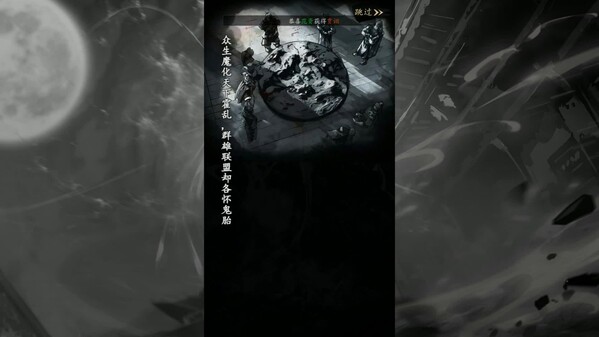
Its artistic direction is another noteworthy element. The presentation draws from Chinese ink-painting influences while using contemporary digital effects and fantasy-oriented character designs. Rather than looking like a restrained historical recreation, the world has the atmosphere of an animated interpretation of a traditional Chinese scroll. This approach fits the card RPG format well because the individual generals remain visually distinctive while the broader presentation retains a connection to the game's cultural and historical inspiration.
Online features extend the usefulness of developed formations beyond ordinary progression. PvP provides an opportunity to test squads against other players, where weaknesses in a seemingly powerful composition can become much more obvious. Cooperative functionality adds another social dimension, while in-game interaction and chat reinforce the online nature of the experience. Because the game is free to play and includes in-game purchases, however, players should expect monetization to be integrated into the progression structure. Anyone who strongly prefers fixed-price games without purchasable progression may find this aspect less attractive.
The largest accessibility issue for international players is language support. The Steam release is primarily intended for a Simplified Chinese-speaking audience and does not provide English support. This is particularly significant for a strategy RPG because understanding skill descriptions, character roles, menus, progression mechanics, and formation recommendations is important for making effective decisions. Players unable to read Chinese may therefore have difficulty appreciating the strategic systems even if they find the artwork and Three Kingdoms theme appealing.
Steam Deck compatibility is currently not officially rated by Valve, so it should be regarded as Unknown rather than Verified or Playable. The absence of an official compatibility rating means players should not assume that every interface element, control method, text field, online feature, or performance characteristic will function optimally on the handheld. It is primarily safer to approach it as a Windows-focused PC experience unless future Steam Deck testing provides a formal compatibility classification.
Overall, 宫三国 offers a respectable mixture of Three Kingdoms fantasy, character collecting, idle progression, real-time competition, and formation-based strategy. Its greatest strength is the flexibility of its team-building system, particularly the ability to pursue healing, resurrection, rage, burn, burst-damage, and other specialized compositions. Its distinctive Chinese-inspired artwork complements the setting effectively, while approachable progression makes it relatively easy to begin. The language barrier, free-to-play monetization, and uncertain Steam Deck support are its most notable drawbacks, but players within its intended audience may find plenty of enjoyment in collecting famous generals and continually refining their formations.
Rating: 7/10