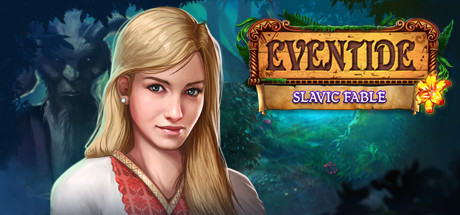
Eventide: Slavic Fable, developed by The House of Fables and published by Artifex Mundi, is a beautifully crafted hidden-object adventure that draws deeply from the well of Eastern European mythology. It tells the story of Mary Gilbert, a botanist who receives an urgent message from her grandmother, the caretaker of a mysterious heritage park that serves as a sanctuary for creatures from Slavic folklore. Upon arriving, Mary discovers that her grandmother has been kidnapped by Boruta, an ancient and malevolent forest spirit intent on using the park’s mystical energies to gain control over both the human and magical worlds. What begins as a simple rescue mission quickly evolves into an enchanting journey through a world brimming with myth, wonder, and danger. The narrative, while following the familiar “save a loved one” structure typical of Artifex Mundi’s catalog, is elevated by its cultural specificity and the game’s commitment to integrating folklore into every aspect of its world-building.
From the opening scenes, Eventide: Slavic Fable establishes a strong sense of atmosphere through its lush visual design and attention to detail. Every screen feels like a hand-painted tapestry brought to life, with soft lighting, intricate textures, and carefully chosen colors that evoke the dreamlike quality of a fairy tale. The environments shift from moss-covered forest groves to candlelit sanctuaries and ancient ruins, each infused with a distinct sense of place and mythological resonance. The art direction reflects The House of Fables’ signature style—vibrant yet grounded, detailed yet readable—and this clarity of design is crucial in a hidden-object game where visual coherence directly affects gameplay. The soundtrack, filled with soft choral tones, woodwind melodies, and distant echoes, perfectly complements the setting, weaving an auditory spell that sustains the atmosphere of enchantment. Voice acting, while not always exceptional, adds enough personality to the characters to make the story engaging, and the overall sound design effectively supports the tone without overwhelming the experience.
At its core, the gameplay adheres closely to the hidden-object adventure formula that Artifex Mundi has refined over the years. Players explore a series of interconnected locations, collecting items, solving puzzles, and completing hidden-object scenes that unlock new areas or advance the story. The puzzles vary in complexity and type, ranging from pattern-matching and mechanical contraptions to logic-based riddles and sequence challenges. The hidden-object scenes themselves are thoughtfully designed, alternating between traditional item lists and fragment-based assembly puzzles where players must piece together objects from broken components scattered throughout the scene. This variety prevents monotony and gives the gameplay a steady rhythm, blending exploration with problem-solving in a way that feels both relaxing and rewarding. The difficulty can be adjusted through multiple modes—Casual, Advanced, and Expert—allowing both newcomers and experienced players to tailor the experience to their preference. Hints and skips are available for those who want a more narrative-focused experience, though the puzzles themselves are rarely so opaque as to require constant assistance.
One of Eventide’s standout qualities is how seamlessly it incorporates Slavic mythology into its narrative and mechanics. Instead of generic fantasy tropes, the game populates its world with folkloric beings drawn from Eastern European tradition: leshys, rusalkas, domovoi, and other spirits who inhabit the natural world and challenge Mary throughout her journey. Each encounter feels rooted in lore, with the game providing short notes or collectibles that expand on the legends behind these creatures. This layer of cultural authenticity gives the story more depth than the usual hidden-object fare, grounding its fantasy in traditions that feel ancient and lived-in. The mythological framework also informs the game’s central themes of balance and respect for nature. Mary’s scientific perspective contrasts with the mystical world she enters, and her journey becomes as much about understanding and harmony as it is about rescue and triumph. It’s a simple but effective narrative device that lends emotional texture to an otherwise familiar structure.
The game’s structure is well-paced, encouraging exploration without becoming tedious. The inclusion of a fast-travel map—a hallmark of modern hidden-object design—prevents unnecessary backtracking and makes navigation efficient, allowing players to focus on discovery rather than retracing steps. Each location offers multiple layers of interaction, with collectible flowers and bestiary entries rewarding observant players. The puzzles are integrated logically into the world, avoiding the arbitrary feel that sometimes plagues the genre. Whether unlocking a magical barrier or crafting an herbal potion to heal a wounded creature, most tasks feel contextually appropriate, reinforcing the sense of being part of a living, enchanted environment. The optional bonus chapter, unlocked after completing the main story, extends the narrative slightly, offering an epilogue that ties up loose ends while introducing a few new puzzles and scenes. Though short, it adds value for completionists and deepens the game’s connection to its mythological setting.
That said, Eventide: Slavic Fable does show its limitations, particularly in narrative depth and mechanical innovation. The plot, while charming, follows a predictable trajectory, with few surprises beyond its folkloric flourishes. Players familiar with other Artifex Mundi titles will recognize the structural beats almost immediately: an opening crisis, a sequence of exploration punctuated by magical interventions, a climactic confrontation, and a tidy resolution. Some of the puzzles, though visually engaging, lean toward repetition, especially in later stages where patterns and logic recur. Likewise, the hidden-object scenes, though beautifully composed, can feel formulaic to veterans of the genre. A few minor technical quirks, such as small cursor delays or uneven transitions between animated sequences, occasionally disrupt immersion. However, these issues are minor and largely forgivable within the context of the game’s overall craftsmanship and artistic quality.
Despite these familiar shortcomings, Eventide: Slavic Fable succeeds in capturing the quiet magic that defines the best of Artifex Mundi’s catalog. It doesn’t seek to reinvent the hidden-object genre but to perfect its core appeal—immersive art, gentle challenge, and a sense of wonder. The Slavic mythology theme gives it a distinctive voice among similar titles, offering an atmosphere that feels both fresh and nostalgic. It’s a story about family, myth, and the fragile boundary between science and superstition, told with warmth and visual beauty. For casual players, it provides a few hours of tranquil escapism; for hidden-object enthusiasts, it offers another lovingly crafted entry that rewards careful observation and patience. Eventide: Slavic Fable may not push boundaries, but it stands as a polished, evocative, and culturally rich experience that invites players to lose themselves in a world where legends breathe and nature itself tells stories. It’s a reminder that sometimes, the simplest tales—told with sincerity and artistry—are the ones that endure the longest.
Rating: 9/10