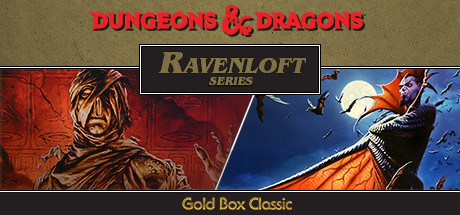
Step into a world of gothic and Egyptian horror and adventure, set in the campaign setting of Ravenloft. This series of entrancing horrors includes Ravenloft: Strahd's Possession and its sequel, Ravenloft: Stone Prophet.
Modeled estimate, not a reported figure. How we estimate →
Discounts
Every price cut of more than 20% we have observed, in each market that quoted one, with this game's chart position on either side of it. These are episodes, not a model: a sale is one event, and one event cannot tell you what the next one will do.
Reviews, worldwide (the counter carries no country): 0/day in the week to Sep 7 → 0/day in the week after.
For scale, across Steam · Top Sellers · Brazil over the last 30 days: the 26 chart moves that followed a price cut of more than 20% went a median of 7 places towards #1, and the 2,400 moves with no price cut behind them went 2 away. One store, one chart, one country — it is the only place we have enough observations to say even that.
Prices outside the United States have been collected since 6 August 2026 and chart positions since 19 July 2026, so a cut older than that has no market to compare and a market that joined later has no history yet. Nothing here is converted between currencies.
About
Add-ons
Each DLC is estimated with the same model as a game, then summed — a modeled figure, not reported DLC sales.
Engagement
Reviews
Themes across 41 recent reviews and how positive each mention is. A keyword signal, not full sentiment analysis.
Reviews
Recomendado sobre todo para viejuners que jugaron en su dia, para nuevas generaciones pues no les gustará por que son RPGS complicados pero muy entretenidos, el unico problema es que no viene traducido al castellano, cosa que si salieron en castellano en su dia. OJO!: El stone prophet presenta algunos bugs ...
Dungeons & Dragons: Ravenloft Series is a darker, moodier twist on the traditional Gold Box formula. Set in the gothic horror world of Ravenloft, these games (Strahd’s Possession and Stone Prophet) lean heavily into atmosphere, trading high fantasy heroics for creeping dread and isolation. The shift to a more immersive, first-person style adds a unique edge, while still retaining that classic D&D structure of party management, exploration, and combat. It can feel a bit clunky at times, but the setting does a lot of heavy lifting - the tone is consistently eerie, and the world feels oppressive in a way few games of the era pulled off. If you’re a fan of Ravenloft or want a more horror-tinged take on classic D&D RPGs, this is worth diving into.
Media

Related
Related
Price dynamics, follower growth, revenue and sales trajectories with interactive tooltips
This and every other Pro feature is free until October 20, 2026. A free account is all it takes.
Genres
Stats
All-time low is the lowest price we've recorded for this game since we started tracking it.
Languages: English
Hours played at review time, across 41 reviews with recorded playtime.
positive critical· bar length = how often the theme comes up
At the time that I am reviewing this I have completed Strahd's Possession and am making inroads into The Stone Prophet. I can't stress how good these games are for quite different reasons. Strahd's Possession is a very tight CRPG experience, that makes good use of the AD&D2e game mechanics and Ravenloft setting to try to find something that veered away from being a pure dungeon crawler and into a more balanced experience. Its major downside now is how vanilla it feels compared to a lot of what followed. (From memory of playing this in the '90s) Stone Prophet takes this even a step further, but introducing more varied game mechanics, wild character builds as potential party members, and dialing up a lot of the character interactions to include more puzzle solving. Its major downside is that it leans into some of the worst aspects of dungeon crawling a little too much. Hidden switches and smashing vases has never become so boring. From memory, a lot of the dungeons use palette swapped tile sets and lack a lot of the environmental dressing that was in the previous game so they all start to feel a little samey. It's a still a great game and well worth playing.
Back in the day and age where Windows didn't exist and where MS-DOS reigned. The games back then were focused on quality and telling stories; less so about trying to milk you for your money's worth. I can highly recommend every game in the old TSR series and anything in the 80s/90s D&D library.
https://youtu.be/2V-O7_Z20XY Classics now thirty years old have a lot of historical wealth but lack strength for modern players to make it worth going back to.
Avert your eyes
Neutral review You enter maze dungeons that are like riddles where you have to press something here to open something there, go to another level to find a key to the previous level, avoid traps and kill guardians, fall into pits sometimes, complete dungeons and loot the place. And put notes to the automap to remember what's going on. 41 hours for Strahd's Possession using the clue book. How did I finish this game in the late 90s? A series of hidden buttons in the dungeon under the church, levers located away from doors. At least designers included an automap in these games and opened doors appear. Clues in the graveyard that are so vague that you have to swip the area and try everything to understand what the clue is. Buttons in castle Ravenloft in areas where you are attacked by booby traps and try to pass hastily. Keys in areas behind illusionary walls, when a multiclass character can never reach a level to cast true seeing. Golems that kill your whole party in 2 seconds. Swiches in the catacombs that are so hardly visible a character has to pass a detect ability check to say what to do. Lots of buttons and illusionary walls that you can miss even if you swept a dungeon 2 or 3 times. A Daedalos maze design for every dungeon. Why did this happen in all d&d? Daedalos maze for everything. Although people who buy this already know what is happening and what to expect. For those like me who haven't played Ravenloft for years, beware of the monsters that drain levels. Vampires, wights, even in the last battle Strahd drained some levels. And then I accidentaly saved after the battle instead of hitting the load button which is near. I found out about the missing levels when I imported the characters in Stone prophet. I replayed 4 extra hours, some when I realized this was happening with the monsters in the graveyard. You are allowed only 10 saves slots. If you have a 4 pcs party then the battle XPs split in 4, it is not the total monster's XP for everyone. I knew this in the past but forgot it now and checked it in Stone Prophet. A 2 pc party killing a Troll got 1155 each and a 3 member party 770. Or 4950XP for a Grave Golem, 2475 for 2 player characters while for a 3 member party 1650. Otherwise a multiclass pc won't reach 6th level spells. I finished with 4 pcs with no level drained, I recruited others as soon as they appeared. A pc Paladin 9 level, a npc fighter 9 level , a pc Cleric/mage 8/9 level and a npc mage 10 level. For illusionary walls a 9 level priest can cast true seeing. Or if you scibe the mage scroll you need a 11 level mage. Or you just keep the scroll you found, cast it when you are stuck and it vanishes. Hit points when you level up are dice rolls and you might want to reload the game or remake the starting characters. The music was good only when I entered the fogs and faced the Treants, the sound has random screams and growls playing when you are out, I had them turned off most of the time because it is annoying. It took me 39 hours to finish Stone Prophet reading the clue book many times because I couldn't find a solution. And I have finished this one too in the past. To import you have to use the down arrow and the dat file appears. The characters won't import chests, key rings, sacks, cases, and some items like the +3 rod of smiting. I played only with the 2 imported characters and finished with a 19 level Paladin and a 16/15 level Cleric/Mage. There is a helmet of true seeing in this game and at 5th spell level the Mage at some point finds a teleport scroll, so after searching a dungeon you just teleport and rest. In Stone Prophet you find rune stones for every location, which you take to your inventory, and can teleport you any time at the starting point of a place. You can teleport with the 5th level spell anywhere inside a map or with a rune to a different map. So you can unburden your inventory lets say in the village of Muhar and if you want something later you just teleport there and get it. The GoG version is the same besides that in Steam the 2 games are installed together while in GoG every game is separate. And in Steam you can take snapshots choosing opengl in the graphics settings, I learned this reading another player's review. If you want some comments about Ravenloft as far as I understand (I had most of the products) it started as an adventure like the dracula cult movies. Then other things got in the mix. Strahd was not only able to shapeshift but change the whole land like the myth of the king Arthur when he was sick. Elrod who wrote the diary of Strahd gave him a sin like Cain's, he made a pact with mysterious voices to kill his own brother. Elrod as she writes in the book likes vampire stories and gangster stories. And I think that the original adventure turned into something more dark as people were designing a Gothic campaign setting to include all the cult horror movies. Strahd became the lord who shifted the land to exist in the negative material plane. In the new 5e Ravenloft book there are categories of horror. I don't like many of them, generally I am not a fan of horror movies. I like good weird tales. And I still remember something I read in the internet in the late 90's. A guy that was like the biggest fan of Ravenloft sended a letter I don't remember where, lets say TSR, to tell them about incontinuites and mistakes in the chronology and the events that took place. According to that site the reply he got was in a few words get a life.
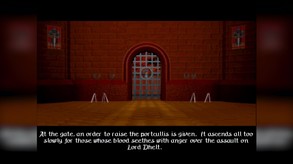
Dungeons & Dragons: Ravenloft Series is a classic RPG compilation developed by DreamForge Intertainment and republished for modern systems by SNEG, bringing together Ravenloft: Strahd’s Possession and Ravenloft: Stone Prophet in a single package. Originally released in the mid-1990s, these titles represent an era when first-person dungeon crawling was evolving into more immersive, real-time experiences. Set within the gothic horror realms of the Dungeons & Dragons Ravenloft campaign setting, the collection offers a distinct tone compared to traditional high-fantasy RPGs, emphasizing dread, atmosphere, and moral tension over heroic spectacle. Strahd’s Possession transports players to the cursed land of Barovia, a mist-covered domain ruled by the infamous vampire lord Count Strahd von Zarovich. The setting itself is one of the strongest elements of the experience. Villages feel oppressive, forests seem perpetually haunted, and ancient castles loom over the landscape as constant reminders of Strahd’s dominance. The game unfolds from a first-person perspective, allowing players to explore towns, dungeons, and wilderness areas while assembling a party of adventurers. The combination of real-time combat and traditional Dungeons & Dragons mechanics gives encounters a dynamic edge, though the system still relies heavily on strategic preparation and careful party composition. The sequel, Stone Prophet, shifts the environment dramatically, replacing Barovia’s gloomy woods with the arid deserts of Har’Akir. This change in setting introduces a different flavor of horror, rooted in ancient curses and desert mysticism. Sandstorms, crumbling ruins, and undead creatures roaming forgotten tombs create a hostile and atmospheric world. While the tone remains firmly within gothic horror, the shift in geography adds welcome variety. The continuity of core mechanics ensures familiarity, but the altered landscape and narrative themes keep the second installment from feeling like a simple retread. Both games rely heavily on party management and character development drawn from Advanced Dungeons & Dragons rules. Players recruit companions, balance skills and abilities, and manage equipment and spellcasting resources carefully. Combat occurs in real time but is deeply influenced by character statistics and tactical positioning. Encounters can be punishing, particularly when entering areas unprepared, reinforcing the importance of planning and understanding enemy weaknesses. This blend of action-oriented exploration and traditional RPG depth defines the series’ identity. Visually, the series reflects its 1990s origins. Character models, textures, and environmental details are dated by modern standards, but they maintain a certain nostalgic charm. The first-person perspective was ambitious for its time, creating a sense of immersion that distinguished it from strictly grid-based dungeon crawlers. Sound design supports the mood effectively, with eerie musical themes and ambient effects that heighten tension. While the interface and controls may feel cumbersome compared to contemporary RPGs, they are part of the historical authenticity preserved in this re-release. The modern Steam release maintains the core experience without major overhauls, focusing instead on compatibility and accessibility. Players approaching the series today should expect mechanics rooted in an earlier design philosophy—less streamlined, more demanding, and occasionally opaque. However, for those willing to engage with its systems, the games offer a richly atmospheric journey through one of Dungeons & Dragons’ most distinctive campaign settings. Ultimately, Dungeons & Dragons: Ravenloft Series stands as both a time capsule and a testament to the ambition of early 3D RPG development. Its blend of gothic horror storytelling, party-based tactical depth, and immersive first-person exploration gives it a unique identity within the broader D&D video game lineage. While modern players may need patience to adapt to its dated mechanics, those drawn to classic CRPG design and the haunting allure of Ravenloft will find a compelling and atmospheric adventure that remains memorable decades after its original release. Rating: 7/10
It took a bit but the gameplay really grew on me, especially after I discovered you can navigate with the mouse. After getting over the dated mechanics and game world, it's a very charming game with very charming characters. They really demonstrate the principle of less is more.
Ambos juegos son unos clasicos que intentaban aunar el engine al estilo eye of the beholder con una perspectiva mas semajante a la del Doom. A pesar de que a veces se haga cuesta arriba, las historias son estimables. - Strahd possesion es el mas iconico de los dos, ya que adapta la aventura clasica de Ravenloft al formato digital. Aunque siendo el primer juego de ese engine se notan bastantes costuras. - Stone Prophet tiene cosas mejores pero tambien se hace mas tosco ya que hicieron un sistema de pseudoturnos que te daba mas tiempo pero hace el combate mucho mas lento. Ambos juegos son muy poco jugables sin una guia, afortunadamente ambos la incluyen en el paquete.
Selling now
See how fast this game is selling right now — estimated copies and revenue per day from recent review growth.
Players by region
Where this game's players are, estimated from review languages.
Related
| Game | Estimated lifetime revenue | Reviews | Review score | Price |
|---|---|---|---|---|
| $38.1K | 111 | 95% | $13.59 | |
| $30.6K | 54 | 98% | $13.99 | |
| $7.4K | 21 | 95% | $8.99 | |
| $4.9K | 34 | 74% | $6.99 | |
| $2.7K | 12 | 92% | $10.49 | |
| $1.5K | 21 | 90% | $3.99 |
Related
| Game | Estimated lifetime revenue | Reviews | Review score | Price |
|---|---|---|---|---|
| $11.8K | 86 | 92% | $9.99 | |
| $11.7K | 69 | 12% | $4.99 | |
| $11.7K | 370 | 78% | $0.99 | |
| $11.7K | 64 | 89% | $8.99 | |
| $11.8K | 81 | 91% | $9.99 | |
| $11.8K | 372 | 93% | $1.99 |