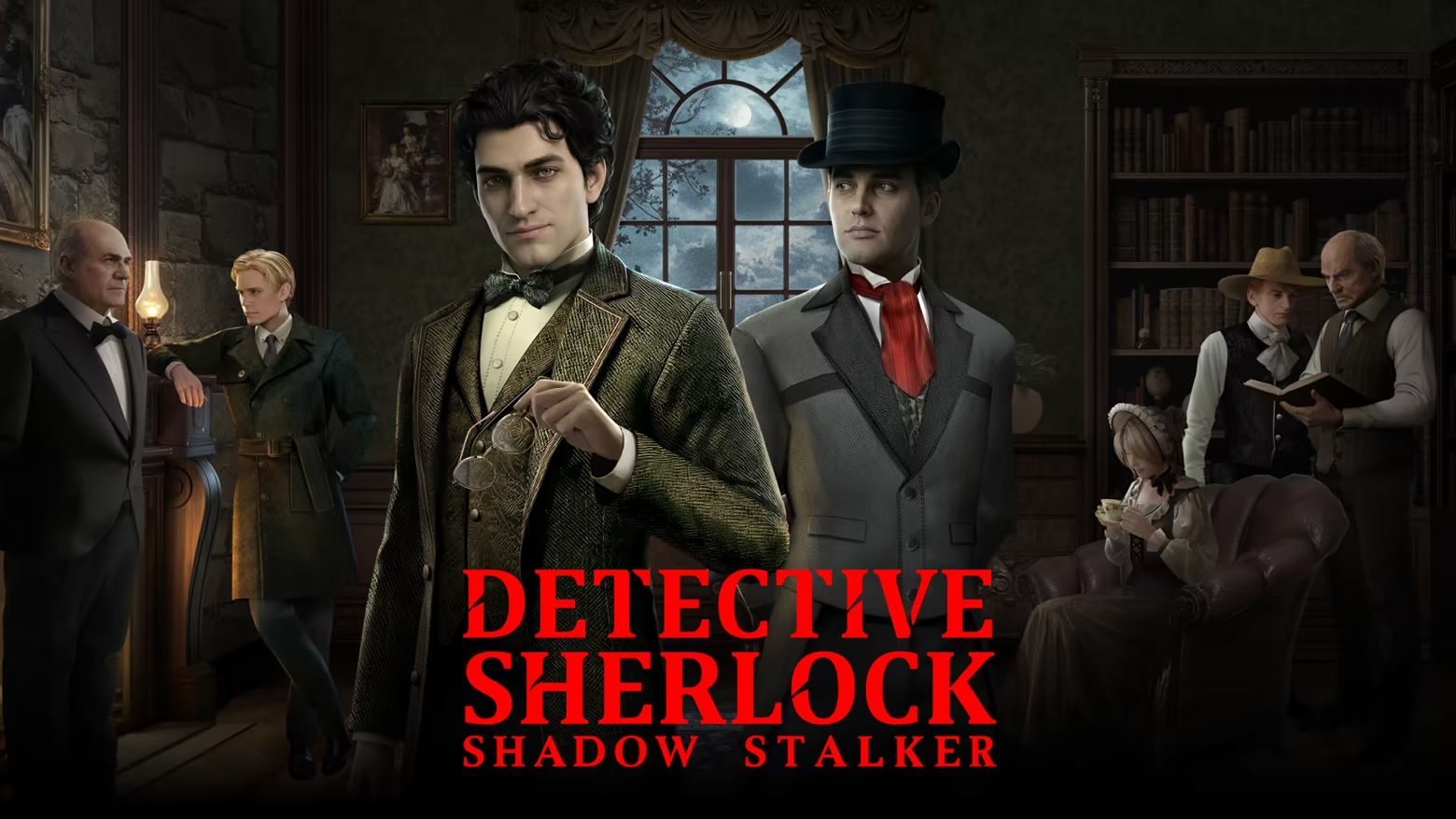
Every character remembers, watches, tests, and may deceive you like a living person. They have emotions, voices, expressions, and buried secrets. Break them with words or evidence — or realize too late that you were only a pawn in their game. A detective game built around truly lifelike NPCs.
Modeled estimate, not a reported figure. How we estimate →
About

“When you gaze into the truth, the truth gazes back.”
This is an immersive mystery deduction game powered at its core by AI large language models.
You play as Sherlock Holmes, entering the Victorian town of Dartmoor in the 19th century. There, you will match wits with dozens of AI-driven characters and uncover the truth behind curses, lies, and murder.
There are no fixed dialogue choices. There is no single standard answer.
You can freely talk to every character: chat, interrogate, test, deceive, comfort, threaten, bribe, praise, or even deliberately mislead them. Every NPC has their own personality, secrets, memories, emotions, and stance. They remember what you say, change their trust in you based on your attitude, and may crack under pressure, slip up, lie, question you back, or even completely break down.
You are not clicking through dialogue options.
You are engaging in psychological warfare with NPCs that feel alive. Find clues, expose lies, and break open the secrets hidden in their hearts.
In the outskirts of 19th-century London, thick fog surrounds the mysterious Baskerville Hall.
Sir Charles Baskerville is found dead near the moor. His eyes are wide open, his right hand clutching his chest, yet there are no obvious wounds on his body. Around the scene are traces that appear to belong to a large hound.
The legend of the demonic hound once again haunts the estate. The new heir, Sir Henry, is consumed by fear. The butler refuses to speak. The doctor is evasive. The inspector is eager to close the case. Everyone seems to know something, and everyone seems to be hiding something.
“It must be the curse… the Baskerville family curse! The demon hound has returned!”
“Am I truly unable to escape this curse? No… I don’t want to die… Ah—!”
Inside the manor, shadows gather. Beyond it, danger waits in the fog. Fear grips every throat like the hand of a demon.
After Holmes is invited to Baskerville Hall by his friend Mortimer, more deaths follow: a mutilated corpse in the moor, a woman’s body found in the fountain of a neighboring estate…
Are these seemingly unrelated cases connected? What secret lies behind the Baskerville curse?
Someone fears the truth.
Someone is using the legend.
Someone is hiding a secret.
Someone is watching from the shadows.
“Sherlock, you once said every brick of Baskerville Hall whispers… but some secrets are too heavy for even the Thames to swallow.”
“Then we need sharper ears — perhaps those of a doctor who insists on carving Christmas pudding with a scalpel.”
When you have eliminated the impossible, whatever remains, however improbable, must be the truth.
====== Free Chat! Become a Real Detective ======
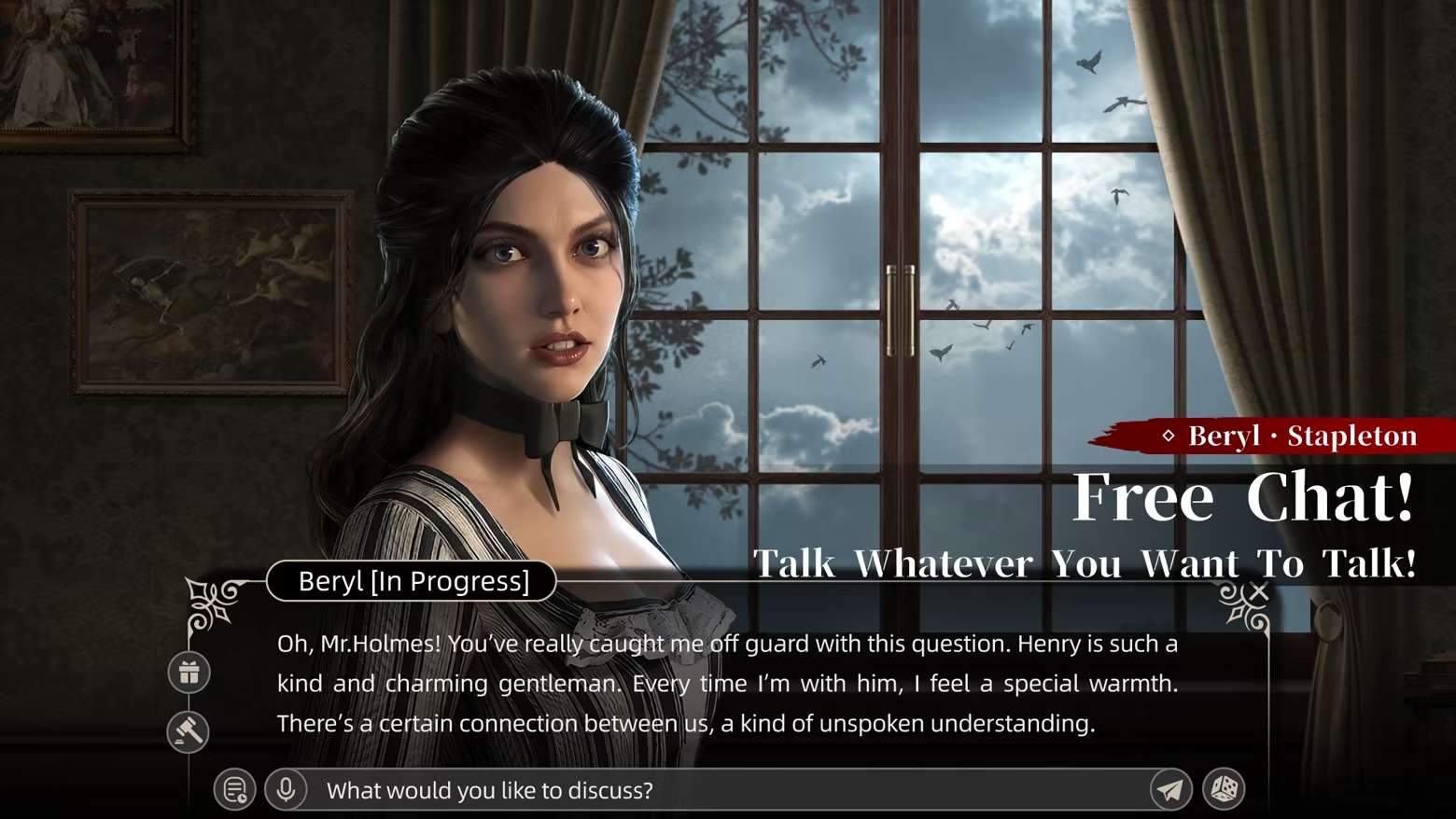
There are no dialogue options.
You can freely talk to NPCs in any way you choose: chat, interrogate, deceive, praise, threaten, bribe — anything you can think of.
NPCs are no longer lines of code, but “living” characters infused with AI: forcing themselves to stay calm under interrogation, scrambling to cover up a lie, gossiping about others, shifting blame, and hiding their true intentions.
AI makes every character feel alive. You never know whether they will help you solve the case — or stab you in the back.
====== Break Their Mental Locks and Uncover Their Secrets ======
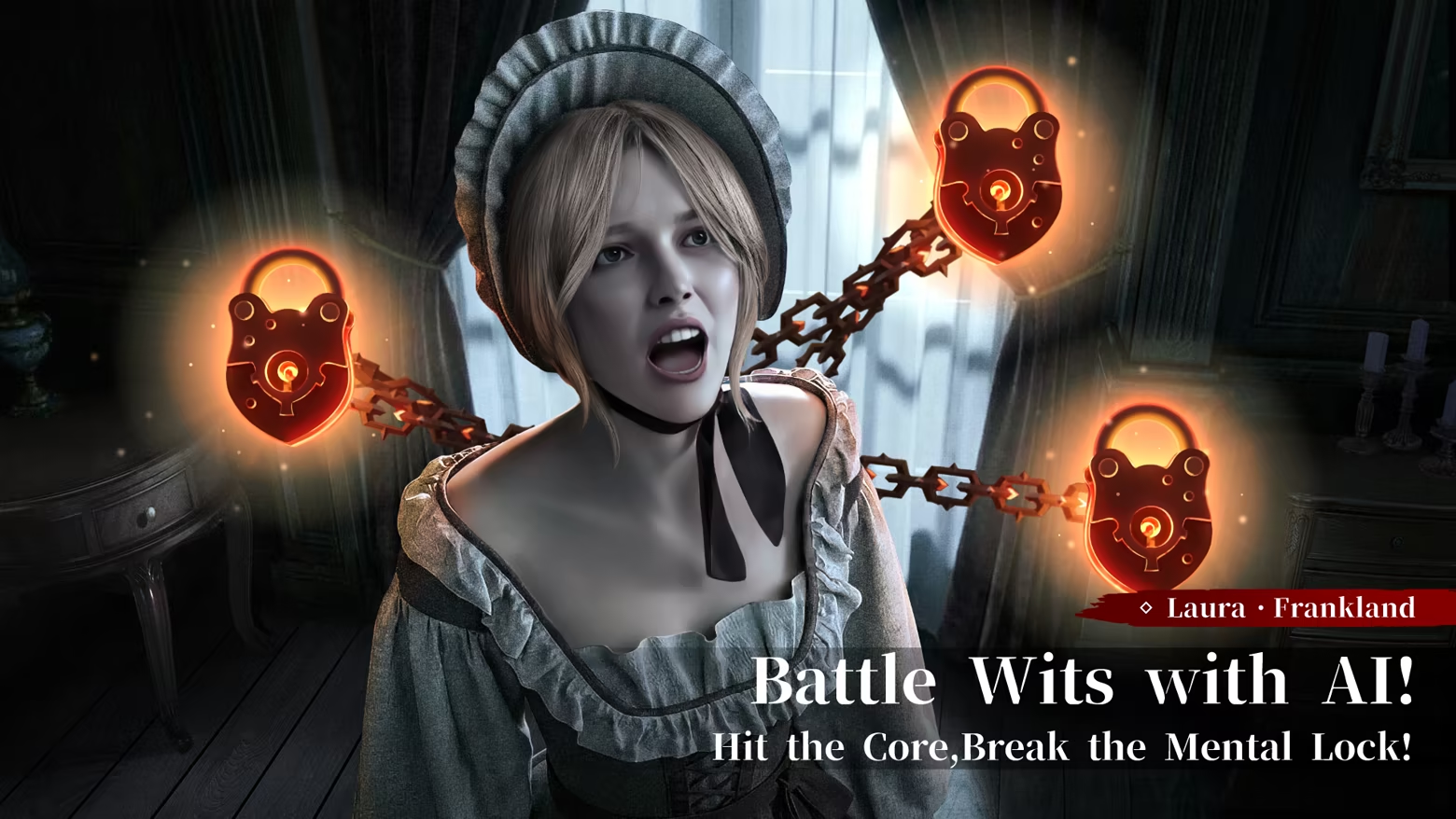
Everyone has a secret they are trying to protect.
Some fear exposure.
Some want to protect loved ones.
Some do not trust you.
Some would rather lie than reveal the truth.
Use conversation, evidence, gifts, items, and emotional pressure to gradually break through their defenses.
Behind every mental lock may lie a crucial clue. Clues connect layer by layer, leading you closer to the final truth.
A true detective does not simply ask questions.
A true detective makes people reveal what they never meant to say.
====== Hundreds of Items: Evidence or Gift - Your Choice ======
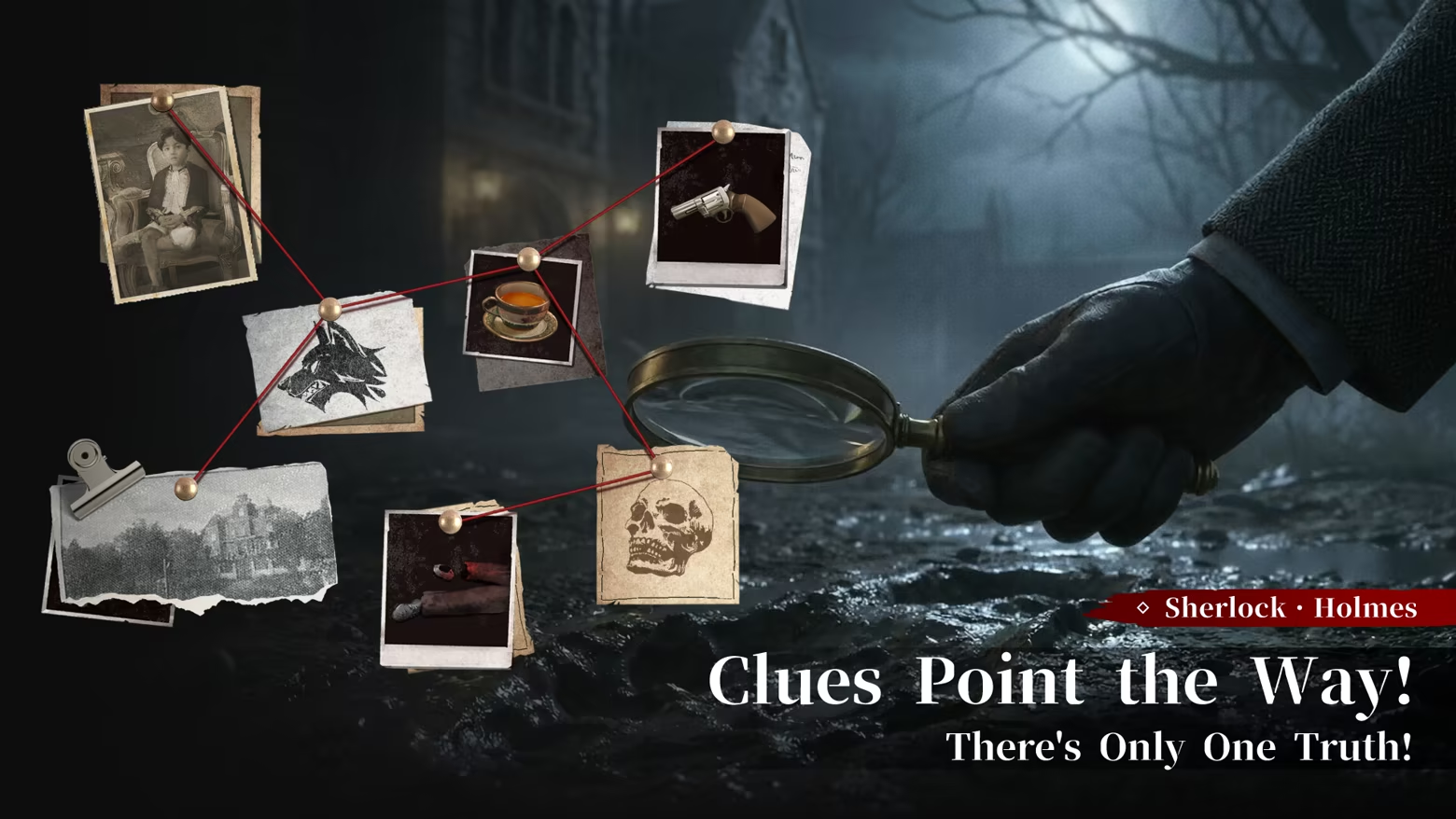
Show your evidence and leave the culprit no room to deny the truth.
Hundreds of items can be found throughout the game. Use them as evidence, or give them as gifts — the choice is yours.
Give a scalpel to a doctor, and he may praise you as a kindred spirit. Give the same scalpel to a lady, and she might slap you for “cursing” her.
Each character will react in real time based on their own personality and the current situation — blushing, anger, cold laughter, or even pulling a gun.
Flirt or provoke. The risk is yours.
====== AI-Driven Twists!Multiple Hidden Endings ======
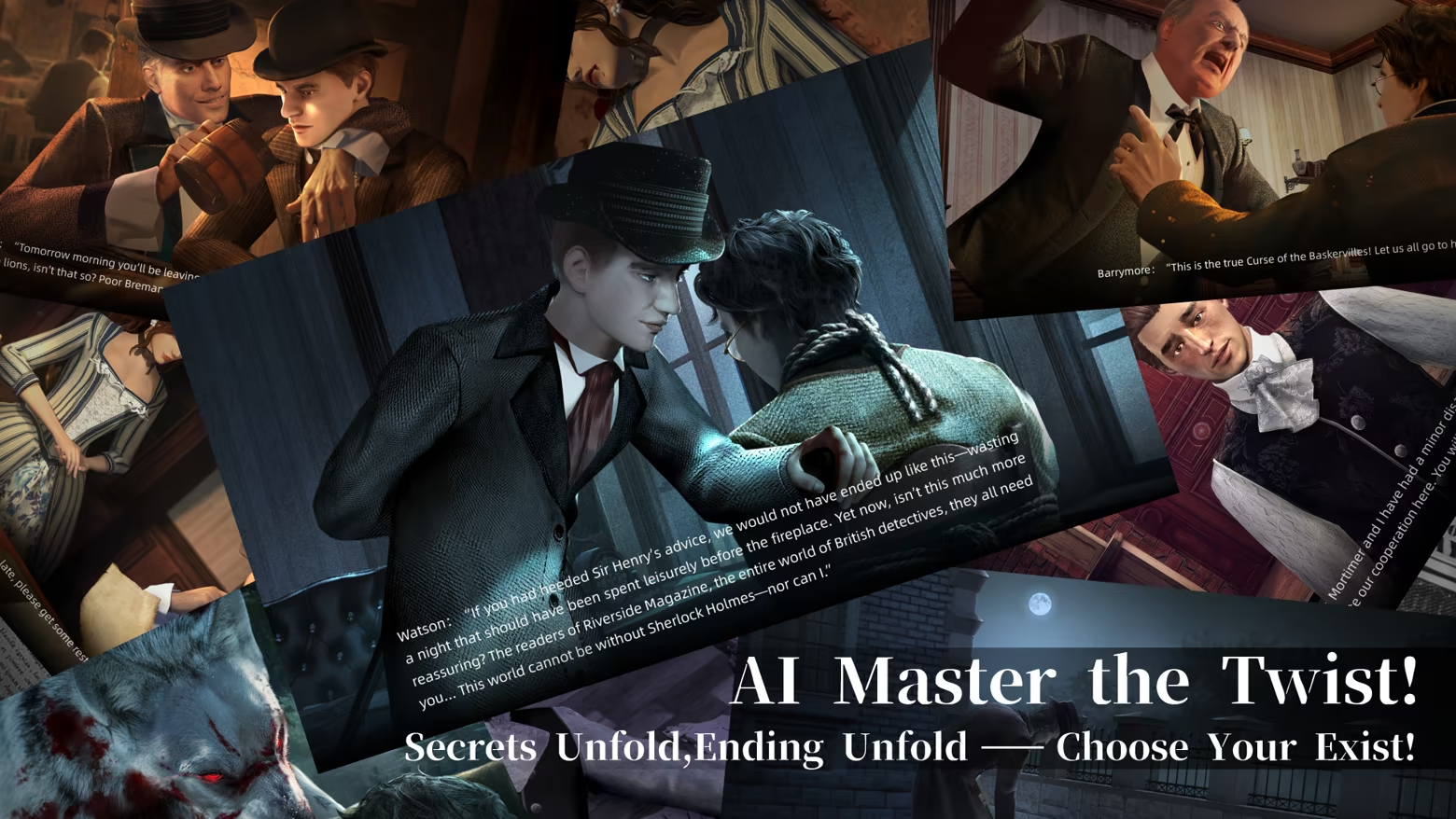
“You think catching the killer is the end? The true culprit is laughing at your innocence.”
Accuse the wrong person, and tomorrow’s newspaper may read: “Sherlock Holmes Disgraced in Framing Scandal.”
Hide a key piece of evidence, and ten years later, you may glimpse the smile of a supposedly dead baron on a dark street.
AI will shape the story based on your words, completed tasks, collected clues, and items used, leading to different endings.
— Hush. Did you hear the hound howling deep in the moor?
Genres
Stats
All-time low is the lowest price we've recorded for this game since we started tracking it.
Engagement
Reviews
Themes across 350 recent reviews and how positive each mention is. A keyword signal, not full sentiment analysis.
Reviews
Honestly, what hooked me most about this game is just how much freedom it gives you. You're playing as Sherlock Holmes, and once you get to a crime scene, there's no one handing you a list of dialogue options. You've gotta open your mouth and ask things yourself. WASD to move around, Shift to crouch, Space to jump, hit E to interact with stuff in the environment and gather clues. When you're in a conversation, just click the dialogue box to back out and go back to freely roaming around. Once you've collected enough leads, open up the icon menu to organize them, fire questions at yourself, and reason through the case. The whole loop is basically search, question, deduce—but because the conversations are completely open-ended, it feels worlds apart from those script-on-rails mystery games. Every NPC's dialogue is generated in real time by an AI language model. In the settings you can switch between different AI systems—DeepSeek, GPT, all the mainstream ones are there. You ask whatever you want, they answer whatever they answer, and whether you can catch a slip-up in their words is entirely on you. I tried making an NPC end every sentence with "meow"—they looked confused but still did it. Fair warning though, that kind of trolling has a chance of tanking their affection toward you, so don't mess around with key characters. I also maxed out Watson's affection and had him calling me all sorts of affectionate nicknames, and since I'm playing as Holmes? Absolute CP fan paradise. Sure, the devs snuck in some hidden guardrails, but as long as you don't cross the line, there's a surprising amount of room to goof off. That said, high freedom also means it's easy to screw things up. Save often—especially before important conversations—because one wrong question can kill the chat and nuke the relationship. Also, definitely crank up the dialogue speed in settings first thing. The game goes for a "real person" feel, so NPC responses come out one word at a time, and the text box at the bottom trickles out letter by letter to match. When you're trying to quickly gather leads, that pace will seriously test your patience. Every now and then you'll ask something outside their programming and the NPC just... freezes, stuck in deep thought. Hard to tell if the AI is genuinely wrestling with it or the network just hiccuped. Switching to a different model smoothed things out noticeably—different AIs definitely handle those edge cases differently. The cases themselves are adaptations of classic Sherlock Holmes stories, so as a longtime fan, half the time I already know where things are heading. I keep wanting to just blurt out "isn't it so-and-so who did it?!" The game shows all these numbers going up and down—looks impressive—but in practice, affection is pretty much the only thing I could actually feel shifting. Other emotional changes? Couldn't really find a way to notice them. Maybe future updates will flesh that out. Who knows. Bottom line: it's a Sherlock Holmes detective game where NPC dialogue is driven by AI language models. You play the legendary detective—search crime scenes, interrogate witnesses, organize leads, reason your way through, and crack the case. Conversations have a general sense of direction, but the freedom is massive—you can ask whatever you want. Get too weird with it though, and people will like you less. The whole selling point is that "interrogating a real person to solve a case" immersion, and whether you crack it or not really just comes down to how you talk.
Media

Related
Related
Price dynamics, follower growth, revenue and sales trajectories with interactive tooltips
This and every other Pro feature is free until October 20, 2026. A free account is all it takes.
Languages: English*, Simplified Chinese*, Japanese*, Korean*, French*, Italian*, German*, Spanish - Spain*, Russian*, Portuguese - Portugal*, Portuguese - Brazil*, Spanish - Latin America* +2 more
Hours played at review time, across 350 reviews with recorded playtime.
positive critical· bar length = how often the theme comes up
The premise of [i]Detective Sherlock: Shadow Stalker[/i] is genuinely promising, but it ultimately falls short of what is advertised. The Steam trailer suggests a polished and cinematic detective experience, yet the actual game looks nothing like it. The graphics feel mediocre compared to the visual quality shown in the promotional material, which makes the trailer seem misleading. The game is also unfinished in a very literal sense. The store page mentions [i]the ending is still in development[/i]. Another words, the game simply stops, leaving everything unresolved. It becomes difficult to stay invested when the mystery remains a [i]mystery[/i]. Technical issues create even more frustration. There is no option for vertical sync, which leads to noticeable screen tearing while moving around. Since this is an early access game, updates arrive frequently, but each one forces you to start over from the very beginning. After every patch, the saved game refuses to load, and the main menu displays pop‑ups containing Chinese characters, including the game's title when playing in Window mode. I’ve been disconnected from the internet several times while questioning a suspect, and each time the character stops responding because the AI requires an active connection. In other words, the game cannot be played offline. Finally, the front yard contains an unfenced graveyard. When questioned, Henry Baskerville and others deny it even exists. And why are there duplicate grave markers for Elizabeth Smith, who lived from 1826 to 1886? And honestly, who buries people in their front yard unless they’re a serial killer? However, there is one bright spot here. Google’s Gemini-powered interrogation system is quite impressive. Characters respond in a natural and believable way, and their reactions feel alive rather than scripted. Each character maintains a distinct personality and emotional state, which makes conversations feel dynamic and personal. Sometimes a suspect becomes defensive, and sometimes they reveal more when their guard is down because you've earned their trust. Summary: The clever interactive AI is the strongest part of the experience, but the misleading trailer, mediocre graphics, unfinished story, and technical problems make this feel more like an early prototype rather than a fully playable detective game. It also requires a constant internet connection, since suspects stop responding the moment the connection drops, meaning the game cannot be played offline. [quote]For more puzzle game reviews, news, and everything puzzle-related, follow [url=https://store.steampowered.com/curator/25928931-Puzzle-Lovers/]Puzzle Lovers[/url] and check out our [url=http://steamcommunity.com/groups/puzzlelovers]Steam group[/url].[/quote]
The main selling point is AI generated responses to your questions. There is no clicking through premade questions or asking people about specific topics, so finding a useful clue or answer depends entirely on your interrogation skills. The only preset options are a fair number of gestures and actions, such as a handshake, kiss, or thumbs up, but these do not deliver results. This is not all that different from early adventure games in which you had to type in a prompt. Those games also had an answer for each question, but it was often something along the lines of confusion about what you were talking about, a statement that the question was irrelevant, or simply a suggestion to try asking something else until you eventually asked the right question. Here, the response is generated based on what you type, or, if it is easier, what you say into a microphone. Every response is also read aloud by the character using computer-generated voices. Unfortunately, these are a total miss because they cannot convey any emotion or even read a sentence in a natural way. Instead, emotions are shown through character facial expressions, emojis, or descriptions in the response box. Your questions influence several emotional states that appear after you say something. If a character likes what you said, you will probably see positive emotions such as respect and affection. If they dislike it, they might show fear or feel pressured. A single prompt can often result in both positive and negative emotions. How much each emotion increases or decreases, represented by a plus or minus sign and a number, depends on the prompt. If you threaten to kill someone, for example, negative emotions will increase while positive ones decrease. If you apologize, the opposite happens. Sometimes even a simple "please" added to a question can affect someone's emotions. You can also negate a negative effect by apologizing or pointing out something positive about a character. As far as I can tell, you cannot ruin a character's disposition to the point where the game becomes unplayable. But at the end of the day, the mechanic doesn’t even matter. In general, finding information should not be particularly difficult if you regularly play detective games. You mainly ask characters about other people or items, where they were at the time of a crime, what they know, and similar questions. A general objective points you in the right direction and often tells you what information you are supposed to obtain from a particular person. You do not have to write full, coherent sentences, either. Even a single word will produce a response. Every character has something to reveal, but how you get that information, whether through brute force or deduction, is up to you. If you care about maintaining good relationships with everyone, you can save before talking to a character, ask strange or inappropriate questions to get what you need, and then reload and ask the right questions. If even that does not work, you can simply ask someone for help with what you should do next. While conversation is the biggest part of the detective work, there is also some snooping involved. You walk around in first person and search for clues and evidence. Nothing in the environment is marked, but there is also nothing else you can inspect besides relevant clues and evidence. The interaction prompt appears when you get close enough, so you do not have to be overly precise or spend a long time hunting for objects. Sometimes a person will refuse to reveal certain information, which is represented by locks. To break through them, you need to enter the right prompt, present evidence or testimony, or do a combination of all three. Clues and testimonies can be reviewed at any time, along with information about the main characters, how much they trust you, and a map. Trust can be increased by giving characters gifts. You can give them any item you have collected, whether it is evidence or not, although you can also ask them to give the item back. The final major feature is the deduction board, where you place testimonies and items into slots and try to find connections between them. Although the overall idea is interesting and works surprisingly well in some parts, the game has several serious issues. The first is that character responses depend on your internet connection. Most of the time, a response is immediate or takes only a second or two, but sometimes a character simply stops and waits. This delay is a consequence of the chatbots used to generate the responses, and it also means the game is always online. There is no real preservation for a game like this. In simple terms, it is similar to a multiplayer only game with no players. Eventually, it dies. Chatbots operate with a limited number of requests or tokens, and although the game apparently has enough resources to complete the current content, those resources will eventually run out. Secondly, everything about the game screams "AI generated," from the text and voices to the cutscenes. That naturally makes you question everything else, including the textures and locations you explore. There are also technical problems that seem unrelated to the AI itself. For example, buttons can stop working after opening the main menu, or the game can become stuck while loading an area, such as when trying to enter a house in a village. Some of this can be attributed to the fact that the game is still in Early Access. However, the currently available content ends after finding clues in the swamp, which takes around two hours, or considerably less if you are quick at solving things. This is particularly concerning because the game's Steam page states that the Early Access version contains 90% of the content. If that is accurate, it means there is not much more to expect beyond the ending. All of this leads to the final and perhaps biggest problem: the incredibly high price. It is impossible to justify when so many aspects of the game are AI generated. You could potentially justify the price if it reflected the cost of chatbot credits and the rest of the game were original, polished, and substantial. Unfortunately, that is not the case here.
Специально для вас попросила ИИ сформулировать моё впечатление:) Решительно не рекомендую. Это не игра, а нейрослоп. На дворе 2026 год, но проект умудряется выглядеть и звучать хуже, чем игры двадцатилетней давности. Плюсы: С Бэрримора чисто поугарала. Так плохо его ещё никто и никогда не рисовал. Пожалуй, это единственный смешной момент во всём этом недоразумении. Минусы: Кривой ИИ-визуал: Первая же кат-сцена встречает вас кривой, поплывшей генерацией. Смотреть на это физически больно. Ужасный визуал: Качество отрисовки локаций и персонажей застряло на уровне Обливиона 2006 года. Но Обливион хотя бы был авторской работой, сделанной людьми, а здесь — бездушное месиво. Доисторический интерфейс: UI выглядит абсолютно устаревшим. Дешёвая озвучка: Роботизированные ИИ-голоса звучат максимально плоско, дешёво и безбожно режут слух. Это абсолютно не стоит своих денег. Очередная халтура, созданная ради быстрой наживы на известном имени. Обходите стороной. Ваш Gemini.
I'm afraid after playing the demo and liking the premise i was a bit skeptical on how the full game experience would be. Suffice to say after taking the plunge and purchasing it while being a little cautious about needing to buy extra token packs in the future to use the a.i, i loaded the game and started once again like the demo listening to lestrande and truman talking. I spoke with the detective for about a minute when "server currently not responding, please try again later" came up. reloading the game 4 times i was hit with the same error. Unfortunately i wasn't willing on this occasion to persevere and have got a refund. Nice idea and premise but i think we will be a few years away from the type of game this game wants to become. credit for getting it released though and i'll keep an eye on developments to maybe come back in a year or so.
Die Szene nach dem Abendessen, als Watson und Henry plötzlich einen völlig anderen Charakter zeigten, war total absurd und gleichzeitig sehr lustig. Obwohl ich wusste, dass etwas nicht stimmte, habe ich mich doch dazu hinreißen lassen, noch ein bisschen weiterzureden. Eigentlich war es meine Aufgabe, einen Weg nach draußen zu finden, aber ich hätte das Spiel fast in einen Otome-Titel (ein Dating-Sim) verwandelt! Ach ja, ich habe übrigens mehrere Spielstände gespeichert, damit ich später jederzeit mit ihnen weiterschwatzen kann.
说实话,AI跟游戏结合这事儿,我之前总觉得是噱头,但这次玩下来,也确实让人看到点未来游戏的影子了。 这最直观的感受就是——这游戏里的NPC是“活”的。他不再是那种按固定台本念词的木头人,你跟他说他真的能接住话。而且游戏里直接内置了好几种AI模型DeepSeek、GPT什么的都能切着用。同一个案子,同一个嫌疑人,你用不同模型去盘问,对方回话的风格和细节都能不一样,还挺玄学的。 自由度这块儿,确实很顶。现在大家跟AI聊天都有点心得了吧?你敢问NPC就敢回。 我甚至看到有人把华生的好感度刷爆,然后让福尔摩斯跟华生在查案间隙搞点暧昧互动,实在是有点放飞自我了。 案子都是福尔摩斯经典故事改的,有时候看着线索都想替主角喊“凶手就是那谁!”游戏里一堆数值在跳,但我玩的时候体感最明显的就是好感度,其他情绪值变化没太抓住,可能藏得深了点。 说几个实用建议: 第一,勤存档,尤其是要跟关键人物对线之前。我真的因为一句话说错,直接聊崩过,回头读档才发现原来那句话换种问法,对方能抖出一堆料。 第二,去设置里把对话速度拉满。这游戏为了模拟真人感,AI回答是一个字一个字往外蹦的,配合文本框逐字出现,效果是真沉浸,但你急着过剧情的时候也是真捉急。 第三,AI偶尔会卡壳。你问了点超出它预设范围的问题,对方突然陷入沉思,半天蹦不出一个字,也可能是网络波动。换了个模型之后,流畅度明显就好起来了。 第四,别手欠去搞怪。我试过让每个NPC说话结尾都加个“嗷呜”,虽然人家真照做了,但主要角色的好感度肉眼可见往下掉,后面破案直接难度飙升。 正经玩的话,还是得按着案件要求一步步来,该问的问了,该搜的搜了,推理链条才能串起来。 瞎聊虽然好玩,但容易把自己绕进死胡同,案子破不了局。总的来说,这算是AI模型在游戏应用里一次挺有诚意的尝试。 它不是那种传统意义上的“互动电影”,而是真的把对话权交到你手里。每个NPC都成了一个能自由交谈的信息源,你扮演福尔摩斯,跑现场、问证人、翻箱倒柜找物证,最后靠自己拼出真相。对话虽然有大致引导,但你想聊啥基本不受限——当然,代价是聊太离谱,好感度会教你做人。 这游戏并不算完善,也算不上佳作,但也确实让我们看到一种可能:当AI能真正“听懂”人话,游戏里的世界就不再是铁轨上跑火车,而是真的让你去探索、去试错、去撞南墙。 至少玩完之后,我对未来AI在游戏里能干出什么事来,还挺期待的。 [quote]关注鉴赏组:[url=https://store.steampowered.com/curator/45134494]浮生评测[/url] ←"浮生若梦,一鉴倾心,邀您共赏人间烟火" 加入Steam组:[url=https://steamcommunity.com/groups/LLFLLFF]浮生评测[/url]←“一起追寻'浮生若梦'般的游戏体验” 开始“浮生若梦”鉴赏组的奇幻之旅![/quote]
I've never read the original book — at first I couldn't even tell the characters apart. But the game opens with the inspector and the doctor disagreeing over the cause of death, then layers in the family legend, Henry's strange experiences, the butler's secrets, and the figures out on the moor one by one, so there's really no barrier to getting into it. The plot is remarkably tight — every clue planted early on gets explained later, unlike stories that start strong and then fizzle out because even the author can't make sense of their own setup. By the time I dug up the portrait and the letters, I found myself actively trying to recall who'd mentioned what earlier. Playing it actually made me want to track down the novel and read it. Highly recommended!
https://youtu.be/RB-SzEWHW3U Детектив Шерлок: Охотник за Тенью (Detective Sherlock: Shadow Stalker, Sherlock Holmes: Night Stalker) Отличный симулятор детектива с подключённым внешним ии. Надеюсь что когда то добавят свой ии в игру чтоб не зависеть от внешних ии. Так же надеюсь другие истории по Шерлоку подобные этой будут (или в эту игру будут добавлены они). Недостатки: *Ограничение времени на выполнение задания для продвижения по истории. *«Безлимитные токены» действуют только ограниченное время. *Кнопка F12 кроме сделать скриншот ещё переключает полный/оконный режим экрана. Несколько багов встречено: *не всегда был текст переведён как полностью так и пару слов. *1 раз была проблема с управлением передвижения (персонаж двигался в другом направлении). Такое несколько раз встречал в PUBG, но обычно решалось переключением между окон или используя джойстик. Но только перезапуск тут помог. *в одном из диалогов камера отвязана была от собеседника и можно управлять взглядом.
Персонажам можно задавать какие угодно вопросы… буквально какие угодно. Несколько раз, заболтавшись с ними на темы, совершенно не связанные с делом, я вспоминала, что вообще-то сижу и играю в игру. У персонажей можно спрашивать дорогу, вместе с ними строить версии произошедшего, добывать новые улики через очные ставки и расспрашивать, что они думают о других героях, — возможностей реально очень много.
Selling now
See how fast this game is selling right now — estimated copies and revenue per day from recent review growth.
Active players
Estimated daily and monthly active players (DAU/MAU) modeled from peak concurrency.
Players by region
Where this game's players are, estimated from review languages.
Players also reviewed
The games this title's players most often review too — audience affinity.
Related
| Game | Estimated lifetime revenue | Reviews | Review score | Price |
|---|---|---|---|---|
| — | 0 | — | — | |
| — | 0 | — | — | |
| $697.6K | 2.9K | 73% | $7.99 | |
| $247.7K | 605 | 88% | $16.99 | |
| $214.3K | 503 | 82% | $8.99 | |
| $119.5K | 429 | 76% | $9.99 |
Related
| Game | Estimated lifetime revenue | Reviews | Review score | Price |
|---|---|---|---|---|
| $229.3K | 356 | 33% | $16.99 | |
| $229.2K | 3.2K | 82% | $4.99 | |
| $229.2K | 1K | 93% | $9.99 | |
| $229.2K | 2.1K | 84% | $4.99 | |
| $229.4K | 2K | 96% | $4.99 | |
| $229.1K | 429 | 85% | $14.99 |