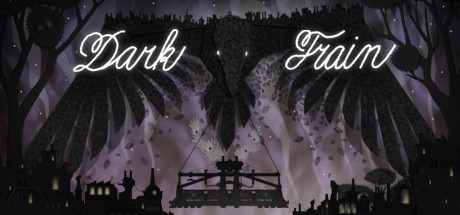
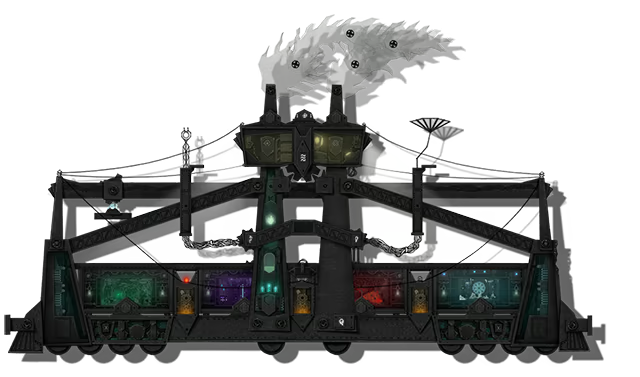
Dark Train is one of those rare indie projects that feels less like a conventional video game and more like a piece of conceptual art brought to life. Developed and published by Paperash Studio, with Ateliér Duchů involved in its release, it presents a moody, handmade world constructed almost entirely from paper, scissors, ink, and shadow. The premise is simultaneously simple and mysterious: you play as Ann 2.35f, a mechanical squid bound to a coal-powered locomotive called the Dark Train, tasked with escorting it through strange environments while uncovering the forgotten civilization that once created it. There are no tutorials, no dialogue, and no traditional storytelling devices—everything must be interpreted through visual cues, environmental shifts, and the train’s ever-changing state. The result is an experience that demands attention, patience, and curiosity rather than passive consumption.
Its audiovisual identity is unquestionably its strongest asset. Every environment feels tactile, like a physical diorama filmed under theatrical lighting. The sharp silhouettes, layered textures, and meticulous cutout details give the sense that someone built an entire world on a desk before animating it. Scenes unfold like eerie shadow plays—mechanical towns, abandoned cathedrals, ominous forests, drowned industrial ruins—each rendered with such care that exploration feels rewarding even without explicit objectives. Sound design reinforces the atmosphere through metallic scraping, distant thunder, rhythmic machinery, and unsettling ambience rather than melodic composition. There is a persistent sense of isolation, yet also wonder, as if the player has been granted exclusive access to a forgotten museum of mechanical ghosts.
Gameplay is structured around puzzle solving, resource management, and environmental interaction, but Dark Train refuses to explain itself. Instead, it expects players to learn by experimenting—clicking levers, manipulating train components, observing how weather affects the locomotive, or noticing how environments respond when Ann interacts with objects. The train serves as both hub and puzzle box, requiring the player to balance fuel, electricity, steam, and car configurations to keep it moving. Each new region introduces different types of logic puzzles that must be deciphered entirely through context. There are no inventories, no glowing hotspots, and no prompts—you must decide what matters and what does not. For certain players, this autonomy feels exhilarating, offering a level of discovery that most modern games avoid. For others, it becomes opaque, unintuitive, or even punishing, especially when progress stalls with no indication of what action was missed.
This ambiguity extends into the storytelling. Dark Train has lore—quite a bit, in fact—but it never expresses itself through words. Instead, the narrative unfolds through symbolism, architecture, mechanical relics, and surreal transitions. The train’s journey gradually reveals a world shaped by ambition, industry, and collapse, yet the player is left to interpret what happened and why. Ann’s presence raises additional questions: is the squid a tool, a witness, a remnant of past technology, or something more spiritual? The game seems deliberately uninterested in providing definitive answers. This makes the experience intellectually stimulating for players who enjoy puzzles beyond the mechanical ones, but it may leave those craving closure feeling unsatisfied once the final scene arrives.
The game’s strengths—its silence, opacity, and artistic confidence—also constitute its limitations. The lack of guidance can lead to frustrating stretches of trial-and-error. Some puzzles require pixel-perfect clicking or noticing tiny environmental details in dim lighting. The squid’s movement, intentionally odd and floaty, occasionally interferes with precision. Progression pacing can feel uneven, swinging between rapid breakthroughs and long, quiet standstills. And because the experience is heavily driven by discovery, replay value is modest once its mysteries have been solved. Dark Train is not designed to be universally approachable—it makes no concessions for convenience or accessibility, which inevitably narrows its potential audience.
Despite that, its identity remains refreshingly uncompromised. It does not chase trends, borrow design formulas, or attempt to emulate better-known adventure games. It is fully committed to its handmade visual language, its surreal tone, and its belief that players can—and should—figure things out for themselves. For fans of atmospheric indie titles, experimental narrative structure, and games that treat worldbuilding as art rather than exposition, Dark Train offers a rare and rewarding journey. It evokes the sensation of wandering through an abandoned art installation, touching objects not meant to be touched, and discovering stories never formally written.
Dark Train may not appeal to those who value convenience, clarity, or traditional pacing, but for players drawn to mysterious worlds, creative craftsmanship, and interpretive play, it becomes unforgettable. It is strange, beautiful, disorienting, and undeniably human—despite having no humans in sight.
Rating: 7/10