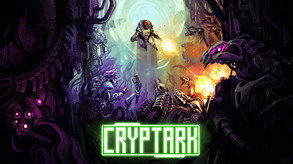
Cryptark is a 2D sci-fi shooter where you take on the role of a heavily armed privateer seeking to earn government contracts by boarding deadly alien space-hulks. It's up to you to strategize a plan of attack, pick an equipment loadout, and destroy the central core to be victorious.
Modeled estimate, not a reported figure. How we estimate →
Prices
The United States storefront in every case, so this compares stores and not countries.
Prices
Each in the currency that store quoted — not converted: the gap between two rows is the publisher's pricing, not an exchange rate.
Every market we collect.
About
Genres
Sums Steam only; PlayStation publishes no volume signal, so the true total is higher by an unknown amount.
| Store | Price | Audience | Score | Chart | Est. revenue |
|---|---|---|---|---|---|
SteamYou are here | $14.99 | 2Kreviews | 82% | — | $721.6K |
| $14.99 | 404ratings | 87% | — | not modelled |
Matched by title — a reused name can pair the wrong games. * is a critic aggregate. Prices and positions are each store's United States storefront; Epic charts worldwide. Audience and Score too, except Steam's, which is worldwide.
Engagement
Reviews
Themes across 53 recent reviews and how positive each mention is. A keyword signal, not full sentiment analysis.
Reviews
Cryptark is tough as nails, but super rewarding once you get the hang of it. The tactical planning before each mission is just as important as the action, which makes every run feel meaningful. Controls can feel a bit overwhelming at first, and it takes time to get used to. Really satisfying if you enjoy learning complex systems and improving run by run.
[h1]Hidden Gem[/h1] [b]Key features[/b] [list] [*]Sense of awe, [*]Alien tech, [*]You can nuke spacecrafts! [/list] [b]Whoa, CRYPTARK is just so good![/b] Honestly didn't expect much, thought it would be some kind of a platformer. Very first mission proved me wrong! [u]We are tomb raiding space hulks[/u]. Objectives are - get in, take out hostile elements and grab precious loot. https://steamcommunity.com/sharedfiles/filedetails/?id=3731192421 Levels are beautiful, such a nice picture overall! Interstellar wreckages are massive. Once you're inside, you see spinning turbines, piled bones of extinct aliens here and there, with some hardware still moving around. As well as defence systems and AI. [b]Combat starts with Preparation[/b] You get to choose which behemoth to salvage. Scans reveal active systems and you adjust your load out accordingly. Fast chaingun, slow flamers, precise riffle, cluster grenades, even energy weapons. Costly, but this guaranties your success. The money comes from previous completed missions and extra goals (e.g. no shields, no grenades, keep certain constructions). https://steamcommunity.com/sharedfiles/filedetails/?id=3730977870 [b]Clearing out isn't simple[/b] There are Drone Facilities that constantly spawn enemies, so you'd want to destroy them first, right? But then there's a Repair Complex which quickly repairs previously obliterated DF. So, take out RC first? Can't do it yet, because it's shielded from the opposite side of the behemoth. See, now you're swearing and flying in zero-g through vast halls absorbing projectiles just to make it in time to bomb that RC. Or you might get a Scan Jammer, completely denying your map any means of navigation. Imagine it's paired with a facility that assimilates functions of previously nuked SC. You took out one, but now take out another! Oh and don't forget about many drones and turrets still active and tirelessly hunting you as you rushing around. Some may even trap you inside their forcefields, and summon metal squids. Others will spin and accelerate towards you. Did I mention there are bigger turrets on the outer hull too? Now I did. https://steamcommunity.com/sharedfiles/filedetails/?id=3731840645 [b]Logical modes[/b] CRYPTARK has three modes. They complete each other from a story perspective. In the normal mode you get a timer and a credit bonus, should you beat the objectives swiftly. Each successful mission earns you money to spend on in the next node. Then there's a rogue mode, where you keep all harvested door keys, weapons, ammo and have no access to your captains ship. Finally, a very short mission where you face your contractors and recover the final artifact. CRYPTARK has several characters with unique abilities. Its music is amazing and exploding xenos remains fun and engaging. Space, aliens, pieces of extra-terrestrial lore. [u]100% worth playing. [/u]
Media

Related
Related
Price dynamics, follower growth, revenue and sales trajectories with interactive tooltips
This and every other Pro feature is free until October 20, 2026. A free account is all it takes.
Stats
All-time low is the lowest price we've recorded for this game since we started tracking it.
Languages: English**languages with full audio support
Hours played at review time, across 53 reviews with recorded playtime.
positive critical· bar length = how often the theme comes up
**Played on Steam Deck CRYPTARK isn’t usually the kind of game I go for, but I decided to give it a shot anyway, and I’m glad I did. The visuals are cool, and the overall chaos of each mission makes the game a blast to play. The game doesn’t hold your hand much with tutorials, so a lot of the fun comes from learning through trial and error and figuring out the best strategies on your own. Things can get overwhelming fast, and you’ll definitely get smoked a few times, especially when resources start getting expensive, but that tension is part of what makes it so enjoyable. I also appreciated the game length. Right when I started wondering how much longer it would go on, I ended up beating the Cryptark, which felt perfectly paced. There also seems to be a solid amount of replayability, even though I personally don’t replay many games, im sure some of you will.
There is a lot of frustrating design here that puts me off from continuing the game. You got things coming from off screen to hit you, in a way you can't really see or react to till they are already pounding you. Enemies and attacks have a tendency to fill the screen with junk, and the color scheme and aesthetic really make things difficult to differentiate one thing from another. Its like everything blends into everything, and it creates this messy flow of combat due to the amount of just techno green and blue around. The cross hair and laser sight are really easy to lose track of in the middle of the sprawling mess of everything. The idea of alien artifacts and how to get them is fun, actually doing it is not. Melee enemies and some explosive attacks tend to turn you into a pinball as that bounces you to wall, which can lead to you just getting stuck in a corner, and just having to abandon the mission. Conceptually the idea of going around scavenging for alien artifacts and tech is fun, but I don't think the design choices here create a fun game to come back to.
A really fun and unique shooter game, I enjoyed my time with it. My play time is low because I played it on another system before purchasing the game on steam.
Good game, great artstyle, AMAZING music! But i would like there to be a option to build a mech from scratch. Also some of the achivements are bugged even in 2026.
CRYPTARK, developed and published by Alientrap, is a roguelike twin-stick shooter that distinguishes itself by blending intense real-time combat with a layer of strategic planning that feels closer to a tactical operation than a straightforward action game. Set in a grim, industrial sci-fi universe, it places players in the role of a hired mercenary sent to infiltrate derelict alien warships, dismantle their defenses, and destroy their cores for profit. While the premise sounds simple, the execution is far more nuanced, transforming each mission into a careful balance between preparation, precision, and resource management. What immediately sets CRYPTARK apart is how much emphasis it places on pre-mission planning. Before entering a ship, players must assemble a loadout using a limited budget, choosing from a variety of weapons, tools, and support items. This system introduces a constant economic tension, as every piece of equipment has a cost and every action during a mission consumes resources. Ammunition, repairs, and utility items all draw from the same pool, meaning that reckless play can quickly lead to financial collapse. This structure forces players to think beyond raw firepower, encouraging efficient, calculated approaches rather than brute-force tactics. Once inside a ship, the game shifts into fast-paced twin-stick shooting, but even here, strategy remains central. Each vessel is composed of interconnected systems—shield generators, repair nodes, enemy production units—that directly influence the difficulty of the encounter. Rather than simply clearing enemies, players must decide which systems to disable first, often navigating dangerous layouts while under constant pressure. The result is a layered gameplay experience where movement, targeting, and decision-making all intersect. Success depends not just on reflexes, but on understanding how to dismantle the ship’s infrastructure in the most efficient way possible. Procedural generation plays a significant role in maintaining variety. Each ship features a different layout, enemy composition, and system arrangement, ensuring that no two missions unfold in exactly the same way. This unpredictability keeps the gameplay fresh and encourages adaptability, as players cannot rely on memorization alone. However, it also introduces moments where difficulty can feel uneven, particularly when challenging layouts are paired with limited resources. This tension between randomness and fairness is a defining part of the experience, rewarding players who can adjust their strategies on the fly. The game’s progression system is intentionally restrained. While players can unlock new equipment and options by completing missions and collecting resources, each run largely stands on its own. There is no heavy reliance on permanent upgrades to carry players forward; instead, improvement comes from mastering the game’s systems and making smarter decisions. This design reinforces the game’s focus on skill and knowledge, but it can also make early failures feel punishing, especially when progress is lost due to a single costly mistake. Visually, CRYPTARK embraces a dense, mechanical aesthetic that complements its tone. The interiors of alien ships are filled with industrial details, flickering lights, and destructive effects that give each mission a sense of urgency. Combat is visually chaotic but remains readable, with explosions and weapon effects adding impact without overwhelming the player. The audio design enhances this atmosphere, combining mechanical sounds and a tense soundtrack to create a constant sense of pressure as players navigate hostile environments. One of the game’s most notable strengths is how it merges two seemingly different gameplay styles into a cohesive whole. The deliberate pacing of planning and system management contrasts sharply with the frantic nature of combat, yet the two elements support each other effectively. This duality gives CRYPTARK a unique identity, setting it apart from more traditional roguelike shooters. However, it also contributes to its difficulty, as players must be comfortable juggling both strategic thinking and real-time execution. The challenge level is undeniably high, and it may not appeal to everyone. Mistakes can be costly, and the combination of limited resources and procedural unpredictability means that failure is often part of the learning process. For some players, this creates a rewarding sense of tension and accomplishment, while for others, it may feel overly punishing. The game demands patience and a willingness to engage deeply with its systems, offering little in the way of shortcuts or safety nets. In the end, CRYPTARK is a tightly designed experience that succeeds by committing fully to its core ideas. It offers a compelling blend of strategy and action, wrapped in a distinctive sci-fi setting that reinforces its themes of risk and survival. While its demanding nature and economic constraints may limit its accessibility, those who embrace its systems will find a deeply satisfying and highly replayable game that rewards careful planning and precise execution. Rating: 8/10
Es buen juego, no lo mejor que he jugado, pero, esta bien
I can see the appeal. Sadly, this is absolutely not my cup of tea. Nor would I actually spend 15€ for that.
Its difficult to recommend this unless you're a big Roguelike fan, so buyer beware. It's a fun little twin-stick roguelike, but there's an *extremely* steep learning curve, and even with practice you'll take so much stray damage you didn't see coming, to the point where you'll be filling your loadout with medkits out of necessity. On top of that, I'd even recommend enabling the Low Detail setting, which effectively turns off the lighting, because between the visual effects and the shifting camera, it makes it really, really tricky to distinguish where dangerous projectiles, enemies, and even where YOU are on the screen most of the time. But, if you spend some time on it, you'll find a great collection of risk/reward systems, intense combat, and lots of toys to play with.
Players by region
Where this game's players are, estimated from review languages.
Players also reviewed
The games this title's players most often review too — audience affinity.
Related
| Game | Estimated lifetime revenue | Reviews | Review score | Price |
|---|---|---|---|---|
| $21.1K | 222 | 94% | $4.99 | |
| $3.5K | 20 | 85% | $5.99 | |
| $10.6K | 71 | 72% | $9.99 | |
| $25.7M | 89.9K | 95% | $14.99 | |
| $437K | 4.9K | 97% | $4.99 | |
| $81.5K | 286 | 90% | $11.99 |
Related
| Game | Estimated lifetime revenue | Reviews | Review score | Price |
|---|---|---|---|---|
| $721.4K | 1.7K | 61% | $29.99 | |
| $721.9K | 1.2K | 79% | $19.99 | |
| $722K | 2.2K | 90% | $14.99 | |
| $722K | 1.6K | 66% | $24.99 | |
| $720.8K | 1.7K | 75% | $14.99 | |
| $722.4K | 1.4K | 71% | $24.99 |