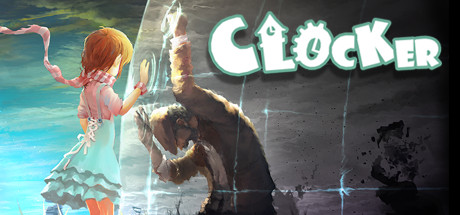
Clocker, developed by Wild Kid Games and published in collaboration with indienova, is a quiet yet emotionally resonant puzzle adventure that explores the relationship between time, memory, and family. At its core, it tells the story of a father and daughter separated by a mysterious temporal disturbance, and the player’s task is to guide them toward reunion through a series of intricate time-based puzzles. Rather than relying on dialogue-heavy storytelling, Clocker uses its mechanics and atmosphere to express emotion, creating a narrative that unfolds organically through the player’s actions. The concept is both intimate and ambitious, blending heartfelt storytelling with a mechanical complexity that challenges the mind as much as it tugs at the heart.
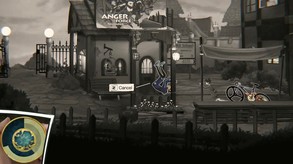
The game begins with a clockmaker father who, through his experiments, accidentally alters the flow of time in his world. His pocket watch, a symbolic and literal embodiment of time’s fragility, becomes the key to manipulating the environment and solving puzzles. The world around him is frozen in stasis, and by using the watch’s power, the player can fast-forward or rewind the lives of the people and objects suspended in this moment. Later, control shifts to his daughter, who must navigate the consequences of her father’s actions. This dual-character structure is central to Clocker’s design, allowing the story to be told from two perspectives that ultimately intertwine. The father’s manipulation of time changes the world in unpredictable ways, while the daughter’s exploration and determination to fix the damage bring emotional weight to the mechanical process. Together, they create a layered narrative that feels deeply human despite its fantastical premise.
Clocker’s puzzles are its strongest and most defining feature. Each scenario requires an understanding of cause and effect—how moving one element in the past will influence another in the future. The father can alter objects and characters in various temporal states, while the daughter deals with the results of those manipulations. This creates a fascinating interplay where one puzzle solution might disrupt another, forcing players to think in loops rather than straight lines. The sense of discovery that comes from seeing the world shift under your control is immensely satisfying, but it can also be demanding. Some puzzles require keen observation and patience, as the relationships between objects and time sequences are not always immediately obvious. The game never holds the player’s hand, and this deliberate ambiguity gives its challenges more depth. However, this complexity can sometimes lead to frustration, particularly when the logic behind a puzzle feels opaque or when progress hinges on noticing subtle environmental cues.
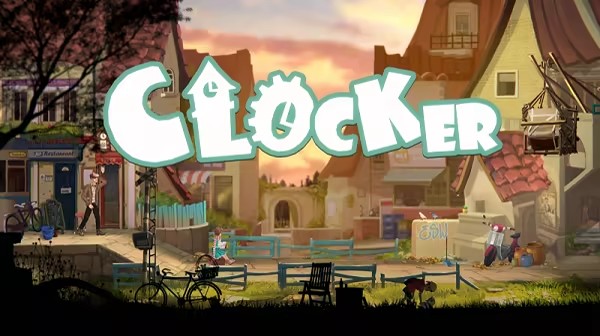
Visually, Clocker adopts a hand-painted style that evokes a storybook or watercolor painting. The color palette shifts gently as time moves, helping to differentiate between temporal states and emotional beats. Environments are modest in size but filled with small, evocative details—a frozen fountain, a clock tower mid-chime, people caught mid-step—that remind the player of the stillness that defines this disrupted world. The art direction contributes significantly to the game’s emotional impact; it doesn’t aim for realism but for texture and tone, crafting a world that feels dreamlike yet grounded. The sound design complements this perfectly. A soft, piano-driven score carries the player through moments of discovery and sorrow, reinforcing the game’s themes of loss and connection. The music often fades into near silence, creating a reflective atmosphere that gives the player space to think and feel between puzzles.
Where Clocker falters is mostly in pacing and accessibility. The game’s complexity, while intellectually engaging, can occasionally slow its momentum, especially when a puzzle sequence requires backtracking or extended trial and error. Some players might find the progression uneven, as moments of revelation are interspersed with stretches of confusion. The interface, though functional, occasionally feels cumbersome when switching between time manipulation and exploration, and the control scheme can feel imprecise in certain sections. These issues don’t undermine the experience entirely, but they do interrupt the flow of an otherwise meditative game. The narrative, while affecting, is minimalistic; it leaves many emotional threads implicit rather than stated, relying on the player’s interpretation to fill the gaps. This can be powerful for those who appreciate subtle storytelling, but others may wish for more direct emotional payoffs or dialogue-driven moments.
Despite its imperfections, Clocker achieves something rare in its genre. It creates a space where logic puzzles serve emotional storytelling rather than distracting from it. Every action the player takes—every rewound moment, every shifted timeline—feels like an expression of the characters’ bond. The father’s attempts to control time mirror his desire to protect his daughter, while her journey to restore balance reflects her acceptance of loss and responsibility. The story concludes on a bittersweet note that reinforces the central idea that time cannot be conquered but only understood. Clocker leaves the player with a lingering sense of melancholy and reflection, not through grand spectacle but through quiet, deliberate design. It’s a small game with a big emotional heart, and its ability to connect complex mechanics with human storytelling marks it as a standout within the indie puzzle landscape. For players who value introspective, artistically driven experiences that challenge both the mind and the heart, Clocker is a moving and memorable journey through the fragile beauty of time.
Rating: 7/10