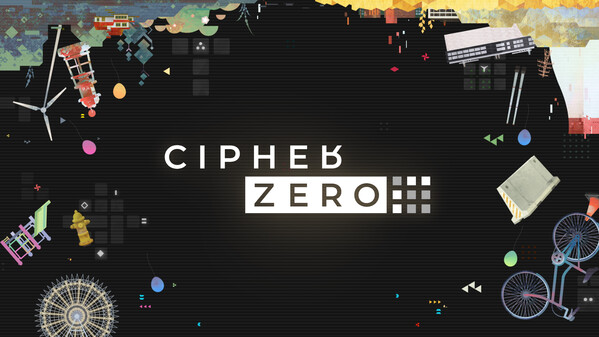
CIPHER ZERO is a puzzle game developed and published by Zapdot that embraces minimalism in both presentation and design philosophy. Rather than relying on tutorials, dialogue, or elaborate storytelling, the game places players directly into a series of logic challenges and expects them to uncover the rules independently. That approach creates an experience built entirely around curiosity and deduction, where understanding mechanics becomes just as important as solving the puzzles themselves.
From its opening moments, CIPHER ZERO establishes an unusual rhythm. Players are presented with mysterious symbols arranged across clean grid-based layouts without explanation or guidance. There are no lengthy instructions explaining objectives or mechanics. Instead, progress comes through observation, experimentation, and gradual understanding. Every puzzle solved teaches something valuable, turning discovery itself into the central reward.
What separates CIPHER ZERO from many puzzle games is how strongly it commits to player-driven learning. Rather than introducing mechanics through traditional tutorials before escalating difficulty, the game trusts players to identify patterns naturally. Strange glyphs and abstract symbols slowly reveal their functions over time, encouraging careful analysis rather than guesswork. Early puzzles establish fundamental concepts while later stages build upon that knowledge in increasingly clever ways.
This structure creates an unusually satisfying progression system. Advancement feels meaningful because improvement depends entirely on personal understanding. Success rarely feels accidental. Solutions emerge through persistence and logical reasoning, creating moments where difficult challenges suddenly become clear after one critical realization. Those moments of breakthrough become some of the game's greatest strengths.
The puzzle design itself demonstrates impressive consistency. With hundreds of handcrafted challenges spread across the experience, CIPHER ZERO avoids relying on repetition to extend playtime. New ideas appear regularly enough to maintain momentum, while older mechanics return in fresh combinations that encourage players to think differently about systems they believed they had already mastered. Puzzle variety remains strong without sacrificing the focused identity that defines the game.
Difficulty progression deserves considerable praise. The game gradually increases complexity while respecting player intelligence. Challenges become more demanding without feeling unfair, encouraging experimentation and patience rather than random trial and error. The sense of accomplishment that follows difficult solutions creates an addictive progression loop that encourages continued play.
At the same time, CIPHER ZERO's design philosophy may not appeal equally to everyone. The complete absence of direct instruction means players unwilling to spend time studying mechanics independently may encounter frustration. Certain puzzles require sustained concentration and persistence, occasionally asking players to step away and reconsider solutions from entirely different perspectives. The experience rewards patience heavily, but players seeking faster pacing or constant guidance may struggle to connect with its approach.
Visually, CIPHER ZERO embraces restraint. Its presentation remains intentionally clean and focused, avoiding unnecessary distractions that might interfere with concentration. Minimalistic environments evolve subtly over time, creating visual progression without compromising readability. The simplicity works to the game's advantage because every element exists to support puzzle solving rather than compete for attention.
Audio design contributes significantly to the atmosphere as well. Ambient music and sound effects create a calm, reflective mood that complements slower problem-solving sessions. Puzzle games often demand extended periods of concentration, and CIPHER ZERO understands the importance of creating an environment that supports focus rather than overwhelming players through excessive stimulation.
The game's strongest achievement may be how effectively it transforms learning into gameplay. Every completed challenge expands understanding while simultaneously preparing players for future complexity. Knowledge becomes progression. Improvement becomes measurable not through statistics or upgrades but through growing familiarity with the systems themselves.
There is also an impressive confidence behind the design. CIPHER ZERO never compromises its philosophy to chase accessibility trends. Zapdot clearly built a puzzle experience for players who enjoy discovery, experimentation, and logical reasoning without constant assistance. That commitment gives the game a strong identity that remains memorable long after individual puzzle solutions fade from memory.
Players who appreciate deduction-focused gameplay and pattern recognition will likely find substantial value here. CIPHER ZERO succeeds because it understands that puzzle games can be at their strongest when they trust players to think independently. It strips away unnecessary distractions and delivers an experience built around pure problem solving.
The result is a focused and rewarding logic game that values intelligence, patience, and curiosity above everything else. Its minimalist design hides surprising depth beneath the surface, creating an experience that remains engaging from beginning to end.
Rating: 8/10