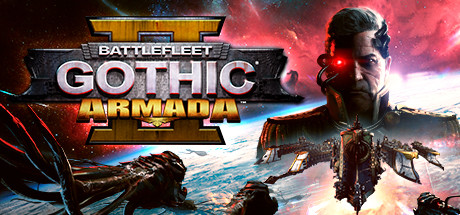
Battlefleet Gothic: Armada 2 is the new real-time strategy game adapted from Games Workshop’s famous tabletop game that portrays the epic space battles of the Warhammer 40,000 universe.
Modeled estimate, not a reported figure. How we estimate →
Each in the currency that store quoted — not converted: the gap between two rows is the publisher's pricing, not an exchange rate.
Every market we collect.
Discounts
Every price cut of more than 20% we have observed, in each market that quoted one, with this game's chart position on either side of it. These are episodes, not a model: a sale is one event, and one event cannot tell you what the next one will do.
Reviews, worldwide (the counter carries no country): 1.29/day in the week to Sep 3 → 1.43/day in the week after.
About
Sums Steam only; GOG publishes no volume signal, so the true total is higher by an unknown amount.
| Store | Price | Audience | Score | Chart | Est. revenue |
|---|---|---|---|---|---|
SteamYou are here | $19.99 | 9.7Kreviews | 75% | — | $4.1M |
| $3.99−80% | 89ratings | 66% | — | not modelled |
Matched by title — a reused name can pair the wrong games. * is a critic aggregate. Prices and positions are each store's United States storefront; Epic charts worldwide. Audience and Score too, except Steam's, which is worldwide.
Updates
Build ids and update times come straight from Steam's PICS — the same source SteamDB reads. Patch history grows as we record new builds.
Engagement
Reviews
Themes across 864 recent reviews and how positive each mention is. A keyword signal, not full sentiment analysis.
Reviews
DO NOT BUY - Game crashes to desktop on modern hardware
为什么一直闪退?刚买的时候不这样啊
It's a neat concept, but poor execution. The UI is clunky, gameplay is overall just middling. They spent a lot of work on models and vibes and that comes through, but they forgot about the actual game part.
Media

Related
Related
Price dynamics, follower growth, revenue and sales trajectories with interactive tooltips
This and every other Pro feature is free until October 20, 2026. A free account is all it takes.
Reviews, worldwide (the counter carries no country): 221.17/day in the week to Jul 17 → 2.57/day in the week after.
For scale, across Steam · Top Sellers · Brazil over the last 30 days: the 26 chart moves that followed a price cut of more than 20% went a median of 7 places towards #1, and the 2,402 moves with no price cut behind them went 2 away. One store, one chart, one country — it is the only place we have enough observations to say even that.
Prices outside the United States have been collected since 6 August 2026 and chart positions since 19 July 2026, so a cut older than that has no market to compare and a market that joined later has no history yet. Nothing here is converted between currencies.
Genres
Stats
All-time low is the lowest price we've recorded for this game since we started tracking it.
Languages: English*, French, German, Spanish - Spain, Simplified Chinese, Russian*languages with full audio support
Hours played at review time, across 869 reviews with recorded playtime.
positive critical· bar length = how often the theme comes up
玩了几个小时就开始闪退,网上的方法都试过了,几十块当喂狗了,倒霉
闪退一直闪退
Battlefleet Gothic: Armada 2 is a strange sequel because it improves several things from the first game while making the overall experience more frustrating the longer I played it. I gave the first game a 5/10, mainly because of its slow pacing and impractical interface, and I expected the sequel to take those problems and build something better around them. In some areas it does, but after finishing the Imperial campaign and trying another faction, I came away feeling that the game expanded its content without expanding the experience in the same way. The first game was extremely slow, especially when moving ships across the battlefield, and Armada 2 finally fixes one of the most obvious problems by allowing the player to speed up the action. The problem is that the same attention was not given to the rest of the game's management systems. The campaign map becomes much larger as new regions appear, but the tools for managing that larger scale remain unnecessarily manual. You have to jump between systems, check where your fleets are, select individual fleets and commanders, and then manage their ships separately. When you have only a few fleets this is manageable, but once the campaign grows it becomes tiring rather than strategic. The fleet construction system is one of the clearest examples. New ships are tied to the fleet and the shipyard system, which means that if a fleet somewhere else needs reinforcements, I cannot simply build the ship from a controlled planet and assign it to that fleet. I have to deal with where the fleet is, where construction is available and how to move those ships afterwards. That adds management without creating an interesting strategic decision. I would much rather have a production system where controlled planets build ships and I can decide which fleet receives them, even if that process had a cost or took several turns. That would make logistics a strategic decision instead of forcing me to constantly move things around the map. The same problem appears when fleets are destroyed. Losing a ship should matter, but the game turns that loss into another round of management because replacing the unit means going through the same construction process again. I would have preferred a system where damaged fleets could spend several turns recovering, while replacing a destroyed ship immediately required additional resources or another penalty. That would make the loss meaningful without forcing the player to repeat the same administrative process every time a unit is destroyed. Combat itself is also affected by this philosophy. The game combines a turn-based strategic layer with real-time battles, which is an approach I actually like, but there is not enough preparation before those battles begin. Once combat starts, I have to manually organise and reposition my fleet while dealing with the enemy at the same time. There are not enough tools for creating groups, assigning formations or preparing the way I want my ships to operate before the battle starts. With a game built around commanding fleets, this makes the tactical layer feel more micro-intensive than it needs to be. The limitations on fleet size make this even more noticeable. This is Warhammer 40K, a universe where I expect to see enormous fleets and chaotic battles, yet the game constantly limits how many ships I can bring with me. Even when my fleet value is high, the number of smaller escort ships remains restricted by the same system. I would much rather have cheaper and weaker escort ships that could be used in greater numbers, where their value comes from numbers rather than individual strength. They could be easy to destroy but still useful for overwhelming defences, disabling systems or protecting larger ships. That would fit the scale and brutality I expect from Warhammer 40K far better than constantly telling me that I have reached another artificial limit. The campaign itself is where my opinion dropped the most. After spending around 35 hours completing the Imperial campaign, I expected the other factions to offer something substantially different. I knew they had different ships, abilities and gameplay mechanics, but I also expected their campaigns to reflect the factions themselves, with different objectives, situations and narratives that would make playing them feel like a new experience. Instead, much of the campaign structure is reused, including cutscenes and situations that I had already experienced with the Imperium. The factions play differently, but the campaign does not change enough to justify repeating another extremely long playthrough. This is especially disappointing because the game gives the impression that these different factions are supposed to offer much more than a different set of units and abilities. That also made me question where the development focus actually went. I cannot say that the developers created these campaigns this way specifically because they prioritised multiplayer, but that is certainly the impression I get from the final product. There is a lot of variety in factions, abilities and combat, yet that variety does not translate into equally varied single-player campaigns. The result feels like the game has enough mechanical variety to support different multiplayer experiences, while the campaign structure remains much more repetitive. The presentation is a mixed bag as well. Some of the cutscenes still look good and fit the setting, while others show the age of the game more clearly. The mechanics themselves feel modern enough, but the presentation does not always maintain the same quality throughout the campaign. I also cannot ignore the amount of time the game asks from the player. A long campaign is not automatically a problem, but when the same management systems repeatedly require the player to perform the same tasks, and then the game expects another full campaign for another faction without providing a substantially different experience, the time investment becomes difficult to justify. I am not going to play dozens of additional hours simply to unlock achievements by repeating a campaign I have already experienced. That is what ultimately prevents me from recommending Armada 2. If the different faction campaigns had actually offered different stories and objectives, I could have tolerated many of the management problems because there would have been a reason to keep playing. The problem is that the game gives me more factions without giving me enough new reasons to experience their campaigns. I still appreciate what Armada 2 does well. The combat has more variety, the game is faster than the first one, the different factions have distinct mechanics and there are more mission types than before. But when I compare the complete experience with the first game, I cannot justify giving this sequel a higher score. The first game had obvious limitations, but Armada 2 expands the scale without giving the player the tools needed to manage that scale efficiently, and then asks the player to repeat much of the same campaign experience with other factions. I expected more from the sequel, especially after seeing how many factions and systems it offered. Instead, I ended up feeling like I had played one very long campaign and was then being asked to do it again with different ships. For a game built around the idea of commanding different Warhammer 40K factions, that is a much bigger problem than simply having an inconvenient interface. [b]Score: 4/10[/b] (1) Trash(2) Horrible(3) Very Bad(4) Bad(5) Average (6) Fine(7) Good(8) Very Good(9) Great(10) Masterpiece
启动游戏闪退解决方法: 右键我的电脑 - 高级系统设置 - 环境变量 在系统变量中添加 变量名:OPENSSL_ia32cap 变量值:~0x20000000
傻逼游戏,游戏本体就像阿巴顿放出的电子恶魔反复肘击我的烤面包机,使用机魂安抚代码仍然无效。
Battlefleet Gothic: Armada 2 es, sin exagerar, una de las representaciones más completas, ambiciosas y fieles del universo de Warhammer 40,000 que se han llevado al videojuego. Si la primera entrega ya nos permitía vislumbrar la guerra en el vacío, esta secuela amplía el foco hasta mostrarnos el conflicto en su escala más brutal: una guerra total por el control de sectores enteros de la galaxia. Una fidelidad que roza lo enciclopédico Basado de nuevo en el juego de mesa Battlefleet Gothic, esta segunda entrega no solo mantiene la fidelidad estética y conceptual, sino que la eleva a otro nivel. Aquí no hablamos únicamente de combates espaciales: hablamos de campañas estratégicas donde cada sistema estelar tiene valor, donde cada decisión repercute en la supervivencia de imperios enteros. El juego se sitúa en el contexto de la Cruzada Indomitus, un periodo clave del lore en el que el Imperio de la Humanidad lucha desesperadamente por mantener el control tras la fractura de la galaxia. Este trasfondo no es decorativo: impregna cada misión, cada diálogo y cada enfrentamiento. La guerra invisible: el verdadero frente de batalla Si algo define a Battlefleet Gothic: Armada 2 es su capacidad para mostrar esa “mano invisible” que sostiene —o condena— a los ejércitos terrestres. En Warhammer 40k, las batallas planetarias son solo la punta del iceberg. Sin control orbital, ningún mundo puede resistir. Aquí es donde el juego brilla especialmente: Bloqueos orbitales que asfixian planetas enteros. Bombardeos exterminatus que borran civilizaciones. Interceptación de refuerzos antes de que lleguen al frente. Cada flota que despliegas no es solo un conjunto de naves: es una herramienta estratégica capaz de decidir el destino de miles de millones de vidas sin que jamás se dispare un bolter en la superficie. Una escala sin precedentes La gran mejora respecto a la primera entrega es la escala. El mapa galáctico ya no es un simple telón de fondo: es un tablero vivo donde gestionas múltiples flotas, defiendes sistemas y lanzas ofensivas coordinadas. Las campañas —especialmente la imperial— transmiten una sensación constante de presión. No estás ganando una guerra: estás intentando no perderla. Todas las facciones, toda la galaxia Uno de los mayores logros del juego es incluir prácticamente todas las grandes facciones del universo: El Imperio de la Humanidad, con sus flotas lentas, resistentes y devastadoras. El Caos, maestro del hostigamiento y la corrupción. Los Tiránidos, una amenaza biológica que no conquista… devora. Los Necrones, casi imparables, con tecnología que desafía la lógica. Los Orkos, caóticos, impredecibles y brutalmente efectivos. Los Eldar y Drukhari, con su velocidad y precisión quirúrgica. El Imperio T'au, con doctrina tecnológica y combate a distancia. Cada una no solo tiene naves distintas, sino una forma completamente diferente de entender la guerra. Aprender a jugar con cada facción es, en sí mismo, explorar su filosofía dentro del lore. Combate táctico: lento, pesado y letal A diferencia de muchos juegos espaciales más arcade, aquí el combate tiene peso. Las naves no giran con facilidad, los errores se pagan caro y cada maniobra cuenta. El posicionamiento lo es todo. La gestión de habilidades puede cambiar una batalla. El abordaje sigue siendo una herramienta clave, especialmente para el Imperio. Cada enfrentamiento se siente como un duelo entre gigantes, donde la planificación supera a la rapidez. Una experiencia audiovisual profundamente “Warhammer” Visualmente, el juego es espectacular. Las naves imperiales son auténticas catedrales góticas en el vacío, mientras que las demás facciones reflejan perfectamente su identidad: Orgánico y grotesco en los Tiránidos. Frío y ancestral en los Necrones. Salvaje y caótico en los Orkos. El sonido y las voces refuerzan la inmersión: órdenes gritadas, himnos imperiales, silencios tensos antes del impacto… todo contribuye a esa sensación de estar participando en una guerra eterna y desesperada. Más que un juego: una ventana al verdadero Warhammer 40k Lo más importante es que Battlefleet Gothic: Armada 2 no solo amplía lo visto en la primera entrega: redefine cómo entendemos el conflicto en Warhammer 40,000. Nos enseña que: Las guerras no se ganan solo en trincheras. Los héroes en tierra dependen de decisiones tomadas en órbita. La galaxia no es un conjunto de planetas aislados, sino un sistema interconectado donde las flotas son el verdadero poder. Conclusión Battlefleet Gothic: Armada 2 es una obra imprescindible para cualquier fan del universo Warhammer 40k. No solo por su jugabilidad o su escala, sino porque captura algo que pocos juegos logran: la sensación de formar parte de una guerra galáctica total. Es, en esencia, la representación definitiva de esa guerra silenciosa en el vacío… donde no hay gloria, solo decisiones imposibles y mundos que desaparecen sin dejar rastro.
Caution!: The bug that causes the game to crash a few minutes after launching seems to still exist (October 3, 2025). There are possible solutions available online that resolve the problem, but they require specific adjustments in OpenSSL 1.2. An alternative option for those who don't play online: simply turn off the internet on your computer after starting the game; then the error won't occur either. Otherwise: I'm a huge Warhammer 40k fan, and the game completely fulfills my expectations of the universe. Good graphics and mechanics. I would personally appreciate more campaigns that cover all playable races, but otherwise, it's a good game.
Selling now
See how fast this game is selling right now — estimated copies and revenue per day from recent review growth.
Active players
Estimated daily and monthly active players (DAU/MAU) modeled from peak concurrency.
Players by region
Where this game's players are, estimated from review languages.
Players also reviewed
The games this title's players most often review too — audience affinity.
Related
| Game | Estimated lifetime revenue | Reviews | Review score | Price |
|---|---|---|---|---|
| $2.3M | 8.1K | 86% | $9.99 | |
| $5M | 5.8K | 80% | $34.99 | |
| $2.5M | 6.1K | 69% | $14.99 | |
| — | 7.9K | 89% | — | |
| $19.4M | 36.1K | 98% | $19.99 | |
| $11.4M | 21.3K | 90% | $19.99 |
Related
| Game | Estimated lifetime revenue | Reviews | Review score | Price |
|---|---|---|---|---|
| $4.1M | 13.3K | 98% | $9.99 | |
| $4.1M | 5.2K | 76% | $19.99 | |
| $4.1M | 4.3K | 76% | $49.99 | |
| $4.1M | 15.8K | 94% | $6.99 | |
| $4.1M | 5.3K | 81% | $24.99 | |
| $4.1M | 4.6K | 81% | $24.99 |