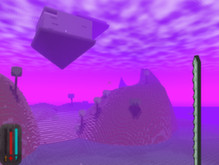
3079 is a futuristic, open-world action first-person role playing game. All areas, buildings, items, quests and characters are randomly generated. You will find unique lands & challenges. I hope you enjoy it!
Modeled estimate, not a reported figure. How we estimate →
About
Genres
Stats
All-time low is the lowest price we've recorded for this game since we started tracking it.
Engagement
Reviews
Themes across 42 recent reviews and how positive each mention is. A keyword signal, not full sentiment analysis.
Reviews
I don't remember how this game got into my library lmao ignore my rating I have no clue what this game is like but it looks dead.
3079 -- Block Action RPG, developed and published by Phr00t’s Software, is an ambitious sandbox experience that attempts to merge multiple genres into a single procedurally generated world. It blends elements of first-person shooters, RPG progression, and voxel-based exploration into a game that prioritizes freedom above all else. From the moment you begin, it becomes clear that the game is less about guiding the player through a structured journey and more about dropping them into a system-driven environment where experimentation and self-direction take center stage. The core appeal lies in its open-ended design. Players are placed on a hostile alien planet where factions are in constant conflict, and nearly every aspect of the world—from terrain to enemies to missions—is generated dynamically. This procedural approach ensures that no two playthroughs are exactly the same, offering a sense of unpredictability that can be compelling, especially in the early stages. Exploration becomes a central activity, as players move through deserts, mountains, and other biomes in search of loot, objectives, and opportunities to grow stronger. However, while the scale of the world is impressive, the lack of handcrafted detail can make environments feel repetitive or lacking in meaningful distinction over time. Combat is handled from a first-person perspective and incorporates a mix of shooting mechanics and movement-based abilities. Players have access to tools like jetpacks and grappling hooks, which add verticality and flexibility to both traversal and combat encounters. These mechanics can create moments of excitement, particularly when navigating large groups of enemies or escaping overwhelming situations. Despite this, the combat system itself is relatively straightforward, with enemy behavior that often feels predictable and encounters that lack variety. As a result, while the action is functional and occasionally engaging, it does not consistently evolve in a way that sustains long-term interest. A significant part of the gameplay loop revolves around collecting and upgrading gear. Weapons and items are generated with randomized attributes, encouraging players to continuously search for better equipment. This loot-driven progression system provides a sense of advancement, but the differences between items are often incremental rather than transformative. Over time, this can make the pursuit of new gear feel more like a numerical upgrade cycle than a meaningful change in playstyle. The game also includes light building mechanics, allowing players to modify the environment or construct simple structures. While this adds another layer to the sandbox experience, it is not as developed as the other systems and often feels secondary to exploration and combat. Similarly, the quest system provides objectives to follow, but these tasks tend to be repetitive and lack narrative depth, reinforcing the game’s reliance on systems rather than storytelling. Visually, 3079 adopts a blocky, voxel-based style that supports its procedural generation but also highlights its limitations. The environments are functional and colorful, but they lack the detail and variety needed to create a strong sense of immersion. Character models and animations are similarly simple, contributing to an overall presentation that feels rough and unpolished. Technical issues, such as inconsistent performance and awkward controls, further emphasize the game’s indie nature and can detract from the experience. What defines 3079 most is the gap between its ambition and its execution. It offers a wide range of systems and a level of freedom that is impressive for a small-scale project, but many of these elements feel underdeveloped or loosely connected. The game does not provide much direction, leaving players to figure out its mechanics and objectives on their own. For some, this open-ended approach can be appealing, creating a sense of discovery and experimentation. For others, it can lead to confusion and a lack of motivation to continue. Despite its shortcomings, there is a certain appeal to the game’s experimental nature. It feels like a project driven by ideas and creativity rather than strict design constraints, and this gives it a unique character that sets it apart from more polished titles. Players who enjoy sandbox experiences and are willing to tolerate rough edges may find moments of enjoyment in its exploration and freedom. In the end, 3079 -- Block Action RPG is a game that stands out more for what it attempts than for what it ultimately achieves. It presents a compelling concept—a procedurally generated world filled with endless possibilities—but struggles to fully realize that vision in a cohesive and refined way. It is best approached as an experimental indie title that offers a glimpse of potential, even if it falls short of delivering a consistently engaging experience. Rating: 6/10
Media

Related
Related
Price dynamics, follower growth, revenue and sales trajectories with interactive tooltips
This and every other Pro feature is free until October 20, 2026. A free account is all it takes.
Languages: English**languages with full audio support
Hours played at review time, across 42 reviews with recorded playtime.
positive critical· bar length = how often the theme comes up
mediocre at best. high complexity with no introductory phases to teach you how to play. has potential if you sink the time to climb the difficulty curve.
Good game , well played. Thanks!
so much soul in this one
3079 feels like a proof of concept. It's a procedurally generated "RPG" that has far too few variables to make that procedural generation meaningful. But let's step back for a moment. 3079 takes place on a planet consumed by war. Two factions have been fighting endlessly for seemingly no reason and it is your mission to figure out why and stop it. Who you are is never explained, nor is it explained why some galactic entity would care to intervene in a terrestrial war or why they would do so by sending in a single poorly equipped soldier. Once you arrive on the planet you realize that you have been cut off from communicating with HQ due to the actions of an army of demons that seemingly are the root cause of the planet's issues. So your mission is to destroy these demons. I'll admit to never actually destroying said demons so I can't tell you if that is the entire game or if more happens afterwards. On the planet you join with the humanoid faction and take on quests for their leaders. These quests are technically procedurally generated but they are so basic and pull from such a small pool of variables that it would be more accurate to say that there are about 5 quests that you simply repeat the entire game. The larger problem here is that the rewards are also random as are limitations like being unable to kill anyone. If you don't happen to like any of the variables you simply have to wait for a new quest to pop up or find another quest giver. This is infuriating as all quest givers (and all characters for that matter) look identical and have no names. So finding a quest that gives you whatever item it is you need to progress can be a nightmare. Of the 7 hours I played this game, five of them were spent trying to get a quest giver to reward me with the demon slaying sword you need to beat the demons. You cannot beat the game without it and there is no indication which of the randomly spawning (and unspawning) quest givers will give you the sword. After 5 hours of making no progress I eventually restarted the game and in 15 minutes had the sword I needed. So to summarize, the random elements this game is so proud of lead to boring, samey quests that can take hours to give you the items you need. Some of these items can also be purchased at shops but shopkeeper spawns are also random. Sometimes the only shopkeepers are fighting on the frontline of the war and combat does not stop while you are in a shop. Plus, again, all shopkeepers look identical and are not named, so good luck figuring out which shopkeepers you have checked in with and which you haven't. And of course their random inventories could mean that none of the shopkeepers have the item you need and so you just have to walk around killing enemies waiting for the current group of shopkeepers to be killed so a new batch can spawn that might have the items you want. 3079 also allows you to build and destroy blocks like in Minecraft but there is no crafting system and I could not for the life of me find any real benefit to mining or building, especially considering your efforts would be quickly demolished by the ever ongoing war. Lastly, you have your stats and skills, which are improved through use, The Elder Scrolls style. You do not gain new skills as the game progresses, only level up the skills you have. So just play the game and level up while your enemies do the same. Pointless. I am moving on now to try 3089. Let's hope the developers used their experience making this proof of concept to allow them to actually make a fully featured game.
lsd+extasy bad trip
[h1]3079 – A Rough, Strange and Surprisingly Addictive Sandbox RPG[/h1] [i]I have been gaming since the 1980s, have played thousands of games across PC and consoles, and have written close to 500 Steam Curator reviews. Steam shows nearly 74 hours for me in 3079, so this is not a case of judging it after twenty minutes. I have spent enough time with it to understand both why some players love it and why others immediately give up.[/i] [hr][/hr] [h2]Not Minecraft with guns[/h2] The first impression is a procedurally generated block world viewed from first person, but the actual structure is closer to a strange mix of an action RPG, Borderlands-style random loot and an experimental sandbox shooter. You are dropped onto a planet trapped in a permanent war between factions. You begin allied with one side, but your reputation can change, and it is possible to turn against your original allies. A third threat, the demons, attacks everyone and requires special equipment to defeat. The world, buildings, characters, items and quests are generated. Difficulty rises as you travel farther from the starting area, but equipment also becomes stronger. The main loop is simple: explore, fight, collect weapons, sell unwanted gear, improve skills and move into more dangerous regions. It is a game driven by systems rather than carefully scripted scenes. [h2]Loot, skills and progression[/h2] Weapons and equipment have different values, colours, weight limits and statistics. Finding a stronger rifle, shotgun, sword, launcher, grappling hook or anti-gravity pack can noticeably change how you play. There is no conventional ammunition system. Weapons use energy, and stronger equipment requires more of it. This is unusual, but it creates one of the largest balance problems. Early weapons can drain energy so quickly that combat becomes slow, while enemies may recover before you are ready to fire again. Skills improve through use. Firearms increase by shooting, engineering helps with upgrades, charisma affects followers, camouflage supports stealth, and other skills cover mining and stealing. Some advancement methods are repetitive or counter-intuitive, making progression feel more like exploiting a system than naturally developing a character. Death is also punishing because you lose a random item. Losing ordinary loot is manageable; losing your best gun or grappling hook can be extremely frustrating. Despite these flaws, the loot chase kept me playing. There is always another small goal: reach a new region, find equipment that supports more weight, improve a useful weapon or escape with valuable gear. [h2]Movement is the best part[/h2] The grappling hook and anti-gravity equipment are easily the most enjoyable mechanics. The hook lets you cross terrain, climb structures, escape battles and reach floating locations. The anti-gravity pack allows controlled movement through the air. Both have weight limits, so entering stronger regions eventually requires improved versions. That system can feel artificial because every new area makes old mobility equipment obsolete, but when everything works, movement is where 3079 feels most original. Grappling across a battlefield, landing on a tower and firing into a faction fight is more memorable than the simple graphics suggest. [h2]Combat, factions and AI[/h2] Combat is functional rather than polished. There are several weapon categories, body-part damage and dismemberment, but the shooting is stiff. Enemy health, energy requirements and generated weapon statistics can create battles that are either trivial or painfully slow. Allied characters can follow you, which is useful early in the game. Their AI is unreliable, especially inside buildings or around complicated terrain. Faction behaviour is unforgiving. Accidentally attacking an ally may turn the entire side against you, and changing allegiance is not always easy to reverse. Consequences are welcome, but the game does not explain them clearly enough before they happen. Demons add another complication. They require a specific weapon and can interfere with movement from a considerable distance. They are interesting at first but become irritating when they repeatedly interrupt exploration. [h2]Procedural freedom and repetition[/h2] Procedural generation is both the greatest strength and weakness. The world can continue almost endlessly, with stronger enemies, different terrain and newly generated equipment. Biomes include grasslands, mountains, snow, deserts, poison areas and seas. However, a larger world is not automatically a richer one. Buildings and settlements repeat, while missions usually follow a small set of templates: kill a target, protect someone, destroy an object or hack a computer. The game has a storyline with a beginning and ending, but it is easy to lose among random missions and exploration. This is not a narrative RPG where characters and handcrafted locations drive the experience. It is a sandbox where players create much of the meaning through equipment, travel and self-chosen goals. [h2]Building and additional systems[/h2] 3079 includes construction, mining, stealing, vehicles, aircraft and multiplayer. That is an impressive feature list for a game made by one developer, but many parts feel experimental rather than fully developed. Building has limited value because the game encourages constant travel into higher-level territory. Mining exists, but scavenging weapons from battles is often more profitable. Aircraft can be discovered and hijacked, though their controls and AI are unreliable. Co-op can make the chaos more enjoyable because another player helps compensate for the weak onboarding and harsh beginning. The store also lists cross-platform multiplayer. There is a lot here, but the systems do not always connect cleanly. [h2]Presentation and technical age[/h2] 3079 was released in 2011 and looks older in places. Character models, animations, menus and structures are crude. NPC and building scale can appear inconsistent, and the interface requires patience. It runs through Java, which supported Windows, macOS and Linux, but Java can also create setup friction on modern computers. The game still has a distinct identity. The strange models, stark landscapes and futuristic music create a lonely, surreal atmosphere, as though you are exploring an abandoned simulation containing a permanent war. Some players will find this charming; others will find it unacceptable. [h2]Final verdict[/h2] 3079 is ugly, confusing, repetitive and frequently unbalanced. It is also unusual, creative and capable of producing moments that polished mainstream games would never create in quite the same way. The grappling hook, anti-gravity movement, faction warfare, generated loot and dangerous exploration kept me returning even when the quest design and progression became tedious. [b]Recommended for patient players who enjoy rough sandbox RPGs.[/b] Do not buy it expecting Minecraft, Borderlands or a modern survival game with a clean interface. Buy it because you are curious about a strange procedural action RPG made by one developer and are willing to learn its rules through experimentation. The later 3089 may be easier to recommend to most players, but 3079 still has a distinctive identity. After nearly 74 hours, I cannot pretend there was nothing here worth playing.
Ну ♥♥♥ знает, не моё.
Very nice game. :)
Selling now
See how fast this game is selling right now — estimated copies and revenue per day from recent review growth.
Players by region
Where this game's players are, estimated from review languages.
Related
| Game | Estimated lifetime revenue | Reviews | Review score | Price |
|---|---|---|---|---|
| $44.1K | 113 | 75% | $17.99 | |
| $215K | 277 | 82% | $19.99 | |
| $36.1K | 76 | 70% | $19.99 | |
| $2.2M | 5.5K | 73% | $9.99 | |
| $666.6K | 28.3K | 75% | $0.99 | |
| $546.6K | 1.9K | 73% | $11.99 |
Related
| Game | Estimated lifetime revenue | Reviews | Review score | Price |
|---|---|---|---|---|
| $36K | 818 | 70% | $1.99 | |
| $36K | 222 | 77% | $4.99 | |
| $36K | 193 | 94% | $9.99 | |
| $36K | 83 | 86% | $19.99 | |
| $36K | 285 | 74% | $5.99 | |
| $36.1K | 90 | 90% | $14.99 |