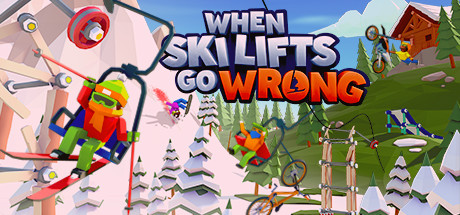
Ride into a hilarious construction puzzler; packed with over 100 creative physics-based challenges, sports and bloody disasters! Build contraptions to help every passenger reach their destination. Enjoy the sports by controlling your riders away from (or towards if you feel like it) peril!
Modeled estimate, not a reported figure. How we estimate →
Prices
The United States storefront in every case, so this compares stores and not countries.
Discounts
Every price cut of more than 20% we have observed, in each market that quoted one, with this game's chart position on either side of it. These are episodes, not a model: a sale is one event, and one event cannot tell you what the next one will do.
Reviews, worldwide (the counter carries no country): 0.14/day in the week to Jul 31 → 0.14/day in the week after.
For scale, across Steam · Top Sellers · Brazil over the last 30 days: the 25 chart moves that followed a price cut of more than 20% went a median of 10 places towards #1, and the 2,413 moves with no price cut behind them went 2 away. One store, one chart, one country — it is the only place we have enough observations to say even that.
Prices outside the United States have been collected since 6 August 2026 and chart positions since 19 July 2026, so a cut older than that has no market to compare and a market that joined later has no history yet. Nothing here is converted between currencies.
About

Add-ons
Each DLC is estimated with the same model as a game, then summed — a modeled figure, not reported DLC sales.
Sums Steam only; Nintendo publishes no volume signal, so the true total is higher by an unknown amount.
| Store | Price | Audience | Score | Chart | Est. revenue |
|---|---|---|---|---|---|
SteamYou are here | $1.49−90% | 885reviews | 87% | — | $34.5K |
| $14.99 | — | — | — | not modelled |
Matched by title — a reused name can pair the wrong games. * is a critic aggregate. Prices and positions are each store's United States storefront; Epic charts worldwide. Audience and Score too, except Steam's, which is worldwide.
Engagement
Reviews
Themes across 45 recent reviews and how positive each mention is. A keyword signal, not full sentiment analysis.
Reviews
Succeed, and you've built a smooth-running transit system. Fail, and it's pure disaster-movie chaos. Either way, it's a good time.
peanut would love some pets and treats :) 🌸> フ | _ _ l /` ミ_xノ / | / ヽ ノ │ | | | / ̄| | | | | ( ̄ヽ__ヽ_)__) \二つ
Just like Bridge Constructor, but fun
Media

Related
Related
Price dynamics, follower growth, revenue and sales trajectories with interactive tooltips
This and every other Pro feature is free until October 20, 2026. A free account is all it takes.
Genres
Stats
All-time low is the lowest price we've recorded for this game since we started tracking it.
Languages: English, French, German, Spanish - Spain, Japanese, Russian, Simplified Chinese, Portuguese - Brazil, Korean, Polish
Hours played at review time, across 45 reviews with recorded playtime.
positive critical· bar length = how often the theme comes up
Я более худшего аналога конструктор головоломок не встречал!!!!!! Бесячая и душная игра, которая хотела удивить, но обосралась - 2/10
When Ski Lifts Go Wrong is a neat little physics puzzler with some genuinely satisfying solutions. That said, the controls can feel fiddly and the challenge spikes get frustrating fast. Fun in short bursts, but it never fully hooked me.
На Steam Deck всё хорошо. Спасибо Lenovo за раздачу. Игра представляет из себя пазл с построением такого прибора, канатки которая поднимает лыжников на гору. В этом будут мешать ограниченный бюджет постройки, препятствия на пути и неудобный ландшафт горы. Может кто знает, эта игра напоминает похожу про постройку мостов, так же нужно строить чтобы никто не упал и ничего не развалилось. Из интересного выделю особые уровни где нужно строить трамплины для скатывающихся с горы. Ну и вид от первого лица прикольный. А так, игра на любителя, мне не очень заходит уровень за уровнем выкладывать эти постройки без какой-либо сути. Такие бессмысленные пазлы обычно на телефоне играла раньше, на ПК чисто на любителя. Также из плюсов огромное количество уровней и даже уровни от сообщества, так что если и покупаете то наиграться можно вдоволь.
When Ski Lifts Go Wrong is a physics-based puzzle and construction game developed by Hugecalf Studios and published by Curve Games. The game centers on designing and building ski lifts, bridges, ramps, and other structures to transport skiers safely across challenging mountain terrain. While the concept might initially sound simple, the game gradually reveals a surprisingly deep engineering sandbox where creativity, physics simulation, and careful planning come together. By combining lighthearted presentation with intricate mechanical systems, the game offers a playful yet challenging experience that encourages experimentation and problem-solving as players attempt to construct stable transportation systems in increasingly difficult environments. The basic premise of the game places players in a snowy mountain resort where infrastructure must be built to help skiers reach their destinations. Each level presents a new section of terrain filled with cliffs, steep slopes, and gaps that make travel impossible without assistance. Players must use a set of building tools to create functioning ski lifts or other structures that allow characters to move safely from one point to another. These constructions rely on cables, support towers, planks, and ramps that must be connected carefully to form a stable system. The game’s physics engine simulates weight, tension, and structural stress, meaning that poorly balanced designs can collapse dramatically once the lift begins carrying passengers. As a result, players must constantly evaluate their designs, reinforcing weak points and adjusting angles to ensure the structure can support the load. The campaign mode consists of dozens of carefully designed levels that introduce new mechanics and increasingly complex challenges as players progress. Early stages serve as tutorials that familiarize players with the building tools and basic structural principles required to construct functional lifts. These early puzzles tend to be straightforward, allowing players to experiment with simple tower placements and cable systems. However, later levels become significantly more complicated, requiring longer lifts, multi-section structures, and creative solutions to overcome difficult terrain. Some stages introduce optional objectives such as collecting stars or completing the challenge while staying under a limited budget, encouraging players to refine their designs and find more efficient solutions. Budget management plays a key role in the gameplay loop. Every structural piece used during construction has a cost, meaning that players must balance stability with efficiency when designing their lifts. A heavily reinforced structure may work perfectly but exceed the allowed budget, forcing players to rethink their approach and find a more elegant design. This system encourages strategic thinking and often leads to satisfying “aha” moments when players discover a minimalistic solution that achieves the same result using fewer materials. The combination of physics simulation and financial constraints gives each puzzle a sense of authenticity, as players essentially perform the role of an engineer responsible for designing cost-effective infrastructure. Although ski lifts are the primary focus of the game, many levels introduce alternative challenges that add variety to the gameplay. In some stages, players must build ramps or bridges that allow vehicles such as snowmobiles or bicycles to travel across hazardous gaps. These vehicles rely on momentum and careful timing to reach their destination, which means the player’s structure must be built with precise angles and distances. Occasionally, the game also shifts perspective and allows players to directly control the riders as they navigate the obstacles they constructed. These segments provide a change of pace from the construction mechanics and help reinforce the connection between the player’s engineering decisions and the resulting gameplay outcomes. One of the most entertaining aspects of the game is its embrace of chaotic failure. When a structure is poorly designed or lacks sufficient support, the moment it begins carrying riders can quickly turn into a spectacular collapse. Ski lifts may buckle under pressure, cables may snap, and passengers may tumble down the mountain in exaggerated ragdoll fashion. While these failures can initially feel frustrating, they often become a source of humor thanks to the game’s playful physics and animation. Watching a complex structure crumble in an unexpected way frequently leads players to analyze what went wrong and attempt a better solution, reinforcing the game’s trial-and-error approach to problem solving. In addition to the structured campaign, the game includes sandbox features that give players the freedom to experiment without restrictions. In sandbox mode, players can build elaborate lifts and obstacle courses across open mountain environments without worrying about budgets or specific objectives. This mode encourages creativity and allows players to explore the physics system in more experimental ways. Some players use this freedom to create massive lift networks spanning entire landscapes, while others design elaborate stunt courses for vehicles and riders. The sandbox mode significantly increases the game’s replay value by turning the environment into a playground for engineering experiments. Visually, the game adopts a colorful low-poly art style that emphasizes clarity and charm. The environments feature bright snowy mountains, pine forests, and cheerful ski resorts rendered in simple geometric shapes. This visual approach ensures that the construction pieces remain easy to identify while building structures, helping players focus on the mechanical aspects of the puzzles. The characters themselves are stylized and animated with exaggerated ragdoll physics, adding a layer of humor when things inevitably go wrong. Despite the simplicity of the graphics, the world feels lively and inviting, reinforcing the game’s relaxed and playful tone. The audio design complements the lighthearted atmosphere with upbeat music and playful sound effects. Background tracks maintain an energetic yet relaxed mood while players experiment with different building solutions. Sound effects emphasize the mechanical aspects of the structures, such as creaking supports, snapping cables, or the satisfying clink of successful lift connections. When a structure collapses or a rider crashes, exaggerated sound cues enhance the comedic effect. The soundtrack remains subtle enough not to distract from the puzzle-solving process while still contributing to the game’s cheerful personality. Overall, When Ski Lifts Go Wrong delivers an enjoyable and inventive blend of physics puzzles and creative construction gameplay. Its combination of strategic engineering, humorous failures, and charming presentation makes it both challenging and entertaining. The gradual increase in puzzle complexity keeps players engaged as they experiment with new designs and refine their building techniques. While it may not offer a deep narrative or extensive variety in mechanics, the core concept is executed with enough creativity to provide hours of satisfying problem solving. For players who enjoy construction puzzles, physics experimentation, and the satisfaction of watching a carefully engineered solution finally work, the game offers a delightful and memorable experience. Rating: 8/10
我是牛顿 怎么受力我说了算
This is one of the many clones of the Bridge Builder, but it tries too hard at being different and ultimately fails mechanically. There are good games in the genre, this is not one of them.
Decided to play till I got stumped. That didnt take long. Neither an architect nor an engineer
Selling now
See how fast this game is selling right now — estimated copies and revenue per day from recent review growth.
Players by region
Where this game's players are, estimated from review languages.
Related
| Game | Estimated lifetime revenue | Reviews | Review score | Price |
|---|---|---|---|---|
| $5.7K | 19 | 53% | $9.99 | |
| $604 | 12 | 67% | $1.99 | |
| — | 0 | — | — | |
| — | 0 | — | — | |
| — | 0 | — | — | |
| $2.2M | 7.5K | 92% | $9.99 |
Related
| Game | Estimated lifetime revenue | Reviews | Review score | Price |
|---|---|---|---|---|
| $34.5K | 242 | 75% | $8.99 | |
| $34.5K | 198 | 75% | $9.89 | |
| $34.5K | 182 | 84% | $7.99 | |
| $34.5K | 129 | 91% | $14.99 | |
| $34.5K | 303 | 57% | $3.99 | |
| $34.4K | 65 | 68% | $24.99 |