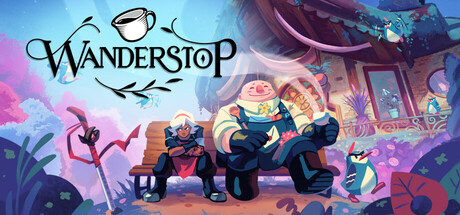
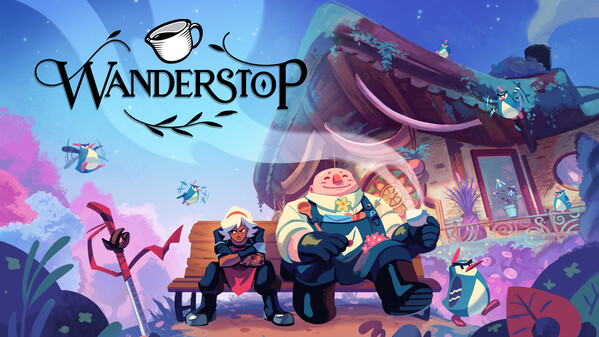
From the creator of The Stanley Parable and The Beginner’s Guide comes Wanderstop, a narrative-centric cozy game about change and tea.
Modeled estimate, not a reported figure. How we estimate →
Prices
Each in the currency that store quoted — not converted: the gap between two rows is the publisher's pricing, not an exchange rate.
Discounts
Every price cut of more than 20% we have observed, in each market that quoted one, with this game's chart position on either side of it. These are episodes, not a model: a sale is one event, and one event cannot tell you what the next one will do.
Reviews, worldwide (the counter carries no country): 1/day in the week to Aug 22 → 2.14/day in the week after.
For scale, across Steam · Top Sellers · Brazil over the last 30 days: the 23 chart moves that followed a price cut of more than 20% went a median of 14 places towards #1, and the 2,515 moves with no price cut behind them went 2 away. One store, one chart, one country — it is the only place we have enough observations to say even that.
Prices outside the United States have been collected since 6 August 2026 and chart positions since 19 July 2026, so a cut older than that has no market to compare and a market that joined later has no history yet. Nothing here is converted between currencies.
About


Genres
Sums Steam only; PlayStation, Xbox, Epic, Nintendo publish no volume signal, so the true total is higher by an unknown amount.
| Store | Price | Audience | Score | Chart | Est. revenue |
|---|---|---|---|---|---|
SteamYou are here | $24.99 | 3.2Kreviews | 93% | — | $3M |
| $24.99 | 721ratings | 93% | — | not modelled | |
Updates
Build ids and update times come straight from Steam's PICS — the same source SteamDB reads. Patch history grows as we record new builds.
Engagement
Reviews
Themes across 829 recent reviews and how positive each mention is. A keyword signal, not full sentiment analysis.
Reviews
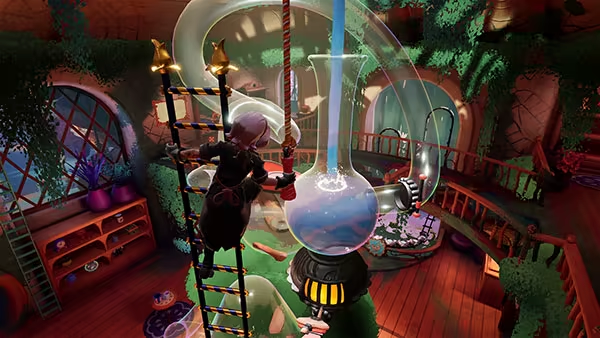
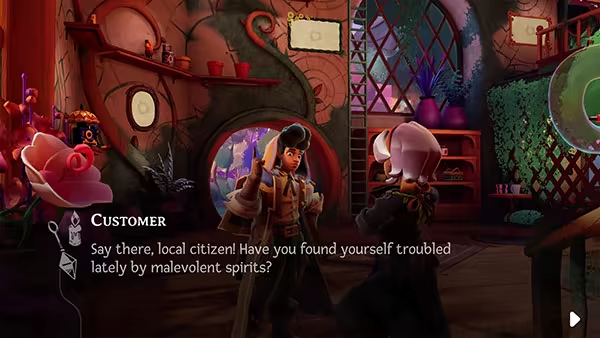
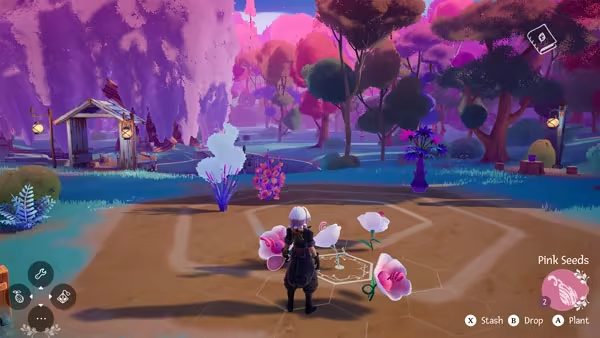
Wanderstop is a narrative life simulation adventure developed by Ivy Road and published by Annapurna Interactive that takes the familiar framework of a cozy management game and transforms it into a thoughtful exploration of personal struggle, emotional exhaustion, and healing. Beneath its warm presentation and relaxing atmosphere exists a story that asks difficult questions about identity, ambition, and the pressure people place upon themselves. While tea brewing and daily routines form the mechanical foundation, the experience ultimately becomes something far more reflective than a traditional simulation title. The story centers on Alta, a former champion warrior whose life begins to unravel after repeated failure damages the confidence that once defined her. Unable to accept personal decline, she pushes herself relentlessly in pursuit of returning to her previous strength. That determination eventually reaches a breaking point when exhaustion forces her off course and into a mysterious woodland clearing occupied by a tea shop known as Wanderstop. There she meets Boro, the calm and patient owner who offers Alta a place to rest. She has no intention of staying. Her focus remains fixed on moving forward and reclaiming what she believes she has lost. However, circumstances force her into an unfamiliar routine that gradually changes her understanding of strength and purpose. One of Wanderstop's greatest accomplishments comes from how closely gameplay aligns with its emotional themes. Tea brewing serves as the central activity, but preparation is intentionally designed as a slower and more deliberate process. Ingredients must be gathered, plants cultivated, and tea carefully prepared through systems that encourage engagement with small details rather than efficiency. The game consistently rejects urgency. There are no aggressive timers demanding optimization and no systems built around maximizing productivity. Instead, every activity reinforces patience and presence. The tea shop itself becomes the emotional center of the experience. Visitors arrive carrying personal stories, unusual requests, emotional burdens, and quiet struggles of their own. Alta prepares tea tailored to their circumstances while slowly forming connections with people passing through Wanderstop. Conversations rarely exist purely to deliver objectives. The interactions feel personal and human, allowing relationships to develop naturally over time. These moments slowly influence Alta's perspective while strengthening the emotional foundation of the larger narrative. Boro deserves special recognition because he serves as more than a supporting character. His calm worldview creates a powerful contrast against Alta's relentless self-imposed pressure. Rather than offering simplistic answers to difficult problems, he encourages reflection and patience. Their relationship evolves gradually through quieter moments instead of dramatic confrontations, allowing emotional growth to emerge naturally without forcing sentimentality. Beyond tea preparation, Wanderstop introduces smaller activities that strengthen immersion while reinforcing its themes. Players can organize the surrounding area, plant crops, gather resources, clean fallen leaves, and spend time simply existing within the world. These tasks avoid becoming repetitive chores because they support the broader message surrounding rest and balance. The game treats quiet moments as meaningful rather than treating them as downtime between larger objectives. Exploration remains intentionally intimate rather than expansive. The magical forest surrounding the shop provides a peaceful setting filled with personality and visual warmth. Environmental storytelling subtly contributes to atmosphere while supporting the slower pacing. Wanderstop understands that emotional investment does not always require enormous worlds or large-scale spectacle. Smaller spaces can carry equal meaning when supported by thoughtful design. Visually, the game embraces a colorful art direction that balances comfort and melancholy exceptionally well. The environment feels welcoming without becoming overly idealized. Character animation reinforces personality naturally while environmental details create a setting that feels lived in and emotionally grounded despite its magical qualities. Audio design further strengthens the atmosphere. Music supports reflective moments without overwhelming quieter scenes, creating an emotional consistency that carries through the entire experience. Sound and presentation work together effectively to maintain Wanderstop's identity as something gentle, contemplative, and emotionally sincere. Players expecting traditional management complexity or demanding gameplay systems may initially struggle with the slower design philosophy. Wanderstop deliberately avoids turning productivity into reward loops. Success is not measured through optimization or efficiency. The game actively encourages players to slow down and exist within its world rather than rushing toward completion. That deliberate pacing ultimately becomes one of the game's greatest strengths. Wanderstop understands that healing often happens gradually rather than through sudden transformation. Alta's journey never presents growth as simple or immediate. Instead, the game approaches emotional recovery with patience and honesty. What makes Wanderstop memorable is not simply its tea shop mechanics or relaxing presentation. It is the emotional sincerity beneath every interaction. The game explores burnout, ambition, disappointment, and personal expectations with remarkable care while avoiding simplistic conclusions. Wanderstop succeeds because it understands that meaningful stories can emerge from ordinary routines and quiet moments. Through thoughtful writing, memorable characters, and carefully designed systems, it delivers an experience that feels deeply personal long after the journey ends. Wanderstop delivers exceptional storytelling, emotionally intelligent writing, relaxing gameplay systems, and a beautifully reflective atmosphere that transforms a cozy life simulation into an unforgettable narrative experience. Rating: 9/10
Media

Related
Related
Price dynamics, follower growth, revenue and sales trajectories with interactive tooltips
This and every other Pro feature is free until October 20, 2026. A free account is all it takes.
Every market we collect.
Stats
All-time low is the lowest price we've recorded for this game since we started tracking it.
Languages: English*, French, Italian, German, Spanish - Spain, Japanese, Simplified Chinese, Spanish - Latin America, Traditional Chinese, Korean, Portuguese - Brazil*languages with full audio support
| $24.99 |
| 100ratings |
| 96% |
| — |
| not modelled |
| $24.99 | — | 91% | — | not modelled |
| $24.99 | — | — | — | not modelled |
Matched by title — a reused name can pair the wrong games. * is a critic aggregate. Prices and positions are each store's United States storefront; Epic charts worldwide. Audience and Score too, except Steam's, which is worldwide.
Hours played at review time, across 832 reviews with recorded playtime.
positive critical· bar length = how often the theme comes up
Nunca fue un juego de hacer té. Es un juego relajado que he jugado en proceso de duelo así que también ha resultado muy íntimo. En ocasiones preparar té me ha resultado molesto, por querer ver la evolución de la trama. El juego te insta a tomar las cosas con calma y a elegir bien tus fotos favoritas.
Wanderstop is a game about tea, and finding yourself. I wishlisted this some time ago purely on the fact Davey Wreden was behind it, and I eventually bought it. He has a way of weaving narratives in games that I always enjoy. You play Alta, a warrior who went years undefeated. Until one day, she lost. Seeking a way to get better she goes into the woods to find a person who she heard could make her the best again. Instead she finds a tea shop in a hut, run by a jolly fellow by the name of Boro. There she meets customers, makes tea, grows plants, and does general tidying. It's more interesting than it sounds. I like the central themes put forward, and in general Wreden games are all about experiencing the moments that make them unique. Definitely one to recommend.
Lovely little relaxing narrative game about tea and life!
very cute
énorme pépite avec un ost incroyable
我以为我已经很随和已经能接受发生的一切了,但玩Wanderstop居然还能学到新的。还没通关但估计还有很久,先写着,少量剧透。 这是一个让人们学会不要再对成功有着病态的痴迷的游戏。主角是一个非常高傲的战士,从未失败,直到她终于落败了一次并且从此再也拿不起自己的剑,误打误撞来到这家茶馆当了做茶的员工。说真的场景变化而我失去了所有的物品时我真的很吃惊,全都没了,很少有游戏会这么做,但后来我发现其实也没什么的,我们总会失去东西,如果我们能够获得它们,以后想要的时候也能再获得。之前的顾客也消失了,尽管我以为我们的故事才刚刚开始,社会化很差没有恶魔可杀的nerd猎魔人?走了。和儿子关系微妙试图成为骑士而且受到诅咒影响结果到最后几乎失去了神志的父亲?我想也许我们再也见不到了。尽管按照一般游戏的套路我似乎应该帮助对方,让对方重获新生的同时自己也学到什么然后突破困境什么什么的,但这些都消失了。茶馆老板是我们的引导者,他说这是别人的人生,我们也许能参与,但不能永远干预,别人有自己的路,而且要由祂们自己完成。刚好我是一个对于失去一段人际关系非常焦虑的人,尽管我们可能根本不熟。但是我想也可以吧,也许我们永远不会再相见了,但我不可能帮助别人解决所有问题,那是别人自己的人生,我们终究不能干预太多。如果还能遇到那些人,当然很好,如果不能,我想也没关系,总还会有新的人。我不知道这个游戏是怎么做到的,但玩它的时候我真的会不再焦虑,放松下来。在焦虑的时代,这真的很困难,我完全明白作者为什么要做这个游戏,而且这是一个伟大的游戏。我曾希望改变世界,让世界变得更好,这样的东西大概就是我想做的,这样就很好 除了成就太谜语人了,跳成就的时候我真的不知道发生了什么,明明我好像什么也没做呀,不过也可以吧,也许以后我会明白的
IT WAS GREAT, I'M NOT CRYING YOU ARE.
The creator of The Stanley Parable and The Beginner's Guide has done it again! This game masquerades as a cute little farming sim, (like Dinkum, Stardew Valley, or Animal Crossing) but touches on some really deep issues. Be forewarned, the undercurrent of this game hits like a truck and might sneak up on you as it did with me. This guy is a true auteur -someone who not only elevates games from simply pushing buttons for fun into true statements on humanity, but who shines a light on their true potential. If is isn't obvious - I'm a true fan. You know how there are certain directors whose films you'll see without question, or band's whose albums you'll buy without even listening to them first? Yeah, for me he's one of those. Give this game a shot - and take your time, you won't be disappointed
There are good games. There are games you love, games that fill you with nostalgia or a bittersweet feeling. And then there are games that sticks with you, that change something inside. Wanderstop is one of those.
Players by region
Where this game's players are, estimated from review languages.
Players also reviewed
The games this title's players most often review too — audience affinity.
Related
| Game | Estimated lifetime revenue | Reviews | Review score | Price |
|---|---|---|---|---|
| $4.9M | 3.8K | 82% | $20.99 | |
| $5M | 3.7K | 88% | $59.99 | |
| $2.2M | 2.8K | 96% | $24.99 | |
| $102.7K | 190 | 62% | $14.99 | |
| $84.2K | 144 | 68% | $19.99 | |
| — | 0 | — | — |
Related
| Game | Estimated lifetime revenue | Reviews | Review score | Price |
|---|---|---|---|---|
| $3M | 10.2K | 96% | $19.99 | |
| $3M | 7.9K | 81% | $19.99 | |
| $3M | 6K | 62% | $29.99 | |
| $3M | 4.8K | 74% | $19.99 | |
| $3M | 2.9K | 88% | $29.99 | |
| $3M | 4.1K | 78% | $19.99 |