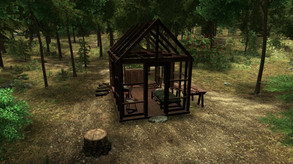
Take on Henry David Thoreau’s classic adventure in living simply in nature as you explore this epic open world game based on the story of Thoreau’s life in the woods alone at Walden Pond.
Modeled estimate, not a reported figure. How we estimate →
Stats
All-time low is the lowest price we've recorded for this game since we started tracking it.
Languages: English**languages with full audio support
Sums Steam only; PlayStation, Xbox publish no volume signal, so the true total is higher by an unknown amount.
| Store | Price | Audience | Score | Chart | Est. revenue |
|---|---|---|---|---|---|
SteamYou are here | $9.99 | 117reviews | 84% | — | $17K |
| $9.99 | 169ratings | 80% | — | not modelled | |
Engagement
Reviews
Themes across 40 recent reviews and how positive each mention is. A keyword signal, not full sentiment analysis.
Reviews
I've asked for my money back. This is not even worth the 3.60 I paid for it. Very slow in movement/lagging. The graphics are very poor and so is the movements. The game play is pretty much clicking or click and drag. You have to go though the story, doesn't matter if you are in the middle of something it will just end the day for you. A little boy ran past me on one of the first tasks and it looked like a road blocks avatar. I really don't get how people are raving about this game. The is no inventory, no collecting. It's click to pick food now you are full. Click and drag to hit this nail, you've built a house. If this was back on windows 95 I would say this is amazing but it came out in 2019. I've played student free demos that are better than this in every way. Don't get this, find something else
This Land is your Land, This Land is my Land... I love already the name "Walden, a game" with those low key letters. Walden is more an experimental project than an actual game. It does not hold much on its surface but under it is a great philosophic message about living freely and what actual freedom and strength is and boy - even the protagonist is voiced by Emile Hirch, the actor who starred in Into the Wild. Among him the other voice talents (including Jim Cummings) breath life to this well crafted title, which is also said to be used in education and why not there is quite much topics from history of US and also things which touch globally everyone. I lived as a hermit throughout the game and I say it was interesting, but grindy progress that was boring but somewhat unforgettable. Walden was made for you and me.
Media

Related
Related
Price dynamics, follower growth, revenue and sales trajectories with interactive tooltips
This and every other Pro feature is free until October 20, 2026. A free account is all it takes.
| $9.99 |
| 159ratings |
| 84% |
| — |
| not modelled |
Matched by title — a reused name can pair the wrong games. * is a critic aggregate. Prices and positions are each store's United States storefront; Epic charts worldwide. Audience and Score too, except Steam's, which is worldwide.
Hours played at review time, across 40 reviews with recorded playtime.
positive critical· bar length = how often the theme comes up
The image looks very grainy and blurry which makes me dizzy. The game does not register slow mouse movement at all, and generally it is very hard to look around due to mouse smoothing. It is impossible for me to enjoy playing the game due to the mentioned problems.
This is a nature-themed historical Walking Sim, with some "fake" survival elements. And when I say "fake", I mean you can't really die. The worst that can happen is that you faint from overexerting yourself, but then you immediately wake up in your bed. Graphics are pretty good, and typical of a 2017 game made with Unity. The voice-acting is decent, and it may be A.I. doing the voices. You are author Henry David Thoreau. You must live in the woods surrounding Walden Pond ([i]which is outside of Concord, Massachusetts[/i]) for one year. The game starts in Early Summer, and "technically" ends in Late Spring of the next year. And when I say "technically", I mean you don't actually have to quit playing. I'm getting ready to start my third year, so I guess you can continue playing to infinity. The game starts with you looking at the frame of the cabin you're building out in the woods, so obviously the first thing you should do is finish building the cabin. The game has four survival tasks to constantly keep up with ([i]although as I said earlier nothing will really happen to you if you don't[/i]). Those tasks are find food, chop wood, mend your clothes, and repair your cabin. You walk around in the woods, inspecting plants and animals, and collecting arrowheads. You get inspiration from nature, and it helps you write your essays and stories. You can walk into town to buy supplies, get odd jobs, and send/receive mail. In town you can visit the general store, the post office, and your family home. It's weird that your parents and sister are supposed to live there, but you never see any of them. Speaking of weird, every building that you can go into either doesn't have a door, or the door is standing open all year long. You play a guessing game with your sister where she leaves a note with poetic clues to a location, then you go find that location. It's not hard, because you don't actually have to figure anything out. When you read the notes, the mystery locations are automatically marked on the map for you. Your best friend is the author Ralph Waldo Emerson. You fetch books for him that he takes into the woods to read and then accidentally leaves them out there. You also do some quests for controversial author and teacher Amos Bronson Alcott. He was an outspoken abolitionist, and helped runaway slaves who were escaping via the underground railroad. He was also the father of author Louisa May Alcott. To purchase supplies at the general store, and to get to Boston to give a lecture, you need money. There are five ways you can earn money. You take random jobs as a Surveyor, do some work at your best friend Ralph's house, collect plant and animal specimens for a scientist, sell excess harvest from your bean field, and chop wood. I find this game very peaceful and relaxing. I also love the immersion. It actually makes me want to go out into the woods and live in a cabin myself, because I understand why Thoreau liked solitude. There is a free soundtrack, but it doesn't automatically come with the game. You have to manually download it from the Store Page. Achievements are all easy to get. Just do the quests and go with the flow of the game.
To be clear, this is not a traditional survival game. Although the game contains several survival elements, such as building and maintaining a shelter; mending clothes; foraging for food; and splitting wood for fuel, the failure to meet one or more of these needs will not have serious consequences. I spent much of my first winter near starvation with my cabin in disrepair, and the only change I noticed was my lower stamina when completing these routine chores (I have since read that it is possible to faint from extreme hunger, but this never happened in my game). Although simple and repetitive, the tasks are satisfying to perform, and only when fishing did I ever feel my patience tested. However, I suspect they are largely unnecessary for survival. The aim is to achieve a more immersive experience, not to create a fail state. The heart of the game is its detailed natural environment, aided in large part by stellar sound design - a particular highlight of my playthrough was boating across the pond early one morning as birdsong sounded against the gentle splash of an oar. While there are some long-term goals, most gameplay consists of walking along the banks of Walden Pond, inspecting wildlife, and jotting down notes in your journal. If I were to offer one criticism of the game, it would be the difficulty of navigating the journal. At the end of each day, Thoreau will flip to the start of that day's entries, allowing the player to reread each of his observations. Past this point, there is no way to lookup a particular date, and older entries must be located by painstakingly leafing through page after page. So far as its story is concerned, I feel the game did a tremendous job of compressing several key moments from Thoreau’s life within the span of the game. Through a series of letters, it explores Thoreau’s professional life and his relationships with his sister Sophie, his brother John, his friend and mentor Ralph Waldo Emerson, and the abolitionist movement. Because many of these letters issue quests that will only trigger a reply once completed, it is unlikely most players will experience every piece of narrative content within a single year. Despite introducing a welcome element of replayability, I do wish this had been done a bit differently. One year is already about nine hours of gameplay, by which time most players will likely have seen all the game has to offer.
As odd as the concept is for a video game, they capture the spirit of the book well. It's not particularly deep or engaging as a game, but it's simple, peaceful, and reflective. As Thoreau's life in the woods would have been. Thanks USC Games, and thank you Henry. Moose Indian
Walden, a game offers an experience that stands apart from most modern adventure titles by focusing on introspection, simplicity, and humanity's connection with nature instead of action or fast-paced progression. Developed by USC Game Innovation Lab and published by USC Games, it draws inspiration from Henry David Thoreau's classic work Walden, inviting players to relive his famous retreat to Walden Pond through an interactive lens. Rather than presenting a traditional narrative filled with conflict and dramatic set pieces, the game encourages players to embrace solitude, discover meaning in everyday moments, and experience the rewards of intentional living. It is an ambitious adaptation that transforms philosophical ideas into engaging gameplay without losing the spirit of the original literary work. The world itself is the game's greatest achievement. Set within a carefully crafted recreation of Walden Pond and its surrounding wilderness, the environment feels vibrant and alive as seasons change, wildlife moves naturally through the landscape, and weather alters both the scenery and the player's daily routine. Exploration is rewarded not with hidden weapons or treasure, but with moments of discovery, reflection, and inspiration. Every trail, forest clearing, and quiet shoreline contributes to an atmosphere that encourages players to slow down and appreciate details that many games intentionally overlook. This peaceful setting becomes more than just a backdrop—it serves as an active participant in the overall experience. Although Walden, a game incorporates survival mechanics, they are designed to reinforce its philosophical themes rather than create constant pressure. Players gather food, maintain shelter, keep warm during changing weather, and manage their energy throughout each day. These systems remain accessible and balanced, serving as reminders of the practical realities of living independently in nature. At the same time, the game asks players to pursue intellectual fulfillment by observing the environment, recording thoughts, and seeking moments of personal inspiration. The balance between physical survival and spiritual growth mirrors Thoreau's own search for purpose, making every decision feel meaningful without becoming overly complex or stressful. Storytelling unfolds organically through exploration and reflection instead of relying on extensive dialogue or cinematic sequences. The game portrays Thoreau's journey not simply as a historical reenactment but as an examination of self-discovery, mindfulness, and the value of living deliberately. Themes of independence, personal responsibility, and the relationship between people and the natural world emerge gradually through the player's experiences. Rather than forcing conclusions upon the audience, the game encourages thoughtful interpretation, allowing each player to form a personal connection with its ideas. This subtle approach makes the narrative feel authentic and emotionally resonant. The presentation complements these themes exceptionally well. Its painterly visual style captures the beauty of the New England wilderness without striving for photorealism, while dynamic lighting and seasonal transitions continually refresh familiar locations. Ambient sounds of birds, wind, rain, and rustling trees immerse players in the tranquil setting, creating a soothing atmosphere that rarely feels repetitive. The restrained musical score further reinforces the contemplative mood, supporting exploration without distracting from the quiet elegance of the natural environment. Together, the visuals and sound design create an experience that is relaxing, immersive, and artistically cohesive. The game's unconventional design means it will not appeal equally to every player. Those looking for intense action, competitive gameplay, or constant objectives may find its deliberate pacing too slow. Progress depends largely on observation, patience, and personal curiosity rather than traditional rewards or dramatic challenges. However, players who appreciate narrative exploration, educational experiences, or games that encourage reflection will likely find Walden, a game to be both refreshing and memorable. It succeeds because it remains faithful to its vision rather than attempting to imitate more mainstream genres. Beyond its entertainment value, the game also functions as an impressive educational experience. It effectively introduces players to Thoreau's philosophy and historical context by allowing them to actively engage with the ideas instead of simply reading about them. Literature, history, environmental awareness, and personal reflection become intertwined through interactive systems that encourage learning through participation. This seamless blend of education and gameplay demonstrates the unique potential of video games as a medium for exploring complex intellectual subjects. Walden, a game is a remarkable example of how interactive storytelling can successfully translate classic literature into an engaging digital experience. Its thoughtful survival mechanics, immersive natural world, meaningful themes, and peaceful atmosphere create an adventure that prioritizes reflection over excitement without sacrificing player engagement. While its slow pace may not satisfy everyone, those willing to embrace its contemplative design will discover an experience that is both intellectually rewarding and emotionally enriching. Rating: 7/10

just read the book, amazing idea but the wonky controls are a serious deal breaker
█ Refunded █ For a title I anticipated to be very solitary, there is [i]an awful lot of voice acting.[/i] :^Þ I mean... it's Walden. Out in the woods. As Thoreau. [b][i]Alone.[/i][/b] But here he is, narrating. Aloud. And alone. It simply doesn't work for me. Just read the book. Aloud, perhaps. X^D
yes.
Selling now
See how fast this game is selling right now — estimated copies and revenue per day from recent review growth.
Players by region
Where this game's players are, estimated from review languages.
Related
| Game | Estimated lifetime revenue | Reviews | Review score | Price |
|---|---|---|---|---|
| $4.2M | 23.6K | 88% | $9.99 | |
| $2.1M | 4.6K | 91% | $24.99 | |
| $1.8M | 3.9K | 83% | $14.99 | |
| $85.5K | 287 | 85% | $6.49 | |
| $38.1K | 43 | 86% | $34.99 | |
| $10.5K | 45 | 67% | $14.99 |
Related
| Game | Estimated lifetime revenue | Reviews | Review score | Price |
|---|---|---|---|---|
| $17K | 159 | 89% | $5.99 | |
| $17K | 61 | 79% | $17.99 | |
| $17K | 108 | 68% | $3.99 | |
| $17K | 199 | 39% | $2.99 | |
| $17K | 287 | 74% | $2.99 | |
| $17K | 128 | 49% | $2.99 |