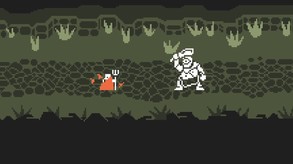
Developed by Pierre Vandermaesen and published by VANDERMAESEN GAMES, Tinyfolks is a compact strategy RPG that proves impressive depth does not require massive worlds, elaborate graphics, or hundreds of hours of content. Combining town management, squad building, roguelite progression, and turn-based combat, the game delivers a focused experience that consistently rewards thoughtful decision-making. Its minimalist presentation may initially suggest a simple indie project, but beneath the charming pixel-art exterior lies a surprisingly engaging blend of tactical gameplay and long-term progression.
The premise is straightforward yet effective. Players take control of a small settlement threatened by a powerful dark force and must recruit villagers, train heroes, upgrade facilities, and assemble a capable team strong enough to confront the growing dangers ahead. Rather than relying heavily on story-driven sequences, Tinyfolks allows its gameplay systems to take center stage. The narrative exists primarily to provide context for the player's actions, keeping the focus on building a stronger town and developing an increasingly powerful roster of adventurers.
One of the game's strongest features is its class progression system. Recruits begin as humble villagers but can evolve into a wide variety of specialized professions. Each class possesses unique strengths, weaknesses, and abilities, encouraging players to experiment with different combinations. Building an effective party involves more than simply recruiting the strongest units available. Success often depends on creating balanced teams that can support one another during difficult encounters. This emphasis on synergy adds meaningful depth to every recruitment decision.
Combat is accessible yet strategically satisfying. Battles unfold through a turn-based system that rewards planning rather than quick reflexes. Players must carefully consider attacks, abilities, equipment, and positioning while adapting to the strengths of different enemy types. The mechanics are easy to understand, but mastering them requires thoughtful preparation and efficient resource management. Every victory feels earned because success usually stems from smart planning rather than overwhelming numerical advantages.
The variety of enemy encounters helps maintain engagement throughout the adventure. Different monsters require different approaches, preventing battles from becoming repetitive. As players progress into new regions, stronger opponents introduce additional challenges that encourage constant refinement of party composition and tactics. This gradual increase in complexity creates a satisfying learning curve that keeps combat interesting over time.
Town development serves as the foundation for long-term progression. Between expeditions, players return to their village where they can construct and improve various buildings. Each structure unlocks new opportunities, whether through recruitment, crafting, research, or economic growth. Deciding which facilities deserve priority becomes an important strategic consideration because resources are limited. The town management system creates a rewarding sense of ownership, as every upgrade visibly contributes to future success.
Resource management plays an equally important role. Gold, materials, and other valuable assets must be allocated carefully to ensure steady progress. Players constantly face decisions regarding whether to invest in new heroes, improve existing facilities, purchase equipment, or save resources for future opportunities. These choices create meaningful trade-offs that prevent progression from feeling automatic.
The equipment system further enhances customization. Weapons, artifacts, and various upgrades can dramatically alter the effectiveness of individual characters. Finding powerful gear often opens new tactical possibilities and encourages experimentation with different builds. Because equipment can significantly influence performance, acquiring valuable items remains exciting throughout the game.
One of Tinyfolks' most appealing qualities is its pacing. The game respects the player's time by delivering meaningful progress at a steady rate. Battles are concise, upgrades feel impactful, and new opportunities appear regularly. Even short play sessions can result in noticeable advancement, making the game particularly enjoyable for players who appreciate strategy experiences that avoid unnecessary padding.
The roguelite influences help strengthen replayability. While each run offers familiar objectives, random elements ensure that no two journeys unfold exactly the same way. Different recruit options, item discoveries, and progression choices encourage players to adapt their strategies rather than relying on a single solution. This unpredictability helps keep the experience fresh even after multiple playthroughs.
Visually, the game embraces simplicity without sacrificing charm. The pixel-art presentation is clean, colorful, and easy to read. Character designs may be minimalist, but they possess enough personality to make different classes immediately recognizable. The interface is equally effective, presenting important information clearly while maintaining a compact and approachable appearance.
The soundtrack complements the gameplay well. The music creates a relaxed yet adventurous atmosphere that supports both exploration and town management. While the audio presentation is not particularly elaborate, it succeeds in reinforcing the game's cozy and strategic tone. Sound effects are equally functional, providing satisfying feedback during combat and progression.
Despite its many strengths, Tinyfolks is not without limitations. Players seeking extensive narrative content may find the story somewhat underdeveloped. The game focuses heavily on systems and progression rather than character development or world-building. While this design choice keeps the pacing brisk, it may leave some players wanting a stronger narrative framework.
The relatively small scale of the adventure can also be viewed as both a strength and a weakness. The game avoids unnecessary complexity, but some players may eventually wish for additional environments, classes, or advanced mechanics. Compared to larger strategy RPGs, the overall scope remains modest despite the impressive depth packed into its systems.
Certain aspects of progression can occasionally feel dependent on experimentation. While discovering effective strategies is part of the appeal, newer players may encounter moments where optimal decisions are not immediately obvious. Fortunately, the game's forgiving structure encourages learning through experience rather than punishing mistakes too severely.
What ultimately makes Tinyfolks stand out is how effectively it balances accessibility with strategic depth. It introduces mechanics gradually, keeps systems understandable, and consistently rewards thoughtful play. Every feature serves a clear purpose, creating an experience that feels remarkably polished and focused. The game never tries to overwhelm players with unnecessary complexity, yet it offers enough meaningful choices to remain engaging throughout.
Tinyfolks is a testament to the idea that great strategy games do not need enormous budgets or massive worlds to succeed. Its combination of town building, tactical combat, class progression, and resource management creates an addictive gameplay loop that is easy to learn but difficult to put down. While its limited scope and light storytelling may prevent it from appealing to every RPG fan, its clever design, satisfying progression, and charming presentation make it one of the more memorable indie strategy RPGs in recent years.
Rating: 9/10