
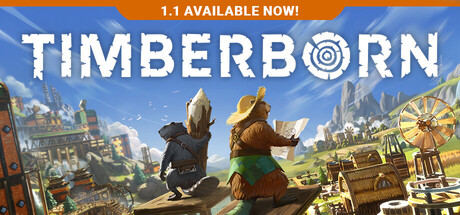
Humans are long gone. In a world struck by droughts and toxic waste, will your lumberpunk beavers do any better? A sandbox city-building game featuring ingenious animals, vertical architecture, water physics, and terraforming. Contains high amounts of wood.
Most likely between $34.1M and $96.7M. On 8 games checked against developer-reported sales, our median error is 11%. How we estimate →
Matched by title. Prices and chart positions are each store's US storefront; Epic charts worldwide. * critic score.
Reviews
Themes across 1834 recent reviews and how positive each mention is. A keyword signal, not full sentiment analysis.
positive critical· bar length = how often the theme comes up
Reviews
Not sure I understand the glazing for this. This is a crowded field and there are so very powerful heavy hitters. Maybe the cutesy factor is tilting peoples opinion, or maybe the things I don't like are actually what make it appealing to others. No sound effects is extremely odd. No wood sounds, sawing, gnawing, nothin. There are environment sounds like some birds and a little breeze. The beavers say "hi" when you click on them, but they build and gnaw in silence. The soundtrack seems repetitive already. So much of RTS is the ASMR of hearing your village or city churn and grind and operate. There is none of that here and that's just weird for a 1.1 The grid/box map style feels dated and doesn't really serve the gameplay. No weather. Just cyclic drought and magically reappearing water The tutorial is heavy handed while also being kinda useless. The order that it teaches you to do things is not very strategic or smart. Material balance feels off. The wrong moves early on can cripple you. This creates one of those games that you restart for the 15th time to try and get it right... that's... kinda obnoxious after a while. There's this weird stressful mad dash to get stable and then after that there's basically no incentive to do anything else. I dunno.... it's just not very fun watching cycle after cycle of your beavers in hispeed building half a building in a day. There is an absolute ton of different things to build but I honestly don't know what for. Not to mention the beavers take forever and materials feel sparse even on easy maps. You have to feed and hydrate your beavers. You get this stable within the first cycle of drought and then what? I'll keep trying but I'm not hooked at all.
"Removed Sluice, this time for good." This patch note fundamentally shifts the game's direction and alienates players who loved the original design. While deeper automation is a great addition, completely removing the Sluice artificially raises the game's complexity floor. Instead of allowing players to build and relax at their own pace, the game now forces everyone into complex puzzle-solving or resorting to copying online guides just to progress. The Sluice could easily have remained as an optional tech-tree unlock—allowing players seeking a heavy logic challenge to bypass it, while preserving the fun for those who prefer straightforward building. Removing player choice drastically alters who this game is for.
Rating: 9/10 industrious beavers 🦫🌲 Timberborn is the kind of game that says, “Build a cute little beaver village,” and then six hours later you're frantically redesigning an entire river system because your population accidentally drank the last drop of water and now everyone is one bad drought away from becoming decorative lawn ornaments. The premise is simple. Beavers survived humanity. Nature is healing. Unfortunately, nature is also trying to kill you every few weeks with droughts, heat waves, and your own questionable city planning decisions. Gameplay At first, life is peaceful. Your beavers are harvesting wood, collecting berries, and building cozy little homes. You feel like a competent leader. Then the first drought arrives. Suddenly you're staring at reservoirs, floodgates, pumps, and irrigation systems like you're preparing a master's thesis in hydraulic engineering. What started as a colony builder quickly evolves into a full-scale war against the laws of physics. The water mechanics are the star of the show. Rivers flow realistically, dams actually matter, and every construction project feels meaningful. Few things are more satisfying than watching a massive reservoir fill for the first time. Few things are more devastating than realizing you accidentally flooded half your town because you moved a floodgate one click too far. The vertical building system is fantastic. While most city builders spread outward, Timberborn encourages you to build upward. Before long you've created towering wooden skyscrapers, elevated walkways, and enough staircases to make your beavers qualify as mountain goats. And then there are the bots. Once you unlock mechanical workers, your colony transforms from "cute woodland settlement" into "beaver-run industrial revolution." Nothing says progress quite like replacing half your workforce with machines powered by giant spinning wheels. Visuals & Vibes The art style is absolutely charming. Everything is colorful, detailed, and full of personality. Watching dozens of beavers carry logs around with complete confidence makes every colony feel alive. The soundtrack deserves special mention too. It's calm, relaxing, and perfectly suited to the experience. That is, until a drought begins and you're desperately calculating how many days of water remain while the music politely pretends everything is fine. There's something oddly therapeutic about watching your colony function. Water flows, crops grow, machines spin, and little beavers hustle around carrying materials twice their size. It's city-builder comfort food with occasional moments of absolute panic. Final Thoughts Timberborn is clever, addictive, and surprisingly deep. It takes the familiar city-builder formula and transforms it into a fascinating puzzle of water management, engineering, and survival. You'll spend hours creating magnificent dams, elaborate irrigation systems, and efficient industrial districts. You'll also accidentally flood your farms, forget to stockpile water, and watch an entire district collapse because one critical staircase was removed. But every disaster just becomes another lesson for the next colony. Mostly because you're convinced this time your giant mega-dam definitely won't turn the entire valley into a beaver-themed Atlantis. 🦫💧🌲
I am sorry. I bought the game in early access in 2022 as it was promising. It really was a cute city builder with the novelty of drought threats. I played a lot in the early versions, then less and less. Indeed as the patches released, the devs kept adding features that made the game easier. The addition of badtides was nice but it is not challenging enough. It really just is a drought on steroids. They added more and more buildings, crops and leisure for the beavers, but never more gameplay. As a result, the game is boring. You understand pretty fast that you need to build big water reserves early on to survive droughts and badtides. Once you have them, the game is over. There is no real incentive to build all those buildings and to make bots. Adding automation was surprising as it does not feel needed. The game needs a bigger variety of randomized threats to keep the players on their toes and get them to adapt their cities. Storms, snow, heatwaves, you name it. It also desperately needs endgame perspectives that are more complex than "build big city".
Pretty chill game overall. I've caught myself staying up till 3 am just tending my community and beavers lol. Once you start stacking up food and water, the real fun begins as you begin crafting new buildings, resources and leisure spots for the beavers. Decorating is also a fun aspect of the game, setting up each housing building is cool. The droughts can get a little stressful when they start hitting 7 or 8 days lol. Carrots is the way to go for food honestly, bread is good too. Throw some lofi or oldies music in the background as you make your own lil beaver world. 10/10 vibes.
It's a relaxing game to play after work It look simple yet alot is going on Water mechanic is awesome Building not only houses and production but also dams
PROS - Unique water management and engineering mechanics. - Deep and rewarding city-building gameplay. - Creative vertical building system. - Charming art style and relaxing atmosphere. - Highly satisfying progression. CONS - Can become overwhelming in the late game. - Requires a lot of planning and micromanagement. - Slower pace may not appeal to everyone. VERDICT Timberborn is a brilliant city builder that proves a unique concept can completely reshape a familiar genre. The combination of water physics, engineering, and strategic planning makes every thriving colony feel like an achievement. If you enjoy management and city-building games, this is an easy recommendation. 8/10
This game starts every map as colony survival sim, evolving into a logistics management game and ends as a mega structure/terraforming sandbox. I've enjoyed every hour I've put into it.
I wasn't interested on playing this game till a random guy on TY... district hall named the Thorn Breakers convince me to make a move... and here am i... with 30 hours of play... recommend 10/10
[h2]TLDR:[/h2] Timberborn is a solid (but not complex) city builder based in a whimsical post-apocalyptic world where beavers have outlasted humans. Gameplay is fully sandbox and very fun, focussing on creating your own buck-toothed utopia in a challenging environment. While a great game, it has a lot of room to build (pun intended) and not recommended for players who like complex city builders (I'm looking at you City Skylines fans...). Timberborn is a great city builder based in a charmingly whimsical setting. The premise of the game is clearly set out from the start and the tutotrial, while somewhat slow and clunky, does a good job of introducing you to the basics of the game, but those accustomed to city builders will quickly move beyond the tutorial (or like me, forget it exists only to be yelled at later down the line). Controls are (broadly) intuitive too. The game offers a range of starting challenge based on the player's choice of map (and of course difficulty level). There are very few challenge factors beyond this. The ability to choose between two types of beaver clans is a nice choice by the developers, offering two different play styles. That being said, the difference and variation between the two play styles is minor and once you adjust to the minor changes (and some different buildings, mostly in 'wellbeing') the difference matters little in the end. You can play as: [b]Folktails:[/b] The original (vanilla) beavers focussed on their traditional love of nature, food, comfort, and of course wood. [b]Iron Teeth:[/b] Industrious beavers who abandoned the Folktails way of life and embraced the technology of the 'hoomans' and love nothing more than metal and efficiency. Going as far as reproducing using external vats (and even able to skip 'childhood' stage. [h3]Pros:[/h3] - Solid, comfy, whimsical city building experience with a diverse range of maps offering a range of challenge. - A comfy whimsical setting that encourages resource and population management while balancing this against the happiness of your beavers and creating the efficient and aesthetically pleasing city that you and your flat-tailed brethren crave. - The 15-layer freedom to build vertically is incr.edibly fun and allows for huge Warhammer 40k style hive cities (massive tower cities) - The district-management system, while not unique, offers another layer of management for those who want to make their city more efficient and have a more distinct character between the sections of their city. - Automation (Yes/No logic based) circuits offer a good opportunity to both manually and automatically manage your city to move away from extreme micromanagement and potential mistakes. - The soundtrack really matches the whimsical vibe of the game. - The option of two different tribes of beavers to play as, offering a variation of play styles. [h3]Cons:[/h3] - Provided you keep an eye on food and water reserves and your population growth, there is very little mid-late game challenge. - Access and scalability to mid-late game buildings barely exists. Provided you focus on research point generation from the start, there is little barrier to accessing the ability to reshape the terrain by mid-game and with it the power to completely remove the risk of droughts and badwater spills. - There is no campaign or 'mission' format seen in similar games such a Frostpunk (although there is a mod that emulates this to a degree). - The soundtrack is limited and after enough time can become tiresome. This is not an unusual problem for smaller (or even larger developers), but is worth noting. Just put on music in the background outside the game. - The game lacks graphic optimisation, which means that when you begin reaching larger cities it's difficult to achieve decent FPS, especially at X3 speed. - District management is a good addition, but if not consistently reviewed it is possible for an entire district to die out because the import/export space is being kept by other materials rather than prioritising food and water. [h3]Recommendations: How can the game improve?[/h3] 1. Introduce a campaign/mission-based format to the game so that all gameplay isn't sandbox. These missions can also introduce fun limitations/restrictions that force the player to tackle problems from different angles (e.g. reliance on wind turbines only or no badwater stores to create explosives when the mission is to redirect riverflow etc). 2. The game's graphics/CPU optimisation should be improved to allow better fps for larger cities. 3. Additional resource and building types should be introduced to increase variety, game play styles, and additional challenge of resource management. 4. Add different world events beyond 'drought' and 'badtide'. [b]Note: I ran out of time writing this review so it is not as robust as I would like, but should give a good taste of the game! - I highly recommend it and hope the developers continue to add more content and updates.[/b]