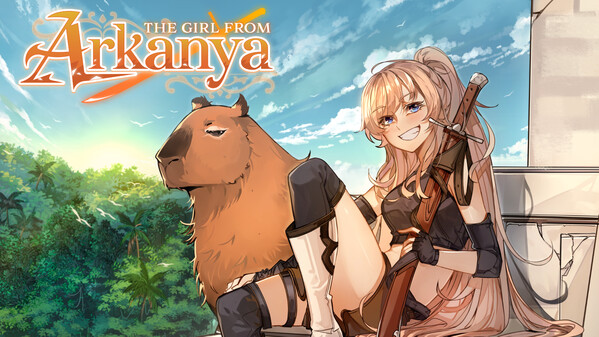
The Girl from Arkanya is a top-down treasure hunting RPG, mimicking the style and feel of 2D Zelda games. Explore the jungles of Amazonia as Marisa, alongside her capybara companion!
Modeled estimate, not a reported figure. How we estimate →
Discounts
Every price cut of more than 20% we have observed, in each market that quoted one, with this game's chart position on either side of it. These are episodes, not a model: a sale is one event, and one event cannot tell you what the next one will do.
Reviews, worldwide (the counter carries no country): 0.14/day in the week to Aug 20 → 0.29/day in the week after.
For scale, across Steam · Top Sellers · Brazil over the last 30 days: the 26 chart moves that followed a price cut of more than 20% went a median of 7 places towards #1, and the 2,400 moves with no price cut behind them went 2 away. One store, one chart, one country — it is the only place we have enough observations to say even that.
Prices outside the United States have been collected since 6 August 2026 and chart positions since 19 July 2026, so a cut older than that has no market to compare and a market that joined later has no history yet. Nothing here is converted between currencies.
About


Add-ons
Each DLC is estimated with the same model as a game, then summed — a modeled figure, not reported DLC sales.
Engagement
Reviews
Themes across 48 recent reviews and how positive each mention is. A keyword signal, not full sentiment analysis.
Reviews
The Girl from Arkanya takes the familiar foundations of classic top-down action adventures and gives them a cheerful identity built around treasure hunting, exploration, puzzles, and an unexpectedly useful capybara companion. Developed and published by Arkanya Games, the experience is openly inspired by traditional 2D Zelda-style adventures, yet it avoids feeling like a simple imitation by incorporating its Amazonia-inspired setting, dual-character mechanics, collectible artifacts, and magical dances into the established formula. The adventure follows Marisa, an ambitious treasure hunter hoping to build her reputation while carrying on her family's legacy. Her journey becomes far more significant when circumstances bring her together with Ka'apiuara Yum Kaax, conveniently shortened to Kapi, a magical capybara who becomes both companion and essential partner. Their mission eventually grows into a struggle to protect their home, but the story maintains a playful personality rather than becoming excessively dramatic. Marisa's enthusiasm for treasure and Kapi's unusual presence give the narrative a lighthearted quality that suits the colorful presentation. Exploration is the heart of the experience. The adventure stretches across seven handcrafted overworld regions filled with secrets, treasures, characters, and environmental challenges. Progress is rewarding because wandering away from obvious paths can lead to useful discoveries rather than merely decorative locations. Collectible artifacts are especially appropriate for a protagonist whose identity revolves around treasure hunting, and their connection to the history of Amazonia gives them additional thematic purpose. Players who enjoy thoroughly searching environments are therefore rewarded for curiosity. Six themed dungeons provide much of the more structured adventuring. These areas combine exploration, puzzles, combat, and progression while gradually expanding the abilities available to Marisa and Kapi. The structure will immediately feel comfortable to fans of classic action RPGs, but it remains satisfying because completing a dungeon can meaningfully change how subsequent areas are approached. Instead of progression being defined primarily by increasing statistics, acquiring new capabilities opens additional possibilities throughout the world. Equipment plays an important role in maintaining this sense of discovery. There are 15 equippable tools designed for purposes that extend beyond straightforward combat. They can contribute to solving puzzles, navigating environments, reaching new locations, and dealing with enemies, while certain tools can also be upgraded. Finding equipment consequently creates the appealing sensation that another part of the world may now be accessible. It encourages players to remember suspicious obstacles and unexplored locations instead of treating each area as something permanently finished after the first visit. Magic provides another layer of progression through sacred dances. Completing dungeons allows Marisa to acquire spells activated through these dances, granting special abilities to both members of the duo. It is a whimsical concept that fits naturally into the game's personality while making dungeon completion feel consequential. More importantly, these abilities complement the central character-switching mechanic rather than existing as an isolated progression system. Switching between Marisa and Kapi is arguably the most memorable gameplay feature. Many obstacles require players to alternate between the two, making the companion an active participant instead of an NPC who simply follows the protagonist. Understanding how their individual abilities complement each other becomes part of puzzle solving and exploration. This creates opportunities for experimentation and makes controlling the pair considerably more interesting than having a conventional companion character with limited interaction. The same design also works naturally with cooperative play. A second player can join locally and control the other character, with drop-in and drop-out functionality making cooperation relatively accessible. Shared and split-screen co-op are supported alongside Remote Play Together. Playing alone still provides the complete experience because one person can switch between both characters, while cooperative play transforms those mechanics into coordination between two players. This flexibility makes the adventure equally suitable for solitary exploration or sharing the journey with someone else. Its pixel-art presentation complements the retro-inspired structure particularly well. The colorful environments and top-down perspective provide good visual clarity while reinforcing the nostalgic atmosphere. More importantly, the Amazonia-inspired fantasy world helps distinguish the scenery from the forests, castles, and medieval villages that frequently dominate similar games. The combination of mythology, treasure hunting, ancient artifacts, jungle environments, and magical elements creates a cohesive identity even when many of the underlying gameplay concepts are intentionally traditional. Combat, puzzles, collecting, exploration, equipment progression, and character switching are interconnected rather than feeling like unrelated activities. Finding a tool can expand exploration, exploration can uncover artifacts, dungeon completion can unlock magic, and new abilities can provide solutions to obstacles encountered earlier. This interconnected progression gives players reasons to revisit locations and experiment with their growing collection of abilities. The main limitation is that experienced action-adventure players will recognize much of the underlying blueprint. The dungeon-based structure, ability-gated exploration, environmental puzzles, equipment progression, and collectible hunting are hardly new concepts. What prevents the experience from becoming overly derivative is the personality surrounding those mechanics. Kapi is more than a mascot, character swapping has genuine gameplay importance, and sacred dances and treasure hunting add flavor to familiar progression. Steam Deck compatibility is promising from a technical standpoint because the Steam version provides SteamOS and Linux support and the game has controller-oriented mechanics that naturally suit handheld play. However, the Steam store information available does not display an official Valve Steam Deck Verified or Playable rating, so it is better regarded as potentially suitable for Steam Deck rather than officially verified. Its top-down presentation and compact action-adventure structure nevertheless make it the kind of experience that conceptually fits portable play very well. Overall, this is a thoughtfully constructed tribute to classic top-down adventures that understands why exploration, meaningful equipment, secrets, dungeons, and gradually expanding abilities remain satisfying. Arkanya Games adds enough personality through Marisa and Kapi's partnership, its setting, magical dances, treasure-hunting theme, and cooperative possibilities to establish an identity of its own. It is particularly easy to recommend to players who enjoy methodical exploration, environmental puzzles, collectible hunting, pixel-art RPGs, and discovering abilities that continually change how they interact with the world. Rating: 8/10

Media

Related
Related
Price dynamics, follower growth, revenue and sales trajectories with interactive tooltips
This and every other Pro feature is free until October 20, 2026. A free account is all it takes.
Genres
Stats
All-time low is the lowest price we've recorded for this game since we started tracking it.
Languages: English
Hours played at review time, across 48 reviews with recorded playtime.
positive critical· bar length = how often the theme comes up
Powered by beer and friendship
A fun, short, and cute zelda-like. The graphics are cute, the characters are charming, and the game mechanics are fairly easy to get a grasp on. The overall difficulty level is fairly easy, with only some of the bosses posing a real challenge. The game is not terribly long, you can complete all achievements in about 20 hours, but that's about as long as I'd want to play it. A few minor complaints about overall polish and reliability, I even managed to softlock myself somehow when the grappling hook caused a weird physics glitch. And my least favorite feature is how losing during a boss fight forces you to restart all the way back from the nearest bed, which can mean a long trudge back through an entire zone to try to fight the boss again, but the bosses were easy enough that I only ever died once to them anyway.
A chill and charming Zelda-like. The combat was fairly easy and the puzzles didn't feel very complex, but it still was a fun time while doing enough to distinguish itself from others in the genre.
Game is a cute/10. A cute little Zelda like that isn't really pretending to be more then it is. Good way to spend about 20 or so hours for just as many dollars if you enjoy the GBA Zelda's. Combat isn't much to write home about but then again, neither really was the source materials. Exploration and Puzzle solving has its moments and is fun from time to time. There's some joy to unlocking new abilities though i'd be lying if I said that my most used weapon was the one you get in the first Temple. The story is rather simplistic and the characters are cute. There are a bunch of elemental based dungeons, you are the sword wielding adventurer who takes care of them. The rather simple setup however does make way to I believe the games greatest strength over the source material and that's more dialog and wit. The main character actually speaks, There's a lot of cute back and forths between her and other characters, and its the type of dialog I think really sells the game. Again, this isn't really much more then a short Zelda-like but it does the job if your looking for something in that ball park. Not too hard. Not too long. But still a cute experience.
This game was pretty good, the story was passable include the dialogue even had some funny moments. The difficulty is a bit a of miss only died once at the final boss. The tools the game provided was a bit lacking for me at least didn't really use all of the except for the hook shot and ribbon for dashing purposes and bombs were mandatory for completion. This game shows promise and I hope the Developer continue to improve this style of game. 7/10 for me. Looking forward the their next game.
9/10!! If you long for a Link to the Past-like adventure/action RPG with puzzles and cool dungeons, this game is a winner. There are sidequests, collectable items and upgrades, dance spells... there is a spunky heroine, a stern capybara and a cool system to control them both. My only complaint is the loading time between areas but maybe it's because I'm running it on my toaster.
The Girl from Arkanya is very inspired by Link to the Past in its puzzle and dungeon design, the way the hookshot equivalent works, and general look and feel. If you like Link to the Past or Link's Awakening or other classic 2D Zeldas you'd probably like this one. The only significant unique aspects were the two protagonists and switching (and if you have a friend, you can do couch coop to play together) between them; and the song/stance system giving you a variety of special attacks. Note that whoever you aren't controlling in single player won't do anything in combat, you need to do couch coop to have both characters attacking or acting at once. Puzzle design is decent, nothing too hard, and nothing too easy. There is an OK overworld map (it's split into segments but it's less clear which screen in those segments you are or need to go to), but no dungeon map so a few of the dungeons got extremely complex and difficult to navigate. The items are decent, mostly LttP like, but the songs are interesting. Aside from the Lunar song, every one of them acts like a stance, which does various things and gives you a unique special attack. The Sun stance for instance gives you a flaming sword attack that burns targets, while the Storm stance gives you a large MP costly AoE attack. The water stance is mostly what I stayed in, its special is a short duration shield but it also passively increases your movement speed in water, and there's a lot of water. There are several sidequests, but no tracker so you have to remember what it was you were searching for. There are important to do for the boost in power you get from doing them or access to different collectibles. I like the take on the trade sequence, it really releases the frustrations of this kind of long quest. There are a few negatives. The inventory is terrible, there are a large number of items, the majority of which you sell for money, but the inventory fills up extremely quickly. Thankfully the loot inventory is separate from the key item and tools inventories. Unfortunately there are some drops or chest items that are required for sidequests, and these are not marked unless you're in the sidequest that requires them! They're all farmable, but if you don't know to save certain items it's a pain. Like the classics, you need to write down places you need to go back to, the only map markers are for your goal or for sidequests. If you're not used to that, you probably won't have a good time navigating secrets. Finally there are some things that are tedious or slow. Loading screens are a lot longer than they really should be considering the 2D nature of the game, Deaths will take you to the closest bed you've unlocked, not the beginning of the dungeon, so you can have a long runback. Warping can only be done from a warp stone, so you have to walk to one to do any sort of fast travel. Waking up after sleeping is also very slow. The inventory system mentioned above is tedious to work with. Warping requires that you use the song, not just talk to the statue, so it's an extra step to get anywhere. Overall, there were some slow or tedious parts but I did enjoy the time. If you have a friend to do couch coop, I feel that would dramatically improve the fun of combat and split puzzles.
The game was a lot of fun, a nice colorful adventure, exploring around with Marisa and Kapi's banter was entertaining and the story clearly evokes a greater world this was made in, hope there is more to the world of Marisa and the priestess' ! The pixel art is beautiful and the music while not as varied remained enjoyable the whole way through! I missed some upgrades despite beating the game so there are some secrets beyond the needed path for those who feel like exploring a bit more for them, there also optional quests where you get to interact some more with the NPCs which I felt added a lot their characters
Love this older "Zelda" like game. Had some small bugs but nothing that hindered the game.
Players by region
Where this game's players are, estimated from review languages.
Related
| Game | Estimated lifetime revenue | Reviews | Review score | Price |
|---|---|---|---|---|
| $49.5K | 167 | 72% | $10.79 | |
| $11.4K | 54 | 69% | $9.99 | |
| $139.1K | 296 | 91% | $13.49 | |
| $11K | 22 | 100% | $19.99 | |
| $1.4K | 7 | 71% | $9.99 | |
| $529 | 3 | 100% | $6.99 |
Related
| Game | Estimated lifetime revenue | Reviews | Review score | Price |
|---|---|---|---|---|
| $87.5K | 615 | 98% | $5.99 | |
| $87.5K | 102 | 81% | $19.99 | |
| $87.5K | 599 | 70% | $9.99 | |
| $87.5K | 236 | 67% | $9.99 | |
| $87.6K | 246 | 73% | $9.99 | |
| $87.4K | 666 | 79% | $7.99 |