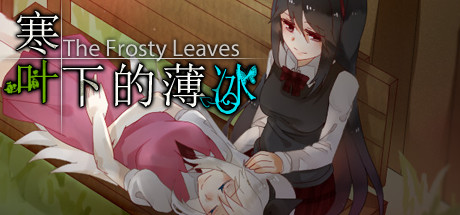
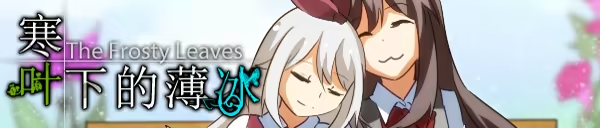
The Frosty Leaves 寒叶下的薄冰 is a small-scale but emotionally ambitious narrative adventure that blends mystery, light puzzle-solving, and visual-novel storytelling into a reflective and often melancholic experience. Developed and published by 凝冰剑斩, the game places far greater emphasis on mood, memory, and emotional consequence than on mechanical complexity, positioning itself as a story-first title meant to be felt rather than mastered. From its opening moments, it establishes a quiet, somber tone that invites the player to slow down and pay attention to subtle details rather than rushing toward resolution.
The story revolves around Leng Xiaobing, an ordinary grocery store worker whose life is thrown into turmoil after an encounter tied to a strange and illegal plant. What begins as a seemingly grounded incident gradually unfolds into a layered narrative that shifts between the present and fragmented memories of the past. The structure deliberately blurs timelines, using recollection as a storytelling device to reveal motivations, regrets, and emotional wounds piece by piece. Rather than offering a straightforward mystery to solve, the game asks players to interpret events through the lens of memory, where truth, guilt, and longing are often intertwined.
Gameplay is divided into a clear rhythm that alternates between exploration-driven puzzle segments and text-heavy narrative sections. The puzzles themselves are generally accessible and grounded in environmental interaction rather than abstract logic. Their primary purpose is to support pacing, giving players moments of active engagement between emotionally dense story sequences. While these puzzles are rarely challenging in a traditional sense, they contribute to immersion by reinforcing the sense of moving through physical spaces that carry emotional weight. The absence of combat or complex systems reinforces the idea that this is a contemplative experience rather than a conventional RPG.
Narrative choice plays a subtle but meaningful role. Throughout the game, players can collect hidden items and make decisions that influence how certain scenes unfold, eventually leading to one of two endings. These choices are not framed as obvious moral decisions, but rather as small actions and observations that reflect how closely the player engages with the story’s emotional undercurrents. This design encourages attentiveness and, for some, replaying the game to better understand how different interpretations of events can alter the outcome.
The emotional core of The Frosty Leaves lies in its exploration of loss, memory, and strained relationships. Much of the story’s impact comes from its attempt to portray fragile emotional states rather than dramatic confrontations. Conversations often feel subdued, sometimes awkward, and occasionally abrupt, which can be interpreted in different ways. For some players, this rawness enhances authenticity, making the characters feel imperfect and human. For others, the dialogue can feel uneven or lacking in nuance, particularly when the game reaches for heavy emotional beats without fully developing them. This unevenness is one of the most common points of division among players.
Visually, the game adopts a restrained, painterly style typical of RPGMaker projects, but it uses color and composition effectively to convey mood. Environments often feel cold, muted, and slightly distant, reinforcing the themes of emotional isolation and unresolved pasts. Character portraits are expressive enough to communicate mood without excessive detail, allowing players to project their own interpretations onto subtle expressions. The soundtrack complements this aesthetic with melancholic and atmospheric pieces that underscore scenes without overwhelming them, though occasional abrupt transitions can break immersion.
One notable limitation is accessibility. The game was originally developed with Chinese language support and lacks an official English localization, which significantly narrows its potential audience. For players able to understand the language directly, the story’s emotional intent comes through more clearly. For others relying on translations, some nuance and subtlety may be lost, particularly in a game so heavily dependent on tone and wording. This language barrier has likely contributed to its relatively low profile outside its core audience.
In terms of scope, The Frosty Leaves is unapologetically modest. It does not aim to deliver a sprawling narrative, deep mechanical systems, or polished cinematic presentation. Instead, it offers a compact experience focused on atmosphere and emotional resonance. This restraint can be seen as either a strength or a weakness depending on player expectations. Those looking for intricate gameplay or tightly structured storytelling may find it lacking, while players drawn to introspective, emotionally driven indie titles may appreciate its sincerity.
Ultimately, The Frosty Leaves 寒叶下的薄冰 is a niche but heartfelt work that prioritizes emotional exploration over traditional gameplay satisfaction. Its strengths lie in its mood, themes, and willingness to dwell in uncomfortable emotional spaces, even when its execution is imperfect. For players who value story-driven experiences, reflective pacing, and narratives centered on memory and loss, it offers a quiet but memorable journey that lingers less through spectacle and more through feeling.
Rating: 7/10