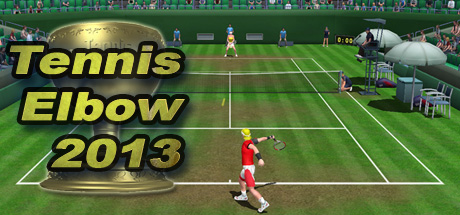
Created by and for tennis fans, Tennis Elbow 2013 is a tennis simulation with an easy and intuitive learning curve, but with exceptional gameplay depth.
Modeled estimate, not a reported figure. How we estimate →
Discounts
Every price cut of more than 20% we have observed, in each market that quoted one, with this game's chart position on either side of it. These are episodes, not a model: a sale is one event, and one event cannot tell you what the next one will do.
Reviews, worldwide (the counter carries no country): 0/day in the week to Sep 2 → 0/day in the week after.
For scale, across Steam · Top Sellers · Brazil over the last 30 days: the 25 chart moves that followed a price cut of more than 20% went a median of 10 places towards #1, and the 2,413 moves with no price cut behind them went 2 away. One store, one chart, one country — it is the only place we have enough observations to say even that.
Prices outside the United States have been collected since 6 August 2026 and chart positions since 19 July 2026, so a cut older than that has no market to compare and a market that joined later has no history yet. Nothing here is converted between currencies.
About
Engagement
Reviews
Themes across 43 recent reviews and how positive each mention is. A keyword signal, not full sentiment analysis.
Reviews
The kind of sports game where you can play it every day and still suck. S-tier.
Good enough for people who want to try playing tennis without going to a real court.
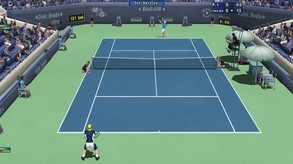
Tennis Elbow 2013 is a tennis simulation built around the idea that believable mechanics and tactical depth matter more than spectacular presentation. Developed and published by Mana Games, it delivers a surprisingly detailed interpretation of the sport despite its visibly dated graphics. Instead of relying on flashy animations or elaborate broadcast effects, the experience concentrates on movement, positioning, timing, shot preparation, and reading an opponent. This approach gives matches a methodical quality that becomes increasingly rewarding as the player learns how its systems interact. The gameplay provides considerably more depth than its straightforward controls initially suggest. Players can use different types of strokes for offensive and defensive situations, including powerful acceleration shots, safer returns, topspin lobs, and drop shots. Positioning is especially important because simply pressing the correct shot button does not guarantee an effective return. Reaching the ball early, preparing properly, choosing an appropriate direction, and understanding the opponent's position all influence the outcome. As a result, longer rallies often become tactical contests where patience and intelligent placement can be more valuable than raw power. An extensive difficulty system helps make this simulation approachable. Six major difficulty levels are divided into numerous sublevels, allowing the challenge to increase gradually rather than forcing players into large jumps in opponent ability. Visual assistance can help newcomers understand positioning and aiming, while experienced players can reduce these aids for a more demanding experience. This flexible structure makes it possible to learn the mechanics progressively while still providing substantial challenge for players who already understand tennis strategy. The World Tour mode is one of the strongest reasons to invest significant time in the game. Rather than presenting isolated tournaments, it simulates a large professional circuit containing thousands of competitors and hundreds of events. Players can create a tennis professional and attempt to climb the rankings through increasingly difficult competition. Singles and doubles events are available, while rankings and tournament progression create a convincing sense of building a career. The sheer scale of the tour helps make individual victories meaningful, particularly when a developing player begins reaching later rounds against stronger opposition. Court surfaces provide another layer of strategy. Nine different surface types are represented, covering variations of clay, grass, hard courts, synthetic surfaces, and indoor conditions. The ball behaves differently depending on the court, meaning a strategy that works comfortably in one tournament may require adjustment in another. Differences in rebound behavior affect timing and positioning, encouraging players to understand each environment rather than treating surfaces as simple visual changes. Match customization is similarly extensive. Singles and doubles are supported, match lengths can be adjusted, and several camera perspectives allow players to find a viewpoint that suits their preferences. Local split-screen competition is available, while network functionality expands the experience beyond computer-controlled opponents. Character customization is relatively modest by modern standards, but it provides enough flexibility to establish a personal competitor for the career modes. Modding support is another significant advantage, particularly for players interested in extending or altering the game's content. Presentation is the area where its age is most apparent. Character models and environments are functional rather than impressive, animations occasionally appear stiff, and the interface has a distinctly older PC-game character. Anyone approaching it expecting the production quality of a contemporary big-budget sports title may find the first impression underwhelming. Audio is similarly restrained, emphasizing basic match atmosphere rather than elaborate commentary or television-style presentation. However, the relatively lightweight visuals also help the game run on modest hardware. Steam Deck compatibility is not officially rated by Valve, so it should be considered Unverified rather than formally Verified or Unsupported. Its relatively modest hardware demands are encouraging, but the absence of an official compatibility rating means handheld users should expect that controls, interface navigation, text readability, or other aspects may require adjustment. Players specifically purchasing it for Steam Deck should therefore approach it as an unofficial rather than guaranteed handheld experience. Where the game ultimately succeeds is in making improvement feel meaningful. Early matches can expose poor positioning and careless shot selection, but experience gradually teaches players how to construct points, anticipate returns, change direction intelligently, defend under pressure, and recognize opportunities to attack. Winning becomes satisfying because progress is closely connected to understanding tennis rather than simply improving character statistics. Tennis Elbow 2013 remains an appealing choice for players who prioritize simulation, career depth, tactical rallies, surface variation, and customization over modern visual polish. Its presentation has aged considerably, but the underlying tennis mechanics remain unusually substantial. The enormous career structure and scalable difficulty also provide excellent longevity. For someone willing to accept its old-fashioned appearance, it offers a thoughtful and highly replayable interpretation of competitive tennis. Rating: 8/10
Media

Related
Related
Price dynamics, follower growth, revenue and sales trajectories with interactive tooltips
This and every other Pro feature is free until October 20, 2026. A free account is all it takes.
Stats
All-time low is the lowest price we've recorded for this game since we started tracking it.
Languages: English*, French*, Italian, German, Spanish - Spain, Dutch, Hungarian, Polish, Portuguese - Portugal*languages with full audio support
Hours played at review time, across 43 reviews with recorded playtime.
positive critical· bar length = how often the theme comes up
I've played just about every teem tennnis game from GBA to N64 to PSP to virtua tennis , most of them to completion on the hardest setting. This is one of the most fun and realistic, but I do like many of them. Some I do not like are AO tennis, matchpoint.
This was a very enjoyable game for me during the COVID-19 pandemic.
pretty cool game. Just not the one for me.
Super fun but with mods
重要:カメラモードを『Subjective』に変更してカメラ距離を離すと世界が変わる。 ---- 旧レビュー クオリティ的には十分作り込まれてるけど、とにかくボレーのコントロール性が凄まじく悪いのが玉に瑕。 ボレー(や、たまに強打)が簡単にコートの遠く外に飛んでいく点を除けば、結構神ゲーの可能性がある。 ---- 新レビュー(Subjectiveに対する要望) ・ダブルスのいちいち後ろを振り返る仕様がもったいない。 ・リターン時にカメラ向きが真正面になっているが、サーブの方を向いていて欲しい。 ・カメラ位置が若干低い気がする。 ・体に近すぎてミスる場合はボールがぶっ飛ぶんじゃなくて、ネット越えない打ち損じにしたほうがリアリティあると思う。 ---- ボレーの仕様について開発元から直接返信をいただきました。 『ボレーについては、トレーニングクラブ > ウォームアップに行き、エイミングプレビューを有効にしてください。そうすると、ボレー時のエイミングが非常に敏感で、打つ準備にほとんど時間がなくてもライン近くを狙えることが分かります。そうでなければ、ほとんどの場合は中央付近しか狙えません。』
Best tennis simulator!
They're calling it the best tennis game from 2013
Players by region
Where this game's players are, estimated from review languages.
Related
| Game | Estimated lifetime revenue | Reviews | Review score | Price |
|---|---|---|---|---|
| $1.4M | 1.1K | 96% | $29.99 | |
| $421.9K | 533 | 91% | $24.99 | |
| $202.6K | 349 | 88% | $19.99 | |
| $207.7K | 337 | 82% | $19.99 | |
| $23.1K | 22 | 45% | $29.99 | |
| $7.7K | 38 | 79% | $7.99 |
Related
| Game | Estimated lifetime revenue | Reviews | Review score | Price |
|---|---|---|---|---|
| $393.6K | 945 | 96% | $5.99 | |
| $393.6K | 3.3K | 83% | $4.99 | |
| $393.8K | 1.1K | 72% | $19.99 | |
| $393.4K | 1.6K | 79% | $11.99 | |
| $393.9K | 2.8K | 65% | $4.99 | |
| $393.4K | 994 | 91% | $24.99 |