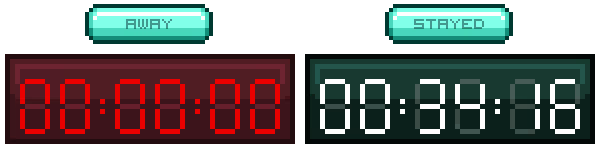
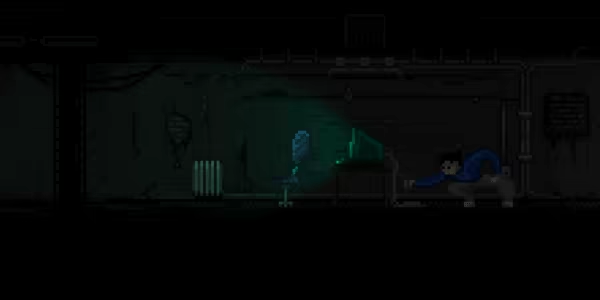
Award-winning, innovative puzzle-adventure. By communicating through your PC, you must help a kidnapped man escape captivity - in real-time. While you sleep, he is alone. When you return to your PC he has hope. Your encouragement and advice will be the difference between his salvation or despair.
Modeled estimate, not a reported figure. How we estimate →
About


Sums Steam only; PlayStation, Xbox, Nintendo publish no volume signal, so the true total is higher by an unknown amount.
| Store | Price | Audience | Score | Chart | Est. revenue |
|---|---|---|---|---|---|
SteamYou are here | $11.99 | 567reviews | 68% | — | $107.7K |
| $9.99 | 153ratings | 72% | — | not modelled | |
Engagement
Reviews
Themes across 50 recent reviews and how positive each mention is. A keyword signal, not full sentiment analysis.
Reviews
This haunting survival thriller is chillingly immersive and tense! 👻🏠 Sneak through shadows 🎮 with heart-pounding stealth ✨, eerie visuals, and gripping choices. A spine-tingling experience for horror fans!
заeбал ныть
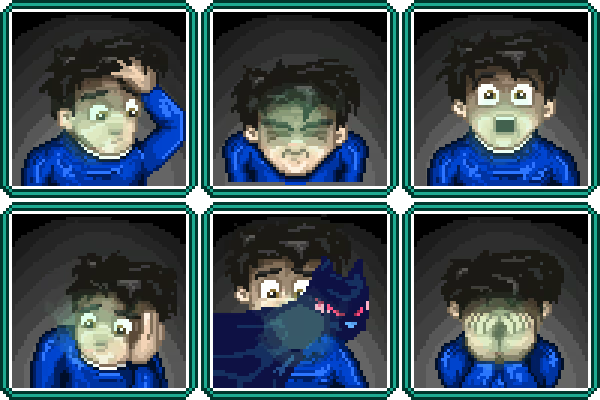
STAY, developed and published by Appnormals Team, is a haunting psychological adventure that explores loneliness, guilt, and the fragile nature of human connection through an unconventional storytelling format. Instead of controlling a traditional character, you communicate in real time with Quinn, a man who wakes up trapped in a mysterious, dimly lit room with no recollection of how he got there. His only contact with the outside world is you, the player, speaking through a computer screen. This premise instantly separates STAY from other narrative-driven games—it transforms you into both participant and observer, where every word you type and every second you spend away from the game can alter the fragile mental state of the person depending on you. The experience is intimate, uncomfortable, and profoundly human, blurring the boundary between player and character in ways few games dare to attempt. The entire experience unfolds through text-based interaction, pixel-art visuals, and a real-time timer that constantly reminds you of Quinn’s isolation. When you quit or step away, the game continues running, measuring how long you’ve left him alone. Returning after a prolonged absence, you might find that he has grown anxious, resentful, or withdrawn, commenting on how you abandoned him. This mechanic gives an unsettling weight to even the smallest decisions—it makes you feel responsible not just for Quinn’s physical survival, but for his emotional well-being. The connection you build with him feels startlingly authentic because it mirrors real communication: uncertain, awkward, and vulnerable. Through branching dialogue choices, you can choose to comfort him, challenge him, or even manipulate him, and each decision influences how much he trusts you. The intimacy of these exchanges, amplified by his trembling pixelated expressions and the faint hum of his surroundings, creates a sense of empathy and unease that lingers throughout the game. The pixel art style may appear simplistic at first, but it’s meticulously designed to evoke claustrophobia and dread. The small, confined spaces that Quinn inhabits—rooms filled with cryptic objects, flickering lights, and ominous computer screens—communicate more emotion than many fully 3D environments. The static backgrounds and grainy webcam view emphasize how powerless both you and Quinn are in this situation. The minimalist aesthetic also heightens the focus on Quinn himself, his face rendered in expressive detail despite the limited resolution. His eyes flicker nervously, his body language shifts between desperation and hope, and every small change in his demeanor becomes a clue to his mental state. The music, an ambient mix of melancholy piano notes and low electronic drones, reinforces this atmosphere of uncertainty and tension. It’s not a world you explore physically, but one you inhabit psychologically—an emotional space where silence feels suffocating and every word you exchange becomes a lifeline. Beyond its conversational framework, STAY introduces environmental puzzles that punctuate the narrative and provide moments of traditional gameplay. These puzzles, often cryptic and abstract, represent Quinn’s attempts to interact with his surroundings—unlocking doors, deciphering messages, or piecing together fragments of memory. They are designed to challenge both your logic and your patience, though they sometimes lean into frustration. A few puzzles are notoriously opaque, demanding trial and error or external reference to solve, which can pull you out of the immersive flow the story works so hard to build. Yet when they work, they feel integral to the experience, symbolizing Quinn’s struggle to regain control over his life and his environment. The slow unraveling of clues adds to the sense of mystery, drawing you deeper into the question of who Quinn is, why he was taken, and what his connection to you truly means. Narratively, STAY operates on several levels. On the surface, it is a mystery about captivity and escape. But beneath that, it becomes a psychological examination of trauma and trust, with themes of depression, self-destruction, and redemption woven throughout. The writing is introspective and often philosophical, filled with references to literature, psychology, and existential thought. Quinn questions not only his surroundings but his sense of self, and his dialogue reflects a man grappling with guilt and regret. The player’s responses shape the tone of the story—offering comfort might stabilize him, while cynicism or distance can push him further into despair. This emotional dynamic transforms the player into an active participant in Quinn’s recovery or downfall. The sense of responsibility grows heavier as you realize your choices may not just determine how the story ends, but whether Quinn finds a reason to live. The game’s real-time element is one of its most unique and controversial features. When you close the game, time still passes for Quinn. The longer you’re away, the more his trust erodes. It’s a clever narrative device that makes your own engagement—or lack thereof—a form of storytelling. Every pause becomes a statement, every absence a betrayal. For some players, this mechanic creates a powerful emotional connection; for others, it feels like an artificial constraint designed to induce guilt. Yet it undeniably succeeds in making STAY feel personal in a way that most games never achieve. It’s not just about controlling outcomes—it’s about being present, about understanding the weight of attention and neglect in a relationship built entirely through screens. Despite its brilliance in concept and atmosphere, STAY isn’t without flaws. Its pacing can be uneven, and the dialogue sometimes meanders into heavy-handed or repetitive territory. Certain puzzles break immersion by being overly obscure or poorly explained, forcing players to look up solutions rather than reasoning them out naturally. The branching dialogue system, while robust, can occasionally give the illusion of choice without significantly changing key events. Still, these issues don’t diminish the strength of its emotional impact. The game’s imperfections feel almost appropriate given its subject matter—it’s messy, unpredictable, and deeply human, much like the conversations it simulates. STAY’s ultimate achievement lies in its ability to evoke empathy and reflection. By making the player’s engagement the central mechanic, it transforms passive storytelling into a moral experience. You don’t just guide Quinn—you share his fear, his loneliness, and his fragile hope. It’s a game that quietly asks difficult questions about responsibility, connection, and what it means to truly care for someone in distress. The ending you receive, determined by your choices and level of commitment, serves not as a judgment but as a mirror of how you chose to interact with him. In a medium where disconnection is easy and empathy is often secondary to victory, STAY dares to make emotional investment the only path forward. In the end, STAY is not a game for everyone—it’s slow, text-heavy, and emotionally taxing—but for those willing to surrender to its pace and premise, it offers an experience unlike anything else. It’s less a conventional adventure and more an experiment in digital empathy, a haunting dialogue between player and character that lingers long after the screen goes dark. Through its minimalist design, clever mechanics, and unflinching portrayal of psychological struggle, STAY delivers an intimate and unsettling exploration of what it means to be present for someone when they need you most. It doesn’t just tell a story—it asks you to live in it, to listen, and, above all else, to stay. Rating: 6/10

Media

Related
Related
Price dynamics, follower growth, revenue and sales trajectories with interactive tooltips
This and every other Pro feature is free until October 20, 2026. A free account is all it takes.
Genres
Stats
All-time low is the lowest price we've recorded for this game since we started tracking it.
Languages: English, French, German, Spanish - Spain, Simplified Chinese, Korean, Japanese, Portuguese - Portugal, Russian, Traditional Chinese
| $11.99 |
| 151ratings |
| 74% |
| — |
| not modelled |
| $11.99 | — | — | — | not modelled |
Matched by title — a reused name can pair the wrong games. * is a critic aggregate. Prices and positions are each store's United States storefront; Epic charts worldwide. Audience and Score too, except Steam's, which is worldwide.
Hours played at review time, across 50 reviews with recorded playtime.
positive critical· bar length = how often the theme comes up
[h1] 시도는 좋았음 [/h1] [h3] 재미는 있었음 (초반까지는) [/h3] 90% 할인으로 안 샀으면 진짜 억울했을거 같음... 근데 또 90%할인으로 사고 보니? 가격 보정으로 이정도면 개이득이지 싶음 딱 절반 챕터까지만 재미있었다. 할인할때 사세요! 지금 사세요 90% 할인할때 이런 사람에게 추천해요: 포인트 앤드 클릭 형식의 게임이 좋다. / 갑툭튀가 없는 게임이 좋다. / 기왕 게임은 퍼즐 돌려막기가 아닌 다양(좀과다)해야 한다. / 특이한 게임 플레이 방식을 해보고 싶다. / (전체적인 게임 진행이) 선택지만으로 나뉘었음 좋겠다. / 성가신 남자를 약 4시간동안 둥기둥기해보고 싶다. / F랑 T를 번갈아가면서 연기할 수 있다. 이런 사람에게 비추천해요: 게임하다 혈압 오르고 싶진 않다. / [spoiler] 랜덤 생성(공략x, 파훼법만o) [/spoiler] 퍼즐은 하기 싫다. / [spoiler] 열린 결말 [/spoiler] 이 싫다. / 주인공은 자아 없이 휘둘려야한다. / F랑 T를 번갈아가면서 연기할 수 없다. 사실 개인적으로는 챕터 갯수를 해당 숫자 [spoiler] 24 [/spoiler]에 맞추지 않았어도 괜찮았을 것 같아요... (뭘 노린건지는 알겠지만) 굳이 굳이 그 숫자에 맞추려고 늘리다가 쓸데없는게(특히 퍼즐) 추가된 느낌? 실시간으로 주인공에게 도움을 주려는 분위기를 위해 텍스트도 느릿느릿하게 올라와서 가면 갈수록 답답하고, 와중에 스토리는 부풀려지면서 떡밥은 제대로 안 주니까 '그래서 이게 뭔데? 혹시 이거인가? 이거인가? 이거일지도 몰라'만 반복하다가 엥 끝이야? 하고 엔딩이 나와버렸어요. [spoiler] 근데 주인공이 자꾸 지 과거 얘기는 안하고 딴 얘기만 해요 ""개"" 성가심... 이래놓고 명언? 같은걸 갑자기 내뱉고 나가버리니까 '아니 xx 여기서 갑자기 뭔 소리야?' 상태가 됨... [/spoiler] [spoiler] 개인적으로는 차라리 주인공 과거 회상씬을 2~4챕터 정도 넣는게 훨씬 나았을거 같아요... 짧은 컷씬으로 휙휙 지나가니까 얘가 진짜 환상통에 시달리는건지 진짜 잡혀갔던건지 아님 스스로를 가두고 머리 깡 쳐서 기억을 잃은건지 뭔지 감이 하나도 안 잡힘 [/spoiler] 그리고 제발 주인공 죽고나면 죽기 직전 선택지에서 시작 할 수 있게 만들거나 봤던 텍스트는 빠르게 넘길 수 있게 해주거나 했음 좋겠다... 한 챕터 5번쯤 하고있다보니 모니터에 주먹질하는 저를 볼 수 있었습니다 안 깨져서 다행이지 [spoiler] 주인공이 차라리 진짜 내 말 고분고분 듣는 것도 아니고... 짜증이란 짜증은 다 내서 나도 피곤할 즈음에 갑자기 '아냐, 네 말도 일리가 있지.' <이난리 떨며 죽어버릴때의 심정이 진짜... 뭐쩌라고 [/spoiler] 솔직히 퍼즐도 진짜 돌아버리는 줄 알았어서 후반부 퍼즐 4개정도는 공략보고 깼네요 초반이 진짜 재밌었음 다음에 이 게임과 비슷한 컨셉으로 내신다면 그냥 깔쌈하게 1시간 내외 플탐 잡아두시는 편이 좋을거 같습니다 다른건 모르겠고 게임 엔딩나면 세이브포인트 없이 첨부터 다시 시작해야 다른 엔딩 볼 수 있는 점에서 저는 포기했습니다
recomendado ∞/10 🍷🧐
Странновато, иногда туповато, но сильно
чаптер с лабиринтом это просто млять писец, в первый раз я прошел его легко, но после перезагрузки чаптера я немогу его пройти уже час, я даже карту открыл и нихрена не понимаю, не вход найти немогу не выход, психанул и забросил, УЖАС УЖАСНЫЙ ЧТОБ ЕГО
[h2]I don't care if you don't like to eat fortune cookies, if you've been lighting up my feed for the past ten minutes about how HUNGRY you are I'm going to click the eat the fortune cookie option. NO you don't have to eat the suspicious one in the box you can open one of the millions of Unopened boxes. NO I'm not telling you to open all the boxes! [b]DONT THROW THE PHONE AT THE WALL YOU AS-[/b][/h2] Stay has a great a draw with its concept: Tamagotchi but your little digital pal is a kidnapped guy. He waits for you, you say things he likes so you can keep him happy and solves puzzles. Problems: the guy is a piece of work; trust means very little; if he thinks you don't share a "vibe" he might throw the computer at the wall. The puzzles are fun but you might need some background knowledge for some of them. Having the protagonist cut his lifeline for nebulous reasons really hampers things. You would think being put inside a crazy situation would increase your tolerance for others, but that same logic extended to food tolerance has already been answered, this man needs to be saved from himself. Which is ironically is one of the main points of the game. The story is fine enough, but you have to get through some amount of resets due to our digital pal getting caught in dead ends. Overall it doesn't quite meet the scope of what it's selling and the dead ends with how easily you can lose connection with the protag can be frustrating. For a lot of people I wouldn't recommend this, but for those who want to try out an interesting premise and can handle so many resets just to get this man to the end; then this is for you.
Le jeu a ses défauts mais je trouve que l'évaluation "moyenne" est injustifiée. Certes certaines énigmes donnent envie de péter son crâne et c'est un peu dommage que la mécanique du temps resté et parti ne serve qu'à débloquer les fins extra et il y a quelques erreurs de localisation par-ci par-là Mais l'ambiance fonctionne , l'histoire est assez sympa et c'est un jeu original dans son concept et dans sa façon de raconter une histoire. Pour une fois les choix qu'on fait ont un impact pas comme beaucoup de jeu à choix multiple où seulement le choix final compte. C'est un jeu que j'aime et sur le quel je reviens une fois tout les 1 ou 2 ans environ car il m'a marqué.
Класс только за задумку, атмосферу и то что я люблю говоломки. И кошку. А ещё мне нравится таинственность игры и неожиданные (для меня) повороты. На деле ужасно скучная игра с монологом. Игра чисто для людей с Сдвг, ибо я занимался паралельно другими делами. Быстро читая мельком текст как он был готов - отвечал и опять занимался своими делами. Герой нытик, который рассказывает о себе и рассуждает делу и не по делу, не вызывает никакой симпатии или сочувствия. Понимаю, что он человек психологии и философии, но говорит как фальшивка, со своими сравнениями и кучу отсылок (которые я понял не все). Кто вообще в реальности так говорит? Хотелось бы больше головоломок и миниигр. Хоть я и борюсь с желанием забросить игру, но всё же закончу, потому что хочу знать чем закончится. Кратко - игра на любителя.
Selling now
See how fast this game is selling right now — estimated copies and revenue per day from recent review growth.
Players by region
Where this game's players are, estimated from review languages.
Players also reviewed
The games this title's players most often review too — audience affinity.
Related
| Game | Estimated lifetime revenue | Reviews | Review score | Price |
|---|---|---|---|---|
| $1.5K | 36 | 72% | $2.99 | |
| $238 | 7 | 86% | $1.99 | |
| $48.5K | 300 | 92% | $8.99 | |
| $3.5K | 24 | 96% | $9.99 | |
| $1.4K | 36 | 89% | $2.99 | |
| $983 | 33 | 88% | $2.55 |
Related
| Game | Estimated lifetime revenue | Reviews | Review score | Price |
|---|---|---|---|---|
| $107.7K | 324 | 87% | $11.99 | |
| $107.7K | 567 | 95% | $11.99 | |
| $107.7K | 1.2K | 85% | $4.99 | |
| $107.7K | 426 | 69% | $14.99 | |
| $107.6K | 340 | 84% | $14.99 | |
| $107.7K | 527 | 87% | $9.99 |