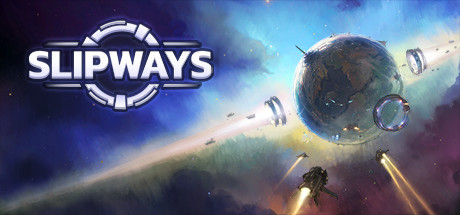
Weave isolated planets into a vast trade empire. Hatch plans. Research game-breaking technologies. Still be done in time for lunch. Enjoy the endless possibilities of a space grand strategy game in 60 minutes flat.
Modeled estimate, not a reported figure. How we estimate →
Prices
The United States storefront in every case, so this compares stores and not countries.
Prices
Each in the currency that store quoted — not converted: the gap between two rows is the publisher's pricing, not an exchange rate.

Every market we collect.
About
Add-ons
Each DLC is estimated with the same model as a game, then summed — a modeled figure, not reported DLC sales.
Sums Steam only; GOG publishes no volume signal, so the true total is higher by an unknown amount.
| Store | Price | Audience | Score | Chart | Est. revenue |
|---|---|---|---|---|---|
SteamYou are here | $16.99 | 2.3Kreviews | 93% | — | $1.1M |
| $6.79−60% | 88ratings | 84% | — | not modelled |
Matched by title — a reused name can pair the wrong games. * is a critic aggregate. Prices and positions are each store's United States storefront; Epic charts worldwide. Audience and Score too, except Steam's, which is worldwide.
Engagement
Reviews
Themes across 57 recent reviews and how positive each mention is. A keyword signal, not full sentiment analysis.
Reviews
Not a bad game, but I was expecting the game to play more like a game of Dominoes. I spend several minutes just trying to figure out what the most efficient move is rather than just quickly matching up planets. For example I colonize a planet that produces lots of water and later realise there are no planets nearby that need water.
Damn this game. It is so easy to play but so hard to actually succeed, at least on challenging difficulty. Slipways isn't a puzzle game but it isn't an empire building space game either. The titular slipways are teleports or gateways that can be built between any 2 planets. They allow for two way transport of resources which can be either people or robots, basics like food, water and minerals or more complicated stuff like electronics, goods or biomatter. Some planets can produce only one resource, so the choice of what to make is non existant. Other planets can produce up to 6 different resources or can produce one resource using different inputs. Selecting what to make where depends on how it can all be combined together. All colonized planets cost upkeep which can only be offset by trade income, so getting as many imports and exports traded around is very important. Surpluses can be shipped off to research labs which keeps employment high and makes population happier but doesn't do much for income. For the most part money is worthless so long as you've got enough to keep building, except for the very early and very late game. In the beginning money is in short supply, and towards the end empire management costs add up so much that only a very succesfull empire can keep from going bankrupt. Expect to lose more than a few runs to bankruptcy. The other common cause of failure is morale dropping too low. Every colony starts with a penalty that goes away only if all it's needs are met. This is not a problem if you are fortunate enough to find a 2-way relationship between starting colonies, or if you can easily build a chain where all members of the chain supply one another. But sometimes a colony just cannot have it's needs met and you're desperate for the resource it produces so you let it linger. The longer it stays unhappy, the longer you keep taking the penalty and if you ever have more than 2 such planets, you may as well give up. So why is it so hard to connect colonies? It's not. It's easy. What's hard is getting colonies into successful or prosperous states, funding research and boosting your score. Sensor range is limited but colonizing planets expands it so sometimes you will gamble that a planet that can produce water for you but needs colonists will have a planet nearby that can supply those colonists. And then it turns out the nearest planet is too far away or connecting it would cross another connection. Gateway connections cannot cross. Believe me, there is plenty of headscratching involved and some cursing. Planets that can supply and support each other are rarely neatly arranged or easy to find. Some runs you may research planetary tugs that can scoot planets within a limited range, but the tech in not guaranteed. The RNG in the game is wonderful. It adds a ton of variety without ever screwing the player because the game is not designed to require good RNG. Just learn from your mistakes and don't repeat them. Helping you along the way is the lovely and loving Undo command, which works as long as you haven't explored new planets or activated ancient relics. The idea is that you use Undo to get yourself out of genuine mistakes and mis-clicks rather than cheat the game. Another super useful feature is the ability to "ghost" build colonies. Rather than actually build a colony, a hypothetical blueprint is placed instead. Place a bunch of them and you will see the basic connections between them allowing you to decide whether the plan is a good one, whether plantes are actually in range of each other, or if you will have a problem or won't be able to connect everything. Slipways is well executed, superbly polished and a fun experience. Except the bits where you rage because you screwed up. It's beautiful, the music is inoffensive but hardly needed anyway and the conrols are super simple. If you find the pulsating probe radius annoying, there is a setting to use fixed radius probes. A rare game where one couldn't think of a QoL feature that wasn't in the game already. An excellent game.
Media

Related
Related
Price dynamics, follower growth, revenue and sales trajectories with interactive tooltips
This and every other Pro feature is free until October 20, 2026. A free account is all it takes.
Genres
Stats
All-time low is the lowest price we've recorded for this game since we started tracking it.
Languages: English, French, German, Polish, Spanish - Spain, Simplified Chinese
Hours played at review time, across 57 reviews with recorded playtime.
positive critical· bar length = how often the theme comes up
这游戏好玩的,但是高难度下会存在理论无解,对轻度玩家很不友好
Ein wirklich tolles Spiel. Ich hab die Pico8 Variante schon eine Weile gespielt, aber diese Fassung ist wesentlich unterhaltsamer. Das Einzige: nicht jede Planetenkonstellation ist wirklich gleich einfach zu spielen. Es kann durchaus vorkommen, dass man in Dead End Szenarien gerät, wo Inputs und Outputs keine sinnvollen Loops ergibt, und man zwangsweise unglückliche Kolonien hat.
A very fun, relaxing, and beautiful space puzzle experience.
Enjoyable puzzle/logistics rougelike with huge replay value and skill ceiling
Fun puzzle game with multiple modes and enough nuance to make multiple playthroughs fun
Players by region
Where this game's players are, estimated from review languages.
Related
| Game | Estimated lifetime revenue | Reviews | Review score | Price |
|---|---|---|---|---|
| $97.2K | 123 | 68% | $19.99 | |
| $3.9K | 11 | 64% | $9.99 | |
| — | 0 | — | — | |
| — | 88 | 84% | $6.79 | |
| — | 0 | — | — | |
| — | 0 | — | — |
Related
| Game | Estimated lifetime revenue | Reviews | Review score | Price |
|---|---|---|---|---|
| $1.1M | 1.7K | 88% | $12.99 | |
| $1.1M | 12.1K | 70% | $3.99 | |
| $1.1M | 19.4K | 72% | $3.99 | |
| $1.1M | 5.7K | 87% | $9.99 | |
| $1.1M | 6.4K | 84% | $4.99 | |
| $1.1M | 3.6K | 92% | $19.99 |