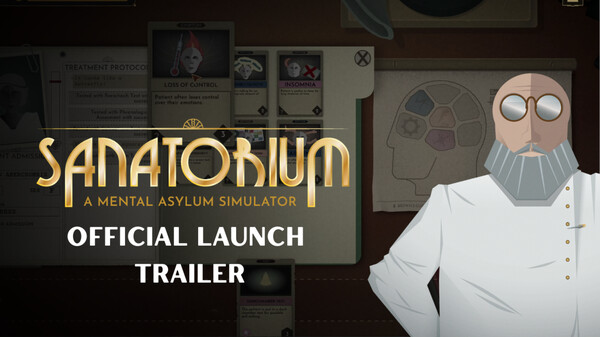
The year is 1923—step inside Castle Woods Sanatorium, where care and cruelty blur together. Disguised as a doctor, you’ll diagnose and treat patients using a deck of symptoms, tests, and outdated therapies. But tread carefully: one wrong move could expose you as an impostor.
Modeled estimate, not a reported figure. How we estimate →
Discounts
Every price cut of more than 20% we have observed, in each market that quoted one, with this game's chart position on either side of it. These are episodes, not a model: a sale is one event, and one event cannot tell you what the next one will do.
Reviews, worldwide (the counter carries no country): 0/day in the week to Aug 24 → 0.14/day in the week after.
For scale, across Steam · Top Sellers · Brazil over the last 30 days: the 26 chart moves that followed a price cut of more than 20% went a median of 7 places towards #1, and the 2,400 moves with no price cut behind them went 2 away. One store, one chart, one country — it is the only place we have enough observations to say even that.
Prices outside the United States have been collected since 6 August 2026 and chart positions since 19 July 2026, so a cut older than that has no market to compare and a market that joined later has no history yet. Nothing here is converted between currencies.

About
“Sanatorium: A Mental Asylum Simulator Is One of the Most Unique Games I’ve Ever Seen” - VICE
It’s the roaring twenties, an age of technological progress and social upheaval. As the city around you expands, you feel left behind: a weary journalist burdened by debt and drifting purpose. Then, out of the blue, a cryptic message arrives from a childhood friend—perhaps the tip of a lifetime. It points to the infamous Castle Woods Sanatorium. A mystery waits there, and you can’t shake the urge to uncover it. It may be nothing more than a hunch, but it feels like a secret that could change everything. Even you. The decision is made: you pack your bags and set out for Castle Woods.

Test your wit and intuition. Every week, new patient files present new puzzles to be solved as you decide which tests to use to uncover symptoms and which treatments you prescribe to cure them. Decide whether you want to follow the rule book or try out experimental new treatments with unknown outcomes. Do you want to be kind or cruel? Business savvy or risk-taking?
Uncover dark secrets behind the squeaky-clean facade of Castle Woods' walls. Meet helpless patients, ruthless opportunists, and an array of other intriguing characters. Collect clues and piece together the shocking truth about the Sanatorium and your own past.

Card-driven workplace sim — step into the role of a doctor in 1923, where every action is bound by the outdated tools and beliefs of the era.
Diagnose, “treat,” or withhold — decide whether to follow harsh, archaic methods or act with compassion, knowing both choices carry consequences.
Every patient is a puzzle — files unfold as layered card sets, with symptoms hidden, revealed, and misinterpreted through limited knowledge.
A full campaign across 4 chapters — uncover the secrets of Castle Woods and the lives caught within its walls.
Branching paths, multiple endings — your decisions shape not only patients’ outcomes, but your own fate as an impostor.
Over 100 cards to chart — symptoms, illnesses, tests, and treatments drawn from the unsettled history of psychiatry.
Evolve your treatment plan — upgrade treatments toward more humane practices, or double down on methods that protect your cover at any cost.

Join our Discord and follow us on our platforms to get updates, read our dev diary weekly, and become part of the community!
Engagement
Reviews
Themes across 48 recent reviews and how positive each mention is. A keyword signal, not full sentiment analysis.
Reviews
You'd think after a YEAR they'd finally fix that stupid game-breaking bug in Ward 3. Can't progress the story whatsoever.
This game was super fun to play. Would definitely play through again!
Sanatorium – A Mental Asylum Simulator is a management game that immediately separates itself from most titles in the genre through its oppressive atmosphere and morally uncomfortable themes. Rather than placing players in charge of a cheerful business or efficient hospital, the game drops them into a bleak 1920s mental institution filled with paranoia, questionable treatments, political pressure, and hidden secrets. From the beginning, there is a constant feeling that something is deeply wrong inside the walls of Castle Woods Sanatorium. Players are not simply managing patients and resources; they are navigating a dangerous environment where every decision can affect lives while also threatening to expose their own hidden identity. The result is a dark and psychologically engaging experience that feels far more intense than a typical simulation game. The gameplay revolves around diagnosing and treating patients through a card-based system that gradually becomes more complex as the story progresses. Symptoms, procedures, medications, and patient conditions are all represented through cards that must be managed strategically. What initially feels like a straightforward management mechanic slowly develops into something much deeper because every treatment choice carries consequences. Some methods may stabilize patients quickly but rely on ethically disturbing practices, while safer approaches require more time and resources. This creates a constant moral tension where efficiency often clashes with humanity, forcing players to think carefully about how far they are willing to go in order to maintain control of the institution. One of the strongest parts of the game is its atmosphere. The sanatorium itself feels cold, isolated, and emotionally draining in a way that perfectly matches the themes of the story. Dimly lit corridors, decaying offices, and unsettling patient rooms create an environment that constantly feels oppressive. The visual design may not rely on advanced graphics, but it uses color, lighting, and environmental details effectively to establish mood. Every part of the institution feels filled with secrets and emotional decay, making exploration and patient interactions feel uncomfortable in the best possible way. The audio design contributes heavily to the immersion as well. Soft ambient sounds, distant noises, and haunting jazz-inspired music create a constant sense of unease that follows the player throughout the campaign. The soundtrack shifts naturally between quieter management moments and more emotionally intense scenes, helping the game maintain psychological tension even when players are simply reviewing patient files or organizing treatments. Combined with the oppressive visuals, the sound design makes the entire experience feel disturbingly immersive. The narrative is another major highlight because the game avoids treating its darker themes in a simplistic or exaggerated way. Instead of relying purely on shock value, the story explores institutional corruption, mental illness, political influence, and personal morality through patient stories and staff interactions. Many of the patients feel tragic rather than monstrous, and learning about their histories gradually becomes one of the most emotionally engaging parts of the game. The player’s hidden identity also adds another layer of suspense because there is always a sense that one mistake could unravel everything. This combination of management gameplay and psychological storytelling gives the experience far more emotional weight than most simulation games. Mechanically, the game succeeds because it balances strategy and narrative progression effectively. Diagnosing patients often feels like solving investigations where players must analyze symptoms, choose examinations, and determine the best course of treatment. Resources are limited, time is valuable, and mistakes can lead to disastrous outcomes. This creates a satisfying gameplay loop where every patient presents a new challenge. Endless Mode also adds replay value by allowing players to focus more heavily on optimization and experimentation without following the main narrative structure. The presentation overall fits the setting extremely well. Menus resemble old medical documents, card designs are easy to understand, and the interface reinforces the historical atmosphere without becoming overly complicated. There is a clear effort to immerse players in the role of managing an institution during a deeply flawed period of medical history. The game’s style remains consistent from beginning to end, helping the dark themes feel believable and grounded. However, the game does have several weaknesses. The pacing can occasionally become repetitive during longer management stretches where players cycle through similar procedures repeatedly. Some mechanics are not explained particularly well, causing the early hours to feel more confusing than necessary. Certain card combinations and treatment methods also become noticeably more effective than others, which reduces strategic variety once players discover optimal solutions. Technical issues such as interface inconsistencies, occasional bugs, and performance hiccups can also interrupt immersion at times. The subject matter itself will likely be divisive for many players. The game deliberately explores disturbing historical practices involving mental health treatment and institutional abuse, and it rarely offers emotional relief from its grim atmosphere. Some scenes can feel emotionally exhausting because the game constantly forces players into morally questionable situations. While this discomfort is clearly intentional and contributes to the game’s identity, it also means the experience will not appeal to everyone. Despite these flaws, Sanatorium – A Mental Asylum Simulator succeeds because of how committed it is to its vision. It combines management systems, narrative storytelling, card-based mechanics, and psychological tension into something genuinely memorable. Very few simulation games manage to create this level of emotional discomfort while still remaining strategically engaging. The constant pressure of balancing ethics, survival, and institutional control gives the gameplay a unique intensity that stays with players long after the campaign ends. For players who enjoy dark management games, morally complex narratives, and strategy experiences with strong atmosphere, Sanatorium offers something genuinely different from the standard simulation formula. It is unsettling, emotionally heavy, and occasionally frustrating, but those qualities are also what make it so memorable. Beneath its grim setting is an ambitious and intelligent game that successfully transforms psychological tension into meaningful gameplay. Rating: 7/10
Media

Related
Related
Price dynamics, follower growth, revenue and sales trajectories with interactive tooltips
This and every other Pro feature is free until October 20, 2026. A free account is all it takes.
Genres
Stats
All-time low is the lowest price we've recorded for this game since we started tracking it.
Languages: English, French, German, Spanish - Spain, Japanese, Korean, Portuguese - Brazil, Simplified Chinese, Italian, Russian
Hours played at review time, across 48 reviews with recorded playtime.
positive critical· bar length = how often the theme comes up
this game makes my brain hurt. ward 3 is pain in the ass
A wonderfully, frustrating, twisted game, that all i can say is in the end i loved every single second of it.
I am really 50/50 on this game as a fan of the simulation/strategy genre. It is frustrating to see that there is a kernel of a great game hidden here, but the devs have just not done enough yet to bring it to life. The core gameplay idea of treating the patients, figuring out diagnoses and treatments is great. The setting is very stylish. The details in the setting are fun. But all these parts unfortunately do not yet come together to make a whole great game. I would say that it is about 70% there and hopefully its true potential will be realized. At this point though it's been more frustrating than fun for me personally, unfortunately.
I want to recommend this game so badly but I can't in its current state. I have unfortunately run into a game breaking bug in ward 2 that won't let me progress any further in the story. What I have been able to play has been amazing and so much fun. I hope to be able to come back and edit this soon once they have fixed it so I can continue playing.
This game is so good, but there are really just so many bugs that I can't recommend it unless you're fine with restarting many days because you clicked something too fast or the game didn't expect you to do something. It's very annoying, but like I said, it's a great game.
it is a very fun card deck game, and the developers are very active releasing quality of life updates often making me a gamer feel very seen
难绷
Players by region
Where this game's players are, estimated from review languages.
Related
| Game | Estimated lifetime revenue | Reviews | Review score | Price |
|---|---|---|---|---|
| — | 0 | — | — | |
| $7.6M | 16.1K | 94% | $15.99 | |
| $2.3M | 3.6K | 95% | $17.99 | |
| $666.3K | 4.7K | 90% | $4.99 | |
| $12.6K | 112 | 90% | $4.99 | |
| — | 0 | — | — |
Related
| Game | Estimated lifetime revenue | Reviews | Review score | Price |
|---|---|---|---|---|
| $97.5K | 64 | 89% | $69.99 | |
| $97.5K | 548 | 57% | $9.99 | |
| $97.5K | 274 | 79% | $13.99 | |
| $97.6K | 823 | 83% | $4.99 | |
| $97.6K | 1.8K | 61% | $1.99 | |
| $97.6K | 370 | 82% | $9.99 |