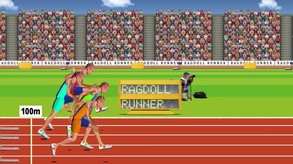
Ragdoll Runners is a physics-based athletics game where you control independently the two legs of an athlete in 8 events of different types: sprint, long jump, triple jump, hurdles. Play against the computer, with 3 friends on the same PC or online against other players' records.
Modeled estimate, not a reported figure. How we estimate →
About
Stats
All-time low is the lowest price we've recorded for this game since we started tracking it.
Languages: English**languages with full audio support
Engagement
Reviews
Themes across 41 recent reviews and how positive each mention is. A keyword signal, not full sentiment analysis.
Reviews
playing since august 2021, still enjoying!
good game but the devs should add pole vaulting
I mean, it's good but not that much levels.
Media

Related
Related
Price dynamics, follower growth, revenue and sales trajectories with interactive tooltips
This and every other Pro feature is free until October 20, 2026. A free account is all it takes.
Hours played at review time, across 41 reviews with recorded playtime.
positive critical· bar length = how often the theme comes up
Tried running fell, tried jumping fell, 10/10
,给个马保国
MUITO FODA O COOP
This game is really fun if you are good at it. Quite a lot of raging but fun!
This game is really fun but cant update because the owner lost all of his code.
sb作者
Ragdoll Runners is an indie sports title developed and published by Samuel Manier that takes the familiar structure of track-and-field competition and turns it into something delightfully unconventional. Rather than relying on automated animations or simple timing-based button presses, the game places full responsibility for movement in the player’s hands, asking them to control each leg independently. This single design choice defines the entire experience, transforming basic running and jumping into a nuanced, often chaotic test of coordination, rhythm, and persistence that feels unlike almost any other sports game on Steam. The core mechanics of Ragdoll Runners are deceptively simple but surprisingly deep. Each leg is controlled with its own button, and forward momentum depends on alternating inputs with precise timing. Early attempts often result in awkward shuffles, faceplants, or spectacular collapses as the ragdoll physics assert themselves, but this initial clumsiness is intentional. As players gradually learn how timing, balance, and forward lean interact, the chaos gives way to fluid motion. Runs that once looked like slapstick comedy slowly evolve into powerful, efficient strides, creating a genuine sense of mastery that feels earned rather than handed out. The game offers a solid selection of athletic events, each built around the same core controls but demanding different techniques. Sprinting events reward clean rhythm and stability, while long jump and triple jump challenge players to coordinate speed, takeoff timing, and body position with precision. Hurdles add another layer of complexity, forcing players to manage both horizontal momentum and vertical control under pressure. Because the physics system remains consistent across events, improvements in one discipline naturally carry over into others, reinforcing the idea that you are learning a unified movement system rather than a collection of isolated minigames. One of Ragdoll Runners’ greatest strengths is how it balances difficulty with humor. Failure is frequent, especially early on, but it is rarely discouraging. Falls are exaggerated, limbs flail dramatically, and races can end in ridiculous pileups that are genuinely funny to watch. Even as players become more skilled, the physics engine ensures that no run is completely predictable, keeping tension and amusement alive even during high-level play. This blend of skill-based challenge and visual comedy gives the game a personality that is both inviting and memorable. Beyond solo play, Ragdoll Runners truly shines in its multiplayer offerings. Local split-screen mode supports up to four players, turning the game into an excellent party experience. Competing side by side amplifies both the humor and the intensity, as friends race, stumble, and celebrate hard-earned victories together. Online leaderboards and challenge modes cater to more competitive players, offering global rankings and daily challenges that encourage refinement and consistency. These modes add longevity, giving players reasons to return long after they’ve mastered the basics. Visually, the game embraces a minimalist presentation that puts clarity and motion ahead of visual flair. Characters and environments are simple, but this simplicity serves the physics-driven gameplay well, ensuring that movement and positioning are always easy to read. Animations emerge naturally from the physics system rather than scripted sequences, which reinforces the sense that every success or failure is the direct result of player input. Sound design follows a similar philosophy, remaining understated and functional so as not to distract from the rhythm and timing that define the experience. What ultimately sets Ragdoll Runners apart is its confidence in its own weirdness. It does not try to smooth out the awkwardness of its controls or hide the unpredictability of its physics. Instead, it leans fully into those qualities, trusting players to find satisfaction in the process of learning and improving. The steep learning curve may initially deter some, but those who persist are rewarded with a game that feels uniquely expressive and skill-driven. In the end, Ragdoll Runners is a standout example of how a simple idea, executed with focus and creativity, can redefine a genre. It turns running into a mechanical puzzle, failure into entertainment, and mastery into a genuinely rewarding journey. Whether played competitively, cooperatively, or just for laughs, it delivers an experience that is both challenging and endlessly entertaining, earning its place as one of the most distinctive indie sports games available. Rating: 7/10
Selling now
See how fast this game is selling right now — estimated copies and revenue per day from recent review growth.
Players by region
Where this game's players are, estimated from review languages.
Related
| Game | Estimated lifetime revenue | Reviews | Review score | Price |
|---|---|---|---|---|
| $26.1K | 73 | 95% | $9.99 | |
| $9.2K | 61 | 44% | $4.99 | |
| $0 | 68 | 90% | Free | |
| $4.6M | 75.7K | 87% | $4.99 | |
| $2M | 18.8K | 87% | $3.99 | |
| $1.3M | 4K | 80% | $19.99 |
Related
| Game | Estimated lifetime revenue | Reviews | Review score | Price |
|---|---|---|---|---|
| $53K | 72 | 68% | $24.99 | |
| $53K | 204 | 82% | $12.34 | |
| $52.9K | 209 | 79% | $12.99 | |
| $52.9K | 102 | 71% | $19.99 | |
| $53K | 110 | 55% | $24.99 | |
| $53K | 137 | 91% | $19.99 |