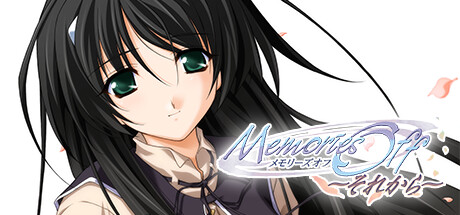
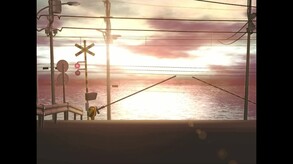
Memories Off Sorekara is a character-driven romantic visual novel built around heartbreak, uncertainty, and the difficult question of whether a relationship can truly be left behind. Developed by MAGES. Inc. and published by Spike Chunsoft Co., Ltd., this Full HD version brings the 2004 romance adventure to modern PCs while largely preserving its traditional presentation and storytelling structure. Instead of attempting to transform the original into a modernized remake, it focuses on making an established entry in the Memories Off series more accessible on contemporary hardware while retaining its distinctive artwork and atmosphere.
The story follows Isshu Sagisawa, a third-year student at Hamasaki High School whose romantic life initially appears comfortable and predictable. He is dating Inori Misasagi, and their relationship seems secure until Valentine's Day takes an unexpected turn. Inori asks Isshu to meet at the same memorable location where she once confessed her feelings to him. Rather than using the occasion to celebrate their relationship, however, she suddenly ends it. The combination of a breakup, Valentine's chocolate, and a place filled with romantic memories establishes the bittersweet emotional direction of the story almost immediately.
From that point forward, the narrative becomes less about simply winning someone's affection and more about understanding why relationships change. Isshu is forced to confront his lingering feelings for Inori while continuing his everyday life and interacting with other girls who may eventually become important to him. The mystery surrounding Inori's decision provides a strong reason to continue reading, but the story also spends considerable time examining loneliness, attachment, jealousy, misunderstanding, and the fear of moving forward. Its slower pacing gives these emotions room to develop rather than rushing from one dramatic revelation to another.
The supporting heroines provide alternative directions for Isshu's story. Characters such as Yukari Sagisawa, Miyabi Fujiwara, Karin Hanamatsuri, and Haya Nonohara bring noticeably different personalities and relationship dynamics into the narrative. This helps prevent the game from becoming entirely consumed by Isshu and Inori's breakup. Depending on the player's decisions, attention can gradually shift toward different characters, creating routes that explore alternative possibilities for Isshu's emotional future. The effectiveness of these routes will naturally depend on which personalities appeal most to the player, but their presence gives the story greater variety and replay value.
Gameplay remains firmly within traditional visual novel conventions. Most of the experience consists of reading narration and conversations, accompanied by character portraits, backgrounds, music, and Japanese voice acting. Choices appear at particular moments and influence subsequent events, relationships, and eventual endings. There are no complex secondary mechanics, combat systems, or exploration sequences to distract from the narrative. This simplicity is appropriate for the genre, although players seeking frequent interaction may find the experience passive. The meaningful element is not mechanical execution but deciding how Isshu responds to the people around him.
Multiple endings provide an incentive to revisit the story and experiment with different decisions. The game also contains the main scenario alongside Prologue Story material, offering additional context to its characters and events. Steam achievements add another objective for completionists. Seeing everything requires considerably more commitment than following a single preferred route, so the overall value increases substantially for players interested in understanding the entire cast rather than pursuing only one heroine.
Visually, this release retains the unmistakable appearance of a Japanese romance visual novel originating in the early 2000s. The Full HD presentation improves its suitability for modern screens, but it does not disguise the age of the underlying artwork and design. Character illustrations are expressive and attractive within their original artistic direction, yet anyone expecting extensive animation or the elaborate cinematic presentation of newer visual novels may find it modest. In this case, preservation works in the game's favor because the original aesthetic contributes strongly to its nostalgic identity.
Japanese voice acting strengthens the emotional presentation, especially during intimate or uncomfortable conversations where tone matters almost as much as the written dialogue. The cast includes accomplished performers, and having characters fully voiced gives greater personality to an otherwise text-heavy experience. Music and backgrounds serve the quieter atmosphere rather than attempting to dominate individual scenes, allowing conversations and emotional revelations to remain the primary focus.
Language accessibility is one of the most important limitations. The game supports Japanese, Simplified Chinese, and Traditional Chinese text, with Japanese voice audio, but it does not provide an official English text option. For English-only players, this represents a major obstacle because the experience depends on understanding lengthy conversations, character motivations, subtle implications, and branching choices. This is not the kind of game that can be comfortably enjoyed by ignoring most of the dialogue.
Steam Deck compatibility is officially categorized as Playable rather than fully Verified. Performance with the default graphics configuration is considered suitable, and the game can run successfully on SteamOS. However, handheld players should expect compromises. Some functionality is not fully accessible through the default controller configuration, touchscreen interaction or a community controller layout may occasionally be useful, and text entry can require manually opening the virtual keyboard. Some interface text may also appear small, while certain prompts can display keyboard, mouse, or non-Steam Deck controller icons. It is therefore functional on the Deck, but the experience is less seamless than a fully optimized handheld release.
Ultimately, Memories Off Sorekara works best for players who enjoy patient romantic dramas in which emotional consequences matter more than mechanical complexity. The Valentine's Day breakup provides an effective opening hook, while the branching routes broaden the story into a larger examination of love, memory, separation, and the possibility of beginning again. Its older presentation and absence of English localization make it a specialized recommendation, but its strong emotional foundation and multiple character paths give it lasting appeal for the appropriate audience.
Rating: 8/10