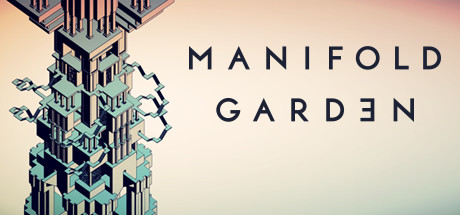
Rediscover gravity and explore an Escher-esque world of impossible architecture. Witness infinity in first-person and master its rules to solve physics-defying puzzles. Cultivate a garden to open new paths forward, where an eternal expanse awaits.
Modeled estimate, not a reported figure. How we estimate →
Prices
Each in the currency that store quoted — not converted: the gap between two rows is the publisher's pricing, not an exchange rate.
Discounts
Every price cut of more than 20% we have observed, in each market that quoted one, with this game's chart position on either side of it. These are episodes, not a model: a sale is one event, and one event cannot tell you what the next one will do.
Reviews, worldwide (the counter carries no country): 1.57/day in the week to Sep 4 → 3.29/day in the week after.
About


Genres
Sums Steam only; PlayStation, Xbox, Epic publish no volume signal, so the true total is higher by an unknown amount.
| Store | Price | Audience | Score | Chart | Est. revenue |
|---|---|---|---|---|---|
SteamYou are here | $4.99−75% | 8.6Kreviews | 95% | — | $507.1K |
| $19.99 | 647ratings | 94% | — | not modelled | |
Updates
Build ids and update times come straight from Steam's PICS — the same source SteamDB reads. Patch history grows as we record new builds.
Engagement
Reviews
Themes across 222 recent reviews and how positive each mention is. A keyword signal, not full sentiment analysis.
Reviews
Manifold Garden is two games, both with incredible potential but both failing to properly explore that potential. At its base, Manifold is a uniquely freeing and beautiful game. Gone are level borders, instead having the world continuously loop in every direction, and having you traverse between levels through portals. Instead of a jump button, you can freely rotate the world around you to 6 different directions, each with a respective colour code. The art style is minimalist in a way that sharply defines every edge of each surface. This works perfectly for a game where your movement finesse is reliant on understanding the position and direction of every surface around you. The sound design is cinematic and booming in a way that sells the infinite size of the world(s) in the garden. In terms of aesthetics, this game is an easy 10/10. Most of the reviews here are about the any% (or "normal") route, so I will only touch on it briefly: The any% route is a walking simulator that occasionally presents you with puzzles, ones that take longer to parse than to solve. The gravity blocks are where most of these puzzles are based around, and they are very fun to work with. Unfortunately, these puzzles barely get more complex than they are at the start of the game, with most involving you performing one trick with a couple of blocks (and not even the coolest ones you can do with them). Other mechanics are later introduced but are neglected just as much. The game seems much more interested in flaunting its grand world, with many rooms just having you traversing intricate architecture to find reach the next portal. Don't get me wrong, it's all very cool, but makes the game feel empty of substance. I didn't even understand the hub until my second playthrough, I just went where the game took me. A standard run of this game only requires you to view the world, not understand it, and I think that's a real shame. -- (Mild spoilers from here on out) -- Then there's the other side of Manifold Garden, the hidden side, experienced mostly through the "God Mode" (or 0%) run. Throughout the world there are some extremely hidden paths that allow you to take an entirely different passage to the end. I did not find these on my own, having a friend instead tell me which rooms each secret was in. Apart from the mindless searching, I could call my God Mode run one of the best gaming experiences I've had in a while, but not for reasons the game intended. God Mode offers both new enclosed, standalone puzzles and larger, open ended meta puzzles which involve transporting blocks from different parts of the world. The new standalone puzzles were a let down, there were some decent rooms but overall it was still quite basic. The meta puzzles is where the insanity begins, and where I need to bring up the biggest issue with this game. Manifold Garden is buggy, extremely buggy. Collision will break, objects will deload, buttons will freeze and your character will get stuck on awkward geometry. I was lucky enough to have these bugs only serve as a mild inconvenience, sometimes even acting as new problems to be solved, but this was only because I had an unconventional route through God Mode. For most players, this will break the route's most fun challenge and could softlock them, forcing a manual reload. This is unacceptable, especially when the game has sections that require you to perform long, repetitive tasks and form fragile setups. It destroys all immersion in the game and it blows my mind that such obvious bugs went unfixed upon launch and remain in the game to this day. Even though most of this review has been complaining, my thoughts on Manifold Garden lean positive overall. It has its shortcomings, but is so unique and novel that I can't help but appreciate it. I'd rather play a game that is both great and terrible than one that is derivative and tepid, though I hope that one day someone will take this concept much further.
Media

Related
Related
Price dynamics, follower growth, revenue and sales trajectories with interactive tooltips
This and every other Pro feature is free until October 20, 2026. A free account is all it takes.
Every market we collect.
Reviews, worldwide (the counter carries no country): 2.57/day in the week to Jul 25 → 4/day in the week after.
For scale, across Steam · Top Sellers · Brazil over the last 30 days: the 25 chart moves that followed a price cut of more than 20% went a median of 10 places towards #1, and the 2,413 moves with no price cut behind them went 2 away. One store, one chart, one country — it is the only place we have enough observations to say even that.
Prices outside the United States have been collected since 6 August 2026 and chart positions since 19 July 2026, so a cut older than that has no market to compare and a market that joined later has no history yet. Nothing here is converted between currencies.
Stats
All-time low is the lowest price we've recorded for this game since we started tracking it.
Languages: English, French, Italian, German, Arabic, Dutch, Japanese, Korean, Portuguese - Brazil, Russian, Simplified Chinese, Spanish - Latin America +2 more
| $19.99 |
| 202ratings |
| 94% |
| — |
| not modelled |
| $19.99 | — | 89% | — | not modelled |
Matched by title — a reused name can pair the wrong games. * is a critic aggregate. Prices and positions are each store's United States storefront; Epic charts worldwide. Audience and Score too, except Steam's, which is worldwide.
Hours played at review time, across 223 reviews with recorded playtime.
positive critical· bar length = how often the theme comes up
This game kind of feels like eating a bunch of empty calories. I seemed like I had some sort of challenging, deep experience while playing it, but the longer I've digested it, the more I've realized I really didn't eat anything of substance. And now I'm just hungry for something else. There were a couple of factors that drew me towards this game. The first was the art direction. I don't think anybody can deny this is a beautiful-looking game. It's very zen and aesthetically pleasing and psychedelic. The second factor was seeing the developer talk about the game at GDC. He was discussing how some of the levels infinitely repeat their landscapes, and how this forced him to approach level design radially. I found that to be an interesting concept. The game paid off in those respects, but I found it to be a pretty forgettable experience otherwise. Let's start with the level design. The radial level design was a unique selling point for me originally, and it's pretty cool how you can fall off any edge and wind up in the same place in an infinitely repeating landscape. It's very appealing aesthetically, too. But, I can't really think of any stand-out moments where this feature introduced a unique challenge. The strongest point in its favor is that it forces you to get your bearings on how to navigate each level, but that could be said about many games in the first person puzzle genre like Portal, and even very old ones like Myst. Some of the levels are very beautiful aesthetically and really capitalize on the infinitely-repeating landscape idea, but don't actually have anything to offer mechanically beyond figuring out how to walk from the entrance to the exit. On that note, let's talk mechanics. There are puzzle-solving mechanics involving blocks and gravitational surfaces, but that's the only interaction the player will experience beyond navigation. One could argue the simplicity is a strength, but I don't think the mechanics on offer were interesting (or unique) enough to justify an entire game built around them. For what it's worth, the puzzles themselves are mostly satisfying, even though it's a pretty easy game. It's one of those games where it's obvious what you're supposed to do, but not always obvious how you do it. But, then again, I could say that about a lot of other games (like Portal, or the Talos Principle), which I would recommend far more than Manifold Garden. This game is a prime example of just how significant of a role art direction plays in indie games, because that's ultimately what got me to purchase the game. Sometimes, there are even games where aesthetics are the only selling point (like Cuphead, which I do recommend). The art was enough to get me to buy Manifold Garden, but it wasn't enough to get me to recommend it to others. And, once you adjust to the art style, the puzzles and mechanics weren't anything to call home about. If you're looking for a game that has great puzzles and a similar art direction, check out Antichamber. Perhaps my point about this is best encapsulated by the ending of the game, because I did play it all the way through. Don't worry, no spoilers. There's not really much of a story to be found in Manifold Garden (and that's not a critique - I enjoy plenty of games without clear stories, like Dustforce). At the end of Manifold Garden, the player is rewarded with a cutscene where the entire world you've been exploring spirals into a beautiful psychedelic pattern. It's nice to watch it, but while I was watching it, I noticed myself feeling disappointed that the psychedelic atmosphere was all this game really had to offer me. And, if I wanted that sort of experience, I can think of plenty of movies that would have been more worth my time (and maybe a few illicit substances). I give it a "meh" out of ten.
I have only played what I assume to be about a third of the way through this game, and I can already tell you that it is one of the best puzzle games I have played in the last few years. To me it feels like a mix between Portal 2's button and cube type puzzles, Superliminal's crazy illusions and tricks. The amount of heart put into this game is staggering. If you enjoy the games I listed before, You should pick this one up.
Круть
Hmm, where to start with this one? Don't get me wrong, Manifold Garden is absolutely gorgeous when you first boot it up. The main mechanic is genuinely cool and rarely used in other games you basically control the 3D orientation of the entire world. Walking up to a wall, making it your new floor, and falling through a never-ending space of repeating structures is a trip. But "initially" is the keyword here. While the puzzles are fun at first, the magic fades pretty fast because the game is just way too abstract for my taste. I’m a lore and story guy. I love puzzlers, but I need a reason to care about the world I'm in. In this game, nothing is ever added in terms of world building, lore, or story as you progress. You're just solving puzzles in an infinite, sterile void. On top of that, not all the puzzles are actually fun to solve, and constantly shifting gravity around in a repeating void can get seriously disorienting after a while. If you just want pure, abstract spatial puzzles and don't care about a plot at all, you might really enjoy this. But for me, the mechanics alone just weren't enough to keep me interested. It looks amazing, but without any story or lore to anchor it, it just felt empty.
The game is interesting and has lots of visual material. But it can get a bit overwhelming sometimes and I occasionally got motion sickness from changing gravity too frequently. Some levels are huge so you might find yourself wandering for a long time before you know where everything is.
A realm of recursive architecture, the ground below becomes the sky. Fractals of stone. Puzzles of light. Traverse six planes orthogonal; the horizons fold into themselves. But this is all, there is no more. Color meets socket, water meets wheel, but challenge never meets the mark. Rulesets isolated, new mechanics never overlap. At first sight puzzles are solved, at first sight the mystery is had. Navigation disorients, doorways blend away. Now walk and wander, and walk and wander more. The rooms were never lived in, The infinite halls grow sterile, The buildings have no echoes. No one walked this way before, this museum where awe becomes routine. Trees of color bloom but there is no picture insight.
not a big puzzle gamer normally but everything else in the game made it so worthwhile!
Loved it ! It's mind twisting, it gave me goosebumps. The only other game that had this effect on me was NaissanceE
a beautiful game with abhorrent design. if this was a video series or short film, i'd have enjoyed it far, far more. most of the difficultly in the puzzles comes from trying to find where anything is, but once you find the pieces it's just a matter of the square peg going into the square hole. personally, i do not think that is a good way to design puzzles. edit: after beating the alternate route, i must say this game is not only horribly designed, but utterly exhausting to play; i've never felt this tired after beating a game.
Players by region
Where this game's players are, estimated from review languages.
Players also reviewed
The games this title's players most often review too — audience affinity.
Related
| Game | Estimated lifetime revenue | Reviews | Review score | Price |
|---|---|---|---|---|
| $35.6K | 200 | 58% | $9.99 | |
| $26.5K | 65 | 77% | $14.99 | |
| $360 | 24 | 54% | $0.99 | |
| — | 0 | — | — | |
| $14.3M | 21.4K | 84% | $39.99 | |
| $7M | 17.8K | 95% | $19.99 |
Related
| Game | Estimated lifetime revenue | Reviews | Review score | Price |
|---|---|---|---|---|
| $507K | 1.4K | 99% | $7.99 | |
| $506.8K | 3.3K | 92% | $4.99 | |
| $506.8K | 1.1K | 69% | $9.99 | |
| $506.7K | 1.4K | 89% | $14.99 | |
| $507.6K | 475 | 59% | $29.99 | |
| $507.7K | 2.8K | 97% | $9.99 |