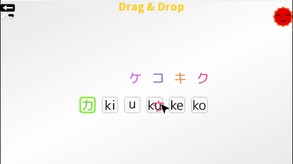
Let’s Learn Japanese! Katakana, developed and published by Dr. Cyril Splutterworth, is a compact educational title that zeroes in on a single goal: helping players become comfortable with the katakana writing system through repetition, interaction, and simple gamified exercises. Rather than attempting to cover the breadth of the Japanese language, it deliberately narrows its focus, positioning itself as an entry point for beginners who want to build a solid foundation in character recognition without being overwhelmed by grammar or vocabulary.
The structure of the experience is built around gradual learning. Characters are introduced in small groups, allowing players to absorb their shapes and sounds before moving on to more complex combinations. This step-by-step approach mirrors traditional study methods but presents them in a more interactive format. Instead of relying solely on memorization, the game reinforces learning through repeated exposure in different contexts, encouraging players to recognize patterns rather than simply recall isolated symbols. This makes the process feel more natural over time, even if it still relies heavily on repetition as its core mechanic.
What gives the game its sense of engagement is the use of mini-games and quick challenges. These activities transform what could have been straightforward drills into interactive tasks where players must identify, match, or select the correct katakana characters under varying conditions. While the mechanics themselves are simple, they serve an important role in maintaining attention and making practice feel less monotonous. Over time, these exercises help build recognition speed, which is crucial for reading fluency, even if the gameplay never becomes particularly complex or demanding.
The pacing is flexible, allowing players to progress at their own speed without pressure. Sessions can be short and focused, making the game well-suited for daily practice rather than long playthroughs. Small progression systems, such as achievements or completion tracking, provide a sense of accomplishment, but they remain secondary to the learning process itself. This design reinforces the idea that the game is meant to be a tool rather than a traditional source of entertainment, prioritizing consistency over intensity.
Visually, the presentation is clean and minimalistic, with an interface designed to keep attention on the characters being learned. The lack of visual clutter helps maintain clarity, which is essential for an educational experience centered on recognition. However, this simplicity also means the game can feel somewhat plain, lacking the variety or stylistic flair that might make it more engaging over extended periods. It does its job effectively, but it rarely goes beyond that.
The most significant limitation of Let’s Learn Japanese! Katakana is its narrow scope. Once players have mastered the katakana syllabary, there is little additional content to explore. The game does not expand into broader language skills such as vocabulary usage, sentence construction, or reading comprehension, which limits its long-term value. For players looking to continue learning Japanese beyond the basics, it will need to be supplemented with other resources. Additionally, those already familiar with katakana will find little here to justify extended use.
Despite these constraints, the game succeeds in delivering a focused and accessible learning experience. By concentrating on a single aspect of the language and presenting it in a structured, interactive way, it lowers the barrier to entry for beginners and provides a clear path toward mastery of the katakana system. It may not offer depth or variety beyond its core purpose, but it fulfills that purpose with clarity and consistency.
In the end, Let’s Learn Japanese! Katakana works best as a starting point—a practical introduction that helps players build confidence before moving on to more comprehensive study tools. It trades breadth for focus, offering a straightforward and effective way to learn one of the essential components of Japanese writing, even if its appeal diminishes once that goal is achieved.
Rating: 7/10