Incoming + Incoming Forces, developed originally by Rage Software and now available on Steam through Funbox Media Ltd, form a fascinating historical snapshot of late-1990s and early-2000s PC gaming culture—a time when 3D accelerator cards were transforming the industry and developers were eager to prove what new hardware could do. The first Incoming was designed unapologetically as a visual showcase, and even today that intention gives it a refreshing sense of confidence. Rather than easing players into its universe or offering lengthy exposition, the game throws them directly into an Earth under siege, where alien assaults batter military installations, and survival depends on split-second adaptability. Storytelling is minimal because the experience is meant to be kinetic, chaotic, and immediate. The player is not a chosen hero but one more weapon in a global effort to push back an overwhelming threat, and that simplicity gives Incoming a purity that many modern shooters, weighed down by lore and narrative obligations, lack.
What set the original Incoming apart—and still does—is its shifting perspective and varied mission design. Instead of binding the player to a single vehicle or combat style, the game rotates through turret defense, gunship piloting, ground vehicle assaults, and aerial interception. One mission may have the player fending off waves of invaders from a stationary cannon, while the next sends them soaring above deserts or frozen outposts in a fighter craft. This format keeps gameplay unpredictable and reinforces the sensation of participating in a large-scale, multi-front war rather than an isolated skirmish. Enemy encounters are designed around spectacle rather than tactical nuance, but the sheer volume of threats, explosions, and shifting objectives ensures constant engagement. It is a shooter built on reflexes and visual comprehension—something that feels distinctly arcade in spirit, even as it adopts the presentation of a 3D military sci-fi epic.
Incoming Forces, released several years later, reflects how both technology and design philosophy evolved. Instead of replaying the original’s defensive war narrative, the sequel shifts perspective entirely, placing players on the alien side following humanity’s victory. That inversion alone gives the game a more developed sense of identity, allowing players to see the conflict from a different emotional and moral standpoint. Campaign missions are more structured, pacing is steadier, and the world feels less like a tech demo and more like a cohesive story. Vehicle variety expands significantly, environments become more imaginative, and objectives require a greater degree of situational reasoning. While still action-forward, the sequel incorporates subtle strategic considerations—protecting infrastructure, escorting vulnerable units, prioritizing targets—not to create complexity for its own sake, but to give battles shape and consequence. It feels like a game that recognizes its predecessor’s strengths and tries to build outward rather than upward.
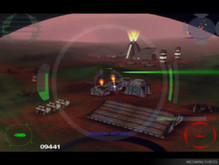
Technically, both titles embody the graphical and audio language of their eras. Incoming’s angular environments, stark lighting, and exaggerated particle effects may appear dated, but they retain a distinct retro charm, especially in motion. The color palettes, explosive feedback, and densely populated skies communicate urgency and scale without needing realism. Incoming Forces benefits from smoother textures, improved model quality, and more ambitious environmental design, showing how quickly PC hardware advanced. Sound design in both games emphasizes impact—shrill alarms, roaring engines, missile trails cutting through air, and victory stingers when objectives are completed. The audio may lack atmospheric subtlety, but its blunt force complements the arcade framing. These are games meant to be played loudly, their bombast part of their DNA.
The Steam releases are functional and accessible but intentionally hands-off. They preserve the original experiences rather than retrofitting them with extensive enhancements. Players may need to adjust resolution settings or sensitivity preferences manually, and the UI reflects late-90s PC conventions. There are no sweeping graphical overhauls, rebalanced campaigns, or reimagined interfaces—just preserved versions of two distinct shooters made available to a modern audience. For nostalgic players or enthusiasts of gaming history, this authenticity is a selling point. For those accustomed to remasters with modern QoL upgrades, loading Incoming for the first time may feel like stepping into a time capsule rather than revisiting a polished classic.
These strengths naturally come with limitations. Incoming’s mission pacing can feel repetitive in long stretches, and its foundational concept—rotation between turret and vehicle segments—may strike modern players as shallow. The original’s story barely exists beyond premise and setting, and even Incoming Forces, which attempts more narrative structure, delivers plot mostly as connective tissue rather than thematic exploration. Difficulty spikes sometimes stem from uneven encounter design rather than intended challenge. Enemy AI is straightforward, leaning on numbers rather than behavior to create intensity. These qualities are not flaws of execution but reflections of the games’ design priorities—they were built for spectacle, accessibility, and immediate fun.
What makes Incoming + Incoming Forces valuable today is not just entertainment but preservation. Together, they capture an era when PC shooters were not yet defined by military realism, open-world ambition, RPG progression systems, or cinematic storytelling. They came from a moment when a shooter could be unapologetically game-like—kinetic, modular, structurally playful, unconcerned with genre labels or long-term retention strategies. Incoming was about defending Earth at any cost; Incoming Forces was about rediscovering empathy for the defeated enemy. Neither game tries to be definitive or transformative, yet both demonstrate how much personality can emerge from simple mechanical variety and confident audiovisual design.
For players who enjoy retro arcade shooters, vehicle-driven action games, or historical curiosities from PC gaming’s transitional decades, this bundle offers a lively and surprisingly enduring experience. Incoming is best approached as a high-energy barrage of explosions and shifting perspectives, while Incoming Forces delivers a more refined take on the same formula. Together, they form a satisfying duology—one documenting the raw ambition of early 3D action games, and the other showing how that ambition matured. They are loud, unapologetic, occasionally clumsy, but vibrantly alive—games that remind us that sometimes all a shooter needs to succeed is momentum, imagination, and a sky full of enemies waiting to be blasted out of existence.
Rating: 6/10