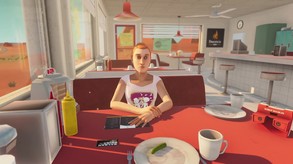
Hitchhiker is a mystery game set along lost highways, where your goal is to solve the puzzle of your own backstory.
Modeled estimate, not a reported figure. How we estimate →
Discounts
Every price cut of more than 20% we have observed, in each market that quoted one, with this game's chart position on either side of it. These are episodes, not a model: a sale is one event, and one event cannot tell you what the next one will do.
About
Genres
Sums Steam only; PlayStation, Xbox, GOG, Nintendo publish no volume signal, so the true total is higher by an unknown amount.
| Store | Price | Audience | Score | Chart | Est. revenue |
|---|---|---|---|---|---|
SteamYou are here | $2.99−80% | 167reviews | 68% | — | $5.9K |
| $19.99 | 199ratings | 70% | — | not modelled | |
Engagement
Reviews
Themes across 42 recent reviews and how positive each mention is. A keyword signal, not full sentiment analysis.
Reviews
Несмотря на почти полное отсутствие геймплея игра цепляет своим сюжетом, интересно за ним следить и придти к развязке. Словно прочитал небольшую книжку. Любителям медетативного повествования рекомендую, другим же не хватит драйва и они имеют шанс откинуться от скуки.
I really liked this game except for the ending that was too open-ended, leaving too much up to interpretation. Hitchhiker is a story-driven adventure game with a surreal twist. Gameplay is minimal, focusing mainly on narrative with a few minigames. We play as an amnesiac hitchhiker trying to piece together his forgotten past by following the tracks left behind by his missing girlfriend. We catch rides with a series of peculiar drivers, journeying along American highways while listening to their personal backstories and inspecting all kind of items within each car. The storytelling and travel aspects of the game reminded me of the game [i]Where the Water Tastes Like Wine[/i]. I wish the game had provided a clearer ending, but overall, I found it was a pretty weird and fascinating ride.
Media

Related
Related
Price dynamics, follower growth, revenue and sales trajectories with interactive tooltips
This and every other Pro feature is free until October 20, 2026. A free account is all it takes.
Reviews, worldwide (the counter carries no country): 0/day in the week to Aug 5 → 0/day in the week after.
For scale, across Steam · Top Sellers · Brazil over the last 30 days: the 25 chart moves that followed a price cut of more than 20% went a median of 10 places towards #1, and the 2,413 moves with no price cut behind them went 2 away. One store, one chart, one country — it is the only place we have enough observations to say even that.
Prices outside the United States have been collected since 6 August 2026 and chart positions since 19 July 2026, so a cut older than that has no market to compare and a market that joined later has no history yet. Nothing here is converted between currencies.
Stats
All-time low is the lowest price we've recorded for this game since we started tracking it.
Languages: English*, French, Italian, German, Spanish - Spain, Arabic, Dutch, Japanese, Korean, Portuguese - Brazil, Russian, Simplified Chinese +3 more
| $19.99 |
| 63ratings |
| 76% |
| — |
| not modelled |
| $2.99−80% | 24ratings | 68% | — | not modelled |
| $4.99−75% | — | — | — | not modelled |
Matched by title — a reused name can pair the wrong games. * is a critic aggregate. Prices and positions are each store's United States storefront; Epic charts worldwide. Audience and Score too, except Steam's, which is worldwide.
Hours played at review time, across 42 reviews with recorded playtime.
positive critical· bar length = how often the theme comes up
I just did not enjoy this game. Usually I enjoy walking simulators and visual novels just fine, but this was more on rails than a House of the Dead title. The plot did nothing for me, as the protagonist was pretty unlikeable, and none of the drivers/spirit guides/what have you were very interesting. I kept waiting for a hook or for the plot to kick in, but it just stayed flat from beginning to end. Generally if you’re going to do a game where the characters are pretty static, you need to counter that with a solid story. This just didn’t have that. As such, I was bored from beginning to end, which is a shame, as the core idea of the game had potential. Slip this and look for something more substantial in the story department.
It's funny. I read reviews as I played a couple chapters and thought "they're being too critical. I like it so far." This game is super disappointing. It doesn't look to be doing too well, so maybe that is for the best. While it does some interesting things, it ultimately fails to be a compelling or thought provoking experience worth having. I actually feel mostly used for emotional resonance in moments that hit after we get to "the end." I feel manipulated. Usually in movies they'll emotionally manipulate you to feel some way. I have always noticed it, but it never bothers me because I try to be along for the ride. If I don't like it I don't feel anything for the terrible story their telling. In this game, though, there are moments that had me, but by the end they blew it! They ultimately had no story worth telling and only vapid philosophical blather that they didn't bother to explain and clearly became another bad indie game that says "the end is whatever you think it is, man." I am on record across many games now. This is trash! Don't do this in video games! It never ever works! I find this game so disappointing because of that. The ending is terrible! They set up this, not great but fun little allegory. Then they get to the end and say "it is whatever you understand it to be, maaannnn." Screw that! What happened? You had all these thin allegorical plot lines going and you DROPPED ALL OF THEM TO MAKE NO SENSE and not explain enough! I can't be more specific because I don't like spoiling things. I have spoiled things in reviews for bad things before, but I don't like doing it. I just don't feel compelled to do that here. This is a game. I thought it would be even less of a game, but there is challenge here. There are a few simplistic puzzles which you'll solve very quickly, but it's still a game. It's not what I call an "interactive experience" (in those you have no challenge- all you do is observe and look at things). It's not a simulator- not even a hitchhiking simulator- so don't get confused. It's a very basic adventure game where you mostly sit in cars. You don't walk around. You don't explore in the traditional sense. You look around, you listen (to some ok and some very bad monologues that respond to SOME dialogue choices you make), and sometimes you interact with things to solve simple puzzles. And whats the point of having a dialogue choice if all you have is one option? That's not even interactivity at that point! Now very clearly in the log line up there it says "Hitchhiker is a mystery game set along lost highways, where your goal is to solve the puzzle of your own backstory." This never happens. You don't solve that mystery- you're given implications. Then you are left on your own, outside the game as it rolls credits, to decide if this game meant anything to you. That's it! That's what this game is. I don't think other people should play this- I absolutely do not recommend it- but I also don't feel I need to spoil it. If you absolutely must play it, because you don't believe me- hell some people like this kind of nonsense because to some people this feels powerful- that's fine, I feel you should know not to get invested in any allegory because it never leads anywhere and ends up full of plot holes! It is my opinion- don't bother. This one is not worth the short time you'll spend on it.
Здесь простая поездка в машине с отзывчивым водителем перетекает в череду загадочных событий, удивительных встреч и странных открытий. Но в целом она странная, абсурдная и небольшая затянутость некоторых эпизодов раздражало Отдельно добавил музыку из игры "Procatalipsis & Pollytikk - Две Половинки Зелёного Яблока (Июньский Снег remake)" Мой итог 5,5/10
HitchHiker, developed by Mad About Pandas and published by Versus Evil, is a narrative-driven adventure game that transforms the ordinary act of traveling into a surreal meditation on memory, identity, and loss. The player takes on the role of a mysterious hitchhiker who awakens on the side of a rural highway with no recollection of who he is or where he’s going. All he knows is that he has a toothbrush in his pocket and a strange feeling that he’s searching for something—or someone. From there, the game unfolds as a road trip across the American heartland, told through a series of five rides with different drivers. Each ride becomes a self-contained story, but all are connected by the same haunting mystery at the center of the protagonist’s amnesia. The game doesn’t follow the usual rules of adventure storytelling; instead, it invites players to sit back, observe, and reflect, letting conversation, tone, and atmosphere guide the experience rather than conventional puzzles or action. Each of the five drivers you meet on your journey serves as a mirror to some aspect of the protagonist’s forgotten past. There’s Vern, the talkative raisin farmer whose laid-back charm masks an air of melancholy; Hops, a philosophical waitress whose cryptic insights begin to unravel the player’s memories; and other characters who shift between kindness and eeriness as the journey progresses. The writing and voice acting are consistently engaging, giving each encounter a weight and texture that elevates the narrative beyond simple dialogue exchanges. Conversations unfold naturally, often starting with mundane small talk before slipping into something deeper and stranger. The game excels at creating tension through tone rather than conflict—something as simple as a pause in the driver’s voice, or a glance in the rearview mirror, can feel loaded with meaning. Each encounter feels intimate, almost uncomfortably so, as if you’re confessing secrets to a stranger on an endless drive through nowhere. The visual and atmospheric design of HitchHiker plays a huge role in shaping its emotional impact. The game’s art direction combines realism and abstraction in a way that evokes both familiarity and dreamlike dissonance. Long stretches of winding highway stretch out into hazy sunsets, while the interiors of cars are rendered with subtle detail that reflects the personalities of their drivers. The world outside the car windows feels alive but slightly off, with recurring symbols and distorted scenery that hint at the instability of the protagonist’s mind. Light, color, and weather shift to match the tone of each conversation, giving the game a sense of emotional dynamism even as its pacing remains deliberately slow. The sound design amplifies this atmosphere beautifully—the hum of tires on the asphalt, the murmur of the radio, the faint echo of voices—creating a sense of immersion that is both calming and unnerving. Every ride feels suspended in time, existing somewhere between the real and the imagined. Gameplay in HitchHiker is minimal but purposeful. Most of the interaction takes place through conversation choices, light exploration of objects within the car, and occasional simple puzzles that serve to break up the dialogue. These puzzles are not designed to challenge the player but to reinforce themes or symbolize the protagonist’s psychological state. Turning a dial, flipping a switch, or manipulating objects often has metaphorical significance rather than mechanical weight. It’s less about solving and more about connecting—each small action builds a rhythm that mirrors the introspective pacing of the story. While some players may find the lack of interactivity limiting, this design choice reinforces the central concept: you are a passenger, not a driver. The game makes you surrender control, allowing the story to unfold at its own speed, much like the slow miles of a long road trip where thought and memory intertwine. What makes HitchHiker particularly compelling is how it weaves the ordinary and the surreal into a seamless experience. The dialogue and setting feel grounded in Americana, yet strange and dreamlike events constantly creep into the periphery. Radios seem to broadcast messages meant for you, objects disappear and reappear, and conversations loop in on themselves. Time doesn’t move linearly, and reality seems to warp the closer you get to uncovering the truth. The game uses these subtle distortions to explore themes of grief, guilt, and the unreliability of memory. It’s never heavy-handed about its storytelling; instead, it lets you interpret events at your own pace. By the time the protagonist begins to recover fragments of his past, the player realizes that the journey isn’t about reaching a destination but about understanding how the mind reconstructs truth after trauma. The game’s ambiguous ending leaves much open to interpretation, emphasizing reflection over resolution. Technically, HitchHiker bears the hallmarks of an indie production, with modest graphical fidelity and a few rough edges in animation and pacing. However, its visual limitations rarely detract from the overall experience. The focus on storytelling and atmosphere ensures that the minimalist presentation feels deliberate, even poetic. The pacing is slow and contemplative, and while that may alienate players looking for a more conventional narrative arc, it suits the mood perfectly. The game invites you to slow down, listen, and think—to engage with the narrative not as a puzzle to be solved but as a story to be absorbed. The entire playthrough lasts only a few hours, but it lingers in the mind far longer, its imagery and dialogue echoing like half-remembered dreams. HitchHiker is a rare kind of interactive fiction that values emotional engagement over action or complexity. It’s a quiet, haunting, and deeply human story about memory, identity, and the strange intimacy that can form between strangers. It asks you to consider how we define ourselves through the stories we tell and the people we encounter, and how the act of remembering can be both painful and redemptive. Though its pacing and minimal gameplay won’t appeal to everyone, it stands as a powerful example of how games can convey emotion through restraint and atmosphere. It’s not about where the road leads but about what you discover along the way. HitchHiker is less a mystery to solve than an experience to feel—a meditative journey that reminds us that sometimes, the most profound truths emerge when we stop trying to steer and simply let the road take us. Rating: 7/10
If you're looking for a hitchhiking game, do yourself a huge favor and go play Road: 96 instead. It's way better in every possible way. I recently played this game, and I've already forgotten how it ended. The game is split into 5 sequences with 5 different drivers. You're supposed to piece together your own backstory, but it's quite hard when the sequences are dreamlike and not realistic. There is barely any interaction, except from choosing some dialogue and clicking on a couple of objects. The visuals are good, but it doesn't save the story from not making sense in my opinion.
Перша гра, яку я пройшов на Стімдеці, і така неоднозначна. Магічний сюжет поступово перетворився в нашарування недопрацьованих ідей. Тим не менш, в цілому враження досить позитивні. Ігрова подорож приємна: - візуально - аудіально (крім російськомовної пісні в третій главі - керування максимально просте зручне - набриднути не встигає 6,5/10
Dil desteği var, oyunun fikri güzel, çizimleri güzel fakat bir o kadar da sıkıcı.. Yani oyunu sırf sonu da sıkıcı mı diye merak ettiğim için bitirdim , sonu daha çok sıkıcıydı. Felsefi kategorisine sahip ama bulutun boğumlarından bize ne cidden salkjdlksajda Bu fiyata asla değmez, indirimlerden Road 96yı anımsattığı için almıştım fakat maalesef diyorum...
Hitchhiker - A Mystery Game is a great narrative game who deserves to be better known. The story is good, the designs are really beautiful and the ambiant is relaxing. I recommend it!!! 💛
Selling now
See how fast this game is selling right now — estimated copies and revenue per day from recent review growth.
Players by region
Where this game's players are, estimated from review languages.
Related
| Game | Estimated lifetime revenue | Reviews | Review score | Price |
|---|---|---|---|---|
| $8.3K | 45 | 93% | $11.99 | |
| — | 0 | — | — | |
| $4.2M | 23.6K | 88% | $9.99 | |
| $5.3K | 72 | 72% | $5.24 | |
| $10.6K | 43 | 93% | $12.99 | |
| $9.6K | 127 | 77% | $2.49 |
Related
| Game | Estimated lifetime revenue | Reviews | Review score | Price |
|---|---|---|---|---|
| $5.9K | 107 | 78% | $2.99 | |
| $5.9K | 60 | 62% | $5.09 | |
| $5.9K | 152 | 70% | $2.24 | |
| $5.9K | 489 | 69% | $0.99 | |
| $5.9K | 51 | 61% | $3.99 | |
| $5.9K | 157 | 85% | $1.99 |