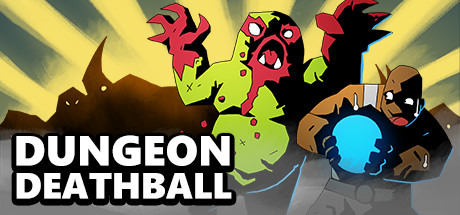
Dungeon Deathball, developed and published by Matt Glanville, is a creative hybrid of tactical strategy, roguelike progression, and sports-inspired gameplay that defies easy classification. It takes the simplicity of turn-based movement and fuses it with the tension of a high-stakes arena challenge, producing a game that feels both immediately accessible and strategically deep. Rather than relying on complex lore or drawn-out campaign structures, it focuses on moment-to-moment decision-making, where every move has weight, every turn matters, and every mistake is brutally punished. The result is an experience that is short in session length but rich in challenge, ideal for players who enjoy thinking several moves ahead in compact, replayable bursts.
The premise is delightfully strange: you control a small team of gladiators trapped in a dungeon-like arena where the only way to survive is to win a deadly ball game. Each match tasks you with navigating a grid-based field filled with traps, monsters, and hazards while trying to deliver a ball to the end zone. It’s a sport where precision and planning trump reflexes, and where your opponents are just as deadly as the field itself. What makes Dungeon Deathball so engaging is how it turns every encounter into a puzzle. You’re constantly balancing risk and reward—when to move, when to pass, when to attack, and when to risk positioning yourself dangerously close to enemies for a potential score. The turn-based format gives you time to plan, but the pressure never fades, as one miscalculation can bring your run to a quick and bloody end.
The game’s design philosophy thrives on economy and clarity. The pixel art presentation is deliberately minimalist, allowing the player to focus on tactical readability rather than visual clutter. Each tile, character, and trap is cleanly defined, ensuring that even when chaos erupts, you can clearly assess your options. Despite the retro aesthetic, the presentation feels modern thanks to fluid animations, satisfying feedback, and subtle visual polish that elevates the experience beyond its low-resolution roots. The soundtrack, built around driving chiptune beats, complements the intensity of the action perfectly—energetic but not overwhelming, evoking the tension of a match in progress while reinforcing the game’s roguelike energy.
Gameplay depth comes from its clever use of systems rather than scope. Each of your gladiators has limited stamina and a handful of actions per turn—move, attack, pass, or interact. Enemies telegraph their attacks a turn in advance, creating a constant game of prediction and counterplay. Success depends on reading these signals and adapting to an ever-changing field of danger. As you progress through the campaign, you encounter tougher enemies, new environmental traps, and faster-paced rounds that force you to think several steps ahead. The roguelike structure ensures that no two runs are identical. With procedural arenas and random modifiers, each playthrough feels like a new tactical challenge, with emergent strategies arising from moment-to-moment improvisation.
Dungeon Deathball also incorporates light progression and unlock systems that keep you coming back. Between runs, you can unlock new characters, perks, and abilities that subtly alter the dynamics of your team. These upgrades never make you overpowered; instead, they encourage experimentation and refinement of your approach. The daily challenge and leaderboard modes add replay value for competitive players, offering a reason to perfect your decision-making and improve your scores. It’s a format that rewards mastery and efficiency rather than grind—a refreshing contrast to many modern roguelikes that stretch content through repetition or heavy progression gating.
One of the most impressive aspects of Dungeon Deathball is its pacing. Runs are designed to last around 20 to 30 minutes, striking a balance between quick sessions and meaningful depth. Every decision has visible consequences, and the game wastes no time with filler or downtime. This makes it ideal for players who enjoy the strategic intensity of roguelikes like Into the Breach but want something faster and more direct. The difficulty curve is fair but demanding, forcing you to learn enemy behavior and adapt without relying on luck. Death is inevitable, but each failure feels like a lesson rather than a setback, reinforcing the “just one more run” mentality that defines the best games in the genre.
However, its strengths also highlight its limitations. Dungeon Deathball is deliberately compact, which means that its core loop—though finely tuned—can begin to feel repetitive after extended play. The limited variety in environments and enemy types may leave some players wishing for more complexity or narrative structure. Still, this focus on restraint is part of its charm. It knows exactly what it wants to be: a lean, tightly designed tactics experience without unnecessary fluff. The simplicity makes it approachable, while the difficulty ensures that mastery is hard-won.
In conclusion, Dungeon Deathball stands as a testament to how minimalism and precision can produce a deeply engaging game experience. Matt Glanville has crafted a roguelike that strips away excess and distills strategy to its purest form—every move is deliberate, every encounter a small test of wit and foresight. It’s a challenging, clever, and rewarding experience that bridges the gap between sports simulation and tactical combat with surprising elegance. While it won’t satisfy those seeking sweeping stories or grand campaigns, it offers something equally valuable: tightly honed design, genuine replayability, and the unmistakable satisfaction of turning chaos into victory through sheer strategy. Dungeon Deathball may be small in scale, but it’s built with the confidence and precision of a true indie gem.
Rating: 9/10