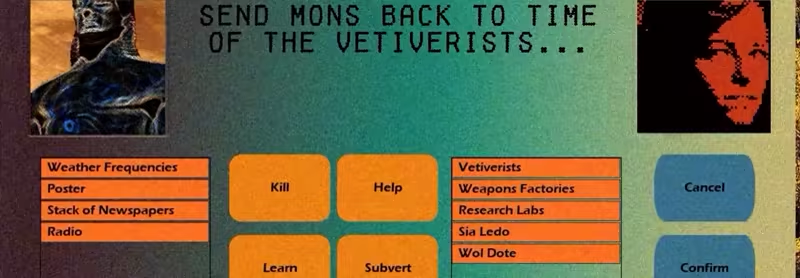
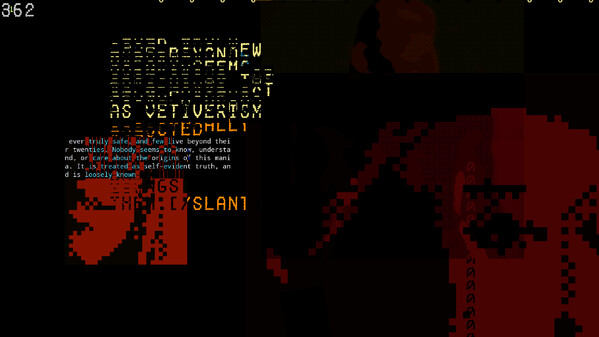
Control history in Decade - a groundbreaking indie adventure. Explore an alternate past. Discover how its ideas develop, distort, and disappear. Seed new movements, destroy others. Subvert the rise and fall of empires, art, ideologies, and individuals in this experimental narrative game.
Modeled estimate, not a reported figure. How we estimate →
Discounts
Every price cut of more than 20% we have observed, in each market that quoted one, with this game's chart position on either side of it. These are episodes, not a model: a sale is one event, and one event cannot tell you what the next one will do.
Reviews, worldwide (the counter carries no country): 0.43/day in the week to Aug 15 → 1.14/day in the week after.
For scale, across Steam · Top Sellers · Brazil over the last 30 days: the 25 chart moves that followed a price cut of more than 20% went a median of 10 places towards #1, and the 2,413 moves with no price cut behind them went 2 away. One store, one chart, one country — it is the only place we have enough observations to say even that.
Prices outside the United States have been collected since 6 August 2026 and chart positions since 19 July 2026, so a cut older than that has no market to compare and a market that joined later has no history yet. Nothing here is converted between currencies.
About
Decade is an experimental adventure game where you will send children back into the past - ten years at a time - to learn how the world ended, and what you can do to change it.

Investigate documents, technologies, and artefacts to understand history. Manage the children and their abilities as they age dramatically. Try to make the right decisions as you create multiple futures that you can venture into.

20 FMV endings to discover
A deep and complex narrative (Over 50k word script)
9 unlockable themes - each with its own soundtrack
A unique and compelling gameplay mechanic

Decade is a first-time solo-dev project.
Genres
Engagement
Reviews
Themes across 60 recent reviews and how positive each mention is. A keyword signal, not full sentiment analysis.
Reviews
[h1]A True IndieGem[/h1] Alright. [i]Decade[/i] is done and dusted. I like the description on the product page, which reads, "experimental narrative game". However, for the sake of simplicity, I'd really call it a choose-your-own -adventure style...ummm..adventure. Through TIME! [i]queue echo[/i] That said, this is certainly not your standard CYOA. I think the brilliance of this game lies in the way you explore timelines, backtracking to initiate changes in history to change the trajectory of history to modern day. Modern day being a horrible apocalypse where pretty much all humans died from war, corrupted rainstorms that destroy bodies, cannibalism, murder, etc... people were having a rough go of it in these alternate histories. An older kid, twelve years old at the time the lore begins and officially seventeen years old at the beginning of this game's actual gameplay (if I'm not mistaken) and three younger kids he has taken under his wing; are the only survivors of a mass exodus from the last known refuge of humanity. When you (the protagonist) were twelve, you were part of the final exodus of people from the last remaining refuge of humanity and along with the three other kids you are protecting, were the last four survivors from that group. Having found a new bunker with plenty of supplies, you lived out the next five years investigating the strange machinery present in said bunker. Turns out, that machinery can transport a person into any point in the past, where they will remain for ten years (although only three days pass in the present day...or was it three minutes? I don't actually recall which). The catch is, the operator can't transport themselves through time, and so you are always here in the present to witness and hopefully guide changes made by your three younger (and eventually older due to the ten years they age per jump) companions. Gameplay is actually node based. Each node represents a point in history where you believe you may be able to make changes that hopefully alter the trajectory of humanity and allow you to leave the bunker without being killed by the rain. As mentioned though, each node explored costs ten years of one of the kids' life as they live out those ten years in real time in each node explored. As you explore, you can trigger changes to history which also change the node chains available. All node chains lead to a modern day ending. Of which there are twenty in total. Each ending comes with a really cool FMV video which shows you more or less what happens based on the changes to the timeline that have been enacted and the specific ending you are witnessing. These were really cool with a lot of psychedelic film filters to make each not only unique, but also kind of reminiscent of 1970's B movie sci-fi. The effects laden ones. Additionally, there are a number of super psychedelic tracks which accompany the FMV's. These range from tunes that seem inspired by Sonic Youth, some crazy Club mixes, At the Drive-In, and of course the aforementioned 1970's psych B movie sci-fi. It's a wild and yet engaging mix. There are three true endings for the game. Good, Bad, Best. And seventeen other endings, which are mostly bad endings, lol. Well, bas for humanity. Good for us, the gamers. :) I finished fifteen of them, including the three true endings. Of those, I was able to figure out ten on my own through trial and error, and I used the flowchart available in the Guides section to catch the rest. There are a lot of seemingly superfluous items you will collect, and your kids will also end up with personality traits that largely also seem superfluous. A chunk of them definitely end up being important, but it felt like you really didn't need about half of them, although there were sometimes two options on how to trigger an event. One being the choice of kid and their stats, the other being an item. So maybe they weren't really superfluous depending on your choices. I found Decade to be a very interesting and engaging game with a lot of philosophical perspectives on humanity that made a lot of sense, especially after having witnessed the rise of the age we live in IRL, where people are as fickle as the wind and as disaffected as maybe humanity ever has been. It's an interesting expose on the way humanity can and will respond to the day and age they live in. I think the historical low of $5.99 is probably the correct price for this game, but it's definitely a worthwhile experience for people interested in engaging with some of the darker or less explored aspects of the human mind, regardless. With a splash of hope mixed in. I think it's well worth a look. Quick footnotes here: Steam's screenshot function is not functional with this game. Which is a shame. There are actually a lot of screen archer worthy moments held within. And the game did crash four times towards the end of my time playing this, seemingly once you open up the final timeline. [b]I received this license via our IndieGems Curator program.[/b] [code]If you found this review helpful and would be interested in supporting my Curator group, [url=https://store.steampowered.com/curator/32549618/]Robilar's Reviews[/url], it would be appreciated. Cheers.[/code] [code]Also follow [url=https://store.steampowered.com/curator/32732116-IndieGems/]IndieGems[/url] for more reviews like this one.[/code]
Media

Related
Related
Price dynamics, follower growth, revenue and sales trajectories with interactive tooltips
This and every other Pro feature is free until October 20, 2026. A free account is all it takes.
Stats
All-time low is the lowest price we've recorded for this game since we started tracking it.
Languages: English**languages with full audio support
Hours played at review time, across 60 reviews with recorded playtime.
positive critical· bar length = how often the theme comes up
Very interesting game to say the least. While the ending depends on the choices you make, it's not evidently clear what choices you have to make. Instead of pointing you towards a objective you are completely in free roam to change history based on the information you have at hand. Solid game
What most players will never realize is that this game is actually an ARG where when you're done playing you can look out your window and see all of the bad endings happening at once. Love when devs go the extra mile for immersion.
Things I learned from this game: - I follow Rosianism - I do not wish to murder the author of this game because of a disagreement on the nature of beauty
Decade, developed and published by Last Piscean, is a deeply unconventional narrative strategy game that leans more toward interactive fiction and conceptual design than traditional gameplay. It’s built around the idea of reshaping history through indirect intervention, asking players not to act within a world, but to interpret it, manipulate it, and gradually understand the forces that led to its collapse. The result is a slow, intellectually demanding experience that stands out for its ambition as much as for its occasional opacity. The premise immediately establishes a sense of tension and purpose. After a catastrophic event known as the “metal rain” devastates humanity, you find yourself in a bunker with three surviving children and access to a time machine. The central mechanic revolves around sending one of these children back into the past for ten years at a time. They return older, changed, and carrying the consequences of your decisions—whether in the form of knowledge, artifacts, or entirely new interpretations of history. This looping structure creates a layered system where each decade becomes both a continuation and a re-evaluation of previous actions. Gameplay unfolds through menus, reports, and conversations rather than direct control. You never see the past firsthand; instead, you piece it together through the fragments your characters bring back. This design choice shifts the focus from action to analysis. Each decision—who to send, what tools to provide, what ideological direction to pursue—has far-reaching consequences that ripple across timelines. Over time, you begin to recognize patterns and connections, slowly building an understanding of how different movements, events, and philosophies contribute to the world’s eventual downfall. What makes Decade particularly compelling is how much it trusts the player. It offers very little guidance, expecting you to engage with its systems through careful observation and experimentation. The narrative is dense and often abstract, filled with fictional ideologies and historical threads that require attention to fully grasp. When it works, this creates a powerful sense of discovery, as players begin to unravel the logic behind the game’s world. However, this same complexity can also be a barrier, making the experience feel overwhelming or unclear, especially in the early stages. The children you send through time are more than just tools—they are central to both the mechanics and the emotional weight of the game. Each has unique traits that influence how they interact with different eras, and these traits evolve as they experience multiple timelines. Watching them age and change adds a subtle but meaningful layer of consequence, reinforcing the idea that every decision carries a personal cost. It’s not just about fixing the timeline; it’s about how those attempts affect the individuals involved. Structurally, the game encourages multiple playthroughs. There are numerous possible outcomes, each shaped by the choices you make across different decades. Many of these endings are far from ideal, reflecting the complexity of the systems you’re trying to influence. Rather than offering a clear path to success, the game presents a series of possibilities, each revealing new information and prompting further experimentation. This iterative approach gives Decade a strong sense of replayability, though it also means that progress can feel slow and sometimes repetitive. Visually, the game is intentionally minimalistic. It relies on simple interface design and understated visuals, keeping the focus on text and decision-making. This approach reinforces its conceptual nature, but it may also make the experience feel less immediately engaging for players who prefer more dynamic presentation. The audio design follows a similar philosophy, providing subtle background elements that support the tone without drawing attention away from the narrative. Where Decade struggles is in its accessibility and pacing. The heavy reliance on text and abstract systems can make it difficult to fully understand the impact of your choices, leading to moments where progress feels more like trial and error than deliberate strategy. Repetition can also set in as players revisit similar scenarios in search of different outcomes. These issues don’t undermine the game’s core ideas, but they do make it a more demanding experience than most. Despite these challenges, Decade succeeds in offering something genuinely unique. It’s a game that prioritizes thought, interpretation, and long-term consequence over immediate feedback. Its exploration of themes like ideology, causality, and the nature of change gives it a depth that is rarely seen in more conventional titles. It may not appeal to everyone, but for those willing to engage with its systems, it offers a rewarding and thought-provoking experience. In the end, Decade is less about winning and more about understanding. It asks players to think critically, to experiment, and to accept that solutions are rarely straightforward. That ambition makes it uneven at times, but also memorable in a way few games achieve. Rating: 8/10

this goes insanely hard the person who left the review saying they wish they'd taken more time vs wolfing it down -- that is definitely true, take your time with this, it's very thoughtful and deserves consideration
Decade's got that sort of razzle-dazzle that you'd get from a very good New Age science fiction paperback: introspection without preaching, aesthetics backed by substance, and, best of all: a sense of humor. My only regret is that I wolfed the whole thing down too eagerly. This is a game meant to be sat and thought on. I wholeheartedly recommend it if you're an anthropology guy, an appreciator of culture in all its forms, or you think that graphic design is totally ♥♥♥♥♥♥♥'.
In short: Play this game it is Art in the best sense of the word. At times dense and heady at others poetic and beautiful this game has a lot to give and is well worth your time. It is simple gameplay wise as it is a light puzzle dialogue based game. Don't let that put you off! I really want to avoid making any allusions to story so the most I'll say is the world and it's events that you explore are awesome! You know it's good when you find yourself agreeing with a fictional philosophical movement and yet understanding that their aims and beliefs are ultimately destructive leading you to question your own judgement
while i feel i'm a bit too stupid for what the game expects of you to progress, as i've felt my reading comprehension being pushed to its limits, this is an incredible pseudo mixed media experience, with a catching philosophical dialogue attached to it. post-modern kino's journey
it's quite an achievement to be so descriptive with so few words and to be so vast in scope with sparse visuals. kinda like this review!
Selling now
See how fast this game is selling right now — estimated copies and revenue per day from recent review growth.
Players by region
Where this game's players are, estimated from review languages.
Related
| Game | Estimated lifetime revenue | Reviews | Review score | Price |
|---|---|---|---|---|
| $40.4K | 88 | 94% | $10.04 | |
| $0 | 0 | — | Free | |
| — | 0 | — | — | |
| — | 0 | — | — | |
| $0 | 32 | 91% | Free | |
| $14.1K | 68 | 87% | $6.69 |
Related
| Game | Estimated lifetime revenue | Reviews | Review score | Price |
|---|---|---|---|---|
| $26.3K | 1.4K | 93% | $0.99 | |
| $26.3K | 247 | 59% | $3.74 | |
| $26.3K | 74 | 50% | $9.99 | |
| $26.3K | 107 | 76% | $9.99 | |
| $26.3K | 74 | 70% | $14.99 | |
| $26.3K | 636 | 95% | $3.99 |