Darxanadon, developed and published by Scumhead, is a dark fantasy action-adventure game that wears its retro inspirations proudly while aiming to carve its own identity within the indie scene. Set in a decaying world where demons rise from both heaven and hell to feed on humanity’s despair, it presents a grim yet strangely alluring vision of a kingdom on the brink of annihilation. The player takes on the role of a lone warrior who awakens far from home, tasked with uncovering the origin of the demonic plague and restoring balance to a land swallowed by corruption. From its first moments, Darxanadon establishes a tone of mystery and desolation, a world that feels lived-in yet broken, one that rewards curiosity and courage in equal measure. Its storytelling is sparse, relying on atmosphere, cryptic dialogue, and environmental cues rather than exposition, allowing players to piece together the lore as they wander through its labyrinthine ruins.
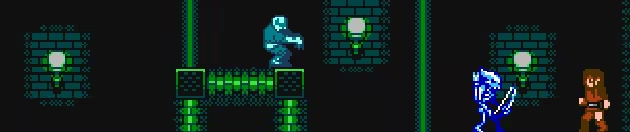
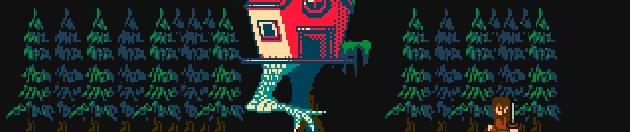
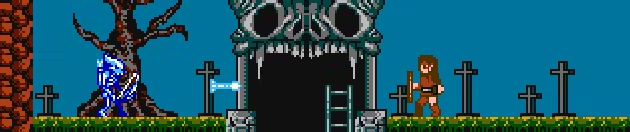
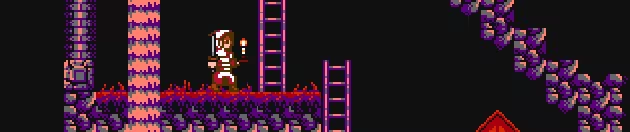
The world design is one of Darxanadon’s defining qualities. Scumhead constructs a vast, interconnected map filled with branching paths, hidden areas, and optional content that recalls the exploratory spirit of classic action RPGs. Each region—from moss-covered groves and decaying fortresses to claustrophobic caverns—feels distinct, even though the visual style remains consistent throughout. The game’s pixel art evokes the aesthetic of NES and early SNES-era adventures like Faxanadu or Zelda II, with simple but expressive character sprites and environments that prioritize readability over excessive detail. While the palette is limited, it’s used effectively to convey mood and texture: deep reds, muted greens, and shadowy blues create a melancholic ambiance that enhances the feeling of isolation. The architecture and layout often suggest forgotten civilizations and long-faded grandeur, contributing to the sense of exploring a dying world. Despite the occasional repetitiveness in tilesets or structures, the atmosphere holds steady thanks to the careful use of lighting and the contrast between serene exploration and intense combat encounters.
The gameplay follows a familiar but satisfying formula. Players can choose between several classes—fighter, archer, or magician—each offering unique playstyles that affect how battles unfold. Combat is straightforward yet deliberate, demanding timing, positioning, and awareness rather than frantic button-mashing. The swordplay is weighty, projectiles behave predictably, and magic spells provide a flexible alternative to direct confrontation. Although the controls are generally responsive, there are moments of roughness, particularly in movement and collision detection. Ladders, for instance, can behave inconsistently, occasionally causing the player to slip through or fail to anchor properly, which can disrupt the otherwise fluid sense of progression. These issues, while not game-breaking, remind players of the limitations inherent in small-scale indie productions. Nevertheless, when the systems work as intended, Darxanadon captures the essence of classic 2D adventure games, where careful observation and cautious advancement are key to survival.
Exploration is at the heart of the experience, and the interconnected structure of Darxanadon’s world rewards attentiveness and experimentation. Unlike many modern games that overexplain objectives, Darxanadon trusts the player to find their own way. Hidden rooms, secret bosses, and concealed upgrades encourage thoroughness, while shortcuts and looping pathways tie the world together in satisfying ways. This approach makes discovery feel organic and earned, though it can also lead to moments of confusion or disorientation, especially without a map or clear guidance. Backtracking is frequent, but it rarely feels tedious because new abilities or weapons often open previously inaccessible areas, echoing the sense of gradual mastery that defines the best Metroidvania-style designs. The balance between combat and exploration keeps the pacing brisk; there’s always something new to find, whether it’s a piece of lore, a new spell, or an unexpected detour leading to a powerful enemy.
Despite its strengths, Darxanadon is not without its flaws. The game’s brevity may come as a surprise to those expecting a lengthy quest—the entire adventure can be completed in a few hours, with most players finishing it in under three. While the condensed runtime ensures that the game never overstays its welcome, it also means that certain aspects of the world and story feel underdeveloped. Boss encounters, though visually distinct and often challenging, vary in complexity, with some boiling down to simple pattern recognition rather than demanding strategy. Enemy variety is modest, and certain zones reuse foes too frequently, which slightly undercuts the sense of progression. Technical polish is another area where Darxanadon shows its indie roots. Minor bugs, collision quirks, and uneven hit detection can occasionally frustrate, especially during platforming sections. However, these imperfections are balanced by the sincerity of the design—the rough edges feel less like negligence and more like the product of a passionate solo effort focused on evoking a specific era of gaming.
The sound design complements the visual and mechanical elements with a subdued but effective score. The soundtrack, composed in the style of retro chiptunes and ambient synth layers, reinforces the game’s haunting tone. Each track is short and repetitive, yet it enhances immersion rather than grating on the ear, adding an eerie rhythm to exploration. The sound effects are sharp and punchy, emphasizing the impact of sword strikes and spell bursts while maintaining the low-fi authenticity of early console audio. There is no voice acting, but the absence of dialogue performance suits the game’s minimalist storytelling approach. Instead, the soundscape contributes to the feeling of loneliness and danger that defines the world.
Darxanadon succeeds most in its ability to transport players into a bleak, interconnected fantasy world that feels simultaneously nostalgic and new. It captures the essence of the classics it draws inspiration from while avoiding the excesses of imitation. The game’s atmosphere, coupled with its modest but engaging mechanics, results in a journey that feels handcrafted rather than manufactured. Its simplicity works in its favor, focusing attention on exploration and discovery rather than complex systems or bloated dialogue. At the same time, its imperfections—short length, lack of refinement, and occasional bugs—keep it from reaching the polish of more expansive indie metroidvanias. Still, for players who appreciate old-school design philosophy and the charm of pixelated adventure, Darxanadon delivers a rewarding experience filled with quiet beauty and grim wonder.
Ultimately, Darxanadon stands as a testament to the power of focused ambition. It may not revolutionize its genre, but it embraces what makes 2D action-adventures timeless: exploration, atmosphere, and challenge. It feels like a lost relic from a bygone console generation, rediscovered and reimagined through modern indie sensibilities. For a few hours, it invites players to lose themselves in its shadowy caverns and crumbling temples, to fight, to explore, and to uncover fragments of a forgotten story. Despite its flaws, Darxanadon’s sincerity and sense of purpose make it a memorable and worthy addition to Scumhead’s growing body of retro-inspired creations.
Rating: 5/10