Colony Ship is a turn-based, party-based role-playing game set aboard a generation ship launched to Proxima Centauri. The game features a detailed skill-based character system, multiple ways to handle quests, choices & consequences, and branching dialogue trees.
Modeled estimate, not a reported figure. How we estimate →
Each in the currency that store quoted — not converted: the gap between two rows is the publisher's pricing, not an exchange rate.
Every market we collect.
Discounts
Every price cut of more than 20% we have observed, in each market that quoted one, with this game's chart position on either side of it. These are episodes, not a model: a sale is one event, and one event cannot tell you what the next one will do.
Reviews, worldwide (the counter carries no country): 1.57/day in the week to Sep 14 → 2.5/day in the week after.
About

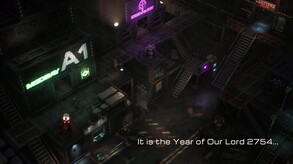
It is the Year of Our Lord 2754…
You will never feel the sun’s warmth under a blue sky, never hear the wind in the branches of a tree, and never swim in the ocean, all because you had the misfortune to be born on the Ship, chained to a fate you didn’t choose. You have never seen Earth and you’ll never see Proxima Centauri either. You’re doomed to live and die on the Ship in the name of the Mission, like your father before you, like his father before him.
The Ship is old. She had already been twenty years in service when she was rechristened Starfarer - a pretty name for a retrofitted interplanetary freighter. No one is certain the Ship will actually reach its destination, and nobody much cares, since no one alive now will live to see it. Might as well get on with your life and try to make the best of it.

Colony Ship is an isometric, party-based RPG inspired by Heinlein’s Orphans of the Sky. Your character's world is a “generation ship,” a massive spacecraft on a centuries long voyage to colonize a distant planet. The Ship's original government has been disbanded following a violent mutiny and you must negotiate a treacherous path among your fellow passengers and the contentious factions striving to dominate the Ship. Your choices will determine who your friends and enemies are.

Your adventure starts in the Pit - a sprawling heap of vacant cargo containers slowly getting filled up with those who couldn't afford to stay in the Habitat or needed to get away from its bosses and factions. Out here, folks live free and die fast...

You open your eyes to a grey hull-metal ceiling, one panel of which flickers yellow, indicating dayshift. You overslept, not that it matters. With a grunt you roll off your stained mattress and open the "window" to let some fresh air in. Like everything else around here, fresh is relative. The Ship does its best to recycle air and water, but cargo holds aren’t high on Her priority list. You breathe in metal and burning oil and look up. Four of the bridge's six projectors are still operational, shining dully down on the container towers of Cargo Hold 3, better known as the Pit, the Free City.
Calling the Pit a city is a bit of a stretch, but so is calling this reddish-brown liquid water. You've read that water is supposed to be clear and cities are supposed to be big, but no ship-born has ever seen either. Maybe in another hundred years water will look and taste like oil and people will be talking about the good old days when it was the color of rust and tasted refreshingly bitter and tangy. That's the kind of optimism that keeps you going.
The elevator crawls up a groove in the cargo hold's wall like a black steel bug that's worn a path traveling to the bridge and back. It’s time to get up there and earn a few credits, but first you need a drink.
Once tasked with adapting Terran plants and grasses to the alien environment of Proxima Centauri, Hydroponics was abandoned during the Mutiny. Quickly overwhelmed by out-of-control mutant vegetation, it more closely resembles deep jungle than a research complex. In addition to the abnormal plants, oversized pest control species –bioengineered to safeguard the colony's farmlands– are also on hand to punish the careless.

Plants were sacred to the Founding Fathers. They represented our connection to Mother Earth, our sustenance, and our future. Picture rippling fields of wheat, rye, and barley to the horizon, mighty oaks and cedars, children eating apples right from the tree. That was the vision for Proxima.
But they didn't anticipate how many seedlings would fail in the Ship's simulated environments. And unless they found a way to make good those losses, it would be catastrophic. Alien fauna and poor soil were deemed the biggest threats, so they matched the most important plant species with customized, symbiont fungi. The latter were meant to act as pest killers. Unfortunately, the fungus did its job a little too well. We’re the pests now.
Before the Mutiny, the rooftops of the Habitat supported a sprawling amusement park. There, the people of the Ship could experience at least a few of the novelties they would never enjoy on Earth or Proxima: walk barefoot on real green grass – courtesy of Hydroponics – or soft, red-tinted 'Proxima' sand; sit under tall, artificial trees; and watch the sunrise on gigantic screens suspended all around. This last was said to be indistinguishable from the real thing, not that anyone aboard had ever seen it.
Nowadays, the three remaining rooftops are heavily fortified platforms, patrolled by armed guards. The sky-screens went dark long ago, a frivolous luxury in a decaying world. The grass underfoot and simulations of golden fields have likewise vanished, replaced by watchtowers and checkpoints. With enemies on all sides, cheap entertainment is a useless distraction from reality and its harsh demands.

The Armory - Among the stars, the children of Earth wish most of all for peace. Nevertheless, the wise prepare for every eventuality – we should not survive long without the means to protect our territory and interests, with violence if every other method is exhausted. To that end, the Ship launched with a wide assortment of peacekeeping weapons and armaments, most of it looted and spent during the Mutiny and the hundred lesser skirmishes that followed.
Mission Control - The century-old wreckage of the Ship Authority government complex that once controlled every aspect of life on the Ship. Now scavengers infest this ancient seat of power, a grim reminder that nothing lasts.
The Shuttle Bay - Noah relied on doves to find a landing place, the Ship carried twelve survey shuttles for that same purpose. Even though the Shuttle Bay survived the Mutiny intact, it was looted in the interim, the life support systems and emergency supplies stripped, and the shuttle interiors used by generations of squatters.
The Factory - An abandoned industrial complex that once worked 'round the clock to produce tools for the Ship and the future colony. Why squander your precious shekels on second-hand Earth machinery, when your captive workforce will have three hundred years to manufacture everything you need?
And many others.

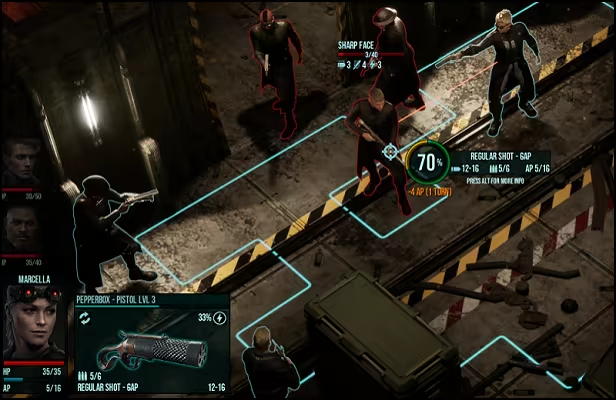
Combat is difficult. You’ll be outnumbered and outgunned, so you’ll have to figure out how to even the odds or avoid fights you can't win. There are 3 main factors determining the difficulty of any combat encounter and your character's life expectancy: Accuracy, Evasion, Damage (both dealt and taken). To succeed in combat, you must learn to control these factors.
Accuracy = 50 + bonuses from (stat + skill + feat + implant + helmet/goggles + weapon). You can easily neglect a couple of items from this list and still be a competent fighter, meaning you don't need to min/max your stats because it's only 1 item out of 6. The attacker's accuracy is further modified by the attack type (different attacks have different pros and cons), the weapon's gun's effective range, and inflicted penalties.
Evasion = bonuses from (stat + skill + feat + implant + armor handling – armor penalty). The defender's evasion is further modifier by cover (the exact bonus depends on the angle), gadget bonus (i.e., using a Disruptor Field), and smoke/spore cloud (smoke grenades and certain critters). More detailed information can be found on the character and inventory screens (which show your accuracy and evasion), and in combat, where you can press ALT when targeting while targeting to learn what is affecting the accuracy of a particular attack.
The damage depends on both the weapon and the target's defense. Incoming damage is reduced by damage resistance (feat + implants + armor) and energy shield (gadget and/or energy armor). Weapons with good penetration and/or aimed attacks can reduce enemy's damage resistance, dealing more damage.
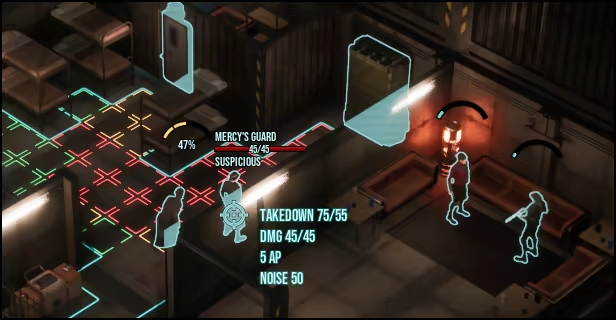

When you enter the stealth mode all tiles are automatically assigned detection values, determined by the distance from the guards, which way they're facing, their Perception, and thermal vision gear, if any. Green - safe (you remain undetected), yellow - risky (if you end your turn there, you'll be spotted), red - instant discovery. High sneaking ability (modified by skill, feats, gear) turns more tiles green and opens up more options, whereas a low level thief might see nothing but yellow and red tiles.
Each step and action (lockpicking, climbing, using computers, killing guards in stealth mode, etc) generates noise. Not a whole lot of noise to instantly alert the guards the moment you do something, but enough to add up over time and raise the guards' suspicions. The higher the guards' Perception, the faster the alert bar is filled. An alerted guard turns towards the last noise generated, meaning a lot of safe tiles will turn red and if you're in the line of vision you'll be instantly discovered.
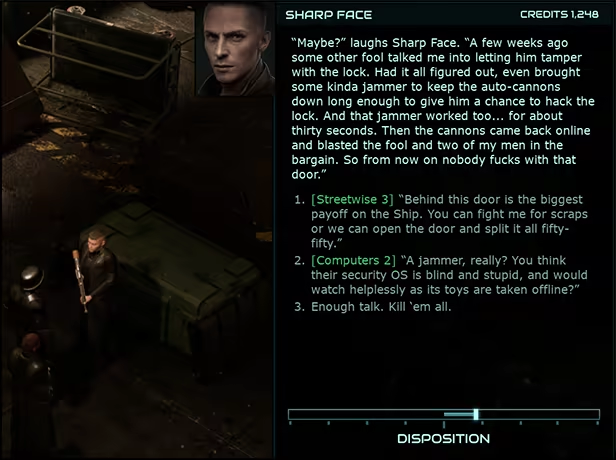

If fighting isn't you thing, you can avoid ALL combat by relying on speech skills: Persuasion, Streetwise, and Impersonate. Not every solution is in your face, but it is there. We check stats, skills, reputation, deeds, and track your choices to deliver appropriate consequences.

Ten party members (max party size is 4) and well over a hundred different characters, some less friendly than others.




Lord's Mercy was her given name. Though he wasn't a priest, her father had called himself a Man of Scripture, and never tired of reminding his only child of God's wrath, His vengeance, His untiring thirst for retribution. If that’s what her name meant, Mercy did her best to live up to it.

"Are you now?" Bartholomew looks at you with interest. "I assume you were on your way to the Habitat, but now you're stuck here... Your odds aren't looking good, my friend,” he gives you a salesman's smile. “Attacking the Black Hand's stronghold is suicide, with or without our help. If Stanton loses...” He makes a pause, letting you work it out on your own.

“You may address me as Harbinger. I no longer have a name." The bitterness in her voice is unmistakable. She must not have been doing this Harbinger thing for long. One of the guards removes his helmet to reveal an oddly leathery face with deep-sunk eyes and a lipless mouth. He grins as he savors your discomfort.
“I wonder if the Neanderthals were as shocked by your outlandish appearance,” the woman says. “I wonder if they foresaw their own doom.”


A generation ship is a perfect ant-farm where different societies can coexist within a limited space, influencing and affecting each others' development while fighting for that limited space, which adds 'the end justifies the means' pressure.

The Protectors' one truth is the Mission, and the sole way to ensure successful completion of the Mission is to follow the Old Ways. The ways of the fathers, forefathers, and Founding Fathers are together the beam upon which the Ship travels to our ultimate destination. The mutiny, which through their steadfast and timely intervention was thankfully aborted, was the ultimate betrayal of the Old Ways, of everyone who had come before, the nullification of every sacrifice and every life dedicated to the Mission.

The Brotherhood was formed to liberate the people from the iron shackles of the Ship Authority. Though their first sally -which the fossils of the old world denigrate with the term "mutiny"- failed to completely achieve this aim, the Brotherhood was successful in establishing themselves as a power to be reckoned with. The Brotherhood's initially pure goal, to free the enslaved wherever they may be, has unfortunately been sullied by the practical concerns of democracy. To bring freedom to the Ship entire must involve war, and no war may be won without sacrifice, nor may battles be managed by committee.

As inevitably happens in dark and challenging times, some citizens turn to God for reassurance, the promise of an end to pain and hunger. Or failing an end, at least a purpose. The Church of the Elect rejected both the Protectors of the Mission and the Brotherhood of Liberty as worldly fools distracted by politics and their own egos. Teaching their adherents that they were chosen by God, the Church frames the journey of the Ship as a centuries-long test of faith. When the Ship arrives at her destination, Judgment Day awaits every citizen. The righteous will be welcomed into the Promised Land of Proxima Centauri, while the unrepentant will be returned to the Hell from which we fled - Earth - to suffer for all eternity.
Plus lesser factions and groups: People of the Covenant (the mutants), the House of Ecclesiastes, formerly known as ECLSS - the Environmental Control and Life Support System, the Pit's Freemen, Thy Brother's Keepers, the Grangers, Jackson's Riflemen, and more!
Sums Steam only; GOG publishes no volume signal, so the true total is higher by an unknown amount.
| Store | Price | Audience | Score | Chart | Est. revenue |
|---|---|---|---|---|---|
SteamYou are here | $15.99−60% | 4.1Kreviews | 88% | — | $1.2M |
| $15.99−60% | 248ratings | 88% | #164 | not modelled |
Matched by title — a reused name can pair the wrong games. * is a critic aggregate. Prices and positions are each store's United States storefront; Epic charts worldwide. Audience and Score too, except Steam's, which is worldwide.
Updates
Build ids and update times come straight from Steam's PICS — the same source SteamDB reads. Patch history grows as we record new builds.
Engagement
Reviews
Themes across 890 recent reviews and how positive each mention is. A keyword signal, not full sentiment analysis.
Reviews
1 of 10 This quickly devolves into a "search the screen for anything you can possibly click" game, which is NOT at all something I'm looking for, and CERTAINLY does NOT make for a 'good' RPG. ALSO: the game WON'T LET YOU SAVE ANY MORE if you've manually saved about 20 times on a single game. EVEN IF YOU DELETE OLD and AUTO saves?!?!?!?! Who the hell made this ♥♥♥♥? I like the atmosphere, I like the cyber-tech and meta-themes, but combat is brutal, options are limited, and unless you can quickly find a magical source of credits, skills, and equipment, this story is completely on rails, giving the player no meaningful options besides the single way and storyline they wish you to play. Do not recommend.
love the game but there are just so many ways to get stuck irreversibly its ridicilous. Hard stuck at act 3 after 20 hours and i have to restart the whole game to progress which i wont. Sad to leave the game like this i was enjoying it. You have to be open to play multiple playthroughs over again to progress or just strictly follow a guide to finish the game on hard difficulty. I dont like sticking hard to guides so it became unplayagble for me. Maybe introduce certain mechanics to respec some of the stuff.
Media

Related
Related
Price dynamics, follower growth, revenue and sales trajectories with interactive tooltips
This and every other Pro feature is free until October 20, 2026. A free account is all it takes.
Reviews, worldwide (the counter carries no country): 3.78/day in the week to Aug 4 → 6.29/day in the week after.
For scale, across Steam · Top Sellers · Brazil over the last 30 days: the 26 chart moves that followed a price cut of more than 20% went a median of 7 places towards #1, and the 2,400 moves with no price cut behind them went 2 away. One store, one chart, one country — it is the only place we have enough observations to say even that.
Prices outside the United States have been collected since 6 August 2026 and chart positions since 19 July 2026, so a cut older than that has no market to compare and a market that joined later has no history yet. Nothing here is converted between currencies.
Genres
Stats
All-time low is the lowest price we've recorded for this game since we started tracking it.
Languages: English, Italian, German, Czech, Russian, Simplified Chinese, Ukrainian
Hours played at review time, across 890 reviews with recorded playtime.
positive critical· bar length = how often the theme comes up
Colony Ship: A Post-Earth Role Playing Game is a dense, unforgiving descent into a future where humanity’s last remnants cling to survival inside a colossal generation ship drifting between stars. Iron Tower Studio approaches this world with a stark, almost oppressive realism. There are no grand vistas, no hopeful utopias, and no guiding hand meant to steer you toward victory. Instead, the game thrusts you into the narrow corridors, rusted bulkheads, and suffocating political tensions of a society that has been trapped in metal for centuries. Its world feels authentically worn: every settlement, faction, and corridor is weighed down by decaying machinery, inherited grudges, failed rebellions, and the dreadful realization that most inhabitants will never live to see landfall on another world. This bleak backdrop becomes the stage for a story that prioritizes nuance over spectacle, forcing the player to navigate moral ambiguity and existential despair as part of everyday survival. The game’s character system is intricate and deeply old-school, inviting players to build not a power fantasy but a fragile, flawed human whose skills matter significantly more than their gear. Every point invested in attributes or proficiencies results in real consequences, shaping how conversations unfold, how exploration feels, and whether combat becomes survivable or nearly impossible. True to Iron Tower’s design philosophy, there is no universal build that performs well in all situations. A silver-tongued diplomat may talk their way out of conflicts but crumble instantly in combat, while a hardened fighter might win battles but struggle to unlock safer or more subtle solutions. Even outside combat, the ship’s harsh environment ensures that choices made during character creation reverberate throughout the entire playthrough, adding a weight and permanence rarely found in modern RPGs. Combat itself is tense, tactical, and unforgiving. The turn-based battles emphasize positioning, cover, and careful resource management far more than brute aggression. Mistakes are punished quickly, sometimes fatally, reinforcing the idea that every hostile encounter is dangerous rather than routine. Success in combat often hinges less on luck and more on preparation, thoughtful use of party synergies, and a deep understanding of the game’s systems. When things go well, the satisfaction is immense; when things go wrong, it feels like a natural result of the ship’s hostile environment rather than unfair design. Yet the game never confines the player to violence as the only path. Many situations encourage alternative solutions—diplomacy, stealth, manipulation, or alliance-building—though none are guaranteed to work smoothly, underscoring the unpredictability of dealing with desperate people in a closed, failing ecosystem. Exploration reinforces this feeling of danger and discovery. The ship is divided into regions that each carry their own identity, scars, and history. Walking through the Pit, the Habitat, the Factory, or the remnants of destroyed sections reveals a society fragmented into isolated pockets of survival, each with its own power players and agendas. The lack of a rotatable camera and minimalist presentation might initially seem like limitations, but they serve the atmosphere: every map layout feels deliberate, funneling you through tight corridors, chokepoints, and derelict areas that make the world feel claustrophobic and lived-in. As you traverse these environments, you encounter remnants of past conflicts, decaying technology, and ongoing factional struggles that speak to centuries of desperation. The setting itself gradually becomes a character—one that is unforgiving, indifferent, and filled with stories that weren’t meant to have happy endings. The narrative and faction dynamics form the heart of the experience. Colony Ship does not rely on cinematic flair or voice acting to convey its story; instead, it excels in evocative writing, morally complex characters, and difficult choices that rarely offer clean resolutions. Every faction is shaped by deeply held philosophies rooted in the circumstances of life aboard the ship. Whether dealing with zealots, rebels, technocrats, or opportunists, you are constantly reminded that every group has its own justification born from the same struggle to survive. The quests often present multiple viable approaches, but each solution feels like a trade-off—gaining someone’s trust might alienate another, and a peaceful resolution might foreclose future tactical opportunities. The complexity of the political landscape ensures that your decisions feel consequential, not because the game promises sweeping, cinematic results, but because every choice subtly shifts alliances, opportunities, and future paths. While the game’s design is ambitious and thoughtfully implemented, it does come with limitations that reflect its niche, hardcore focus. The static camera and utilitarian visuals can feel outdated, and those who expect modern presentation or accessibility features may find the experience harsh or unpolished. Stealth, while present, is inconsistent and not as fluid as other systems, sometimes leading to situations where a stealth-oriented approach feels underdeveloped compared to combat or dialogue. The lack of voice acting and reliance on text-driven storytelling may not appeal to players accustomed to fully voiced narratives. Yet these choices are less flaws than they are intentional design decisions: the game prioritizes depth, agency, and consequence over spectacle, leaning fully into the identity of a demanding CRPG built for players who value complexity over convenience. For those willing to embrace its unforgiving nature, Colony Ship becomes immensely rewarding. Its world feels cohesive, its challenges meaningful, and its narrative grounded in the human struggle for purpose in a place where purpose is difficult to find. Few RPGs capture the feeling of being trapped in a failing society as effectively as this one, and fewer still provide the freedom to carve out your own identity within it. Each playthrough offers new possibilities, new alliances, and new failures, creating a cycle of exploration and discovery that encourages experimentation and replayability. By the time you finish, the experience leaves a lingering impression—not of triumph, but of survival, compromise, and the understanding that in a harsh world, victories are often narrow and hard-earned. Colony Ship stands as a rare example of a role-playing game that refuses to coddle its players, rewarding those who meet its challenges with a rich, thoughtful, and engrossing journey through humanity’s bleak future. Rating: 8/10
+ Streamlining works really well -- you can fast travel almost anywhere + Specialization feels quite good + The player characters are interesting without being tryhard - The combat is a little too crunchy for its own good. Reactions are especially distracting because they are so powerful and so frequent that they can remove most of the movement and positioning from combat. - Initiative and initial positioning are also quite annoying, in that you need to specialize in initiative-related perks to ever have a chance at going first, and your party almost always starts far away from cover - These combat-related issues can make the game feel like a slog at times. I've often told myself "I'll play until the next combat" just because I need to have my head screwed on straight to get through the fights. - I think the colony ship setting would work better as science fantasy than as cyberpunk. It sounds cool in principle but most of the intro areas are just acres of shipping containers. Not exactly a vibe to stimulate the imagination. Generally really well put-together. I still have not finished, but I'm reasonably confident I will get to the end eventually. I want to see what remains.
Perhaps my favourite RPG. The length and pacing of the game is perfect, the knowledge growth for succesive runs is amazing. Like all the best games of this genre, you have to want to get into the game. I failed my first run pretty badly doing underdog lonewolf. Starting over and failing is not a bad thing when so much of the game is based on knowing what order to do things. By the time I write this review I have done all heroic traits (except for cult leader) on underdog lonewolf. At the end I could clear a run in 12-15 hours depending on the power of the build. The studio makes real RPGs as an artform, instead of merely making a product for consumption. The game is worth every penny, and I wish I had bought the game for full price, deserves all the praise. The studio uses every currency unit for developing their next game, which is already shaping up nicely. The thing I enjoy the most about the game is the progression through encounters. Many games suffer from copy paste encounters where the combat doesn't truly matter or meaningfully progress your character. Colony Ship masterfully makes every fight meaningful. So many times I had a run make or break on edging out a win with the right nades and gadgets, using all parts of my character to my advantage giving me the XP i needed to get to the crucial next level. Experience is the ultimate reward, given to you based on what skill you used to solve the encounter. In this way, the game drives you forward by rewarding the player for solving problems, giving the player the ability to solve new problems with the gained levels or gear. I think Colony Ship is the game that does this best. Only the last combat in a select few endings doesn't matter to you charactet, so all the fights are directly usefull to your progression. I always felt sad a the end of act 1 when there are no more encounters to squeeze that extra bit of XP out of. The story and setting also influenced me a great deal philosophically, really a dour tale for dour times. Sadly the game didn't sell well enough for a sequel, something I badly wanted after finding all the lore tidbits on separate runs. This doesn't change the fact that the story is self contained and has a satisfying ending in context of the world. Buy to support a great studio. Maybe you will even enjoy the game ?!?!? (Also don't be afraid of reading a build guide or adding me on steam for some quick advice. Use all you credits on utility, utility is the single greatest combat asset!)
点了设置汉化失效怎么办?不要慌!我已经在评论区找到方法了分享给大家! 解决方法为进入系统盘:\Users\用户名\AppData\Local\ColonyShipGame\Saved\Config\WindowsNoEditor 打开 GameUserSettings.ini,把里面“Culture=en”那行删掉,就又成中文了。
Just finished the game, which took me, apparently, 47 hours. One of the best RPGs out there. In the same club as Fallout 1&2, Baldur's Gate 1&2, Planescapes Torment, Arcanum, Shadowrun Dragonfall, Wasteland 2, Disco Elysium. Age of Decadence was unique, but it was like a fever dream, very hard to play. Colony Ship has the good sides of Age of Decadence but is very very playable, very smooth, and with just the right amount of feeling of unreal, justified by the crazy setting. Both the combat system and the skill system are very addicting. The ending I got felt so good!!! Cannot wait for the next project of this great studio.
[h3] A game worthy of your time and your trust [/h3] I finished Colony Ship, and for the first time in a long while I felt the desire to write a long review for a game. I will start with the main point. [b]Colony Ship is an amazing game and gives the player everything promised by its trailer and description[/b]. What you have before you is a worthy successor to the first Fallout games and Arcanum. So, if you are looking for an exciting and deep RPG that allows you to role-play and make truly meaningful choices; if you want to explore a very unusual and interesting science-fiction world and do all of this in an environment that requires you to use your brain and understand the game’s mechanics, you will definitely enjoy Colony Ship. It is a rare project nowadays, made with great love and attention to allowing the game to be completed in different ways. For me Colony Ship is undoubtedly one of the best role-playing games of recent years. It is an excellent game universe. An excellent RPG that truly allows you to play a role rather than simply complete quests. A game that gives you the opportunity to live part of a life in a strange, alien, and unexplored world. A world that constantly makes you want to learn more about it. But for me personally, the most important thing about this game was something else. Colony Ship is not afraid to ask difficult questions. And it is not afraid to give honest and direct answers to them. Today, this is a surprisingly rare quality not only in games, but in modern culture as a whole. Until almost the very end, I remained tense. I deliberately played the game without reading reviews or walkthroughs, because I wanted to see the story as its authors had intended it. Until the very last moment, I had absolutely no idea how it would end. Moreover, having been taught by the bitter experience of modern games, I was mentally preparing myself for an ending I would find unpleasant. But the final exceeded all my expectations. Above and beyond. Dear Iron Tower Studio. [b] Thank you. [/b]
Not worth the price You can approach the game in two ways. If you play non-violently, it becomes an interactive book. The problem is that the plot is bland and uninteresting. If you played Fallout, STALKER or whatever other major postapo franchise, it has been already done there, and it has been done better. On the other hand, if you choose violence, you're facing hard and punishing combat. It's not "hard, but satisfying", "hard, but realistic", no, it's just hard. If you manage to outflank your enemy and shoot him in the ear with a shotgun, congrats, you took 10% of his HP if you were lucky. In the end it boils down to who has more total HP and firepower, and guess what - it's always the enemy.
This game is fantastic. A turn-based sci-fi RPG set on a generation ship experiencing social upheaval? Sign me up! The story and characters are great, the writing impactful and concise, and the game is beautiful visually. I stayed away for awhile (way too long it turns out) because I'd read the combat was punishingly difficult. The combat was great! I found it challenging but rewarding, complex but not insurmountable by any means. There were a few reloads but nothing crazy. I look forward to replaying it with a different build and faction/story choices.
Selling now
See how fast this game is selling right now — estimated copies and revenue per day from recent review growth.
Active players
Estimated daily and monthly active players (DAU/MAU) modeled from peak concurrency.
Players by region
Where this game's players are, estimated from review languages.
Players also reviewed
The games this title's players most often review too — audience affinity.
Related
| Game | Estimated lifetime revenue | Reviews | Review score | Price |
|---|---|---|---|---|
| $19.9K | 52 | 92% | $12.74 | |
| $6K | 17 | 94% | $12.79 | |
| — | 0 | — | — | |
| — | 0 | — | — | |
| — | 0 | — | — | |
| — | 0 | — | — |
Related
| Game | Estimated lifetime revenue | Reviews | Review score | Price |
|---|---|---|---|---|
| $1.2M | 13.4K | 95% | $5.99 | |
| $1.2M | 1.9K | 98% | $19.99 | |
| $1.2M | 1.3K | 71% | $24.99 | |
| $1.2M | 7.7K | 93% | $7.99 | |
| $1.2M | 4.1K | 95% | $14.99 | |
| $1.2M | 2.3K | 87% | $19.99 |