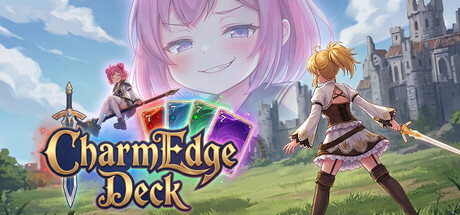
A laid-back casual roguelike-DBG game! As a genius mage-swordsman apprentice, build your magic deck, wield Enchantments and Skills, and teach that snarky young mentor a lesson!
Modeled estimate, not a reported figure. How we estimate →
About
A turn-based Roguelike deck-building game built around a unique elemental card magic system!

As a transfer student, you encounter an unexpected mentor in your entrance exam—a little girl who looks even younger than you.
And this insufferable little brat keeps mocking and messing with you—you'll have to fight back hard with your actions!
Defeat all the magical beasts she summons to clear the Trial—or, once you're fully prepared, challenge her directly and teach her a lesson.
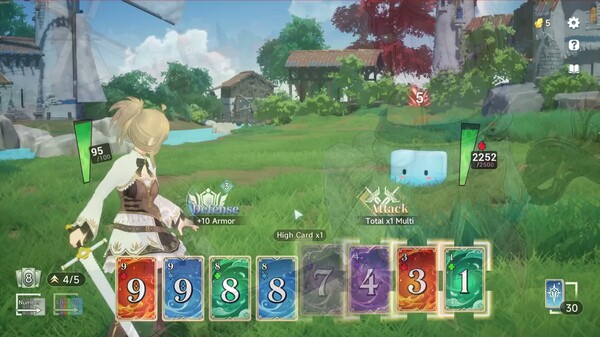
Magic Cards: Your mana is carried by a deck of element cards. Combine hand types (pairs, straights, flushes, etc.) to unleash sword arts attacks!
Wild Skills: Your Skill Cards can act as universal wilds—matching any Number/suit to complete plays, breaking past normal hand-type limits to unleash powerful spells.
Magic Sword Enchantment: Beyond attacking, you can also play 3 cards to enchant your magic sword, gaining just the right elemental advantage over enemies.
Strategic Trade-offs: Your hand is limited, so the right balance of enchanting, attacking, and defending is the key to victory.
Roguelike Randomness: Every run is one of a kind! Encounter random monster lineups, Charm upgrades, and card upgrades—adapt your deck strategy to the unpredictable Trials.
During a Trial, you can:
Collect Dragon Balls and summon the Dragon
Capture and fuse super monster cards
Unlock Mystic Outfits for different deck-building experiences
Gather 5 Sealed Ones in your hand to win instantly~
……
But don't be fooled by its lighthearted look—you'll still need strategy and tactics!
Genres
Stats
All-time low is the lowest price we've recorded for this game since we started tracking it.
Engagement
Reviews
Themes across 45 recent reviews and how positive each mention is. A keyword signal, not full sentiment analysis.
Reviews
[url=https://store.steampowered.com/curator/44181848/] 【更多适合Steam Deck的好游戏推荐,请关注GPD掌机鉴赏家!】[/url] 玩了 4 小时,单人首作能做到这完成度挺意外。核心 loop 是小丑牌那一套的变体——凑对子顺子同花放剑术,技能卡当万能牌补牌型,再拿三张给魔剑附魔打属性克制,手牌就那么几张,攻防附魔得算清楚,雌小鬼导师全程嘴你这设定还挺上头。 缺点也直说:美术音乐明摆着 AI 干的,卡面背景和 3D 角色放一块有点出戏;目前内容量偏薄,几把之后构筑思路就开始重复,后期数值还没完全张开。当 9.9 首发小品逛一圈值,别拿杀戮尖塔标准卡它。最后,作者非常棒,在群里积极和大家沟通,填补和修复可以说是达到了及时反馈,好评!
[h2] 游戏介绍 [/h2] 《魔剑王牌》是B站UP主楚清魂独立开发的一款二次元回合制类肉鸽卡牌构筑游戏,本作将元素魔法与扑克牌玩法相结合,玩家将会作为魔剑士进入古老的魔法学院,通过完成导师的艰难试炼才能顺利入学。 [h2] 故事背景[/h2] 古老的魔法学院是一个以教授魔法培养魔法使闻名的学府,而作为只钻研了剑术的女主角,在入学第一天就受到了老师的刁难,雌小鬼老师给予了你困难的试炼,需要打败她的召唤兽才能顺利入学。 [h2] 玩法特点 [/h2] 本作的玩法还是比较简单的,也就是将传统的扑克牌赋予魔法元素,选取1-10的数字,每种花色对应一种元素,玩家可以在战斗中通过打出散牌,对子,顺子,三带二,炸弹,同花或者同花顺来对敌人造成伤害。其中还有些特别的技能牌,类似于万能牌可以凑出更强力的牌型。 游戏采用线性闯关制,玩家可以自定义游戏的难度,并且每个关卡都可能对应不同的战斗,有普通战斗,奖励关卡,boss战等等,战斗采用回合制,敌我双方血量在人物侧边,某些怪物会有属性克制,通过打出克制属性的牌可以为剑附魔,然后使用魔剑技对敌人造成大量伤害。 战斗结束后玩家可以获得魔晶奖励,以及就像肉鸽一样的三选一buff奖励等等,随着关卡的推进,玩家可以自由构筑自己喜欢的牌组类型,以及搭配各种战斗buff技能,为应对下一个关卡的试炼积累经验。 [h2] 总结 [/h2] 总的来说作为一款单人开发的类肉鸽牌组构筑游戏,本作上手容易,简单的扑克牌玩法的打牌战斗,搭配上魔法元素让构筑方向上可以更为自由,战斗难度的自定义让新手或者老手都能有不错的游戏体验。 [quote]漫话漫谈,期待关注:[url=https://store.steampowered.com/curator/44551694/]写生漫话家[/url] ←节约宝贵时间,阅读省流测评~ 欢迎加入漫话家的大家庭:[url=https://steamcommunity.com/groups/14030826]写生漫话家[/url]←共同探讨游戏中的精彩片段,向玩家展现第九艺术的魅力~
Media

Related
Related
Price dynamics, follower growth, revenue and sales trajectories with interactive tooltips
This and every other Pro feature is free until October 20, 2026. A free account is all it takes.
Languages: Simplified Chinese, English, Russian, Japanese, Traditional Chinese, Portuguese - Brazil, Korean, French, German, Spanish - Spain
Hours played at review time, across 45 reviews with recorded playtime.
positive critical· bar length = how often the theme comes up
《魔剑王牌》玩下来整体特别轻松休闲,不用紧绷神经高强度操作,摸鱼的时候玩刚刚好。里面的怪物设定真的很讨喜,画风软萌,完全没有恐怖压迫感,打怪都少了几分紧张。 闯关节奏比较轻快,不用死磕练度,随拿随玩。美中不足就是玩法深度不算太高,适合用来打发碎片时间。追求硬核战斗的玩家可能会觉得不够劲,但喜欢可爱画风、想放松解压的朋友,这款可以试试。 咖喱评分:8/10
好玩,十块钱他就是石我也得尝尝咸淡,玩过之后确实能感受到作者至少是玩游戏的,里面的遗物之类设计挺有意思,还有“否决”机制很合我胃口,能把不喜欢的遗物ban掉这把不出现,好评。
This sure is a game. It is kinda a deckbuilder, but you start with like 1-10 in 4 colors and go from there. There's crazy amounts of redraw. my first run basically involved constantly redrawing until I had a straight flush of the super effective suite and then one-shotting the enemy. I'm sure the game has more depth as you proceed, but it wasn't the vibe for me. It also has a really aggressive Japanese Gatcha kind of aesthetic that hurt my eyeballs just a little. Its fine, so consider this a very soft "no" from me, but playing one run (23 battles) did not convince me I wanted to play a second run
Battles are turn based, which means you first take your action, then the enemy side performs its own, and then it’s your turn again. You repeat this until one of you is dead. Fighting is done with cards, but it’s all very simple because the majority of cards have a value on them from 1 to 9, and you deal damage depending on what you choose. You gain new cards each round, so nothing goes to waste, but you can attack with a maximum of five cards per turn. Any card can be used for an attack, but to deal the most damage, you need to create pairs, triplets, or sequences. You also need to pay attention to a card’s suit, which is associated with one of the elements, such as fire or thunder. That’s because enemies are weak to certain elements, and picking the right cards does more damage. If you pick three cards belonging to the same suit, you will additionally enchant your attack for the current turn. The three cards will be removed, and you can still attack with the rest within the same turn. There are all kinds of multipliers involved, and if you also manage to create a sequence or find a pair that matches an element the enemy is weak to, it’s very possible to take it out within a single turn. After a few rounds, you’ll start gaining unique cards with better effects. Some of them are monster cards, which also belong to a certain element but come with higher damage and additional effects, as well as skill cards that can replace a card in a sequence. Progress is roguelite, so you get to pick your next enemy after a win. Victory also grants you crystals, a currency used during a run at shops, and a free charm, which comes with various perks that boost elements and cards in general. Most charms are part of a set, so the more you have, the more additional perks you can unlock. Although charms from the same set count as one and stack up, there’s still room for only five different charm sets. If you win something you can’t use, you’ll either have to leave it or make room by recycling a charm you have equipped. This gives you a few crystals to spend at the shop, which also appears after each victory. The offer is random and limited to three items, but you can spend crystals to reroll the store’s selection. These add greatly to your multipliers, and they can sometimes lead to wild damage numbers you didn’t even know were possible. Until you reach the last fight of a run, the boss, and get destroyed. This lets you start another run, but there are no permanent bonuses, so success depends on luck.
玩起来还不错,建模虽然一般不过画面清新。可惜人物没有声音,打击就显得软绵绵的。不过毕竟便宜,能接受没配音,但如果攻防挨打时候能加上哼哼哈兮咿咿呀呀这样的语气词就好多了。另外游戏只有鼠标操作不支持手柄,在掌机上玩挺难受的,其实这种肉鸽卡牌游戏更合适闲时用掌机来一局的。
CharmEdge Deck is a turn-based roguelike deck-building game that takes familiar card-game concepts and reshapes them around elemental magic and sword combat. Developed and published by ChuQingHun, the game presents itself as a relatively relaxed and humorous alternative to more intimidating deck-building roguelikes. Its premise casts the player as a talented mage-swordsman apprentice taking an entrance examination, only to meet a young-looking mentor who immediately begins teasing and provoking them. She summons magical creatures as part of the Trial, giving the protagonist a straightforward objective: defeat the monsters, strengthen their abilities, and eventually become powerful enough to confront the mentor directly. The defining feature of CharmEdge Deck is its elemental card system. Mana is represented through cards rather than a conventional resource bar, and those cards must be combined into recognizable hand types such as pairs, straights, and flushes. Successfully assembling these patterns allows the protagonist to perform sword-art attacks. This creates a satisfying mixture of deck building and hand management because individual cards matter not only for their immediate properties but also for the combinations they can potentially complete. A weak-looking card may suddenly become extremely useful if it finishes a powerful sequence, encouraging players to evaluate the entire hand rather than automatically choosing whichever card appears strongest. Skill Cards add another layer of flexibility by functioning as wild cards. They can substitute for different numbers or suits, making difficult combinations easier to complete and opening possibilities that would normally be unavailable. Their versatility also produces meaningful decisions. Using one to complete a modest attack can solve an immediate problem, but saving it may enable a far stronger combination later. This balance between short-term survival and long-term opportunity is one of the game's more appealing strategic qualities. Cards have uses beyond direct attacks. Players can commit three cards to enchanting their magic sword, providing an elemental advantage that can be especially valuable against particular opponents. Because hand capacity is limited, attacking, defending, and enchanting all compete for the same resources. The player therefore has to consider whether sacrificing several useful cards for an enchantment will provide enough future value to justify losing potential combinations. This gives the combat system more depth than its cheerful appearance initially suggests. The roguelike structure helps prevent the underlying formula from becoming completely predictable. Monster lineups can change between Trials, while Charm upgrades and card improvements introduce different opportunities during each attempt. Instead of relying on one permanent solution, players are encouraged to adapt their decks to whatever resources and encounters appear. Randomness naturally means some runs may provide more convenient combinations than others, but it also complements a game fundamentally built around making the best possible use of an imperfect hand. CharmEdge Deck further distinguishes itself with several unusual side mechanics. Players can collect Dragon Balls and summon a Dragon, capture and fuse powerful monster cards, and unlock Mystic Outfits that alter the deck-building experience. There is even a special victory condition involving collecting five Sealed Ones in the player's hand. These ideas give the game a deliberately playful character and provide alternative goals beyond simply reducing every enemy's health through conventional attacks. They also reinforce the sense that the developer is willing to experiment rather than rigidly follow established deck-builder conventions. Its presentation follows the same lighthearted philosophy. The fantasy setting is combined with anime and cartoon influences, while the mentor-apprentice relationship supplies much of the comedic personality. The game does not appear interested in constructing an especially serious fantasy drama. Instead, the narrative primarily provides context and motivation for repeated magical Trials. Players who prefer darker storytelling or extensive character development may find the premise rather simple, but those seeking an approachable framework for tactical card battles may appreciate its more casual atmosphere. One production detail worth considering is the game's disclosed use of generative AI. A small portion of the backstory is presented through AI-generated mini-comics, while card backgrounds were generated with AI. Item icons were generated and subsequently edited, and the music also uses AI generation. This does not determine whether the underlying mechanics are enjoyable, but it is an important part of the game's artistic production and may influence purchasing decisions for players with strong preferences concerning generative content. The overall package remains focused on single-player play and includes Steam Achievements, Steam Cloud support, and Family Sharing. Ten interface languages are supported, including English, Simplified and Traditional Chinese, Japanese, Korean, Russian, French, German, Brazilian Portuguese, and Spanish from Spain. The game also has relatively modest storage requirements, reinforcing its position as a compact indie release rather than a large-scale RPG. CharmEdge Deck succeeds most clearly when its different card systems intersect. Building poker-like hands, manipulating them with wild Skill Cards, sacrificing cards for elemental enchantments, managing restricted hand space, and adjusting to randomized upgrades all contribute to battles that require more consideration than the colorful presentation might imply. Its concepts remain understandable while leaving enough room for experimentation, and the unusual secondary mechanics give repeated Trials additional personality. As a whole, CharmEdge Deck is an inventive small-scale deck-building roguelike with a clear understanding of what makes card management satisfying. Its narrative is intentionally uncomplicated and its production scope is modest, but the combination-based combat gives it a distinctive foundation. Players who enjoy experimenting with card synergies, adapting to randomized situations, and discovering unconventional victory methods should find plenty to appreciate. Rating: 7/10
以我对肉鸽卡牌的经验来看,这个游戏目前大致能对标70%-80%好评率的类似游戏。 但是考虑到作者是单人制作,售价也很便宜,还是点好评。 主要体验下来的问题如下: 1. 难度曲线不合理,也缺乏局外成长。局外只能解锁少数几个不同的开局方式,打完N0之后下一个能够解锁的东西就在N6,虽然能直接打N6但是难度增加非常陡峭,也没法靠局外成长来降低难度。路上恶心的怪物回血和禁防御机制,基本上需要碰到了特定套路才能打过(例如我全靠扣生命上限打过去的) 2. 完全成型极难,运气成分居多。加遗物槽位的奖励,基本上都要非常靠后才能拿到,前期存不下遗物,也没有锁遗物的机制。后期有位置了,却没时间找遗物,roll不到好遗物(roll遗物价格上涨飞快)。遗物太多,不要的系列否决了一个,也没有感觉到加了多少抽卡概率。经常是终于有位置了,没过两三关就要见boss了。有种道中扛了很大压力终于苟过来了,但是到最后也没有爽到,还是要苟着结束的感觉 相较而言,我倒觉得作者担心的AI美术完全不是问题,这又不是只看颜值的gal 希望作者有心思的话多多打磨玩法吧
较少有的3d二次元美少女风格打牌游戏,在小丑牌基础上增加了战斗元素,弃牌会积累防御数值,引入万能牌后配合各种牌型互相叠加制造爆炸数值,创新和爽感皆有,神器的套装系统也提供了成长深度(๑•̀ㅂ•́)و✧
Players by region
Where this game's players are, estimated from review languages.
Related
| Game | Estimated lifetime revenue | Reviews | Review score | Price |
|---|---|---|---|---|
| $14.3K | 39 | 100% | $14.99 | |
| $2.7K | 9 | 100% | $9.99 | |
| $636 | 2 | 50% | $9.99 | |
| — | 0 | — | — | |
| $120.7K | 436 | 78% | $9.99 | |
| $29.5K | 133 | 67% | $12.99 |
Related
| Game | Estimated lifetime revenue | Reviews | Review score | Price |
|---|---|---|---|---|
| $3.6K | 50 | 48% | $4.99 | |
| $3.6K | 50 | 56% | $4.99 | |
| $3.6K | 160 | 76% | $0.89 | |
| $3.6K | 54 | 100% | $3.99 | |
| $3.6K | 144 | 74% | $0.99 | |
| $3.6K | 87 | 94% | $1.99 |