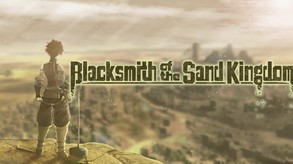
Become the court blacksmith adventuring in the Sand Kingdom in a fantasy RPG!
Modeled estimate, not a reported figure. How we estimate →
Discounts
Every price cut of more than 20% we have observed, in each market that quoted one, with this game's chart position on either side of it. These are episodes, not a model: a sale is one event, and one event cannot tell you what the next one will do.
About
Genres
Sums Steam only; PlayStation, Xbox, GOG, Epic, Nintendo publish no volume signal, so the true total is higher by an unknown amount.
| Store | Price | Audience | Score | Chart | Est. revenue |
|---|---|---|---|---|---|
SteamYou are here | $9.99−50% | 169reviews | 73% | — | $44.6K |
| $19.99 | 566ratings | 87% | — | not modelled | |
Engagement
Reviews
Themes across 41 recent reviews and how positive each mention is. A keyword signal, not full sentiment analysis.
Reviews
Cute game, if a bit lacking. Reminds me a lot of mid 00s indie/doujin rpgs, where it's rough around the edges but it knows what it wants to be. That kind of flavor appeals to me personally, so I don't regret my purchase (though it was also on sale which certainly helped), but I imagine that for a lot of people there are plenty of other games that they'd rather play before this. There are some pretty severe bugs and similar issues (nothing that outright prevents you from finishing the game, but it's annoying and will definitely turn off plenty of people) that are discussed at length in the community hub for this which makes it very hard to expect a random person to buy this game and not end up regretting it. Maybe it's better on other systems, idk? If it didn't have those problems I probably would've thumbs-uped this but as it is, I would recommend this to myself knowing my own tastes but not to a total stranger, if that makes any sense.
何が原因なのか、全ジョブ解放し終わった前後からやたらと強制終了するようになってまともに遊べない。 強制終了するのは決まってエリアチェンジする時だが、いくら安くてもまともにプレイできないならお金の無駄だ。 そしてダンジョン内での「ヒゲのおっさん」との会話イベント後は必ずフリーズするが、会話スキップすると回避できる、と思いきや峡谷エリアでのゴブリンイベントでは何故か会話スキップ機能が働かないのでそこで詰む。
Media

Related
Related
Price dynamics, follower growth, revenue and sales trajectories with interactive tooltips
This and every other Pro feature is free until October 20, 2026. A free account is all it takes.
Reviews, worldwide (the counter carries no country): 0/day in the week to Jul 21 → 0/day in the week after.
For scale, across Steam · Top Sellers · Brazil over the last 30 days: the 25 chart moves that followed a price cut of more than 20% went a median of 10 places towards #1, and the 2,413 moves with no price cut behind them went 2 away. One store, one chart, one country — it is the only place we have enough observations to say even that.
Prices outside the United States have been collected since 6 August 2026 and chart positions since 19 July 2026, so a cut older than that has no market to compare and a market that joined later has no history yet. Nothing here is converted between currencies.
Stats
All-time low is the lowest price we've recorded for this game since we started tracking it.
Languages: English, Japanese
| $19.99 |
| 120ratings |
| 78% |
| — |
| not modelled |
| $9.99−50% | 31ratings | 82% | — | not modelled |
| $9.99−50% | — | — | — | $0 |
| $19.99 | — | — | — | not modelled |
Matched by title — a reused name can pair the wrong games. * is a critic aggregate. Prices and positions are each store's United States storefront; Epic charts worldwide. Audience and Score too, except Steam's, which is worldwide.
Hours played at review time, across 41 reviews with recorded playtime.
positive critical· bar length = how often the theme comes up
it's fun. Pros: -The interface is easy to get used to. -Lots of crafting materials and choices -Good game progression and freedom, you don't really feel rushed to do anything. Relaxing game -Monsters scale up nicely, equipment upgrades are also well scaled -Good story (surprisingly) -Well drawn characters Cons: -Gets repetitive after lvl 50ish -Crashes if you run through battles too fast -Fair postgame, but would have been nice to have a secret dungeon All in all it's a fun little game, good for winding down and just casual play.
残念な事に、不具合と考えられる状況に陥ったので此方でも報告。 私の環境では峡谷MAPでのイベント戦闘直前にゲームが毎回停止し、ボス戦が始まらないためゲームも進まなくなる。 ※当然PCはシステム要件を満たしているし、負荷の掛かる様なアプリ等は同時起動もしていない。 6~7回リトライするも状況は変わらず、ダメ元でイベント会話をスキップするとボス戦開始。 何とも興醒めするが、イベント戦直前に止まる場合は一度イベントを見て止まった後に再起動。 次はイベントをスキップして戦闘を終わらせ先へ進む感じになるのだろうか。 ゲームをクリアしたくても出来なくなる最悪の事態は回避出来たが、何ともガッカリな気分。 他はダンジョンMAP間の移動時に時々落ちる程度だが、直前にオートセーブされるので影響は小さい。 リリースから時間の過ぎたゲームなので改善は期待出来ないが、この様な不具合に当たらなければ面白いゲームだと思っている。
[b]Episode I: The Phantom Grimace[/b] This is another Kemco-published game that was originally a Japanese mobile game with ads and an in-game shop that gets sold as a single complete package on PC. I'm giving this game a pass almost entirely for being cheap because I got it in a bundle and it's a budget version of the very specific Gust Atelier-series subgenre I specifically adore. If that's not your highly specific taste, you're probably going to bounce off this one. (And if you haven't played games like Atelier Sophie or Ryza, go play those, instead.) I'd consider this game nigh-unplayable if you do not have a controller. (Specifically, it seems to require it be an X-Input controller like an XBox controller, but most 3rd party controllers like my Logitech f310 controller have a switch on the back to toggle it.) In spite of being made for touchscreen and having giant buttons for everything on the screen at all times, the mouse is [i]COMPLETELY NONFUNCTIONAL[/i] in this game. The keyboard controls are also weird, expecting you to press WASD to move while hitting buttons like Z, C, Alt, 3, and Enter as the command buttons, and there's no way to rebind keys. I've had problems with the game not recognizing my controller when it starts up sometimes, but flicking the switch back and forth to make it X-input seems to make it recognize it again. (Also, the tutorial expects you to use a Playstation controller, like telling you to hit the square button to do a thing.) Gameplay has a distinctly regimented cycle. You wake up; go to the tavern; spend half the money you made yesterday just eating breakfast because picking cheaper options takes too long; go to the guild and take on new quests; go to the dungeon exactly one time per day to run around smashing ore piles for stuff and maybe fight monsters, which appear on the map but all look like the love child of the Pokemon Muk and Grimace who walk towards you so slowly it's easy to go around but which drop more loot and respawn infinitely for easy grinding; return and go to the temple to restore HP/MP for money; fight five battles in the arena for points you exchange for more mats; go home and make stuff in batches of 10+ because you need to gain experience with every item up to 100% so they get a 25% bonus to stats and sales; put whatever you want to clear from your inventory the most on the "shelves" and hit the button to open the shop, where childhood friend girl just sells a random amount of things. (Monsters don't drop money, so this and selling loot for half off is your only means of making money.) Maybe rank up your shop after you sell a hundred or so things. As soon as the shop time is over, you immediately go to bed, and the cycle begins anew. There's also a "rune" system to slot in bonuses to each piece of equipment. (Two per item, and characters can have up to six equipment slots if they can use a shield.) Runes do everything from basic +10 ATK or DEF (when slotted into equipment that only gives 14 to start with) to 20% chance to inflict blind to MP regeneration every turn, which is mandatory for caster classes. You can directly transfer runes from one piece of equipment to the next, which destroys the item the runes were pulled from. (But anything you can make once you can make by the dozens, so who cares?!) Unlike everything else, you can't manufacture runes, and they need to be found or bought. I hope you like that cycle and the theorycrafting, because it's basically the only selling point. Kill Grimace over and over in dungeons to get mats you craft and sell for profit. If that's fun for you, you'll be able to enjoy this game. Don't play this game for the plot (or "plot" either, although some of the adventurer sprites are cute.) This is the kind of game where the introduction goes like this: "Sucks your dad died." "Thanks." "What're romantically-available childhood friend characters for? Say, what is the overarching goal of this game?" "I'm going to rank up my shop and clear dungeons as a blacksmith adventurer!" "Cool, I'm just going to live in your shop as unpaid labor for the rest of the game." Maybe it's something about being Japanese, but they do not give half a ♥♥♥♥ about being cliche and just presuming you know the drill so they don't have to bother hiding it. Practically the only characters with speaking lines are in the thumbnail, and all but one is associated with one building in the town map. Enjoy the unique worldbuilding of "adventure town #2351732" this time with desert flavor! Meet unique NPCs like "gruff guildmaster guy," "sexy tavern lady," "grandfatherly priest," or everyone's favorite, "romantically available childhood friend!" The actual gameplay revolves around your renamable redhead protag-kun and four party members who have no introduction, lines, or role in the story but are the core characters who push you through the game. (You can change their names and select gender, but appearances are fixed by class, which can be changed mid-game.) Classes require unlocking through quests, so you start the game with 5 characters and 5 classes open. Quests are things like "kill 4 of this monster" or "bring me 10 of this thing you can craft." The plot-advancing special quests are something like "go to the end of the dungeon you just unlocked." It was actually a letdown to me at first, because they framed it as "inspect to make sure nothing odd is going on in the dungeon - this is a quest you can't cancel" so I thought "oh, the plot is starting now, I'm going to find some suspicious bad guys in the place they want me to inspect" but then I just go to the end of the dungeon I'd already been through twice and says "looks like this is the end - quest clear!" There are EVENTUALLY some boss monsters at the end of dungeons when you take quests, but this one really drip-feeds the anemic "plot." About the old real money store - like some of the other Kemco games, there's still a vestigial shop button, but the "gems" you are gained through pseudo-achievements like "kill 100 reptile-type monsters" or "make 10% of the total types of equipment" giving you one gem to buy things like unlocking upgrades you then have to buy in the in-game item shop with in-game money. This means it's not really pay-to-win anymore, but some items cost 60 gems, so you're basically not gaining them all in one playthrough. It's very, VERY paint-by-numbers. Again, I'm only taking what this game's dishing out because it was dirt cheap and this specific formula is my jam. There are better examples of this formula (like the Gust games, or go play Recettear if you want an action-explorer,) but this is something like the fast food version of what other games serve as higher-quality dine-in experiences. It's cheap, uninspired, but serves its role fine enough.
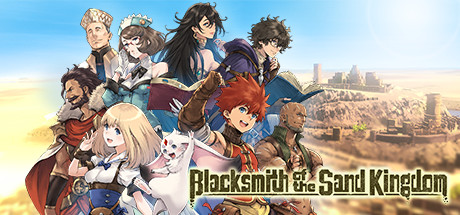
its really a shop/crafting game, all the combat is just auto battle and the dungeons are just random crafting mat nodes and respawning enemys.
Blacksmith of the Sand Kingdom, developed by Rideon,Inc. and published by KEMCO, takes a familiar role-playing framework and reshapes it around a more grounded and cyclical premise. Instead of focusing purely on heroic quests or world-saving stakes, it places the player in the role of a young blacksmith trying to build a livelihood in a desert kingdom, blending dungeon exploration with shop management and crafting progression. This shift in perspective gives the game a distinct identity, even as many of its systems draw from traditional JRPG design. The experience revolves around a consistent and clearly defined gameplay loop that becomes the backbone of progression. Players venture into dungeons to gather materials, defeat enemies, and complete guild quests, then return to town to craft equipment and sell it through their shop. This loop is simple but effective, creating a steady rhythm of exploration and production that drives the game forward. Each successful expedition feeds directly into crafting opportunities, and each crafted item contributes to financial growth and character development. Over time, this cycle becomes deeply ingrained, offering a sense of routine that can feel satisfying, though it also risks becoming repetitive if engaged with for long stretches. Crafting is where the game shows the most depth and personality. The system is built around mastering recipes, improving proficiency with specific items, and unlocking stronger variations as experience increases. Players are encouraged to specialize and experiment, gradually building an inventory that reflects both their progress and their strategic choices. The sheer number of craftable items and upgrade paths provides a strong sense of long-term development, making each new discovery or improvement feel meaningful. At the same time, the reliance on repeated crafting to advance can occasionally feel like a grind, particularly when higher-tier items require extensive material collection. Combat follows a classic turn-based structure, allowing players to assemble a party with various classes and abilities. The inclusion of multiple job options and the ability to combine roles adds flexibility, giving players room to tailor their team to different playstyles. However, despite this potential for customization, the combat itself often lacks complexity. Encounters tend to be straightforward, especially when the player keeps their equipment up to date, which reduces the need for strategic thinking. As a result, battles often serve more as a means to acquire resources than as a central pillar of engagement. The narrative takes a more understated role, providing context rather than driving the experience. The story follows a predictable arc centered on continuing a family legacy and establishing oneself within the kingdom. While it offers moments of charm and introduces a small cast of supporting characters, it rarely reaches the level of depth or emotional impact found in more story-focused RPGs. This is not necessarily a flaw, as the game clearly prioritizes its systems over its storytelling, but it does mean that players looking for a compelling narrative may find it lacking. Visually, the game embraces a colorful, retro-inspired aesthetic that aligns with its straightforward design philosophy. Character sprites and portraits are expressive enough to give the world some personality, while environments remain simple and functional. The presentation is consistent and easy to read, though it rarely stands out as a highlight. Similarly, the audio design supports the experience without drawing much attention to itself, with music that fits the tone but can become repetitive over time. One of the more interesting aspects of Blacksmith of the Sand Kingdom is how it balances progression with repetition. The steady accumulation of wealth, recipes, and upgrades provides a constant sense of forward momentum, making it easy to fall into a “just one more cycle” mindset. However, because the core loop changes very little over time, the experience can begin to feel predictable. For some players, this predictability becomes a source of comfort, turning the game into a relaxing routine; for others, it may reduce long-term engagement. Ultimately, Blacksmith of the Sand Kingdom is a focused and methodical RPG that finds its strength in the interplay between crafting and exploration. It offers a satisfying progression system and a gameplay loop that can be both engaging and relaxing, particularly for players who enjoy incremental growth and resource management. While its combat lacks depth and its story remains secondary, the game succeeds in delivering a cohesive experience built around its central concept. It may not push the genre forward, but it provides a solid and enjoyable variation on familiar mechanics. Rating: 7/10
very repetitive and the story is badly written and there glitch when theres a cutscene the characters stay still and i have to skip the cutscene to continue, but i liked the crafting and gathering, combat is mediocre at best
The lack of wiki is infuriating enough that I attempted to write my own wiki. 10/10
At first this game looks interesting..but it has many flaws. The biggest one is the time-consuming micromanagement: you get material, must refine them and than you use them in your smithy....only that with every new chapter of the game the list of possible material and items gets longer and longer. You want to equip your party with the best? It will take hours doing so....checking every item and than boost them with runes. Another flaw are the boring fights. After you reach a certain level you'll get area spells and with just 2 of them can beat every mob. After finishing the game you can play more...and get some quests with real real tough enemies.
Selling now
See how fast this game is selling right now — estimated copies and revenue per day from recent review growth.
Players by region
Where this game's players are, estimated from review languages.
Related
| Game | Estimated lifetime revenue | Reviews | Review score | Price |
|---|---|---|---|---|
| $1.6K | 8 | 75% | $7.49 | |
| $1.4K | 7 | 86% | $7.49 | |
| $594 | 3 | 67% | $7.49 | |
| $4K | 20 | 75% | $7.49 | |
| $2.6K | 13 | 85% | $7.49 | |
| $2.2K | 10 | 90% | $7.49 |
Related
| Game | Estimated lifetime revenue | Reviews | Review score | Price |
|---|---|---|---|---|
| $44.6K | 358 | 76% | $4.99 | |
| $44.6K | 319 | 92% | $8.99 | |
| $44.6K | 251 | 93% | $6.99 | |
| $44.5K | 98 | 58% | $11.99 | |
| $44.6K | 697 | 95% | $3.99 | |
| $44.5K | 111 | 95% | $14.99 |