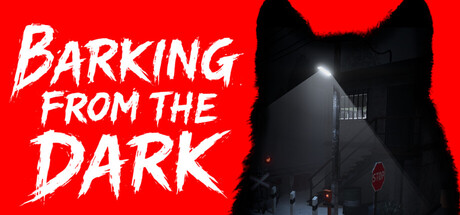
You’re on duty at crossing #13. Keep an eye on the tracks, repair the sleepers, open the barriers for trains, cars, and people. Something in the woods is barking… and it’s calling you.
Modeled estimate, not a reported figure. How we estimate →
Discounts
Every price cut of more than 20% we have observed, in each market that quoted one, with this game's chart position on either side of it. These are episodes, not a model: a sale is one event, and one event cannot tell you what the next one will do.
Reviews, worldwide (the counter carries no country): 0.57/day in the week to Aug 15 → 0.57/day in the week after.
For scale, across Steam · Top Sellers · Brazil over the last 30 days: the 26 chart moves that followed a price cut of more than 20% went a median of 7 places towards #1, and the 2,400 moves with no price cut behind them went 2 away. One store, one chart, one country — it is the only place we have enough observations to say even that.
Prices outside the United States have been collected since 6 August 2026 and chart positions since 19 July 2026, so a cut older than that has no market to compare and a market that joined later has no history yet. Nothing here is converted between currencies.
About
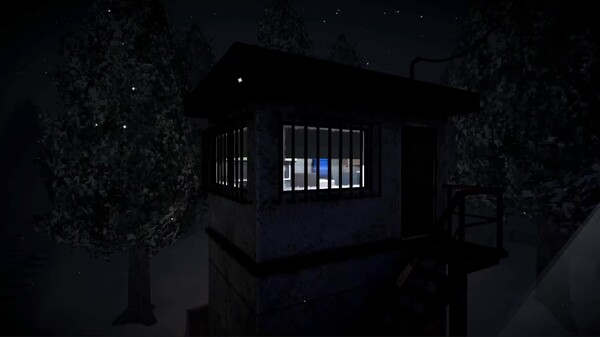
At first, the routine seems simple: tighten the bolts, raise the barriers, let trucks and heavy freight trains from the mines pass through. But the previous operator disappeared after answering the call of a strange barking coming from the forest. All that remains is a note — and the unsettling feeling that the shadows between the trees are moving on their own.
Repair the rails under flickering signal lights and answer calls from the dispatcher.
But with every passing hour, the forest comes alive — the barking grows louder, closer, more insistent.
What’s hiding out there? Dogs? Or something far worse?
The tiny control room is your only island of light.
An old computer, mechanical control panels, instructions pinned to the walls.
Everything that separates you from whatever lurks outside.
The trains cannot be stopped. The connection breaks. The wells lead downward.
Routine work slowly turns into a desperate fight for survival.
No cheap jump scares — only mounting tension, where fear is born from loneliness, silence, and the unknown.
Genres
Engagement
Reviews
Themes across 71 recent reviews and how positive each mention is. A keyword signal, not full sentiment analysis.
Reviews
Barking from the Dark takes the familiar idea of a lonely night shift and transforms it into an unsettling first-person horror experience built around isolation, responsibility, and fear of the unknown. Developed and published by shoftArt, the game places the player at a remote railway crossing where seemingly ordinary duties gradually become part of a psychological nightmare. Rather than immediately surrounding the player with monsters and obvious supernatural events, the game begins with practical work. Bolts need tightening, railway equipment requires attention, barriers must be operated, and heavy freight trains need to pass safely. This ordinary routine gives the horror a convincing foundation because the player's workplace initially feels functional rather than overtly haunted. The mystery begins with the fate of the previous operator, who disappeared after responding to strange barking coming from the surrounding forest. A note is apparently all that remains, leaving the new worker with little explanation for what happened. From this point onward, the woods become a constant psychological threat. The player may be occupied with maintaining the railway, but the knowledge that someone previously vanished makes every trip outside the control room uncomfortable. Barking can be heard beyond the illuminated crossing, and as the shift progresses, those sounds become louder and seemingly closer. The game deliberately leaves room for uncertainty over whether ordinary animals are responsible or whether something considerably more dangerous is hiding among the trees. This reliance on anticipation is one of the game's most appealing qualities. Barking from the Dark presents itself as horror that avoids depending heavily on cheap jump scares. Its fear instead develops through silence, darkness, loneliness, and the possibility that something may be observing the player. That philosophy works naturally with the railway setting. Repairing rails beneath unreliable signal lights can become threatening even when nothing immediately attacks because the player knows the surrounding darkness may conceal something. The need to concentrate on a mundane task while listening for unusual sounds creates tension through vulnerability rather than constant confrontation. The small control room becomes psychologically important because it represents the closest thing the player has to safety. Its old computer, mechanical panels, instructions, and artificial lighting provide a sense of structure in an otherwise hostile environment. Outside that room is a forest that becomes increasingly difficult to understand. The contrast is effective because the player cannot simply remain indoors. Railway operations continue regardless of the growing danger. Trains must keep moving, equipment still needs attention, and the responsibilities of the shift repeatedly force the player back into exposed areas. Communication with the dispatcher initially provides another connection to normality, but even that security becomes unreliable. The game's description indicates that communications eventually fail while the trains continue operating. This is an effective escalation because it removes another layer of reassurance without changing the player's responsibilities. The world does not conveniently stop because something frightening is happening. The railway continues functioning, and the player remains trapped between completing the job and surviving whatever is emerging from the darkness. The game also hints that the mystery reaches far beyond the immediate crossing. References to wells leading downward and an abyss beneath the player's feet suggest that exploration eventually moves into more disturbing territory. This gives the premise additional depth and prevents the experience from being defined exclusively by operating barriers and repairing tracks. Routine labor gradually gives way to survival, investigation, and descent into increasingly abnormal surroundings. The transition also reinforces the idea that the barking in the forest may only represent the surface of a larger mystery. Its visual presentation supports this atmosphere with a stylized retro appearance and pixel-influenced 3D graphics. Instead of pursuing realism, Barking from the Dark benefits from visual ambiguity. Darkness, limited illumination, and deliberately rougher imagery can make distant shapes more difficult to identify, allowing the player's imagination to fill in missing information. The industrial equipment, old-fashioned control systems, railway signals, and lonely woodland environment fit this aesthetic particularly well. The result has the character of an eerie forgotten place despite the railway itself remaining operational. Mechanically, Barking from the Dark combines adventure, simulation, stealth, and survival-horror ideas without appearing to treat any single one as an enormously complicated system. The railway duties are primarily there to immerse the player in the role and provide a repetitive rhythm that the horror can gradually disrupt. Players looking for a detailed railway management simulator may find the simulation elements comparatively straightforward, while those expecting constant action could consider the deliberate pacing slow. The experience seems much better suited to players who enjoy environmental storytelling and suspense that develops before direct danger arrives. The sound concept is particularly important. Making barking the central warning is clever because it is familiar enough to be believable while becoming disturbing through repetition and context. Hearing an animal somewhere in a forest is normally unremarkable, but hearing it repeatedly during an isolated night shift after learning that the previous worker disappeared because of it completely changes its meaning. As the noise approaches, the player begins measuring danger through sound rather than sight. This allows the game to generate anxiety without constantly revealing its threat. The overall design succeeds because its individual elements support the same central feeling. The remote crossing establishes isolation, the routine creates vulnerability, the previous operator's disappearance provides mystery, the forest supplies uncertainty, the failing communication removes reassurance, and the underground implications expand the story beyond a simple creature encounter. Even the unstoppable trains contribute to the mood by reminding the player that normal industrial activity continues while their personal situation becomes increasingly abnormal. Barking from the Dark is therefore an intriguing example of small-scale horror built around atmosphere rather than spectacle. Its limited setting could feel restrictive to players who prefer extensive exploration or action-heavy survival horror, but that confinement is also responsible for much of its tension. The game makes ordinary responsibilities feel dangerous by forcing players to perform them while wondering what is moving beyond the lights. Its greatest achievement is turning a simple railway night shift into a situation where opening the door and walking toward the tracks can feel like a serious decision. Rating: 8/10
Media

Related
Related
Price dynamics, follower growth, revenue and sales trajectories with interactive tooltips
This and every other Pro feature is free until October 20, 2026. A free account is all it takes.
Stats
All-time low is the lowest price we've recorded for this game since we started tracking it.
Languages: English, Spanish - Spain, Russian, Japanese, German
Hours played at review time, across 71 reviews with recorded playtime.
positive critical· bar length = how often the theme comes up
Like other reviews pointed out as well, the start is great. Looking at the Steam-page, I really liked the aesthetics and low-poly styling of the game. Premise was intriguing and sound design was well executed. Game ran well on my hardware so no issues there. However the thematic inconsistencies and pacing difficulties watered the experience down. Logical contradictions on how some characters acted and how they claimed to act weren't lining up, which broke immersion for me at least. I did enjoy the environmental design a whole lot and look forward to similarly styled games from the developer, but for this one, I feel like it was overall a disappointment. Also the claim about "no cheap jump scares" in the product description is a straight up lie.
фурри чуть не разорвали мне анus, короче однозначно лайк
игра хорошая о покупке не жалею, но я бы добавил бесконечный режим или что то в этом роде что бы можно было вайбово посидеть в роли работника жд путей
第13号踏切の当直係員としてお仕事をする、一人称視点ホラー! お仕事をこなしていく中で、この踏切で起きている不気味な出来事に巻き込まれていきます。 お仕事パートはシンプルながらも、ミスが許されない緊張感ある雰囲気が◎! 周りに誰一人もいない夜の山奥で過ごす孤独と恐怖感もとてもよかったです! ジャンプスケアの音量が大きめなので、予備の鼓膜は用意しておいてください(?) 約2時間くらいのプレイでエンディングに辿り着くことができました! 前半と後半でゲーム性がかなり変わり、最後まで楽しくプレイさせていただきました! エンディングの演出も個人的にとても好みです!
I Love These Types Of Games. I Somewhat Predicted The First Half OF The Game, But I Didn't Expect The Second Half. I Had Fun Throughout. My Gameplay: https://youtu.be/fTNk9iJ6AAw
Okay? Hat mich tatsächlich überrascht. Recht kurz, unter 2h. Aber ich hätte ich mir gewünscht, dass man sich in "Part 1" noch etwas mehr Zeit genommen hätte, bevor man "Part 2" zündet. Trotzdem nice!
UN JUEGO DE VERDAD BUENISIMO! para ser de una sola persona me ha dejado aparte de apretando el culo pues muy contento con esta experiencia de terror..... no me esperaba nada de como escalaria la historia y eso. buen juegazo, si pueden cómprenlo a precio completo
Кайфовая отечественная страшилка в стиле Fears of Fantom
Короткая конечно но за такую цену оно того стоит В конце конечно придушили Берите и не раздумывайте Кстати чел который в дверь влететл это 3.14ц
Players by region
Where this game's players are, estimated from review languages.
Players also reviewed
The games this title's players most often review too — audience affinity.
Related
| Game | Estimated lifetime revenue | Reviews | Review score | Price |
|---|---|---|---|---|
| — | 0 | — | — | |
| $0 | 47 | 70% | Free | |
| — | 0 | — | — | |
| $77.1K | 200 | 88% | $9.99 | |
| $29.5K | 89 | 85% | $12.99 | |
| $23.1K | 540 | 76% | $1.99 |
Related
| Game | Estimated lifetime revenue | Reviews | Review score | Price |
|---|---|---|---|---|
| $21.8K | 99 | 100% | $9.99 | |
| $21.8K | 66 | 68% | $14.99 | |
| $21.8K | 92 | 29% | $9.99 | |
| $21.8K | 92 | 76% | $9.99 | |
| $21.8K | 69 | 67% | $9.99 | |
| $21.8K | 92 | 85% | $9.99 |