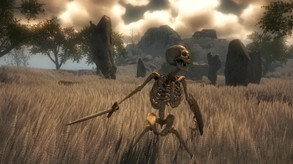
The creators of Shadowgate present Argonus and the Gods of Stone, an epic first-person adventure set in ancient Greece. Stranded on an uncharted isle, you must use your wits to unlock legendary mysteries, barter with gods and overcome an evil that threatens to bring the world to ruin...
Modeled estimate, not a reported figure. How we estimate →
About
Stats
All-time low is the lowest price we've recorded for this game since we started tracking it.
Languages: English*, French, Italian, German, Russian, Simplified Chinese, Spanish - Latin America, Portuguese - Brazil*languages with full audio support
Engagement
Reviews
Themes across 46 recent reviews and how positive each mention is. A keyword signal, not full sentiment analysis.
Reviews
Los juegos pertenecientes a la línea MacVentures series son atrayentes pero al mismo tiempo frustrantes, en tiempos pasados en juegos como Shadowgate, mientras ibas avanzando en tu aventura recolectando ítems y encontrabas una puerta de hielo que detenía tu avance era un clásico que fueras probando item por ítem cuál era el que te servía para abrir la puerta, y a veces sucedían dos cosas: El ítem estaba en una de las habitaciones anteriores y no lo agarraste, o simplemente debías usar la antorcha para derretirlo pero no sabías que antes debías encenderla con las piedras. Rara vez podía darse el caso que la puerta se abría con el ítem menos sospechado (como una flor o una capa). Súmale a eso que encima el juego estaba en total inglés, se te hacía algo parecido a jugar a la gallina ciega, pero el atractivo seguía estando presente de una u otra forma. Argonus And The Gods Of Stone es la nueva propuesta de Zojoi (antes conocida como Icom Simulations y posteriormente Infinite Ventures) que viene a sumarse a ese tipo de juegos, es un Shadowgate aplicado a la mitología griega pero con una mecánica totalmente diferente, pues ya no jugaremos con un menú donde seleccionamos nuestros movimientos sino que lo hicieron más inmerso e intuitivo y apelando al realismo, por ejemplo, cuando encuentras un ítem se muestra convincentemente cómo te agachas, se extiende tu mano, tomas el objeto y te vuelves a poner de pié. Lo mismo cuando quieres observar algo que llama tu atención, no solo está el texto explicativo, TAMBIÉN TE LO RELATA UNA VOZ EN OFF que al igual que Shadowgate, nos narra la historia pero en tiempo pasado. Quienes hemos jugado a este tipo de juegos sabremos apreciar esta clase de detalles, mientras que para otros más nuevos estos detalles pasarán como algo totalmente mundano, desapercibidos y dados por hecho. Si ya jugaste los primeros minutos te darás cuenta que el juego retoma la mecánica que en su momento se utilizó en Shadowgate 64 -Trials Of The Four Towers- y se deduce que dicha idea (que aunque innovadora pero muy criticada en su momento por los fans más acérrimos del Shadowgate original) terminará siendo destinada para esta franquicia. Ahora, siendo consciente que por muchos fans de hueso colorado que existan por los juegos del estilo Macventures Series, también hay que saber llegar al público más joven, por eso también hay que advertir que Argonus And The Gods Of Stone es un Shadowgate a prueba de tontos. Esto significa puzzles menos complicados para una audiencia más sencilla, pero compensado con un entorno más amplio para que al menos tengas que hacer ejercicio con recorridos más largos, esto significa que los ítems están mucho más dispersos por el entorno puesto que ya no estarán todos juntos en una pantalla (y lamentablemente no van a faltar los incautos que en su ignorancia dirán que es un Walking Simulator). Si nos vamos por esos derroteros entonces todos los juegos de Mc Ventures Series deberían caer en esta categoría, pero hay un detalle que pasan por alto: En los WS nada detiene tu camino, en los McVS todo el tiempo tu camino está obstaculizado, por lo tanto a mi juicio estos juegos son como los Resident Evil pero sin zombies ni armas (ocasionalmente). De hecho no sonaría descarado decir que los Macventures Series fueron la influencia directa de Alone In The Dark y de ahí a RE. Gráficamente nos entregan un juego que hace alarde de todos los efectos gráficos que se requerían para contar esta historia (efectos de agua, reflejos, neblina, lluvia, nubes al viento, iluminación, texturas, partículas) aplicados a un entorno mitológico, el resultado alcanza cierta cuota de espectacularidad pero sin llegar a ser la soberbia gráfica (es que tampoco lo necesita, con pocos recursos ya lo consiguen). Jugablemente hay sorpresas pero no las que hubiésemos esperado, y es algo que no deja de ser sorprender ya que para este tipo de juegos es lo que más se debió trabajar y en lugar de eso nos dan uno de los menús más pobres y simplones que se podían ejecutar, cuando pudieron haberse lucido haciendo gala de ello en algo más vistoso, pero redujeron todo a solo una pantalla transparente con los ítems contrastando diametralmente con el realismo que le quisieron implantar, esto no sucede con el mapa que está mucho más trabajado desde que lo despliegas como el buen pergamino que es, hasta los cinemas hechos en grafito que evolucionan a formas terminadas y que dan cuenta de tu avance. Musicalmente tenemos las deliciosas composiciones instrumentales hechas por Rich Douglas, quién repite desde el remake de Shadowgate. Este no es un juego que le gustará a todo el mundo, pero los que seguimos a la gente de Zojoi desde Icom Simulations quedaremos cuando menos atraídos por esta propuesta.
Media

Related
Related
Price dynamics, follower growth, revenue and sales trajectories with interactive tooltips
This and every other Pro feature is free until October 20, 2026. A free account is all it takes.
Hours played at review time, across 46 reviews with recorded playtime.
positive critical· bar length = how often the theme comes up
FANTASTIC EXPERIENCE!WORTH THE PRICE
I loved this game, Basic but decent graphics, good puzzles, awesome setting and story really enjoyed, people should watch a game play video to see if it is a style they like 1st.
Me parece que este juego es una maravillosa experiencia para todos los amantes de la mitología griega y los juegos de exploración y solución de rompecabezas. ¡Totalmente recomendado!
Argonus and the Gods of Stone, developed and published by Zojoi, is a mythological first-person adventure that blends the grandeur of ancient Greek legend with the structure of a classic point-and-click experience. It opens with a striking image: you are Argonus, a historian and cartographer aboard the fabled ship Argo, shipwrecked upon an unknown island. Your crewmates, once living heroes, have been turned to stone by an unseen force. With the help of a mysterious goddess who serves as both narrator and guide, you must uncover the cause of the curse, appease the gods, and navigate a land steeped in divine wrath and forgotten secrets. From its first moments, the game makes clear that it aims to be less about combat or spectacle and more about atmosphere, discovery, and mythic storytelling. The tone and pacing of the game immediately recall classic adventure titles of the 1990s, but presented through a modern visual and narrative lens. Argonus is not a hero in the traditional sense—he is an observer, a man of intellect rather than violence—and this choice defines the game’s entire design philosophy. There are no battles to fight or enemies to slay; instead, your progress depends on exploration, puzzle-solving, and paying attention to the world around you. You traverse the island’s cliffs, forests, and temples in first-person, collecting artifacts, interpreting runes, and listening to the ethereal voice of the goddess Calliope, who narrates your discoveries and offers cryptic hints. This slower, more contemplative approach allows the mythological setting to breathe, encouraging immersion rather than adrenaline. It’s a game for those who prefer to linger in a world, to absorb its mood and details rather than conquer it. The island itself is the centerpiece of the experience. Zojoi has crafted an environment that feels ancient and otherworldly, at once beautiful and desolate. Marble ruins and fallen columns litter the landscape, statues of once-living men stand as haunting reminders of divine punishment, and sunlight filters through broken archways as waves crash in the distance. The developers use this visual language effectively to convey the theme of decay—civilization eroded by time and divine neglect. The level of environmental storytelling is impressive; each location hints at its own history, often without words. The attention to light, shadow, and scale transforms the island into more than just a backdrop—it becomes a living, breathing myth in itself. Though not every texture or model is pristine, the art direction compensates with atmosphere and color. It feels like a world painted in the hues of a myth retold by torchlight. The gameplay follows a methodical rhythm. You explore areas, gather items, and solve puzzles that range from logical to obscure. Some puzzles involve deciphering inscriptions or manipulating ancient mechanisms, while others require combining items in ways that reveal hidden truths. The lack of hand-holding gives the experience an old-school sensibility that will appeal to veterans of classic adventure games, though it can frustrate those accustomed to modern conveniences. At times, progress can stall simply because an essential object blends too well with its surroundings or because a trigger event requires revisiting a previous area. This ambiguity adds to the sense of realism and mystery, but it can also test patience. The game rewards observation and memory rather than mechanical skill, making every solution feel earned but occasionally slow to uncover. Narration plays a vital role in maintaining immersion. The goddess’s voice accompanies you throughout, providing exposition, guidance, and emotional context. Her delivery is theatrical, almost poetic, which suits the mythological tone but can occasionally verge on excessive, describing actions or observations that the visuals already convey. Still, her presence serves as an effective narrative anchor, lending the story a sense of continuity and divine oversight. The writing captures the cadence of Greek mythology, with its blend of grandeur, fatalism, and moral consequence. The gods in this world are not benevolent—they are distant, temperamental, and driven by pride. Through your interactions with them, the story explores themes of hubris, mortality, and the fragile boundary between human reason and divine power. The technical presentation is uneven but serviceable. The game’s lighting and environmental composition do much of the heavy lifting, while character animation and facial detail remain limited. The soundtrack, composed of ambient tones and melancholic melodies, complements the visuals perfectly, evoking both wonder and melancholy. Sound effects are subtle but effective—waves lapping against the shore, footsteps echoing in ruined halls, and the distant calls of unseen creatures—all of which enhance the sense of isolation. Performance is mostly stable, though occasional stuttering and clipping can break immersion. The interface is minimal and clean, with contextual icons indicating interactive objects, though sometimes these icons fail to appear consistently, leading to unintentional confusion. What makes Argonus and the Gods of Stone stand out is its devotion to mythic storytelling rather than action. It does not seek to modernize Greek mythology through spectacle, as many games do; instead, it treats it with reverence and restraint. The game’s world feels ancient not just in setting, but in structure—it moves at the pace of an epic poem, deliberate and grand, but unhurried. For players willing to engage on those terms, the journey becomes quietly profound. Each discovery, each puzzle solved, and each whispered revelation adds to a growing sense of awe and melancholy. Yet the same qualities that make it atmospheric also limit its accessibility. Those seeking fast-paced gameplay or constant stimulation will likely find it too slow, too opaque, or too contemplative. Ultimately, Argonus and the Gods of Stone is a work of artistry and mood rather than mechanical precision. It evokes the timeless beauty of Greek myth through its haunting landscapes, its lyrical narration, and its emphasis on reflection over action. It asks players to embrace patience, curiosity, and imagination—to walk among ruins, listen to the echoes of gods, and uncover a story as old as tragedy itself. Though its execution can falter in pacing and technical finesse, it succeeds in what it sets out to do: to create an experience that feels like wandering through a living myth. It may not satisfy everyone, but for those attuned to its wavelength, it offers a memorable and meditative journey into the divine and the forgotten. Rating: 8/10
really good game or it would be if that STUPID WOMAN NARRATOR WASNT DOMINATING EVERYTHYING. THERE IS NO NEED FOR HER WHATSOEVER SHE SPOILS THE IMMERSION. Also graphics are no good everythings grey even the grass. so I dont know whether to recommend or not. Those things aside i enjoyed playing. Loved talos. he was scary
Selling now
See how fast this game is selling right now — estimated copies and revenue per day from recent review growth.
Players by region
Where this game's players are, estimated from review languages.
Related
| Game | Estimated lifetime revenue | Reviews | Review score | Price |
|---|---|---|---|---|
| $109K | 313 | 97% | $24.99 | |
| $3.2K | 23 | 91% | $9.99 | |
| $651 | 7 | 29% | $5.99 | |
| $926 | 6 | 50% | $7.99 | |
| $245 | 1 | 100% | $5.99 | |
| $178 | 1 | 100% | $6.99 |
Related
| Game | Estimated lifetime revenue | Reviews | Review score | Price |
|---|---|---|---|---|
| $31.1K | 155 | 67% | $8.99 | |
| $31.1K | 176 | 96% | $4.99 | |
| $31.1K | 187 | 87% | $6.99 | |
| $31.1K | 351 | 75% | $3.99 | |
| $31.1K | 134 | 90% | $7.99 | |
| $31.1K | 268 | 93% | $7.99 |