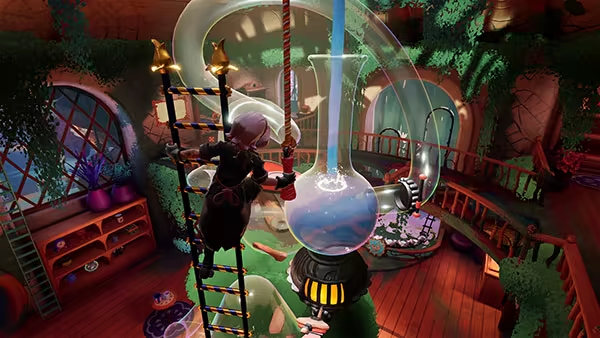
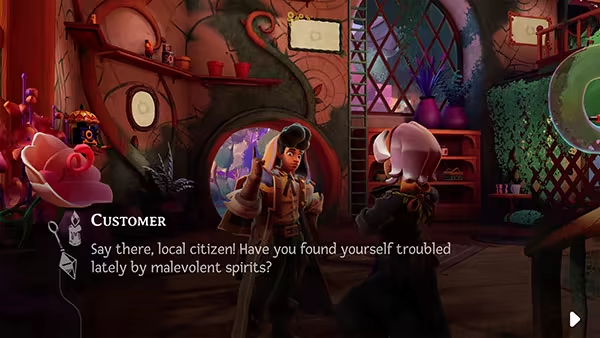
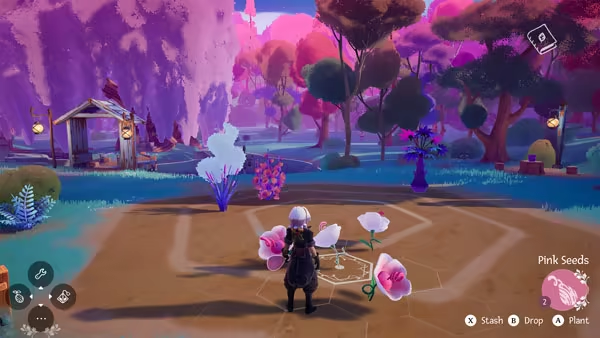
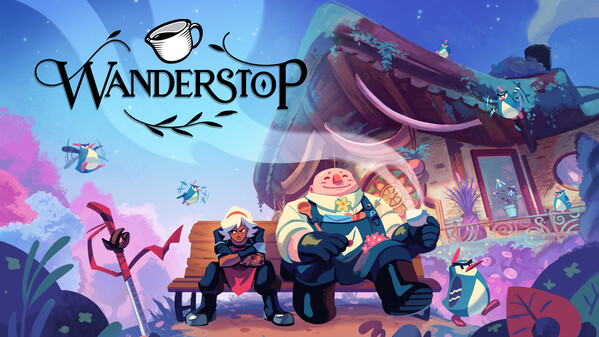
From the creator of The Stanley Parable and The Beginner’s Guide comes Wanderstop, a narrative-centric cozy game about change and tea.
Modeled estimate, not a reported figure. How we estimate →
Prices
Each in the currency that store quoted — not converted: the gap between two rows is the publisher's pricing, not an exchange rate.
Discounts
Every price cut of more than 20% we have observed, in each market that quoted one, with this game's chart position on either side of it. These are episodes, not a model: a sale is one event, and one event cannot tell you what the next one will do.
Reviews, worldwide (the counter carries no country): 1/day in the week to Aug 22 → 2.14/day in the week after.
For scale, across Steam · Top Sellers · Brazil over the last 30 days: the 25 chart moves that followed a price cut of more than 20% went a median of 10 places towards #1, and the 2,413 moves with no price cut behind them went 2 away. One store, one chart, one country — it is the only place we have enough observations to say even that.
Prices outside the United States have been collected since 6 August 2026 and chart positions since 19 July 2026, so a cut older than that has no market to compare and a market that joined later has no history yet. Nothing here is converted between currencies.
About


Genres
Sums Steam only; PlayStation, Xbox, Nintendo, Epic publish no volume signal, so the true total is higher by an unknown amount.
| Store | Price | Audience | Score | Chart | Est. revenue |
|---|---|---|---|---|---|
SteamYou are here | $24.99 | 3.2Kreviews | 93% | — | $3M |
| $24.99 | 721ratings | 93% | — | not modelled | |
Updates
Build ids and update times come straight from Steam's PICS — the same source SteamDB reads. Patch history grows as we record new builds.
Engagement
Reviews
Themes across 820 recent reviews and how positive each mention is. A keyword signal, not full sentiment analysis.
Reviews
I've been an advocate for the importance of friction in games for a long time, and people who have heard me rant about this know that I believe very strongly that even "cozy" games benefit from being challenging or even frustrating at times. Wanderstop is not challenging in the traditional way that games usually are- it never asks for particularly precise inputs or timing and there are few if any real consequences for doing a task "wrong"- but Wanderstop is emotionally challenging in a way that I think makes it particularly unique and compelling among games. So often video games are power fantasies. So often video games offer worlds that revolve around the player, where the player has agency, control, the ability to change the world, the ability to accomplish anything, the ability to make clear, quantifiable progress. Wanderstop denies you all these fantasies. Wanderstop is a game where measures of progress are repeatedly wiped. You will grow a beautiful garden, collect lovely trinkets, arrange your space, and then the season will change and it will all be gone. You will meet characters with interesting arcs, and you will not get to see the end of those arcs. Wanderstop is not a power fantasy, it's the opposite. Wanderstop is a game where you are not in control. The world does not revolve around you. It's not about you, or what you want. It just is. But at the same time, Wanderstop takes you gently by the hand, offers you a warm cup of tea, and asks you to make peace with this lack of control. Will you still find meaning in these tasks, knowing that all evidence of them will go away? Will you still connect with these characters, even though they will leave you? Making this cup of tea with these ingredients for this customer won't make any numbers go up. Will you do it anyway? I found it difficult to accept, the first time my progress was wiped by this game. It's so easy to get overly fixated on external markers of progress, in both games and in real life. Wanderstop came to me at a time when I had lost sight of why I was doing the things I was doing, and even though it was difficult, it was ultimately healing to be reminded that sometimes doing a task really is just about the simple pleasure of doing the task. It's a beautiful philosophy that I'd like to see more games adopt, and it's expertly conveyed here.
Media

Related
Related
Price dynamics, follower growth, revenue and sales trajectories with interactive tooltips
This and every other Pro feature is free until October 20, 2026. A free account is all it takes.
Every market we collect.
Stats
All-time low is the lowest price we've recorded for this game since we started tracking it.
Languages: English*, French, Italian, German, Spanish - Spain, Japanese, Simplified Chinese, Spanish - Latin America, Traditional Chinese, Korean, Portuguese - Brazil*languages with full audio support
| $24.99 |
| 99ratings |
| 94% |
| — |
| not modelled |
| $24.99 | — | — | — | not modelled |
| $24.99 | — | — | — | not modelled |
Matched by title — a reused name can pair the wrong games. * is a critic aggregate. Prices and positions are each store's United States storefront; Epic charts worldwide. Audience and Score too, except Steam's, which is worldwide.
Hours played at review time, across 823 reviews with recorded playtime.
positive critical· bar length = how often the theme comes up
I can't say I'd recommend this game. It pretends to be an relaxing game, but it prefers to make you feel like you're wasting your time and ends up annoying you. You spend time decorating the place not because you're told to, but because you want to, only for all of the progress you made to be reset. Finding trinkets and putting them on shelves? Gone. Decorating all the pots with various flowers? Gone. All the cups you found and prepwork you did with getting fruits and Tea leaves? Gone. The Game quickly teaches you that putting any effort in is ultimately meaningless when you switch the seasons. So why bother at all afterwards? You do the bare minimum to put up with the increasingly annoying requests for drinks. Then the game teaches you that you will encounter people in your life and you won't see a resolution to their problems every time. A bitter but true lesson. ... [b] Except for the fact that they pull that with the Protagonist too. [/b] All those hours you spend getting to know Alta, her inner thoughts and feelings by drinking the different fruit tea's yourself? Doesn't matter. It ends with her walking out of the forest and that's it. There is no resolution, any dialogue choices you made don't matter at all. You don't even get the satisfaction of knowing what her future looks like, not even a basic binary ending slide with "she became a fighter again" or "she stopped and sought out a simpler life." [spoiler] No real resolution either to her being a ♥♥♥♥♥♥ person. She attacked one person, and almost attacked a child later on. The best she does is somewhat recognize she's a bad person. [/spoiler] It's incredibly ironic that you just feel burnout by this game by the end of it. Given that the whole theme of the game is burnout and learning to just relax.
I don’t know what to say, except that I wasn’t expecting it to hit me this hard. After all, it’s just a game. And yet “just a game” was exactly what I needed. Life is life, and having a medium you can pour yourself into, now and then, matters. At first, I didn’t quite catch the theme. I wanted cozy tea shop management. I got life advice that actually sticks. I stepped away from the game a few times. Saying goodbye to some characters felt like betrayal, or like a shortcut from the devs, and I couldn’t accept it. Then life kept being life, and I had to come back, to learn how to say goodbye. Then I learned to be kinder. Then I learned to allow myself to be. Life is life, and it’s maybe not everyone’s cup of tea. But we do need to fill our cup and rest sometimes. Not run all the time. Not drink it all at once. Saying hello matters as much as saying goodbye, because you never know when it’ll be the last time. In everyone, we can see a slice of our own life. And I guess… I guess I’m okay leaving that cozy shop now, and going back to what I needed to return to. I can trust myself.
One of my favourite games of this year that deals with the idea of burnout and needing to be ok with not controlling everything really well. It deserved more recognition and love than it got this year.
Wanderstop is probably one of the most impactful pieces of media I ended up consuming this entire year. A stacked team of developers came together to create a cozy game that has not only shifted how I look at myself, but also left me asking [i]why[/i] I play video games ever since. It's not for everyone -- I highly recommend going through the demo first -- but if anything about Alta clicks with you, even if its parts that you might not like, then this game is absolutely worth giving a shot.
This is the weirdest review to write. You will either love or hate this game... or maybe both? And that is the point??? Did I enjoy this game - not really. Do I recommend it - Yes? I think?? I really really really wanted to like this game more... but that was the point? If you are expecting a cozy farming or business simulator - this is not that game. Like many, I was drawn to the game's story because I too am a burned out perfectionist. The initial gameplay, setting, and characters were great... but locking you out of finishing quests after a certain amount of time killed it for me. But I guess that is the point? The game teaches you a lesson whether you like it or not. It is an absolute master class on using the medium of video games to tell a story, make a point, and change the player. Though it advertises itself as a simulation game, it would be better compared to a visual novel. I did not finish the game completely. I found myself forcing myself to play the game despite not really enjoying any of the gameplay elements. The story is there, but it goes s l o w l y, and will lock you out of quest lines after a certain amount of time, which was what caused me to stop playing... which I guess in itself still ends up being on theme. Even after all that... I don't know if I would change anything about the game. I think it does exactly what it is meant to do, and that is to not be a fun game. 10/10 recommend it as a piece of art. 3/10 do not recommended as a cozy sim game.
I'm sure my immediate, visceral love of this game about burnout and learning to be kind to yourself isn't a reflection of my mental well-being and/or the state of the world at large. Probably nothing to worry about. That love was tested by a few questionable game design choices; some quest lines are missable if you do things out of order with no indication of what the 'correct' order is, the games inventory system isn't designed to handle the sheer quantity of stuff the game asks you to hold on to, the cabinets are awkward to use and don't hold much, and if you just drop things on the floor the always-adorable sometimes-frustrating pluffins are likely to waddle away with them. But the gameplay is soothing, the art is beautiful, the characters are endearing (if dev's could provide Boro's address pls? I'd like to send him an invitation to my wedding), and once you've finished the game you unlock chapter select making it easy to go back and get those missed quests. Plus, all achievements are based on time spent playing the game, so there is no extra pressure on those of us with completionist leanings. Wanderstop is, overall, a lovely place to stop for a while.
[h1] Recommended, with caveats [/h1] A thoughtful and well-written game that explores themes of burnout, perfectionism, familial trauma, and obsessive compulsive behavior. As a "former gifted kid turned struggling adult" I related quite well to the themes the game presented. Up front, if you're looking for a farming-, life-, or shopkeeping-sim like Stardew Valley, Animal Crossing, Recettear, or the like, Wanderstop is very much not those genres despite the Steam tags. It's more of a narrative experience with (very) light gameplay and puzzle elements (the solutions to which are always freely available through an in-game hint system). It's a peculiar game. From the Steam tags, you'd expect it to be a game you could sink a lot of time into, but it's not - it's a narrative game in five discrete chapters (more on that later), and I completed it in about 11 hours. The game wants you to take it slow, but the side mechanics - finding trinkets, taking photos, decorating the shop, interacting with the admittedly-adorable and occasionally-troublesome Pluffins - were not engaging enough that I cared to spend much time with them. Animal Crossing, this is not. But that's also sort of the point, and the game - through its therapist-analog and all around delightful character Boro - will be the first to tell you to experience as many or as few things as you like, at your own pace. Genre confusion aside, there are three reasons I'm hesitant to give Wanderstop a full-throated endorsement, two of which are minor mechanical spoilers. 1. (Non-spoiler) The game has some bugs. I encountered several visual bugs (e.g. tools being incorrectly shown in hand), and a couple instances of blocked inventory access that required exiting and reopening the game. These were not gamebreaking for me, but there are reports on the forums of a possible progression-blocking bug in the final chapter. 2. (Mechanical spoiler) [spoiler] In each chapter, you reach a point in one of your visitors' narratives that blocks any further progress in ANY visitor's narrative. You do not know in advance which interaction or character will trigger this End of Chapter condition, and can accidentally and permanently lock yourself out of completing a character's narrative (short of restarting the entire chapter, and I'm not sure if chapter select is available before finishing the game). [/spoiler] 3. (Mechanical spoiler) [spoiler] I mentioned each of the game's chapters are discrete. After each chapter, the Clearing and the Shop undergo a transformative reset. You lose all of your plants and most of your decorations - including trinkets and mugs. The only things that carry over are unlocked books, photos placed in frames, and unique decorations unlocked through visitor narratives. While this is thematic and very Zen - reminiscent of a sand mandala being obliterated after completion - it was rather disheartening when I first experienced it, and disincentivized me from engaging much with the decorative mechanics going forward. I guess I've yet to internalize some of what the game is trying to teach about change and impermanence, but it was jarring given the store page's description emphasizing your ability to decorate the tea shop. [/spoiler] All in all, Wanderstop gave me some things to think about. My own issues are similar enough to Alta's that I could take away some lessons, though I wouldn't call the experience transformative (and definitely not a replacement for actual therapy!). If you struggle with any of the issues mentioned earlier, you might find Wanderstop worth playing through. But if you're just looking for a new farming-, life-, or shopkeeping-sim, you should probably look elsewhere.
I am a bit disappointed in this game. I had been wanting to play it for a while, considering I myself suffer some burnout and with self expectations, but it was so frustrating to play. Every two hours, all my progress was lost as I changed seasons; I didn't get to see anything else about the characters I were getting to know, or know if they did well or not; and not even the decorations I randomly got remained. I get that it's part of life and all, but it was just so frustating to keep advancing, and ultimately I feel like I got nothing out of the game but a sense of lost time.
It's a solid game, but don't expect much from the story. + Characters are good. I really liked Boro, there is so much I need to learn from him. + Humor is decent, there were some good jokes. + Gameplay-wise it's good (except for the inventory system). A lot of chill, mundane tasks to do. - The whole story is very personal and may not resonate with you. - I don't think the main idea is well expressed. There was no resolution to the protagonist's problem, or maybe I just didn't understand it. I know that we are defined by our actions, but what's next for Alta? What will she choose?
Players by region
Where this game's players are, estimated from review languages.
Players also reviewed
The games this title's players most often review too — audience affinity.
Related
| Game | Estimated lifetime revenue | Reviews | Review score | Price |
|---|---|---|---|---|
| $4.9M | 3.8K | 82% | $20.99 | |
| $5M | 3.7K | 88% | $59.99 | |
| $2.2M | 2.8K | 96% | $24.99 | |
| $103K | 190 | 62% | $14.99 | |
| $84.2K | 144 | 68% | $19.99 | |
| — | 0 | — | — |
Related
| Game | Estimated lifetime revenue | Reviews | Review score | Price |
|---|---|---|---|---|
| $3M | 7.9K | 81% | $19.99 | |
| $3M | 2.9K | 88% | $29.99 | |
| $3M | 10.1K | 96% | $19.99 | |
| $3M | 6.8K | 69% | $29.99 | |
| $3M | 7.6K | 94% | $14.99 | |
| $3M | 3.8K | 79% | $19.99 |