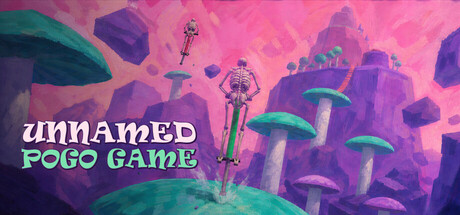
Trapped with friends in a surreal world, your only way out is to bounce your way to the top. Master brutal physics, survive impossible obstacles, and face the climb together in this unforgiving pogo-stick challenge. One bad landing is all it takes to lose it all. Can you reach the peak?
Modeled estimate, not a reported figure. How we estimate →
About
Every bounce takes you closer to the summit—or sends you all the way back down.
At the bottom of an impossible vertical world, you have one tool: a pogo stick. Use momentum, precision, and nerve to launch across giant platforms, surreal environments, and brutal obstacles on a climb that never gives you a second chance.
There is no easy route upward. Every landing matters, every jump can change your run, and one bad bounce can wipe out everything you fought to gain.
Take on the climb alone, or bring friends into multiplayer mode. Race for the summit, challenge each other to survive the hardest sections, or share the pain when somebody falls.
Do you have the patience, timing, and nerves to reach the top?
Brutal Physics-Based Pogo Gameplay: Every bounce matters. Control your angle, momentum, and timing carefully—one small mistake can ruin everything.
Multiplayer Mayhem: Why struggle alone? Team up or race against friends to see who can master the pogo physics first.
Climb Out of an Impossible World: Travel through strange maps and surreal environments as you fight your way upward toward the only exit.
No Easy Way Out: There are no shortcuts. Falling means losing progress and having to climb back up again.
Built for Rage: Narrow platforms, awkward landings, dangerous jumps, and physics that will test your patience to its limit.
This game is a dedicated test of skill and mental endurance. It strips away the safety nets, leaving only the player, the physics, and the climb. Every successful jump demands absolute precision, and every fall is an inevitable part of the journey back up. It is an experience designed for those who appreciate a relentless, high-stakes challenge.
Genres
Stats
All-time low is the lowest price we've recorded for this game since we started tracking it.
Engagement
Reviews
Themes across 140 recent reviews and how positive each mention is. A keyword signal, not full sentiment analysis.
Reviews
Game ran very well. actually fun not sure if it is too hard or if I just suck but there is definetly a challenge Would actually reconmend and i hope this game gets more traction and it gets popular it deserves it
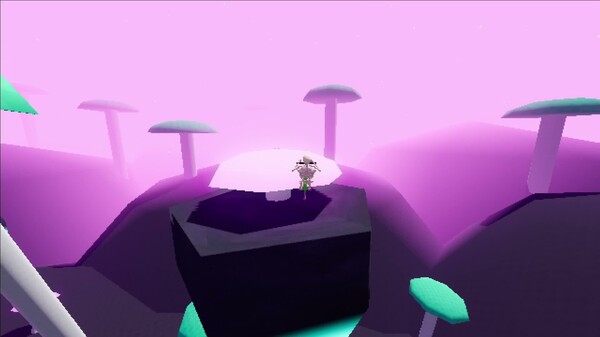
Unnamed Pogo Game takes one of the simplest possible movement ideas and builds an entire precision-platforming challenge around it. Instead of running freely through stages or relying on conventional jumping mechanics, players must climb an increasingly hazardous environment while balancing and bouncing on a pogo stick. The basic objective is straightforward: start near the bottom and work your way upward. What gives the journey its personality is the physics-driven movement, where every bounce, angle, landing, and correction can determine whether you continue climbing or tumble back through areas you already conquered. Movement is intentionally difficult to master. Success depends less on rapidly pressing buttons and more on understanding momentum and learning how the pogo stick behaves after contacting different surfaces. Early obstacles provide opportunities to become familiar with these mechanics, but the challenge steadily demands greater accuracy. Players eventually need to control their trajectory in confined spaces, land on smaller surfaces, and prepare their position for the next bounce. Once the physics begin to feel predictable, there is a satisfying sense that improvement comes from genuine mechanical understanding rather than character upgrades or artificial progression systems. Failure is a major part of the experience. A poorly calculated jump does not necessarily cost only a few seconds because falling can send the player considerably farther down the environment. Losing several successful sections because of one mistake creates genuine tension whenever substantial height has been gained. This punishment can become frustrating, particularly when a difficult sequence must be repeated, but it also gives individual jumps considerably more importance than they would have in a traditional checkpoint-heavy platformer. Reaching a new safe position can feel like an accomplishment precisely because the game makes progress vulnerable. The environmental design complements this structure by presenting a continuous upward challenge filled with awkward platforms, gaps, unusual structures, and increasingly uncomfortable landing opportunities. Its surreal presentation gives the climb a distinctive identity without overwhelming the gameplay with unnecessary visual complexity. Much of the entertainment comes from seeing what bizarre obstacle or location appears next while simultaneously wondering how to navigate it. The strange surroundings also work well with the intentionally ridiculous concept of attempting such a dangerous ascent using nothing but a pogo stick. Multiplayer expands the concept considerably. The inclusion of online cooperative and competitive play means the climb does not have to be a completely solitary exercise in patience. Friends can attempt to progress together or turn the environment into an informal race toward the top. Physics-based failures become particularly entertaining with other players present because disastrous falls can transform frustration into comedy. Competition also provides an additional reason to become proficient with the movement system, especially alongside Steam leaderboard support for players interested in measuring their performance. The game's humor emerges naturally from its mechanics rather than depending entirely on scripted comedy. Watching a carefully prepared jump end with an unexpected bounce and a lengthy fall can be painful and amusing at the same time. That unpredictable quality helps prevent repeated attempts from feeling completely identical. The physics can create memorable recoveries as well, occasionally allowing a seemingly disastrous mistake to turn into an unlikely landing. These moments give the relatively straightforward climbing premise a surprising amount of personality. Content-wise, this is a focused experience rather than a sprawling platforming adventure. Players expecting extensive storytelling, elaborate skill trees, equipment progression, or numerous unrelated gameplay systems should adjust their expectations accordingly. The main attraction is mastering the pogo mechanics and overcoming the environment. Its longevity therefore depends heavily on whether the player enjoys improving through repetition. Multiplayer, competition, leaderboards, and the desire to achieve cleaner climbs provide additional replay value beyond simply reaching the destination once. The developer and publisher are both Unnamed Games. The technical requirements are relatively modest, making the game accessible to a broad range of PC hardware. Steam Deck compatibility does not currently have an official Valve Verified or Playable rating, so it should be considered Unverified for Steam Deck. The game's lightweight technical demands may make experimentation on the handheld possible, but the absence of an official compatibility classification means players should not assume completely trouble-free operation or perfectly optimized controls. Unnamed Pogo Game ultimately understands exactly what kind of experience it wants to deliver. It is a deliberately unforgiving physics platformer where patience, consistency, and mastery matter more than unlocking stronger abilities. Losing height after a mistake can be infuriating, but overcoming the same obstacle that previously caused repeated failures can be remarkably rewarding. Its multiplayer options add welcome social chaos to what could otherwise be an intensely solitary challenge, while the surreal environments and inherently funny pogo physics prevent the concept from feeling entirely mechanical. It will appeal most strongly to players who enjoy difficult climbing games where failure is part of learning rather than something the design tries to eliminate. Rating: 7/10
Media

Related
Related
Price dynamics, follower growth, revenue and sales trajectories with interactive tooltips
This and every other Pro feature is free until October 20, 2026. A free account is all it takes.
Languages: English**languages with full audio support
Hours played at review time, across 140 reviews with recorded playtime.
positive critical· bar length = how often the theme comes up
Very, very hard game, but worth the money. If you enjoy parkour and suffering then I highly recommend.
this is the best game ive ever tried. thanks for all
10/10 video game of all time.
20 minutes is enough time to have a well rounded review... This shi is peak
peak
Be warned: the learning curve is brutal. After 15 minutes, I hadn't made a single bit of progress. It's way too hard for my taste, but hardcore players might enjoy the brutal challenge
video game 2
Game of the year
Selling now
See how fast this game is selling right now — estimated copies and revenue per day from recent review growth.
Active players
Estimated daily and monthly active players (DAU/MAU) modeled from peak concurrency.
Players by region
Where this game's players are, estimated from review languages.
Players also reviewed
The games this title's players most often review too — audience affinity.
Related
| Game | Estimated lifetime revenue | Reviews | Review score | Price |
|---|---|---|---|---|
| $245.8K | 3.4K | 53% | $4.99 | |
| $2.7K | 37 | 27% | $2.99 | |
| $1.9K | 24 | 100% | $4.99 | |
| $615 | 2 | 50% | $7.99 | |
| $456 | 5 | 60% | $3.99 | |
| $0 | 0 | — | $2.99 |
Related
| Game | Estimated lifetime revenue | Reviews | Review score | Price |
|---|---|---|---|---|
| $23.9K | 322 | 84% | $4.99 | |
| $23.9K | 67 | 99% | $19.99 | |
| $23.9K | 420 | 87% | $2.99 | |
| $23.9K | 66 | 95% | $15.99 | |
| $23.9K | 65 | 52% | $8.99 | |
| $23.9K | 55 | 91% | $14.99 |