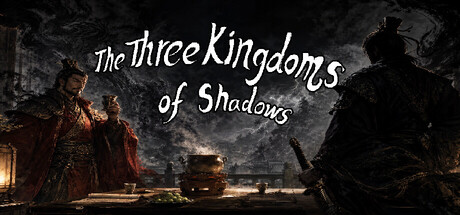
Three Kingdoms of Shadows blends dark political intrigue with occult folklore. As Liu Bei, raised to rule Xuzhou as a pliable puppet, enact decrees, manage resources, and outmaneuver the factions behind your rise. Follow history—or pursue optional mysteries to unlock a path no chronicle recorded.
Modeled estimate, not a reported figure. How we estimate →
About
Three Kingdoms of Shadows twists the Romance of the Three Kingdoms into something darker — a strategy game of faction politics, resource management, and warfare, set in a world where history bleeds into occult folklore.
You are Liu Bei. Drawing on the Records of the Three Kingdoms and the Yingxiong Ji, this reimagining casts your succession in Xuzhou as a calculated political gamble. The local power blocs led by Chen Deng and Mi Zhu elevate you as Tao Qian's successor, expecting an inexperienced outsider they can control — a convenient puppet. Prove them wrong.
As a leader in chaotic times, strike a balance between policy, resources, warfare, and law. Govern your city, weigh conflicting counsel, contend with rival warlords, and make decisions that can bend history itself.
The "Shadows" in the title echoes the Chinese character「阴」(Yin: shadow, occult, eerie), reflecting the unsettling folklore beneath the world and its story. The main campaign remains grounded in historical strategy: ordinary decrees and battles are not supernatural. Occult investigations are optional side stories, pursued only if you choose to follow them.
Two paths await:
• Follow the historical route and steer events toward the chronicles you know.
• Investigate every optional mystery to unlock the hidden Hegemony route — an alternate history no chronicle ever recorded.
[This is not a horror game. A small number of jump scares may occur while exploring eerie side stories. You can enable the “Horror Content Filter” in Settings; once enabled, it will suppress all jump-scare visuals.]
Game Features
1. See through misleading counsel and choose the wisest course.
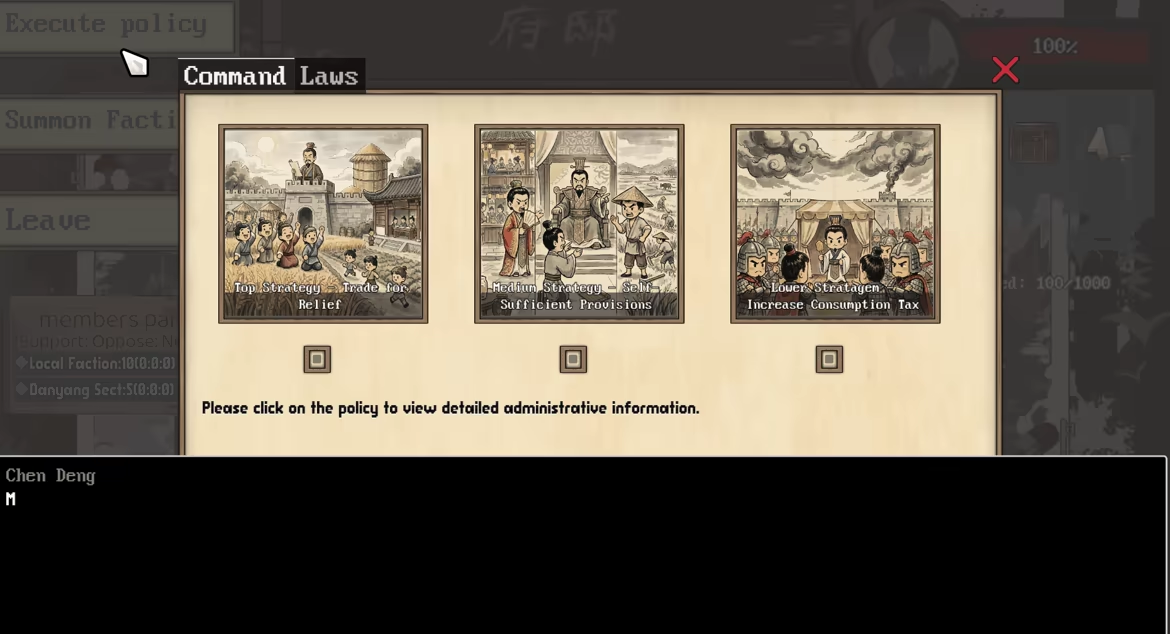
2. Chart distinct legal and policy paths.
3. Wage war fueled by resource management.
4. Complete storyline missions and reshape history.
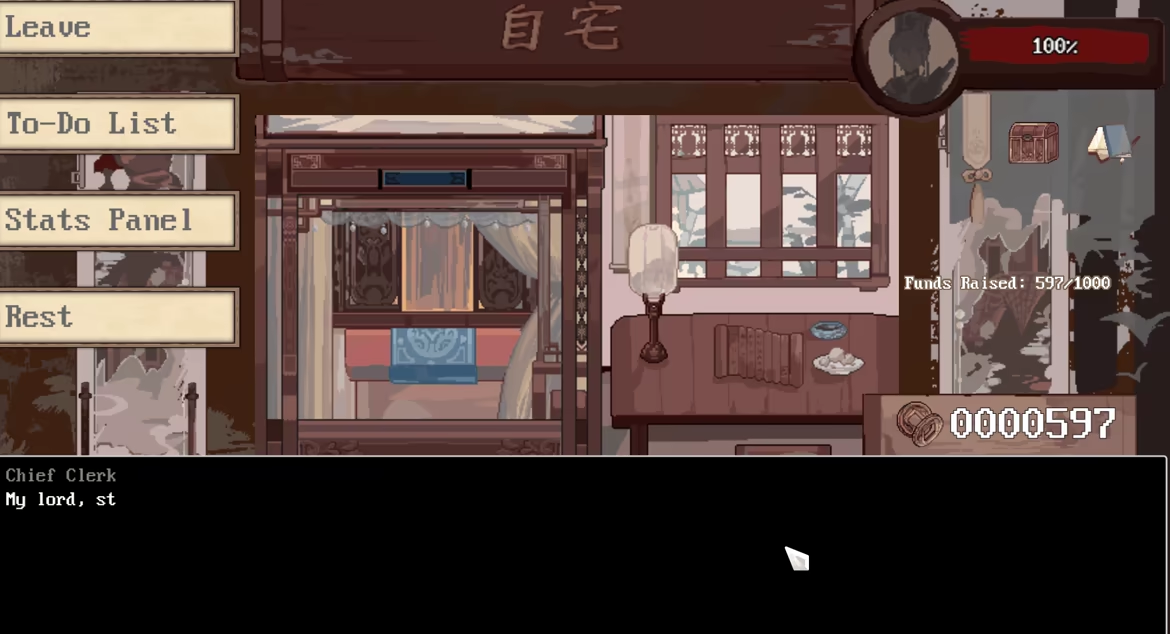
5. Unravel optional side quests steeped in eerie mystery.
6.Challenge an NPC to a strategic game of Shigui Cards.
From puppet to legendary warlord. Xuzhou was given to you on their terms — rule it on yours.
Genres
Stats
All-time low is the lowest price we've recorded for this game since we started tracking it.
Languages: English, Simplified Chinese*, Traditional Chinese*, Japanese*languages with full audio support
Engagement
Reviews
Themes across 55 recent reviews and how positive each mention is. A keyword signal, not full sentiment analysis.
Reviews
本作游戏十分独特的将玩家耳熟能详的三国历史与规则怪谈、阴谋论等融合在了一起,融合而成了这款模拟经营与视觉小说为核心玩法的奇妙作品。当玩家不再以统一中原的战斗策略为目标,不再关注征战沙场的战争胜负。而是放眼在三国时期的另一个视角去看待士族豪绅与军队之间的关系,也许就能品到另一种滋味。 在本作游戏中,玩家扮演的是初入徐州的刘备,作为一方刺史,玩家每天做的就是处理政务,并颁布政法,玩家的决定和行为都会影响各方势力的平衡以及对玩家的支持率。在游戏中士族、豪族和丹阳派系是被重点关照的对象,派系之间勾心斗角的阴谋论也被推出水面。这些内容都是以视觉小说的形式以文字的方式展示出来,玩家只需要在其中阅读内容即可。即便是模拟经营管理部分也都做了简化处理,基本上玩家只需要在几个选项中做决定即可,大部分的内容整理和影响效果都由属下完成。 游戏的阴,在于徐州势力的阴谋论,在于战争之下的阴暗面,也在于游戏的整体氛围。游戏从序章开始就透露出一种诡异的阴,奠定了游戏的基调。在本作游戏中还加入了一些诡异元素与怪谈式支线,诡异而阴暗的内容,让这段本就充满阴谋意味的三国故事进一步蒙上一层阴影。 总的来说,游戏是以另一面去看待三国历史,并且将它诡异化呈现,呈现出来的效果可圈可点。但同时却也放弃了东汉末年三国时期的所谓乱世背景,缺少了那些征战沙场的内容,其实这些内容也可以适当融入到游戏中来,可以让游戏呈现得更加完善全面。 [table][td][b]欢迎关注我们 [/b][url=https://store.steampowered.com/curator/10591434/]突突突发糖辣![/url] [/td][/table]
[url=https://store.steampowered.com/curator/44181848/] 【更多适合Steam Deck的好游戏推荐,请关注GPD掌机鉴赏家!】[/url] 游戏的三国味儿还挺“阴间”的(褒义)。不像传统三国志那种大地图征战,这游戏更像是坐在徐州牧的位子上搞“办公室政治”。要在士族、豪族和丹阳兵之间走钢丝,推个政令还得防着背后捅刀子,代入感挺强。 把“阴谋论”和规则怪谈揉进三国是个亮点,虽然恐怖元素不多,但那种诡异的氛围和正史交织在一起,读文本的时候很有探索欲。玩法主要是看报告和做选择,有点像互动小说加模拟经营,适合喜欢琢磨剧情和权谋的玩家。 不过目前体量确实不大,UI也比较朴素,能感觉到是个人开发者的痕迹。首发二十多块,当个短篇互动小说看看还是值的,想看刘备怎么从“傀儡”混成“枭雄”的可以试试。
Media

Related
Related
Price dynamics, follower growth, revenue and sales trajectories with interactive tooltips
This and every other Pro feature is free until October 20, 2026. A free account is all it takes.
Hours played at review time, across 55 reviews with recorded playtime.
positive critical· bar length = how often the theme comes up
[h1]阴三国谋论[/h1] [h2]游戏玩法[/h2] 玩家在府邸中,可以处理基础的政府公文,日常有人来帮你处理,其他的一些重大的决策,发令颁布都需要玩家自己定夺,一些繁琐的杂务就不需要玩家来操心,并且公文还有幕僚帮玩家整理好核心内容,并且整理出一些对策,玩家直接要定夺就就可以了,完成决策之后,还要安排颁布发令的议程,玩家拥有政策点,不同的法令会消耗对应的政策点,日常处理要务或者完成事件都可以获得政策点,颁布发令还可以征求各个派系的看法,获得认可。游戏中还别的玩法,例如去城外训练军队,选择武将,花费一定费用就可以训练士兵了,训练士兵还有概率升级武将的等级,并且游戏还有商店,一些随机事件,在自己家中还可以看到待办事项,属性面板等东西,最主要的是可以睡觉休息;议事厅中玩家可以执行政策或者召见派系。 [h2]个人游玩体验分享[/h2] 游戏玩下来难度不算太高,游戏中并没有很多个人之类的事迹表现,而是从宏观的角度来操控整个游戏,比如颁布发令,去看这些派系的意见,征求民意这块,这样更好的了解一个国家,一个军队的兴起。游戏对三国历史爱好者来说,也是很不错的作品,在徐州管理各个事务,关张刘赵也在身边,并且还融入了一些怪谈,整的有一点点恐怖,还是很有意思的。 [h2]结语[/h2] 《阴三国谋论》这款三国怪谈游戏,题材很新颖,玩法很有意思,从宏观上来进入这段历史事件,还是很有意思的,感兴趣的可以尝试一下。 [quote] 晚八不睡,早八不醒,梦里准点测评,迎接美好游戏人生! 欢迎关注:[url=https://store.steampowered.com/curator/46039267/] 睡不醒的早八人 [/url] [/quote]
なんだこのニッチすぎるゲームは! 劉備の徐州での日々に特化したシミュレーションゲーム! 亡き徐州牧である陶謙の跡を継ぎ、外様派と地元派のご機嫌をとりつつ、内政をシコシコと行い、族の討伐をしたり、袁術や呂布らとなんやかんやするゲーム。 史実通りの展開が起こったり起こらなかったりする合間に、怪奇要素も加わるのがひと味変わったスパイスとなっている。 中華製インディゲームには珍しく日本語訳を用意してくれており、とってもありがたい。 翻訳の質も問題なく読み進めることができた。 中国語のフル音声で喋りまくってくれるので、気分は後漢末期。 プレイしていて、ゲームとして面白いのかどうかは正直悩ましかったが、このお値段で徐州での劉備になれるというゲーム体験は唯一無二なので、刺さる人には刺さる「怪作品」として、おすすめとさせていただきます。
正史エンディングでクリアしました このゲームはよくある三国志シミュレーションではなく、いかに派閥に嫌われずに政策を通していくか?という戦略ゲームです 課題をこなすのにミニゲームがあったり、怪異と戦うのにちょっとしたホラー要素があったりしますが、それほど難しくなく、過激なものではなかったです ただ戦に関しては運要素が強く、途中で挟まる連戦モードでは外れを引くと一気に難易度が上がるので、そこは辛く感じました テキストは三国志に忠実で、正史ルートは英雄記の内容を多分に含んでいてすごく良かったです 2周目は覇道ルートを進めようとアイテムを全部集めましたが、どうしてもルートに入れず……アイテムを集めて敵を倒すだけではだめなのでしょうか?
《阴三国谋论:徐州篇》是一款把三国历史、政治经营和诡异怪谈揉在一起的剧情向策略游戏。 游戏里我们是刚刚接手徐州的刘备,刚在陶谦身故后的复杂局面里站稳脚跟,一边要处理士族、豪族、丹阳派等各个势力的关系,一边还得经营农、商、军三项资源,处理民生、军事和各种突发事件。游戏掺杂了一些怪谈故事,更是让我们在治理徐州同事,多了一股“别太相信身边人”的味道。 游戏并不复杂,消耗体力安排各种行动,通过政策、议事、拜访、训练等方式获取资源和提高各势力的支持。我们前期需要维持各方关系,送礼、投资等手段都能用来拉拢各方势力,同时还能使用各种影响不同派系利益的政策来获得势力支持。 游戏的军事行动更偏向数值管理,武将之间有着简单的克制关系,但基本上只要投入的士兵和资金越多胜率就会越高。 游戏最为特色的是掺杂了一些怪谈故事在里面,可以通过考察民情等方式来触发支线,从陶谦死后的诡异梦境,到突然出现的怪异尸体、秘境传闻和诡物事件,这些都让徐州多了一层志怪色彩。 此外,游戏里还塞进了不少小游戏,“仕诡牌”算是其中比较有意思的一种,反复挑战之下还挺吸引人。 整体来说,《阴三国谋论:徐州篇》把诡异怪谈整进三国模拟经营游戏里,让游戏那并不复杂的模拟经营系统多了一些不一样的游戏乐趣,想体验不一样的三国游戏的,还是可以试试的。 [quote]关注「 [url=https://store.steampowered.com/curator/45145702//]左邻右里鉴赏组」 [/url] [/quote] [u][b] 游戏好不好玩,只有玩过才知道! [/b][/u]
这个文本质量能称作“三国”“怪谈”吗?大量的句子前一半用空格,后一半用标点符号,然后没有句号是何意味? 这个主角“刘备”怎么说呢,跟刘备几乎没有任何关系,呈现出来的感觉就像是《我被美女包围了》的男主但是没有美女。我的意思不是他没有贴近演义或史实的刘备,而是他几乎不存在,或者说存在于任何一个男主视角的游戏。如果是为了提供代入感的话,或许也能理解(但为啥不原创一个主控呢)但是代入感的客体也不存在,因为其他角色的文本与任何性格的呈现也十分糟糕。至于怪谈也就类似于哪儿有个鬼有个小boss这种程度。 至于玩法我不评价,毕竟只玩了0.6个小时(说实话看起来就挺塑料的)但是一个既不三国也不怪谈的、同时又被用这两点大肆宣传的三国怪谈模拟经营游戏我认为很难让模拟经营产生任何的价值和意义。
三国志関係のゲームを検索していて、一年半ほど前にデモ版を見つけてからずっと待っていた。とりあえず一周目をクリアしたところ。 劉備が徐州牧陶謙の死にともなって後継として迎えられる時期の話だが、州内の士族豪族が背景になる勢力の薄い劉備をコントロールしやすいと見た選考理由であり、刺史であっても領内の各勢力の同意抜きには物事を進められない。これがゲームのキモになりそうで、陶謙が連れてきた丹陽兵を率いる曹豹が軍事力を握っておりなかなかの重要人物となる。もはやネタ武将ではない。歴史的にはまず曹豹のあつかいに失敗するわけだけれど、ここをゲームとして回避できるのかどうか。歴史を踏襲するのか、IFに向かうのか、一周目は歴史の展開に寄せた選択をしたので次はいろいろ試してみよう。 一方、在地勢力には麋竺や陳登がいるが、彼らも一枚岩というわけではなさそうで、実際、展開の過程で[spoiler]知識人層と豪族勢力に分化していく[/spoiler]。政策を通すにあたっては彼らの勢力のバランスを取りながらでないといずれ破綻することが示されている。劉備に全ベットしたかのような麋竺にも相応の駆け引きが要求されることになる。 なにがしかの政策を立案すると、基本的にどこかの派閥の権益と抵触し、彼らの好感度は落ちることになる。一方で、日和見をして現状維持を続けていると今度は刺史として職務怠慢という評価になり、これも信頼を失うことになりやがて詰む。 法案を通しながら、好感度を下げた派閥に別口で機嫌を取りながら進めていく必要があるわけで、いちどにすべての法案を通そうとすることは出来ないつくりになっている。 ゲーム的には立案と議事進行のそれぞれで好感度が減るので回復する余裕がない時には同じターンで同時に進行させず、分けて進めた方がよいだろうか。わたしは初回プレイでは各派への懐柔は贈り物を採用していた。当該派閥の議席の絶対値を増やすことでも回復は出来るのだがそのことで発言力が大きくなったり、期ごとの要求物資が大きくなったりするとあとあとコントロールが難しくなる可能性があり、なかなか示唆的だ。 本貫回避によって、土地のトップは現地の外から採用されなければいけない制度が、ゲーム的に強く反映されているのは非常に興味深いアプローチで、手探りの序盤ではとりわけ諸勢力とピリピリした環境に置かれていることが感じられ、だからこそ関羽や張飛が出てきたときには抱きつきたくなるようなありがたみを感じられる。もう一人、デモ版では趙雲がいたような気がするがタイミング的にはありえないので、オリジナルキャラが描かれているのもドラマ性を増している。 陶謙の息子兄弟や昌豨など、陰に隠れがちな人物たちにも光が当てられており、眼福。 あと冒頭でおどかされたので、陳羣がけっこう怖い人かなと思ったら、徐州を取るのは危ないと忠告してくれたりしてホッとした。しかし、まぁこの人が士族勢力による権力の再生産を制度化する九品官人法を生んだと考えるといずれさらに大きな出番はあるのか。陳羣のグラフィックは個人的にはデモ版でよかった……。 三国志ゲームと言えばの戦闘はルーレット形式の簡素なもので、ここを描くための作品ではないということは頭に入れておいた方がよいかな。またサブストーリー的な怪異譚は、人事面での現実的な展開と趣が変わってこれもなかなか面白い。 ホラーのような導入部から、蒼天というよりは終始くもり空な感じの三国志になりそうかと思ったのだが、しばしば言われる、劉備は知識人層をうまく活用できなかったと切り捨てられがちな時期をあつかって、彼が諸勢力のあいだで揉まれながら成長していく姿をストレートに描いており、侠者性を前面に出した最近の作品群から見るとかえって新鮮でさわやかさを感じて、とても楽しんだ。 徐州編ということは次作も期待してよいだろうか。
The Three Kingdoms of Shadows: Xuzhou takes the familiar Three Kingdoms setting and gives it a more suspicious, politically charged interpretation. Rather than portraying Liu Bei primarily as an established hero destined for greatness, the game begins with him in a vulnerable position after becoming Tao Qian's successor in Xuzhou. The central idea is that influential local families associated with Chen Deng and Mi Zhu supported Liu Bei because they considered him inexperienced enough to manipulate. This immediately establishes an interesting objective: Liu Bei may technically govern Xuzhou, but the player must gradually turn ceremonial authority into genuine political power. Developed and published by 鹏砚, the game combines strategy, simulation, role-playing and adventure concepts around political decision-making and resource management. Governing Xuzhou requires balancing laws, policies, available resources and military demands while responding to problems affecting the city and its population. External warlords also remain a constant concern. This creates a potentially engaging situation in which domestic politics cannot be separated from diplomacy and warfare. Resources spent strengthening military forces may be resources unavailable for internal development, while political decisions that satisfy one faction could create difficulties elsewhere. One of its most distinctive mechanics concerns the advice provided by Liu Bei's subordinates. Instead of assuming every adviser is working toward the same objective, the player must examine conflicting recommendations and determine which proposal best serves Liu Bei's interests. This fits the conspiracy-driven narrative particularly well. Advice becomes something to interpret rather than simply accept, reinforcing the feeling that political factions have motivations of their own. It also helps distinguish the game from strategy titles where advisers function mainly as passive sources of information. Legal and political development provides another layer of decision-making. Different policy routes allow the player to influence how Xuzhou is governed, while storyline missions connect these choices to the broader progression of history. The most compelling aspect is the possibility of changing that history rather than merely reenacting predetermined events. Players can follow a route that remains relatively faithful to the established chronicles, but the game also contains another path for those willing to investigate its optional mysteries. This is where the "Shadows" concept becomes particularly important. The title refers to the idea of Yin, connecting darkness, shadows and the occult with the historical setting. Strange folklore exists beneath the conventional political conflict, although the supernatural material does not replace the historical strategy at the center of the game. Ordinary governance and warfare remain grounded in the Three Kingdoms setting, while eerie investigations largely appear through optional side stories. The developer specifically presents the game as something other than straightforward horror, with the unsettling material limited in scope and without an emphasis on jump scares. Players who pursue these mysteries can work toward the hidden Hegemony route, creating an alternate version of history that moves beyond the familiar chronicles. This is a clever approach to replayability because the alternative route is connected to curiosity and exploration rather than simply choosing a different ending from a menu. Someone primarily interested in historical politics can concentrate on governing Xuzhou and following recognizable events, while a more completion-oriented player can investigate the unusual side content and discover how far the narrative can deviate. Warfare is also tied to resource management, meaning military success should depend on preparation rather than battles existing as an isolated system. This complements the political premise because Liu Bei is supposed to be building power from an uncertain position. Becoming a formidable warlord should therefore feel like a gradual process involving administration, political judgment and economic management instead of an immediate transformation into an unstoppable commander. The overall concept is strongest when these different systems reinforce one another. The presentation also reflects the project's independent nature. Its focus appears to be more heavily placed on interconnected ideas and historical storytelling than lavish production values. The developer has disclosed that a small amount of AI-generated material has been used for placeholder sound effects, assets and promotional illustrations, with plans to replace these gradually with original handmade material, while stating that the core assets are handmade. This transparency is useful, especially for players who care about how visual and audio assets are produced. There is considerable ambition behind the design, but that ambition also represents its biggest potential weakness. Political factions, conflicting advisers, legal systems, city administration, resource management, warfare, historical events and supernatural side stories create many moving pieces. The experience depends heavily on whether decisions produce sufficiently meaningful consequences. If advisers are too easy to read or one policy consistently proves superior, much of the political tension could disappear. Conversely, if the systems interact convincingly, the player could genuinely feel like an inexperienced ruler learning to survive among people who originally expected to control him. The Three Kingdoms of Shadows: Xuzhou ultimately stands out because it uses Liu Bei's succession as the foundation for a political struggle rather than merely another excuse for large-scale Three Kingdoms warfare. Its central journey from manipulated outsider to independent ruler gives the strategy mechanics a clear narrative purpose. The addition of optional occult mysteries makes the setting stranger without completely abandoning its historical foundations, while the historical and Hegemony routes provide two different ways of interpreting Liu Bei's rise. For players attracted to political simulations, Chinese history, resource management and alternate-history storytelling, the game offers an unusually focused interpretation of the Three Kingdoms period. Its presentation may be modest compared with larger strategy productions, but its combination of factional intrigue, deceptive counsel, policy decisions and optional mysteries gives it a recognizable personality. Rating: 7/10
完全没看出有意思的地方。
Players by region
Where this game's players are, estimated from review languages.
Players also reviewed
The games this title's players most often review too — audience affinity.
Related
| Game | Estimated lifetime revenue | Reviews | Review score | Price |
|---|---|---|---|---|
| — | 0 | — | — | |
| — | 0 | — | — | |
| $1.7M | 9.4K | 59% | $11.99 | |
| $371 | 2 | 100% | $5.99 | |
| — | 0 | — | — | |
| — | 0 | — | — |
Related
| Game | Estimated lifetime revenue | Reviews | Review score | Price |
|---|---|---|---|---|
| $15.1K | 112 | 71% | $5.99 | |
| $15.1K | 199 | 63% | $3.99 | |
| $15.1K | 91 | 77% | $6.99 | |
| $15.1K | 98 | 84% | $13.99 | |
| $15.1K | 170 | 77% | $4.99 | |
| $15.1K | 87 | 84% | $8.99 |