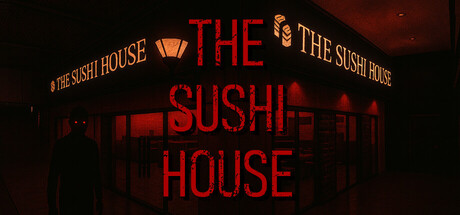
On your first day at the sushi shop, everything seemed normal. But a subtle sense of unease begins to seep into your daily routine. And slowly, you find yourself drawn toward something hidden within.
Modeled estimate, not a reported figure. How we estimate →
About
『The Sushi House』is a first-person, story-driven game set in an ordinary sushi restaurant.
In the midst of familiar routines and a quiet atmosphere, a subtle sense of unease begins to creep in.
You start your new part-time job at the sushi house.
A co-worker shows you the ropes, and you spend your day preparing sushi,
cleaning the floor, and managing the shop.
At first, everything seems normal. But as you go about your daily tasks,
a strange feeling begins to settle in—like something isn’t quite right.
And slowly, that feeling draws you deeper into the mystery of the place.
First-person, immersive gameplay
Realistic sushi-making and shop management systems
A quiet, unsettling atmosphere that gradually intensifies
Interactive dialogue and narrative-driven storytelling
A short but impactful experience (approximately 2 hours)
Headphones or earphones strongly recommended
This game is a work of fiction and has no relation to any real companies, brands, or trademarks.
Genres
Stats
All-time low is the lowest price we've recorded for this game since we started tracking it.
Languages: English, Japanese, Simplified Chinese, Korean, Traditional Chinese
Engagement
Reviews
Themes across 43 recent reviews and how positive each mention is. A keyword signal, not full sentiment analysis.
Reviews
The Sushi House, developed and published by Noirbit, is a short-form psychological horror experience that builds its identity around subtlety, routine, and a steadily growing sense of unease. Rather than relying on conventional horror techniques like constant jump scares or overt threats, it draws tension from familiarity—placing players in a grounded, everyday setting and slowly distorting it until something feels deeply wrong. The result is a focused and atmospheric experience that lingers more through mood than spectacle. The premise is deliberately simple. You step into the role of a new employee working at a small sushi restaurant, tasked with performing ordinary duties such as preparing food, cleaning, and maintaining the workspace. At first, the game leans heavily into these routine actions, establishing a rhythm that feels almost meditative. This sense of normalcy is crucial, as it creates a baseline that makes even the smallest deviations feel significant. As the shifts progress, subtle irregularities begin to appear—changes in lighting, unusual sounds, and small environmental details that hint at something unsettling beneath the surface. Gameplay is built around these routine tasks, functioning as a light simulation that reinforces immersion. The mechanics are intentionally simple, focusing on interaction rather than complexity. Preparing dishes and managing the environment becomes second nature, allowing players to settle into the role before the game begins to disrupt that comfort. As the experience unfolds, narrative elements are introduced through environmental cues and occasional dialogue, encouraging players to piece together what is happening rather than presenting a clear, linear explanation. What makes The Sushi House stand out is its pacing. It takes its time, allowing tension to build gradually instead of forcing moments of fear. The repetition of daily tasks becomes a tool for storytelling, with each cycle introducing subtle changes that shift the tone. This slow escalation creates a psychological form of horror, where anticipation becomes more powerful than direct confrontation. Players are left constantly questioning what might happen next, even when nothing immediately does. The narrative itself is understated and open to interpretation. Rather than delivering a fully explained story, the game presents fragments—visual hints, environmental storytelling, and implied events—that invite players to draw their own conclusions. This ambiguity adds to the overall atmosphere, giving the experience a lingering quality that extends beyond its relatively short runtime. However, this approach may also leave some players wanting more clarity or a deeper exploration of its themes. Visually, the game adopts a grounded and realistic style that enhances its immersion. The restaurant environment is detailed enough to feel believable, making the gradual shift into something more unsettling all the more effective. Small changes in lighting and object placement are used to great effect, ensuring that players remain attentive to their surroundings. The first-person perspective further strengthens this connection, placing players directly within the space and making each interaction feel immediate. Audio design plays a critical role in shaping the experience. Ambient sounds, subtle cues, and moments of silence are used to build tension without overwhelming the player. Rather than relying on dramatic musical cues, the game allows its soundscape to evolve naturally, reinforcing the sense that something is off even when it cannot be immediately identified. This restraint contributes significantly to the game’s overall impact. Despite its strengths, the game’s limited scope is noticeable. Its short length means that it does not fully explore all of its ideas, and the simplicity of its mechanics may leave some players wanting more depth or variation. Once the experience concludes, there is little incentive to return beyond revisiting the atmosphere. However, this brevity also works in its favor, ensuring that the game remains focused and avoids unnecessary padding. Ultimately, The Sushi House succeeds as a concise and atmospheric horror experience that prioritizes mood and subtle storytelling over complexity. It transforms an ordinary setting into something quietly unsettling, using pacing and environmental detail to create a lasting impression. While it may not offer extensive gameplay or a fully developed narrative, it delivers a memorable journey that stands out through its restraint and attention to atmosphere. Rating: 7/10
Media

Related
Related
Price dynamics, follower growth, revenue and sales trajectories with interactive tooltips
This and every other Pro feature is free until October 20, 2026. A free account is all it takes.
Hours played at review time, across 43 reviews with recorded playtime.
positive critical· bar length = how often the theme comes up
GAME WAS BORING AS ♥♥♥ AND ONCE IT GOT TO HORROR PART THEN IT BECAME SOMEHOW DUMBER. THE PEOPLE WHO LEFT POSITIVE REVIEWS ARE LIARS, SIMPLE MINDED, AND SHOULD LOSE THEIR RIGHT TO VOTE.
Living in your lavish apartment on the 100th floor with your open floor plan allowing everyone to watch you take your morning dump and you're worried about making money so you start serving sushi? The amount of instructions the coworker was throwing at us was ridiculous, the conveyor power issues felt unnecessary, you should be able to clean after you've opened if you forgot a spill, I would prefer to be able to complete a set amount of orders for the night instead of it just ending, I should have been able to start serving human parts at some point, Its a good game just long winded in some areas, also, the stealth area felt like like overkill for what needed to be done, you should still buy this one
This game was so good! I love how it ends! I got the rebirth ending! Overall this game is 10/10!
还不错,挺好玩的,但还是免不了恐怖游戏经典先赛博上班的流程哈哈,17元差不多全三个结局2个小时左右流程也比较实惠,讲的大概是一种得了会吃人的病,人肉寿司这样,追逐解密没难度,可以入手。
손님들 스시 그만 먹어...... 이렇게 바쁘고 큰 매장에 알바를 하나만 둔다는 게 말이 안됨;; 그리고 유키 센빠이는 맛있었다 후
一番怖いのがバイト。寿司の作り方は説明されたが、作り方を説明されてない料理を急に頼まれて手こずってたらクビになりました。
okla
쉬워보였는데 난이도가 좀 있네요.. 게임은 전체적으로 괜찮구요
gufufu
Selling now
See how fast this game is selling right now — estimated copies and revenue per day from recent review growth.
Players by region
Where this game's players are, estimated from review languages.
Related
| Game | Estimated lifetime revenue | Reviews | Review score | Price |
|---|---|---|---|---|
| $183.6K | 453 | 94% | $11.99 | |
| $10.4K | 76 | 96% | $4.99 | |
| $5K | 37 | 54% | $6.99 | |
| $2.5K | 36 | 58% | $2.99 | |
| $717 | 19 | 37% | $2.99 | |
| — | 0 | — | — |
Related
| Game | Estimated lifetime revenue | Reviews | Review score | Price |
|---|---|---|---|---|
| $16.9K | 157 | 98% | $3.99 | |
| $16.9K | 1.5K | 97% | $0.99 | |
| $16.9K | 58 | 95% | $8.97 | |
| $16.9K | 55 | 75% | $19.99 | |
| $16.9K | 61 | 51% | $14.99 | |
| $16.9K | 73 | 100% | $9.99 |