The Soul Box is a kinetic visual novel about the mystery of a puzzle box. A story of a heritage hidden behind what’s written. A different look at the future, a worried glance at the past.
Modeled estimate, not a reported figure. How we estimate →
Discounts
Every price cut of more than 20% we have observed, in each market that quoted one, with this game's chart position on either side of it. These are episodes, not a model: a sale is one event, and one event cannot tell you what the next one will do.
Reviews, worldwide (the counter carries no country): 0/day in the week to Aug 11 → 0/day in the week after.
For scale, across Steam · Top Sellers · Brazil over the last 30 days: the 26 chart moves that followed a price cut of more than 20% went a median of 7 places towards #1, and the 2,400 moves with no price cut behind them went 2 away. One store, one chart, one country — it is the only place we have enough observations to say even that.
Prices outside the United States have been collected since 6 August 2026 and chart positions since 19 July 2026, so a cut older than that has no market to compare and a market that joined later has no history yet. Nothing here is converted between currencies.
About
Genres
Reviews
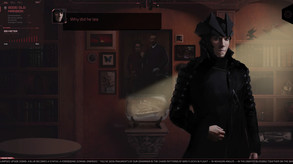
Linear sci-fi novel with a self-contained story, distinct presentation, and little gameplay aside from a few small puzzles. This is all about telling a story with minimal gameplay elements. It involves clones, religion, oppressive society, and all the other elements of a Sci-Fi utopian world. The text is delivered unusually. Instead of displaying the current text, fresh text appears from the bottom, pushing the previous text box upward. This allows you to read and examine every text box thus far, and you can even travel back to the beginning using the mouse wheel for speedier scrolling. The presentation is unique, with the name of the current location, some stats that move up and down, and a news feed at the bottom of the screen, but you will still need to click the mouse button to see the next paragraph or sentence, just like in any other visual novel. Art and characters are fine, and some characters provide a brief description when you hover your mouse over them. There are a few more distinct visual components, such as decisions that don’t really do anything and e-mails you receive here and there. The only thing that requires some work are a couple of puzzles in which you rotate or move something. Clues to the solution are presented in bold writing before the puzzle, so if you get stuck and do not know what to do, you can scroll back. However, it’s all very simple because you can move something around until it clicks into place.
Media

Related
Related
Price dynamics, follower growth, revenue and sales trajectories with interactive tooltips
This and every other Pro feature is free until October 20, 2026. A free account is all it takes.
Stats
All-time low is the lowest price we've recorded for this game since we started tracking it.
Languages: English
[B][I][u]Warning: A short scene with transphobia behaviour acted towards a character[/u][spoiler](who's in disguise)[/spoiler][/i][/b] [I]What's the point of researching the secret to immortality if your belief is that you believe you will get one by default if you're a good enough Samaritan person? Would that be you questioning your faith?[/i] It's about time I talk about an Ikuku game after playing all 5 of them so far. They are enjoyable, but it can be hard to encrypt what the main point of the story is all about. Some may require a replay or for you to play their other games to fully fledged what their meaning, as some are interconnected, some more than others. And they are set in the same universe, just in a different timeline. They also contain Easter eggs that you may recognise if you played the other games, like in this one, funny enough, it advertises those couple of games. For one, The Soul Box is self-explanatory and can be played as a stand-alone game. It takes place in the far future, where there are hyper-speed trains, voice renegotiation AI that follow you around, supporting your everyday activity like making calls and arranging appointments at your command. There are even Android and clones, who have more rights than any living being against discrimination. The plot of Soul Box is a story of 2 guys, one of them a clone and the other one the original, but a very wealthy fella. One day, they both inherited a mysterious box from their deceased uncle, who, rumour had it, the box held the key to immortality. The whole story is focused on the guys trying to crack the code to open the box by talking and blackmailing other people who have connections to their uncle to gain any information about the box, one of them being a radical feminist who opposed the church for their involvement in oppressing minorities throughout the centuries. While this is the main plotline, there's also a sideplot where characters discuss things about the said oppression of females, referring to many historical events as well as other subjects relating to immortality, religion, patriarchy, human progression and sexual liberty. The whole journey has been an interesting read-through, but it does get too philosophical at times, and I'm not a very architecture person when it comes to history. I'm not gonna lie, some information flies right over my head a couple of times, but I believe I got the gist of it, I just wish sometimes I had a brain for it in the first place as I'm not well vice in poem and historial literature. I started reviewing this particular game first because it was easy for me to deconstruct, even if I still don't fully understand the whole contents, I welcome the challenge of evaluating this work. It's like reading the newspaper, a comic book and even a visual novel. Reading it once won't be enough to fully understand it. So it's no surprise there, but it's more apparent with this game that I have to revisit it. Maybe with time and experience, I will have a better understanding of the developer's intent for the game. I do plan to review some of the other Ikuku games and talk more about the games themselves, other than using them as a piggyback, like I did here. Whether or not this review has been useful in helping you consider your options to try this or any of the other Ikuku that may be of interest. No matter what decision you've made, I applaud you for reading this of me trying to stitch my mind together. [i]P.S. It may help to play through all other Ikuku games in release order, but feel free to play this one on it's own but I do recommend before playing the The Soul Box free DLC, The Quixotes Of Tomorrow to play For Ever Melancholia beforehand as there's many refer to that game and things get confusing if you haven't already, but I don't want to spoil the surprise for your entertainment.[/i]
The Soul Box is a narrative-driven kinetic visual novel that approaches cyberpunk from a more introspective and philosophical direction than the action-heavy stories normally associated with the genre. Developed and published by Ikuku, it revolves around a strange death, an enigmatic puzzle box, and questions that gradually expand beyond the immediate mystery. An uncle is found dead after setting out alone in a small boat with surprisingly few supplies, leaving behind uncertainty about where he was going and what he hoped to accomplish. This seemingly personal investigation becomes the foundation for a broader examination of memory, identity, language, inherited beliefs, and the ways people remain connected to their past even within a technologically advanced society. As a kinetic visual novel, the experience is deliberately linear. The player is primarily an observer and reader rather than someone constantly deciding how events should unfold. There are two central protagonists and two worlds involved in the narrative, allowing similar themes to be approached from different perspectives while maintaining a controlled storyline. This format naturally limits replay value for anyone expecting branching routes or numerous endings, but it also gives the writing room to develop its concepts without having to accommodate radically different player decisions. The result feels closer to an illustrated science-fiction novella with interactive elements than a conventional adventure or role-playing game. One of its more intriguing ideas is the comparison between human thought and computer programming. People accumulate their own internal form of code through experiences, memories, opinions, relationships, social expectations, and the words of others. Even when technology changes dramatically, those invisible instructions continue influencing behavior. The futuristic setting therefore serves a thematic purpose rather than simply providing cyberpunk scenery. The story asks whether humanity can truly progress when individuals continue carrying psychological and cultural baggage inherited from previous generations. It is an interesting foundation for science fiction because the focus remains on people rather than technological spectacle. Language receives particular attention within these themes. Words can define morality, establish identities, influence relationships, create conflict, and determine how individuals present themselves to society. The idea of people wearing metaphorical masks fits naturally into this approach, suggesting that identity can be partially constructed from expectations and labels rather than originating entirely from within. The mysterious box complements these ideas because it represents something inherited whose meaning is not immediately apparent. Solving its mystery becomes connected to understanding what has been passed down from the past and what might be hidden beneath the obvious interpretation of events. Although reading and following dialogue constitute most of the experience, there are drag-and-drop puzzles that introduce occasional direct interaction. These sections provide useful breaks from the otherwise passive structure and are thematically appropriate considering the importance of the puzzle box itself. Players should not expect a complicated puzzle game, however. The puzzles support the storytelling rather than dominate it, making them more effective as changes of pace than as the primary challenge. Anyone buying the game specifically for elaborate problem-solving may find this side relatively modest, while visual novel enthusiasts may appreciate having something interactive between longer narrative passages. The presentation helps establish the intended retrocyberpunk atmosphere. Animated backgrounds give scenes additional movement compared with completely static visual novel environments, while the overall futuristic aesthetic reinforces the tension between technological advancement and humanity's continuing attachment to old ideas. Music is another notable part of the presentation, helping establish mood during stretches where reading naturally takes center stage. These elements are particularly important in a kinetic visual novel because strong atmosphere must compensate for the relatively limited amount of mechanical activity. The writing is ultimately the deciding factor in whether the experience succeeds for an individual player. Its psychological and philosophical concerns make it considerably more contemplative than a straightforward mystery story. Discussions surrounding identity, inherited ideas, social masks, language, and human behavior can provide plenty to think about, but players wanting fast pacing or a conventional cyberpunk adventure may find the storytelling abstract. There is also mature written material, including vaguely described sexual content, which prospective players should consider even though explicit imagery is not presented as the central focus. The greatest limitation comes from the same structure that gives the narrative its focus. With little meaningful control over the direction of events, players who believe visual novels should revolve around decisions and alternate routes may feel disconnected. Conversely, readers comfortable with kinetic novels can appreciate the tighter pacing and author-controlled progression. The inclusion of puzzles prevents the experience from becoming entirely passive, but it remains unmistakably a story-first production. Overall, The Soul Box is an unusual independent visual novel that uses a mysterious death and strange inherited object as gateways into larger questions about what people carry with them through time. Its retrocyberpunk setting, two-protagonist structure, animated presentation, music, psychological themes, and occasional puzzles give it more personality than its relatively straightforward gameplay structure might initially suggest. It will appeal most strongly to readers interested in thoughtful speculative fiction who do not require extensive choices or complex mechanics. While its philosophical approach and linear progression will not suit everyone, its willingness to treat cyberpunk as a vehicle for examining language, memory, identity, and humanity's relationship with its past gives the experience a distinctive purpose. Rating: 7/10
An exceptionally crafted game, rich with profoundly relevant reflections on society and human nature. I believe this story will earn the recognition it deserves in the years to come. It's among the finest visual novel experiences I've had.
Selling now
See how fast this game is selling right now — estimated copies and revenue per day from recent review growth.
Related
| Game | Estimated lifetime revenue | Reviews | Review score | Price |
|---|---|---|---|---|
| — | 0 | — | — | |
| $5.6M | 19.3K | 97% | $19.99 | |
| $63.7K | 225 | 72% | $14.99 | |
| $22.9K | 90 | 94% | $13.99 | |
| $10.6K | 67 | 81% | $8.99 | |
| $10.4K | 127 | 86% | $4.99 |
Related
| Game | Estimated lifetime revenue | Reviews | Review score | Price |
|---|---|---|---|---|
| $368 | 57 | 88% | $0.49 | |
| $361 | 53 | 87% | $0.49 | |
| $384 | 66 | 89% | $0.49 | |
| $387 | 61 | 87% | $0.99 | |
| $393 | 51 | 67% | $0.54 | |
| $410 | 64 | 62% | $0.49 |