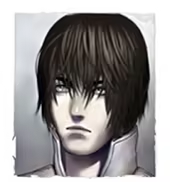
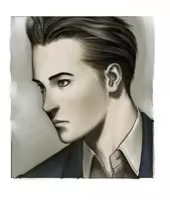
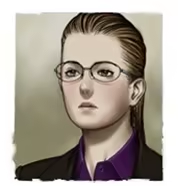
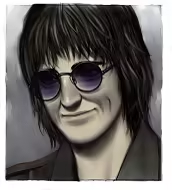
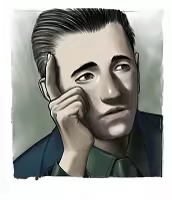
The Silver Case – the debut title from world-renowned developer SUDA51 has been fully remastered and localized to English for the first time ever!
Modeled estimate, not a reported figure. How we estimate →
Every price cut of more than 20% we have observed, in each market that quoted one, with this game's chart position on either side of it. These are episodes, not a model: a sale is one event, and one event cannot tell you what the next one will do.
Reviews, worldwide (the counter carries no country): 0.71/day in the week to Jul 23 → 0.71/day in the week after.
For scale, across Steam · Top Sellers · Brazil over the last 30 days: the 26 chart moves that followed a price cut of more than 20% went a median of 7 places towards #1, and the 2,400 moves with no price cut behind them went 2 away. One store, one chart, one country — it is the only place we have enough observations to say even that.
Prices outside the United States have been collected since 6 August 2026 and chart positions since 19 July 2026, so a cut older than that has no market to compare and a market that joined later has no history yet. Nothing here is converted between currencies.
About


Sums Steam only; PlayStation, GOG publish no volume signal, so the true total is higher by an unknown amount.
| Store | Price | Audience | Score | Chart | Est. revenue |
|---|---|---|---|---|---|
SteamYou are here | $19.99 | 1.2Kreviews | 89% | — | $428.1K |
| $19.99 | 246ratings | 88% | — | not modelled | |
Engagement
Reviews
Themes across 95 recent reviews and how positive each mention is. A keyword signal, not full sentiment analysis.
Reviews
Should We Kill The past ?
tetsugoro kusabi my beloved tokio morishima my beloved
The Silver Case - игра, которую проще назвать авторским экспериментом, чем хорошей или плохой игрой. Это чистейший Suda51: странный, неудобный, местами гениальный и местами вечно раздражающий. Формально перед нами детектив про серийного убийцу и полицейское расследование. Но на деле постоянный поток диалогов, философствований, газетных заметок и сюрреалистичных сцен, из которых надо самому собирать картину происходящего. Сюжет намеренно запутан, от чего кажется бессвязным, но именно эта атмосфера паранойи и техно-антиутопии делает игру уникальной и запоминающейся. Главная проблема же в ней это геймплей. Управление ужасно устарело, сохранения работают неудобно, многие сцены растянуты до абсурда, а настоящих головоломок здесь почти нет. Несмотря на статус детектива, расследовать по сути нечего т.к. большая часть времени это чтение текста и наблюдение за происходящим. Зато стиль до сих пор работает великолепно. Визуальная подача выглядит самобытно даже спустя десятилетия, а саундтрек традиционно для Suda51 получился отличным. Атмосферу игра создает мощную, но требует огромного запаса терпения. Но в итоге The Silver Case это прям очень нишевая вещь. Если нужен хороший детектив или увлекательная визуальная новелла, лучше пройти мимо. Если хочется чего-то необычного, странного и авторского, что не похоже вообще ни на что другое, игра вполне может зацепить. Но удовольствие от нее напрямую зависит от того, насколько вы готовы мириться с ее возрастом и причудами. Мне в итоге не зашло)
Media

Related
Related
Price dynamics, follower growth, revenue and sales trajectories with interactive tooltips
This and every other Pro feature is free until October 20, 2026. A free account is all it takes.
Genres
Stats
All-time low is the lowest price we've recorded for this game since we started tracking it.
Languages: English, Japanese
| $19.99 |
| 85ratings |
| 82% |
| — |
| not modelled |
Matched by title — a reused name can pair the wrong games. * is a critic aggregate. Prices and positions are each store's United States storefront; Epic charts worldwide. Audience and Score too, except Steam's, which is worldwide.
Hours played at review time, across 95 reviews with recorded playtime.
positive critical· bar length = how often the theme comes up
[h1] Стиль делает своё дело [/h1] Наверное, одна из самых сильных и крутых игр от Suda51 (по крайней мере, в тех, в которые я играл). Наверное, даже The Silver Case 24 Ward - самая лучшая визуальная новелла в принципе за всё время существования жанра. Ибо в игре просто потрясающая стилистика и невероятный саундтрек, и это даже не говоря о сюжете. В игре можно взять любой кадр и просто в рамку вешать или на обои ставить, и стыдно не будет, ведь перед тобой настоящее искусство. Также искусство - это то, как игра делалась. У игры три сценариста: всем известный Гоити Суда и Масахи Оока с Сако Като, которые на пару - авторы сценария сюжетной линии Placebo, в то время как сам Суда писал только Transmitter. И как же здорово это в самой игре подано! Из‑за двух разных авторов в игре - два разных стиля персонажей и два разных взгляда на знакомых нам героев. Да и ОСТы там разные. И сюжеты то и дело служат дополнениями друг к другу иногда переплетаясь, но под конец Placebo и Transmitter так идеально разделяются, что дают друг другу собственную историю со своим особенным концом. Наличие геймплея в игре даже нельзя назвать минусом, ибо он идеально дополняет стиль игры и её вайб, даже несмотря на малое количество головоломок. Вся эта ходьба по 3Д пространствам очень сильно поддерживает тон и настроение происходящего. [spoiler] Особенно мне бы хотелось упомянуть резкую смену стиля в истории и основных её красок: в какие моменты это подано и как просто изумляет [/spoiler]. Пожалуй, это будет одна из моих любимых игр в принципе, ведь такой экспириенс не каждая игра, а то и новелла, может подарить. Даже назвать новеллу, которая по стилистике и саундтреку будет на уровне The Silver Case, - уже почти непосильная задача. 9 взрывов мозга из 10. Иногда история должна ломать реальность, чтобы показать её настоящую форму.
Многим новеллистам поучится у этой игры. Ядреная японщина Такеши Китано. Кодзима курит в сторонке. The Silver Case - это не столько детектив в классическом понимании, сколько мрачная притча о природе зла, силе репутации и охоте за призраками прошлого, замаскированная под нуарный триллер. Это намеренно сложный, фрагментарный и порой даже враждебный по отношению к игроку текст, требующий активного сотворчества. Плацебо будет душнить+)
They just created a million kamui ueharas
The Silver Case was initially released for the Playstation 1, in Japanese only, though, by now, is out in languages you actually speak, on platforms you actually own, including, but not limited to, Steam, the Switch and the PS4. Silver Case's gameplay is described pretty easily: It's a visual novel. There is some minor navigation of 3D environments and some very rudimentary puzzle solving that may, if you're generous, technically make it an adventure game but you'll mainly engage with Silver Case through reading. It does do some interesting things with its presentation, though, that do foreshadow Suda's knack for stylish direction. So, what is it actually about, then? Well, on face value, it's a hard boiled detective story, experienced from two different perspectives. A police officer the player gets to name (The closest thing to a canon name he has is the moniker "Big ♥♥♥♥" which, for my and your amusement, I'll use to refer to him) and freelance journalist Tokio Morishima. Both those men investigate a recently escaped serial killer named Kamui Uehara, arrested around 2 decades before the events of the game, for the murders of various political and industrial figures. For people more familiar with Suda51s later work, this might sound pretty mundane. And interestingly enough, it keeps feeling that way for the games early half. The first case of the game seems to conclude the Kamui case in a way that, while leaving some very obvious loose ends, in a relatively grounded and realistic way, with the following two cases, both side stories, continuing on a similarly mundane note, only occasionally hinting towards more mysterious things going on behind the scenes. And for someone more used to Suda's more overtly surreal later games, he is being remarkably subtle in the earlier parts of Silver Case. There is quite a bit of dialogue that suggests weirder things. For example the fact that the games setting, a fictional city named "24th Ward" in Japan's Kanto municipality, is governed by a kafkaesque bureaucracy of nebulous NGO's, companies and agencies. Its police force appears to consist of 3 different competing agencies (Big ♥♥♥♥ himself being a transfer from sort of a counter terrorism SWAT unit named "Republic" to the regular police force called "Heinous Crime Unit) and there is a running joke about characters frequently namedropping mundane sounding organizations like the "International Feminist Coalition" or the "Frontier Party" as if they were clandestine secret societies. Despite hinting at some of these dystopian trappings, Silver Case only really starts to indulge in its own weirdness roughly around the 50% mark, just as I was wondering if, back in 99 when it came out, Suda was perhaps more restrained in his weirdness. But he wasn't, of course, he has always been a surrealist and halfway through, Silver Case shifts gears to turn into something much weirder. From this point onwards, there's gonna be spoilers. Just a heads up. While the whole Kamui plot seems to take a backseat after the first case (In which it was revealed that not the near catatonic Kamui, but a copycat named Ayame Shimohira commited the recent killing spree) to a case about the Heinous Crime Unit investigating a suicide in an apartment complex, mainly used to flesh out the supporting casts personalities, and another one about a series of terrorist attacks on a powerful corporation, Kamui comes back into focus afterwards. It eases the player into it's surreal dystopian trappings with a case about a Cyberpunk cult (Admirers of Kamui, who is seen as sort of a counter cultural icon) who allege to be communicating with extradimensional aliens trying to unleash a computer virus and then dives deeply into what will lay the groundwork for Suda's wider universe and the themes he'll keep exploring for most of his career. In the games last third it turns out that, while there was a real serial assassin named Kamui Uehara at one point, both the current Kamui and his copycat Ayame are the product of a top secret experiment to kidnap more than 1,000 children, keeping them in secret underground shelters and indoctrinating them with the personality of the original Kamui, not only trying to breed a class of perfectly obedient citizens, but also trying to induce a mysterious condition of the original Kamui that gave him silver eyes, granting him eternal youth, along with some other supernatural powers. What makes Silver Case a very potent work of dystopian fiction is how it plays with the unreliability of information. The player gets just enough insight in the goings on behind the 24th Ward to see it as what it is, a deeply inhumane experiment on its own citizens, instigated by a cabal of mysterious faceless technocrats, but the player is left in the dark about the exact scope and scale of the greater conspiracy. Does the 24th Ward's ruling class consist of two parties at war with a third party that has been driven underground after a political purge? Is the feud behind those three parties only a smoke screen and they're all part of a global Illuminati-esque coalition named ELBOW? Maybe neither of those factions exist anymore, and the 24th Wards mayor, who acquired the original Kamui's Silver Eye, rules the city as a totalitarian dictator with the help of a mysterious computer specialist named Nezu. The player gets to hear all these conflicting narratives and while some of Silver Cases sequels and spinoffs elaborate on them, they only layer further mysteries on top of them. Silver Case is, effectively, a dystopian parable, disguised as a weird science-fiction conspiracy thriller, disguised as a detective story. Stylistically indulgent as the game gets, it also show Suda at his most overtly clear about his morals. Silver Case has him firing on all cylinders, providing his perspective on the ideas of government, policing, crime, technology, social dynamics, terrorism and many more. All of those will be recurring themes throughout his work. Flower, Sun and Rain, Killer7, 25th Wards and No More Heroes are all, to some extent, sequels or spinoffs to Silver Case, which makes it rather unfortunate that it's very unlikely to be western players first exposure to Suda51. That said, it still remains probably the most important game to play to understand where exactly Suda, as a writer, is coming from. It's also Silver Case where the phrase "Kill the Past" is first uttered, attributed to Kamui, though first heard from a member of a group of anti-corporate terrorists, trying to get revenge for a past injustice. This mantra will reverberate through all of Suda's work from this point onward, suggesting a focus on finding closure with both your own and your cultures history. As ambiguous as Suda keeps the exact form of the evil forces controlling his world, it is very clear that he views them as something ancient and sinister, desperately holding onto and trying to expand power it feels entitled to. In the end it turns out that the nominal Silver Case, according to public narrative describing the murder of the 24th Wards party elite by the original Kamui, was actually the story of the geriatric government officials murdering first Kamui, then each other, to get a hold on the power of his silver eyes and the closest the game has to a main antagonist is Mayor Hachisuka, who emerged victorious from this massacre and used the Silver Eye's powers of eternal life to kill his own son and take his place as the lifelong ruler of the 24th Ward. It's not saying much, but Silver Case is probably Suda's most easy to understand story until the much later No More Heroes. Its direct followup was "Flower, Sun and Rain". Its Nintendo DS port was the first Suda game to be translated into English and might have been a lot of people first exposure to Suda51, which is unfortunate, because quite a bit of its story hinges on the player being familiar with the lore of Silver Case.
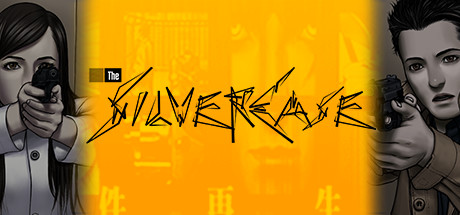
First couple hours are gonna be simultaneously vaguely interesting and pretty boring. Push through them. Take notes. There's an incredible story about the worst parts, the most depraved and violent, of any person, and what leads several people into allowing them to take hold, if you can just push through those first chapters. Take your time. I know that when I first played the game it took me almost two weeks to finish the first four chapters (chapters typically take an hour to an hour and a half to complete, there are 11 normal ones and 3 epilogue chapters that are less than thirty minutes long combined), and two days to get through the rest of the game. If you enjoy the game, make sure to play the two sequels that complete this unnamed trilogy, "Flower, Sun, and Rain", which you'll have to emulate, and "The 25th Ward" which you can easily get on steam. Each game is better than the last, and despite all being adventure games, they all feel very different. Make sure to play through the game like this to get the best experience: TRANSMITTER Chapter 0 TRANSMITTER Chapter 1 PLACEBO Chapter 1 Switch back and forth between TRANSMITTER and PLACEBO until you've finished the game.
Every conversation in this game is like: "Sumio, doesn't this remind you of...?" "What do you mean, Kusabi?" "I don't know..."
You have to kill it...
Players by region
Where this game's players are, estimated from review languages.
Players also reviewed
The games this title's players most often review too — audience affinity.
Related
| Game | Estimated lifetime revenue | Reviews | Review score | Price |
|---|---|---|---|---|
| $5.4K | 29 | 28% | $14.99 | |
| $953 | 28 | 71% | $1.99 | |
| $0 | 0 | — | $1.99 | |
| — | 0 | — | — | |
| — | 0 | — | — | |
| $4.1M | 23.3K | 83% | $11.99 |
Related
| Game | Estimated lifetime revenue | Reviews | Review score | Price |
|---|---|---|---|---|
| $427.9K | 8.9K | 97% | $2.99 | |
| $428.3K | 1.7K | 86% | $6.99 | |
| $428.4K | 1K | 92% | $13.99 | |
| $428.4K | 1.9K | 95% | $14.99 | |
| $427.8K | 1.5K | 91% | $11.99 | |
| $427.7K | 1.1K | 89% | $7.79 |