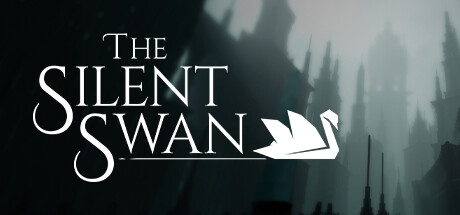
The Silent Swan is a contemplative first-person narrative experience across a megalithic, derelict world. Mixing elements from both walking simulator and open levels.
Modeled estimate, not a reported figure. How we estimate →
Discounts
Every price cut of more than 20% we have observed, in each market that quoted one, with this game's chart position on either side of it. These are episodes, not a model: a sale is one event, and one event cannot tell you what the next one will do.
Reviews, worldwide (the counter carries no country): 0/day in the week to Sep 1 → 0/day in the week after.
For scale, across Steam · Top Sellers · Brazil over the last 30 days: the 26 chart moves that followed a price cut of more than 20% went a median of 7 places towards #1, and the 2,402 moves with no price cut behind them went 2 away. One store, one chart, one country — it is the only place we have enough observations to say even that.
Prices outside the United States have been collected since 6 August 2026 and chart positions since 19 July 2026, so a cut older than that has no market to compare and a market that joined later has no history yet. Nothing here is converted between currencies.
About


Engagement
Reviews
Themes across 43 recent reviews and how positive each mention is. A keyword signal, not full sentiment analysis.
Reviews
The Silent Swan ist eine nicht leicht zu durchschauende Geschichte über Realität, die in wundervolle, stimmige Bilder gewoben wurde. Mir hat die Geschichte sehr gefallen, auch wenn ich die seltsam fehlerhafte deutsche Übersetzung beklagen muss. Leider kann man die Sprache nicht im Spiel wechseln oder ich habe es nicht gefunden. Dennoch, es ist ein Kleinod und ich kann es nur jedem, der nach einer philosophischen, mit anspruchsvoller Geschichte ausgestattetem Spiel sucht. wärmstens empfehlen.
I really enjoy walking simulators, but this one actually had me tired in real life. The environment is beautiful and thoughtfully designed, and I love the overall atmosphere. However, everything is so spaced out that the world ends up feeling empty and unfinished. Some games use that emptiness intentionally to create a sense of loneliness or surrealism, but here it just feels like the game isn’t complete. The painfully slow walking and cycling speed in such a large environment doesn’t help either. You spend what feels like half an hour walking in one direction just to interact with a single object, then another half hour walking somewhere else to trigger the next story event. For such a large map, the lack of an in-game map or compass makes navigation frustrating. It’s easy to get lost, especially near the many highways, and you might wander aimlessly before realising you’ve been going the wrong way - only to turn back and walk even more. The story itself seems intriguing, but the absence of voice narration makes it hard to stay engaged. Normally, text-only dialogue in games can work fine, but in this case, there’s so much of it that keeping up feels like a chore, especially while trying to move toward your next objective. To make matters more confusing, the settings menu includes a 'Voice Volume' option, yet there’s no actual voice acting. It makes the game feel bugged or simply unfinished. This game could be so much better with a few thoughtful adjustments. A smaller, more focused map would make exploration feel purposeful rather than tedious, while adding voice narration - at least for the main character - would make the story far more immersive and emotionally engaging. Clearer navigation tools like a simple compass or waypoint system and a bit more interactivity between major story points would also go a long way toward creating a more balanced experience. The foundation is solid, but the current execution makes it feel more like a concept than a fully realised game.
Media

Related
Related
Price dynamics, follower growth, revenue and sales trajectories with interactive tooltips
This and every other Pro feature is free until October 20, 2026. A free account is all it takes.
Genres
Stats
All-time low is the lowest price we've recorded for this game since we started tracking it.
Languages: English, Spanish - Spain, French, Italian, German, Japanese, Korean, Portuguese - Portugal, Simplified Chinese, Basque, Catalan, Hindi
Hours played at review time, across 43 reviews with recorded playtime.
positive critical· bar length = how often the theme comes up
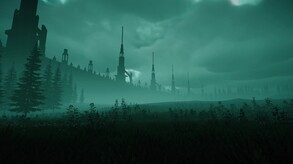
The Silent Swan, developed by Praenaris and published by Gammera Nest, is a first-person narrative exploration game that embraces the quiet melancholy of isolation and the weight of forgotten history. It tells the story of Mirov Kavrazyma, a man who awakens in a strange, desolate future where towering, decayed cities loom on the horizon and his once-familiar world has slipped into silence. The premise is simple, yet the execution is deeply meditative: follow the trail of paper swans left behind by his wife Selene, and uncover the fractured truth behind a world that has seemingly collapsed. What unfolds is less a traditional story and more a poetic unraveling of memory, grief, and consequences, where architecture and silence speak louder than any dialogue. Rather than leaning into conventional game mechanics like combat or puzzle-solving, The Silent Swan builds its entire identity around atmospheric immersion and large-scale environmental storytelling. Players are encouraged to wander vast, interconnected cityscapes—monolithic ruins that echo with the absence of life. These spaces are not filled with distractions or mechanical objectives; they are sparse by design, intended to evoke a sense of distance, decay, and awe. The cities and structures are impossibly grand, each built with an eye for oppressive verticality and haunting symmetry. They invite introspection rather than action. Between these cities, players traverse long stretches of landbridges using a unique vehicle, the quicycle, which adds a touch of movement variety to the experience while preserving the game’s quiet tone. One of the most distinctive features of The Silent Swan is its devotion to scale and openness. It doesn’t just hint at large environments—it fully realizes them. Buildings aren’t just distant decorations; they can often be entered, climbed, explored. Every corridor, staircase, and empty room adds texture to the experience. While this vastness is a technical and artistic achievement, it’s also divisive. Some players may find the sprawling spaces to be meditative, allowing them to soak in the ruins of a broken world at their own pace. Others might experience it as a test of patience, with long stretches of minimal interaction that feel empty rather than purposeful. The game’s refusal to hold the player’s hand means you are expected to find meaning in subtle details, which may not appeal to everyone. Visually, The Silent Swan crafts a striking aesthetic that relies more on atmosphere and architectural design than flashy effects. The game uses fog, light, and shadow to create a consistently moody tone that suits its themes of loss and loneliness. The environments evoke a strong sense of abandonment—windows shattered, structures crumbling, streets devoid of life. Yet there’s a beauty in this ruin. The minimalistic color palette and surreal city layouts give the entire world a dreamlike, almost surreal quality. Complementing this is a carefully restrained audio design, with ambient sounds and an ethereal score that rise and fall with the pace of exploration. There are long periods of near silence, and that silence becomes part of the storytelling. Narratively, the game unfolds through found letters, primarily those written by Selene. These paper swans contain fragments of thoughts, regrets, and observations that gradually piece together the emotional and historical layers of the game’s world. The story touches on themes of memory, exile, and the burden of unspoken truths, and while it leaves room for interpretation, it also provides multiple endings depending on what you discover. This open-ended structure rewards those who fully immerse themselves and seek out every clue. The emotional payoff may be subtle, but it resonates in a way that lingers long after the credits roll. The Silent Swan is not a game for everyone. Its slow pace, absence of traditional gameplay systems, and introspective tone place it firmly within the “walking simulator” genre—but even within that label, it stands apart. It offers an experience that is more architectural poem than game, more meditative journey than interactive challenge. For players who value atmosphere, world-building, and emotional subtlety over action or narrative clarity, it can be a profound and memorable experience. It’s a quiet, brave work that dares to use emptiness as a storytelling device and trusts the player to find meaning within the void. Rating: 6/10
Selling now
See how fast this game is selling right now — estimated copies and revenue per day from recent review growth.
Players by region
Where this game's players are, estimated from review languages.
Related
| Game | Estimated lifetime revenue | Reviews | Review score | Price |
|---|---|---|---|---|
| $28K | 121 | 88% | $11.99 | |
| $13.5K | 262 | 80% | $2.99 | |
| $8.4K | 162 | 85% | $2.99 | |
| $7.4K | 86 | 84% | $3.99 | |
| $2.1K | 61 | 79% | $1.99 | |
| — | 0 | — | — |
Related
| Game | Estimated lifetime revenue | Reviews | Review score | Price |
|---|---|---|---|---|
| $7.7K | 55 | 91% | $4.99 | |
| $7.7K | 229 | 79% | $1.99 | |
| $7.7K | 63 | 73% | $4.99 | |
| $7.8K | 107 | 91% | $4.99 | |
| $7.7K | 104 | 95% | $3.59 | |
| $7.8K | 111 | 76% | $4.99 |