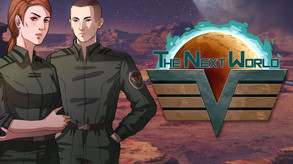
Welcome to The Next World - a strategic visual novel telling the story of a crashed colony ship and its ragged group of survivors, trying to make a new life on the wrong planet. Craft plans, make decisions, and manage your colony's limited resources in a desperate fight to stay alive.
Modeled estimate, not a reported figure. How we estimate →
About


Stats
All-time low is the lowest price we've recorded for this game since we started tracking it.
Languages: English
Add-ons
Each DLC is estimated with the same model as a game, then summed — a modeled figure, not reported DLC sales.
Engagement
Reviews
Themes across 49 recent reviews and how positive each mention is. A keyword signal, not full sentiment analysis.
Reviews
I'll get the bad things out of the way immediately. You'll probably want to mute this game, or at least reduce the levels in the settings. The "music" might improve later on but at the beginning it was more like listening to two pieces of metal grind together. Instead, I lowered everything and just listened to my own music of other things in the background. You'll just be reading a lot anyway. There's a few weird graphic things, like a child "jumping" into his mother's arms only to find he's missing any legs below the knee because they didn't bother to draw it. But that's fine. Otherwise this is a surprisingly enjoyable game. It took some unexpected turns even after I had everything figured out. It's very much a story driven game that changes based on your decisions. It's sort of got that "one more turn" feel as you become more curious about the plot and colony progression. For the price it's probably worth it if you like this kind of game. I've read some of the negative reviews and they don't seem to realize this is absolutely a "visual novel" game. The story is only minorly in your hands and your job is to keep things level in order to keep it moving forward. If that doesn't sound fun, skip the game or watch someone else play it. I don't expect there's a lot of replayability since the story would remain largely the same, but it could be fun to see if you make it through the challenge of higher difficulties.
Media

Related
Related
Price dynamics, follower growth, revenue and sales trajectories with interactive tooltips
This and every other Pro feature is free until October 20, 2026. A free account is all it takes.
Hours played at review time, across 49 reviews with recorded playtime.
positive critical· bar length = how often the theme comes up
The Next World, developed by Illuminated Games and published by AAD Productions, is a hybrid between a visual novel and a resource management survival strategy game that explores the fragility of human civilization on a hostile alien world. The game casts you as the commander of a crashed colony ship, stranded with a group of survivors after a failed interstellar expedition. From the very first moments, it establishes a grim yet compelling tone—one where every decision carries moral weight, and every misstep can lead to starvation, mutiny, or extinction. It’s a story not about conquest or heroism, but endurance, leadership, and compromise in the face of impossible odds. The narrative takes center stage as you guide your survivors through a series of crises. Your responsibilities extend beyond building and scavenging—you must also maintain morale, resolve disputes, and make political choices that shape the future of your fragile colony. The writing is somber and mature, highlighting the isolation and moral strain of life on a planet that doesn’t want you there. The story unfolds through a series of branching events, dialogue options, and random occurrences that test your leadership style. Each choice you make affects resources like food, morale, and energy, as well as your relationships with other survivors. Unlike many strategy games that rely on clear-cut decisions, The Next World thrives on ambiguity—sometimes the “best” choice is simply the one that hurts the least. Beneath its story lies a layer of survival management that adds tangible consequences to your narrative choices. You must allocate workers, gather resources, and maintain a balance between immediate needs and long-term development. It’s a system that mirrors the narrative’s themes of scarcity and sacrifice. Every decision—whether to build shelter, repair communications, or explore new terrain—has the potential to save lives or doom them. While these mechanics are relatively light compared to full-scale strategy titles, they give structure to the story, grounding its emotional stakes in tangible survival metrics. The simplicity of the system also means that it remains accessible, allowing the focus to stay on decision-making rather than micromanagement. Visually, the game adopts a hand-drawn, minimalist art style that complements its introspective tone. The character portraits and backgrounds have a muted, almost industrial palette that reflects the desolation of the setting. The art direction leans heavily into atmosphere rather than spectacle, reinforcing the loneliness of the planet and the sense of decay surrounding the colony. The interface is clean and easy to navigate, with menus that make resource tracking intuitive without cluttering the screen. It’s a game that values function over flash, and in doing so, it maintains immersion without distraction. The writing, spearheaded by Ryan A. Span, deserves special mention for its attention to character nuance and moral conflict. Your crew members are not faceless statistics; they are individuals with their own ambitions, fears, and loyalties. As the commander, you must decide how much to trust them, when to listen, and when to assert authority. This dynamic gives every interaction weight, as your decisions ripple through the colony’s social fabric. Some characters may rebel against your leadership, while others might sacrifice themselves for the greater good. The dialogue is sparse but efficient, delivering emotional impact through implication rather than exposition. It’s a narrative style that respects the player’s intelligence, allowing them to infer motives and emotions through tone and consequence. The pacing of The Next World is deliberate and reflective. There are moments of calm, when you’re planning and rebuilding, punctuated by sudden disasters that demand immediate action. This rhythm mirrors the experience of survival itself—long stretches of uncertainty followed by bursts of chaos. The tension builds not through combat or spectacle but through resource scarcity and human fragility. Every time the food supply dwindles or morale begins to collapse, the sense of impending doom becomes palpable. The slow burn of anxiety keeps players engaged, even without the adrenaline of traditional strategy battles. Despite its strengths, the game does show its indie limitations. The management system, while effective for storytelling, can feel shallow for players looking for deep strategic complexity. The narrative, though strong, occasionally repeats certain event patterns, and the consequences of some choices may feel too binary. The lack of dynamic animation or large-scale visuals might also disappoint those expecting a more cinematic experience. However, these shortcomings are more reflective of its scale and budget rather than a flaw in design philosophy. The game knows what it wants to be—a thoughtful survival narrative—and it delivers on that goal with consistency and sincerity. The replay value is another of its quiet strengths. With multiple endings and branching storylines, The Next World encourages multiple playthroughs. Each run reveals new scenarios and moral dilemmas, inviting players to experiment with different leadership approaches. Whether you play as a pragmatic realist willing to make sacrifices or as an idealist who tries to preserve every life, your colony’s fate shifts in unpredictable ways. This variability adds longevity to the experience and reinforces its central theme: survival is never guaranteed, and every decision carries weight. In the end, The Next World stands as an ambitious and intelligent blend of storytelling and strategy. It’s not a spectacle-driven game but a meditative one, asking players to think deeply about leadership, survival, and the human cost of progress. Its blend of minimalist mechanics and mature narrative design makes it a distinctive entry in the genre—an introspective tale of resilience rather than conquest. While it may not appeal to those seeking fast-paced action or grand-scale management, it offers something far rarer: a quiet, haunting reflection on responsibility and survival at the edge of existence. Rating: 7/10
I first found this game through Steam suggestions. At first I balked at the price for a mere 5 hours of game time as per the reviews, but I added the game to my wish list so I could nab it on sale. Yesterday I received a steam mail telling me this was on sale for just $4! As soon as I got home from work, I started playing it and became so engrossed that I ran the whole story for 5 hours straight until 1 am. The game: This is a virtual novel hybrid that also plays as a strategy game. Events happen in the course of the story, and you decide as you deem best, and these consequences have effects on the colonist's health status, supplies levels, morale, power generation and their very lives. For example, you control vehicles that you send to missions on the map to explore, scavenge, retrieve and other things. How you manage resources and deploy them while dealing with limited quantities of supplies, minerals and power will decide the fate of the survivor's colony. If you don't budged minerals for emergencies, you will find yourself unable to continues and die. If you don't restrict rations when supplies are low, you will starve. If you don't manage power consumption, you will run out of power and kill everyone. If you don't watch the health status, people will die. If you don't keep an eye on morale, you may find yourself replaced. And so on. I loved the implementation of the game, and hope to find more of this type. Beware however: As of this review, achievements were not working and there are a few script bugs (salvaged a rover but it never became available, a few other things). It is a great game for the discounted price anyways. Thank you for the experience devs.
Nice 10-hour game with good replay value. Real choices, good characters, surprising story, balanced difficulty. I hope you like trolley problems :D. As usual, I love Ryan's writing. I keep begging other game devs to hire a writer because thanks to Ryan I got really picky.
I am not someone who plays lots of visual novels and that's not because I don't like visual novels mind you, it is just that not a lot of them feel like they are worth my time. But the moment I read about the The Next World (will be referred to as TNW from now on), it draw my eye because I like science fiction and it seemed like an interesting game. The good: TNW has an interesting concept, trying to survive in a hostile world with no support and little to no supplies. It has a good story to go along with it. Where you can pick who you wish to play as and it offers different story related benefits. Other than the choices you make related to management of your base and what to build first to survive, you get to make some story related decisions. These decisions really feel significant and at times they really make you feel like you need to change your strategy in order to adapt and survive your own choices. The bad: Story events in TNW does fallow a script for continuity, but they are pretty much random. Which seems like a good thing, but making the same choices could yield drastically different results. Almost unrealistically. You are never sure about what will happen next and two story related events could happen one after another to wipe you out instantly. This is where it gets frustrating. Being punished by the game for making bad choices is one thing, being punished for making a choice in the first place makes the whole story element dreadful at times. There is no balance to it. Not a lot of bright, lighthearted story moments to make it more interesting. The ugly: After playing it more than once, you will realize that most of your choices doesn't really matter. Now, you must know this is the case in most games but some events in this game could trigger even if you made the opposite choice, which is immersion breaking at best. Final thoughts: I will give it a thumbs up simply because it is an interesting game to play. It offers an interesting story and even with all its faults, it manages to be interesting enough to keep you playing to the end, just to see if you can help your little colony survive. I would recommend it.
Serious anime! Spase strategy! Logic quest! THIS IS GAME!
I had a fun 7 hours with this. It's not the type of game I normally play but it kept me interested the whole way through. Plenty of choices to make and an interesting system of daily colony management. I wish it kept going after the end, into a freeplay kind of. My only complaint, no achievments unlocked as I played through. Theres mention of it in the forums, dev has never responded to others with the same issue. Otherwise I thought it was a pretty good game.
★★☆☆☆
Minhas tentativas de jogar foi em vão, passa longe de ser meu tipo de jogo. Não sabia administrar recursos e mandava toda hora equipe ir procurar recursos, e ai no final todos passavam fome e eram acometidos por doenças. Não posso negativar por não gostar do gênero. Farmei as cartinhas e tentei, não funciono para mim.
Quite a nice game. Definitely worth a play.
Selling now
See how fast this game is selling right now — estimated copies and revenue per day from recent review growth.
Players by region
Where this game's players are, estimated from review languages.
Related
| Game | Estimated lifetime revenue | Reviews | Review score | Price |
|---|---|---|---|---|
| $1.1M | 4.4K | 83% | $9.99 | |
| $410.8K | 573 | 84% | $19.99 | |
| $229.7K | 362 | 96% | $19.99 | |
| $135.2K | 465 | 80% | $9.99 | |
| $111.4K | 362 | 88% | $14.99 | |
| $30K | 105 | 90% | $19.99 |
Related
| Game | Estimated lifetime revenue | Reviews | Review score | Price |
|---|---|---|---|---|
| $20.8K | 55 | 75% | $14.99 | |
| $20.8K | 117 | 60% | $9.99 | |
| $20.8K | 117 | 74% | $9.99 | |
| $20.8K | 55 | 73% | $14.99 | |
| $20.8K | 118 | 97% | $6.99 | |
| $20.8K | 1.2K | 85% | $0.99 |