The Life and Suffering of Sir Brante — Chapter 1&2
A narrative-driven hardcore RPG set in a gritty world where the gods are real. Set out on a challenging lifetime journey, where every choice you make has a price to pay and consequence to it. Will you become an inquisitor, a judge, or conspire against the old order? Dare to decide!
Estimated lifetime revenue
Free-to-play
Revenue comes from in-game items and microtransactions, which our price-based model doesn't estimate. The player count below is how many people own it, not what they spent.
Est. players
82.8K
people who own it
Reviews
2K
Review score
96%
9.6/10
Concurrent players
2
read Sep 18, 2026, 15:00 UTC
Followers
About
About the game
The Life and Suffering of Sir Brante is a narrative-driven text-based RPG set in a ruthless medieval realm that comes to life on the pages of the protagonist's journal. Though every man's life is predetermined by the Lot they received at birth, it is you who decides whether your character will challenge fate and alter his destiny, rewriting the established laws of the universe.
The free version of The Life and Suffering of Sir Brante — Chapter 1&2 chronicles the early years of Sir Brante's journey. Explore the world of the Blessed Arknian Empire and experience first-hand the cruel customs and order that govern it, then decide who you want to become: an inquisitor, a judge... or a rebel! Whole saved progress from the free version will be automatically transferred into the full version of The Life and Suffering of Sir Brante.
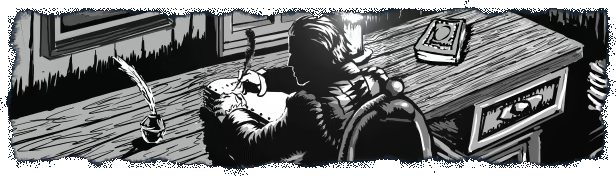
Every imperial citizen's life is predetermined by their estate. The deities known as the Twin Gods have bestowed this truth to the world, dividing mortals into Lots. The nobles lead and rule over others, while the clergy guides people on the one true path, and the lowborn suffer, toiling away for the glory of the Empire. You may accept your fate without question, but it is also in your power to change the cosmic order that governs all.
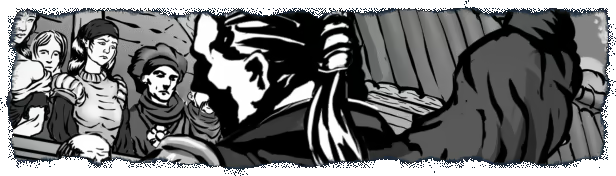
Your choice is not an illusion
Divided into chapters, the game keeps track of the player's deeds, the skills they acquired, as well as other overlapping circumstances that shape a unique plotline for each playthrough. Every decision has its consequences and you will be held accountable throughout the entire journey. To protect your family and loved ones, to impose the rule of the Emperor and make a fortune, or to try and change the world as you see fit... Make your choice, but beware of the follies of pride and ambition.
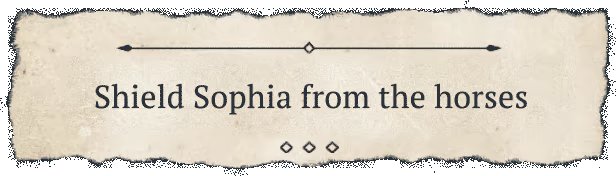
Fight for your life
One man is anything but omnipotent in this realm yet under your guidance, Sir Brante may become a person who can endure every trial fate throws at him and rewrite the very laws that govern his world! Develop and train your character, leveling up such traits as determination, sensitivity, and endurance. All of the hero's skills, starting with those acquired in infancy, will affect his personality, worldview, and relationships, ultimately unlocking new talents and possible storylines.
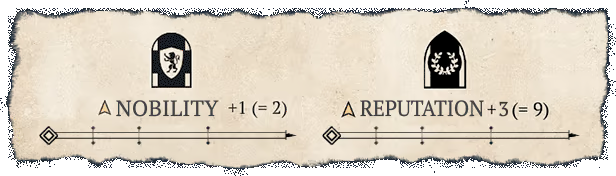
Find your own path
Numerous branching paths that affect the unfolding story will make every playthrough a unique experience: become a noble judge, learn the ways of the inquisition, plot a revolution as a member of a secret society, or embrace an entirely different purpose. Be brave and fate itself shall bend to your will!
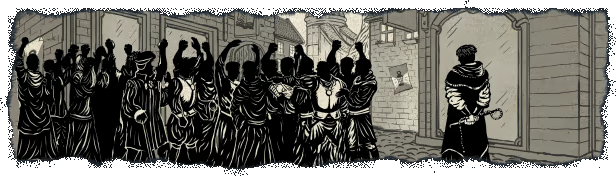
There and hereafter
Resurrection system allows the character to keep his experience upon death, letting the player reevaluate past steps and make adjustments to their strategy going forward. Take control not only of your life but also your demise, then put everything at stake in this cycle of death and rebirth!

The free version of The Life and Suffering of Sir Brante — Chapter 1&2 chronicles the early years of Sir Brante's journey. Explore the world of the Blessed Arknian Empire and experience first-hand the cruel customs and order that govern it, then decide who you want to become: an inquisitor, a judge... or a rebel! Whole saved progress from the free version will be automatically transferred into the full version of The Life and Suffering of Sir Brante.
Key features
At the turn of timeEvery imperial citizen's life is predetermined by their estate. The deities known as the Twin Gods have bestowed this truth to the world, dividing mortals into Lots. The nobles lead and rule over others, while the clergy guides people on the one true path, and the lowborn suffer, toiling away for the glory of the Empire. You may accept your fate without question, but it is also in your power to change the cosmic order that governs all.
Your choice is not an illusion
Divided into chapters, the game keeps track of the player's deeds, the skills they acquired, as well as other overlapping circumstances that shape a unique plotline for each playthrough. Every decision has its consequences and you will be held accountable throughout the entire journey. To protect your family and loved ones, to impose the rule of the Emperor and make a fortune, or to try and change the world as you see fit... Make your choice, but beware of the follies of pride and ambition.
Fight for your life
One man is anything but omnipotent in this realm yet under your guidance, Sir Brante may become a person who can endure every trial fate throws at him and rewrite the very laws that govern his world! Develop and train your character, leveling up such traits as determination, sensitivity, and endurance. All of the hero's skills, starting with those acquired in infancy, will affect his personality, worldview, and relationships, ultimately unlocking new talents and possible storylines.
Find your own path
Numerous branching paths that affect the unfolding story will make every playthrough a unique experience: become a noble judge, learn the ways of the inquisition, plot a revolution as a member of a secret society, or embrace an entirely different purpose. Be brave and fate itself shall bend to your will!
There and hereafter
Resurrection system allows the character to keep his experience upon death, letting the player reevaluate past steps and make adjustments to their strategy going forward. Take control not only of your life but also your demise, then put everything at stake in this cycle of death and rebirth!