
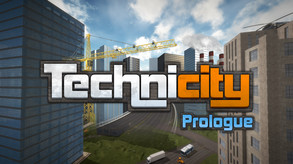
Free Prologue to Technicity, a first-person city-building game with powerful tools that allow you to build faster and bigger. Design your own construction blocks and furniture in factories, terraform the open world, use vehicles to travel in cities that you or your friends create in solo or co-op.
Revenue comes from in-game items and microtransactions, which our price-based model doesn't estimate. The player count below is how many people own it, not what they spent.
About
This is a prologue for the full game "Technicity".

Technicity: Prologue let you test your skills in this first-person city building game where you can also design your own construction blocks and items to create really unique buildings. Use cranes to speed up construction, terraform the open world, build roads and use vehicles to travel in the city that you or your friends create in solo or coop mode.
In the full version of the game, you will be able to develop your city on a larger area, you will have more tasks to complete, tools to use, and new types of buildings to create.

Use a crane or a cement mixer to quickly build houses, shops, factories and any other building you can think of. The design is yours: with a large variety of building blocks of different shapes and materials, you can really create whatever you want.
You can then save a schematic from any building you made and start construction of the same building somewhere else.
Share your schematics in the Steam Workshop and use other players' creations.

The open world is huge, an existing road network with thousands of km's lets you reach every part of the 384 km2 map. In the Prologue you can start to build your city in a 4 km2 limited area, while in the full game the world can be filled with many big cities. Build your own roads and they'll be integrated into the navigation system.
Terraform the world with steamrollers and bulldozers - you can even create or remove entire mountains!

Design and produce your own building blocks, items and furniture in factories, and use them to create really unique buildings.
The items you design can also have useful features: create a garage door that opens, an illuminated sign or even a vehicle.
Any other player in your world can then use the items produced in your factories.

Invite your friends to join your world and build new cities or have fun with some role play. The prologue includes a co-op, limited to 2 players (4 in the full version).
Share your best building schematics in the Steam Workshop and discover what other players have made. In the full game, you'll be able to share entire maps in the workshop.
Genres
Stats
Languages: English*, French, German, Spanish - Spain, Simplified Chinese, Polish, Russian*languages with full audio support
Engagement
Reviews
Themes across 46 recent reviews and how positive each mention is. A keyword signal, not full sentiment analysis.
Reviews
5из10
[h1] [/h1]
Media

Related
Related
Price dynamics, follower growth, revenue and sales trajectories with interactive tooltips
This and every other Pro feature is free until October 20, 2026. A free account is all it takes.
Hours played at review time, across 46 reviews with recorded playtime.
positive critical· bar length = how often the theme comes up
Technicity: Prologue presents a hands-on interpretation of the city-building genre, replacing the familiar distant managerial viewpoint with a first-person perspective that puts the player directly inside the world they are developing. Created by Osaris Games and published by RockGame S.A., this free introductory experience is designed to demonstrate the construction, exploration, manufacturing, terraforming, and cooperative systems of the larger game. Although its available building area and overall content are naturally more limited than the complete experience, it provides enough freedom to show why its approach to urban construction stands apart from more conventional city simulators. The biggest difference is the physical nature of building. Instead of simply selecting a structure from a menu and placing it on a prepared plot, players can construct buildings from individual components. Houses and other structures can therefore reflect personal ideas rather than being restricted to a small catalog of predetermined designs. Various materials, shapes, and construction pieces encourage experimentation, making architecture one of the central forms of progression. There is considerable satisfaction in seeing a structure develop from a collection of basic pieces into something that feels genuinely personal. Large construction projects become more manageable through the use of machinery. Cranes, cement mixers, bulldozers, steamrollers, and other equipment reinforce the feeling of being an active participant in development rather than an invisible administrator. Vehicles also make moving around the environment more convenient and contribute to the sense that the player is working within a physical city instead of manipulating a miniature model. These elements occasionally feel less polished than the equivalent systems in a dedicated vehicle or construction simulator, but their purpose here is to broaden the sandbox rather than provide extremely realistic machinery operation. One of the most practical features is the schematic system. A building that required considerable effort to create can be saved and reused, preventing large urban projects from becoming unnecessarily repetitive. This becomes particularly valuable when constructing neighborhoods or developments where several copies of a design are desirable. Steam Workshop support further expands the concept by allowing building designs to be shared with the community. As a result, players who are less interested in designing every structure themselves can benefit from creations made by more dedicated builders, while enthusiastic architects have a convenient way to distribute their work. Terrain modification is another important part of the experience. Players are not forced to accept the landscape exactly as they find it because heavy equipment can be used to alter the environment. Ground can be prepared for development, obstacles can be removed, and roads can be constructed to connect different locations. This creates a pleasing relationship between urban planning and physical construction. Instead of merely deciding where a district belongs, the player may need to prepare the surrounding land and establish suitable infrastructure before the area begins to resemble a coherent settlement. Manufacturing introduces an additional creative dimension. Factories allow players to produce custom building blocks, furniture, and functional objects. This system is particularly interesting because customization is not limited to cosmetic decoration. Player-created objects can have practical functions, including elements such as illuminated signs and moving doors. The ability to create vehicles and other usable objects further reinforces the idea that the sandbox is intended to accommodate experimentation beyond ordinary building placement. It gives inventive players tools for developing environments that feel more distinctive than cities assembled entirely from standardized assets. Cooperative multiplayer strengthens this construction-focused design. The prologue allows two players to work together, which can make ambitious projects substantially more entertaining. One person might concentrate on structures while another handles roads, terrain preparation, transportation, or manufacturing. There is also room for less structured play, since vehicles, custom creations, and the open environment make the game suitable for simply experimenting with a friend. The multiplayer component is not the enormous communal city simulation some players might imagine, but it complements the creative systems effectively. The important distinction is that this should not be approached as a deeply statistical municipal management simulator. Players primarily interested in balancing complicated taxation systems, political policies, public services, demographic trends, and detailed economic simulations may find the focus comparatively light. Its strengths are construction and creativity. The pleasure comes from physically shaping the environment, building structures, modifying terrain, manufacturing objects, driving around completed areas, and gradually turning an undeveloped space into something recognizable as a player-created city. Visually, the game favors functional clarity over cutting-edge presentation. Buildings, machinery, terrain, and construction components are generally easy to distinguish, which is important when manipulating objects from a first-person viewpoint. However, environments and animations can sometimes appear modest compared with larger-budget building games. The overall presentation reflects the project's independent scale, and some interactions can feel less refined than the underlying concepts deserve. These shortcomings are noticeable, but they rarely undermine the fundamental satisfaction of creating something substantial and then exploring it at ground level. Steam Deck compatibility requires some qualification. Technicity: Prologue does not have an official Steam Deck Verified classification that guarantees an optimized handheld experience. Because its interface and construction systems were primarily designed around traditional PC controls, Steam Deck users should regard it as an experience that may require manual controller configuration, community layouts, or occasional use of trackpads and virtual mouse input. Performance and usability can also depend on the complexity of the constructed environment. It is therefore better considered a game that may be playable with adjustments rather than one offering assured, fully optimized Steam Deck support. As a prologue, the restricted scope is ultimately its greatest weakness and also an understandable limitation. It provides a representative sample rather than the complete city-building journey, so players who become invested in its systems will eventually encounter boundaries that exist specifically because this is an introductory edition. Fortunately, the available mechanics are broad enough to demonstrate the potential of the central idea without reducing the experience to a short tutorial. Technicity: Prologue is most successful when treated as a creative construction sandbox with city-building ambitions rather than a traditional management simulation. First-person building, reusable schematics, custom manufacturing, heavy machinery, vehicles, roads, terraforming, Workshop sharing, and cooperative construction combine into an unusually flexible foundation. Some roughness and limited prologue content prevent it from feeling completely polished, but players who enjoy designing structures and physically inhabiting the worlds they create can find plenty to appreciate. Rating: 8/10
Znacznie bardziej dogłębna, niż początkowo myślałem. Możesz budować fabryki i dosłownie TWORZYĆ NIESTANDARDOWE PRZEDMIOTY DO WYPRODUKOWANIA, z różnymi cechami obiektów, takimi jak krzesło czy dekoracja. Zanim pomyślisz „och, kolejna gra z klockami”, wiedz, że jest WIELE KSZTAŁTÓW DO WYKORZYSTANIA! Naprawdę dobrze się przy tym bawię i nie mogę się doczekać, co przyniesie przyszłość tej gry. 1) Kup działkę. 2) Wykorzystaj swoją charyzmę, aby przekonać potencjalnych kupców, że tylko sprytni będą w stanie zobaczyć twoje ewidentnie ukończone arcydzieło. 3) Zysk $$$
Technicity: Prologue is a free city building game that gives me a pretty unusual amount of freedom for something that is basically a preview of a bigger game. Instead of managing a city from above, I am actually walking around it in first person and building things myself. I can make houses, shops, factories and roads, then drive around the world and see what I have created. The main idea is simple enough, but being able to actually walk around inside my own city makes the building feel much more personal than a normal city simulator. The building tools are easily the best part for me. I can use different shapes and materials to create buildings, save them as schematics and then reuse them somewhere else. I can also design my own blocks, furniture and other items in factories, which gives me quite a lot of room to experiment. The ability to terraform the environment is another thing I really like because I am not limited to building on a completely flat map. I can reshape the land, make roads and change the environment around my buildings. I also like the fact that there is some actual progression instead of simply giving me an empty sandbox and leaving me completely on my own. There are tasks and jobs that give me reasons to build different things, and the game encourages me to grow from a small settlement into something bigger. I can use vehicles to travel around, including construction equipment that makes larger projects less tedious. The prologue also has online co op for two people, which gives the building side another option when I want to work on something together. The biggest problem for me is that the prologue feels limited in exactly the places where I want to keep experimenting. The buildable area is restricted to 4 square kilometres, while the full game uses the much larger 384 square kilometre world. The prologue also has fewer tasks, tools and building types than the full version. I understand why those limits are there because this is specifically meant to be a free introduction, but it does mean I can start getting into the idea of building a proper city before running into the boundaries of what I can actually do. I also think the controls and interface could be easier to understand. There are quite a few systems involved in placing blocks, making objects, using vehicles and managing construction, and it can take me a while to figure out exactly how everything works. The game has a lot of freedom, but that freedom can sometimes feel like it comes without enough guidance. I would rather spend my time designing a building than working out which menu or tool I need to use. Once I understand the basics it becomes much more enjoyable, but the first part can feel unnecessarily awkward. The presentation is fairly basic, but I do not think that hurts the game too badly. The important thing for me is being able to see the city grow from something small into something that actually feels like my own creation. The Workshop support is also useful because I can save and share building designs instead of keeping everything locked to one world. I like that the game encourages experimentation rather than trying to force me into one specific style of city. Overall, Technicity: Prologue is a surprisingly interesting free introduction to a first person city builder. I really like the building freedom, terrain editing, custom objects, vehicles and the ability to actually walk around the places I create. The limited area, smaller amount of content and sometimes confusing controls stop it from feeling like a complete city building experience, but I think the core idea is strong enough to make the prologue worth trying. For me, it works best as a creative building sandbox with a little bit of structure rather than a full city simulator, and considering that it costs nothing, I think there is a good amount here to experiment with. Rating: 7.9/10
☀️
I am number #1 in the world for most hours on this game :D
---{ Graphics }--- ☐ You forget what reality is ☑ Beautiful ☐ Good ☐ Decent ☐ Bad ☐ Don‘t look too long at it ☐ MS-DOS ---{ Gameplay }--- ☐ Very good ☑ Good ☐ It's just gameplay ☐ Mehh ☐ Watch paint dry instead ☐ Just don't ---{ Audio }--- ☐ Eargasm ☐ Very good ☑ Good ☐ Not too bad ☐ Bad ☐ I'm now deaf ---{ Audience }--- ☑ Kids ☑ Teens ☑ Adults ☐ Grandma ---{ PC Requirements }--- ☐ Check if you can run paint ☐ Potato ☑ Decent ☐ Fast ☐ Rich boi ☐ Ask NASA if they have a spare computer ---{ Game Size }--- ☐ Floppy Disk ☑ Old Fashioned ☐ Workable ☐ Big ☐ Will eat 15% of your 1TB hard drive ☐ You will want an entire hard drive to hold it ☐ You will need to invest in a black hole to hold all the data ---{ Difficulty }--- ☐ Just press 'W' ☐ Easy ☑ Easy to learn / Hard to master ☐ Significant brain usage ☐ Difficult ☐ Dark Souls ---{ Grind }--- ☑ Nothing to grind ☑ Only if u care about leaderboards/ranks ☐ Isn't necessary to progress ☐ Average grind level ☐ Too much grind ☐ You'll need a second life for grinding ---{ Story }--- ☐ No Story ☐ Some lore ☐ Average ☐ Good ☐ Lovely ☑ It'll replace your life ---{ Game Time }--- ☐ Long enough for a cup of coffee ☐ Short ☐ Average ☐ Long ☑ To infinity and beyond ---{ Price }--- ☑ It's free! ☐ Worth the price ☐ If it's on sale ☐ If u have some spare money left ☐ Not recommended ☐ You could also just burn your money ---{ Bugs }--- ☐ Never heard of ☑ Minor bugs ☐ Can get annoying ☐ ARK: Survival Evolved ☐ The game itself is a big terrarium for bugs ---{ ? / 10 }--- ☐ 1 ☐ 2 ☐ 3 ☐ 4 ☐ 5 ☐ 6 ☐ 7 ☐ 8 ☑ 9 ☐ 10
Игра "Technicity: Prologue" - это интересная смесь симулятора градостроительства и управления строительной техникой. Несмотря на то, что это всего лишь пролог, он даёт хорошее представление об основном геймплее. Мне понравилось копаться в земле, использовать самосвалы и катки для подготовки территории под постройку. Графика довольно простая, но функциональная, а самое главное - все неплохо оптимизировано. Хотя задач в прологе немного, они демонстрируют возможности будущего строительства и развития города. Чувствуется, что игра может предложить глубокий и захватывающий опыт. Есть несколько недочетов: управление техникой иногда кажется немного неуклюжим, и хотелось бы чуть больше разнообразия в задачах. Но, в целом, "Technicity: Prologue" оставляет положительное впечатление и заставляет ждать полную версию с большими возможностями и глубоким геймплеем. Любителям градостроительных симуляторов и техники - рекомендую попробовать.
i need the full game so i can recreate 9/11
Selling now
See how fast this game is selling right now — estimated copies and revenue per day from recent review growth.
Players by region
Where this game's players are, estimated from review languages.
Related
| Game | Estimated lifetime revenue | Reviews | Review score | Price |
|---|---|---|---|---|
| $11.4K | 241 | 77% | $1.79 | |
| $1.5M | 2.3K | 65% | $19.99 | |
| $912.4K | 1.8K | 89% | $9.48 | |
| $477K | 985 | 69% | $13.99 | |
| $29.5K | 51 | 88% | $14.99 | |
| — | 0 | — | — |