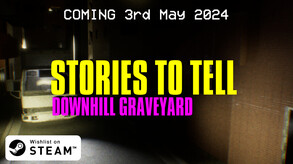
Review – Stories to Tell [Alpha 2] – Downhill Cemetery
Stories to Tell [Alpha 2] – Downhill Cemetery, developed by zebaxx, represents a compelling continuation of the developer’s distinctive approach to psychological horror. Building upon the atmospheric foundations established in Run Away, this installment expands both the thematic scope and environmental design, delivering an experience that feels more deliberate, refined, and thematically cohesive. While still retaining the raw and experimental nature characteristic of early-stage indie projects, Downhill Cemetery demonstrates clear artistic growth and an increasingly confident execution of its core ideas.
4
At the center of Downhill Cemetery lies its setting: a desolate, fog-covered cemetery that immediately establishes a tone of isolation and unease. Unlike the domestic familiarity of its predecessor, this environment is inherently symbolic, evoking themes of mortality, memory, and the unknown. The cemetery is not merely a backdrop but an active participant in the experience, its layout and visual composition guiding the player through a space that feels both grounded and surreal. The gradual descent implied by the game’s title is mirrored in its emotional trajectory, drawing the player deeper into a state of psychological discomfort.
The game’s atmospheric design remains its most defining strength. The persistent fog, dim lighting, and muted color palette create a visual landscape that feels suffocating and disorienting. Visibility is intentionally limited, encouraging the player to move cautiously and heightening the tension associated with every step forward. The VHS-inspired aesthetic continues to play a crucial role, with visual noise and distortion reinforcing the sensation of experiencing something fragmented or partially remembered. This stylistic consistency not only strengthens the identity of the series but also enhances the immersive quality of the experience.
Sound design is once again handled with notable precision. Ambient audio elements—such as distant wind, subtle environmental disturbances, and the faint echoes of movement—are carefully balanced to maintain a constant sense of unease. The restraint shown in the use of sound is particularly effective; moments of near silence are as impactful as those containing audible cues. This dynamic interplay between sound and silence creates a rhythm that sustains tension without overwhelming the player, demonstrating a sophisticated understanding of auditory storytelling within the horror genre.
From a gameplay standpoint, Downhill Cemetery maintains a minimalist approach, emphasizing exploration and environmental interaction over complex mechanics. This design philosophy aligns seamlessly with the game’s atmospheric focus, allowing players to fully engage with the environment and its implicit narrative. The absence of intrusive gameplay systems ensures that immersion remains uninterrupted, enabling the player to interpret the experience on a more intuitive and emotional level. While the mechanics remain simple, they serve their purpose effectively, supporting rather than distracting from the core experience.
Technically, the game continues to reflect its indie origins and developmental stage. Certain elements, such as character movement and interaction systems, may appear basic or somewhat rigid. However, these aspects rarely detract from the overall experience. On the contrary, they often contribute to the uncanny quality that defines the game’s tone. The slight awkwardness in movement and interaction can enhance the sense of disorientation, making the player feel less grounded and more vulnerable within the environment.
A particularly noteworthy aspect of Downhill Cemetery is its use of spatial storytelling. The arrangement of graves, pathways, and environmental details subtly conveys meaning without relying on explicit narrative exposition. Players are encouraged to observe and interpret their surroundings, piecing together a sense of context through visual cues and environmental design. This indirect form of storytelling not only deepens engagement but also reinforces the psychological nature of the horror, as much of the experience unfolds within the player’s own ذهن.
In comparison to its predecessor, this installment exhibits a stronger sense of pacing and structural cohesion. The progression through the environment feels more intentional, with each segment contributing to a gradual escalation of tension. This improved pacing reflects a growing confidence in the developer’s ability to guide the player’s emotional experience, ensuring that the sense of unease is maintained consistently throughout.
Moreover, Downhill Cemetery continues to distinguish itself within the indie horror landscape through its commitment to authenticity and artistic expression. Rather than adhering to established formulas, the game embraces its experimental qualities, resulting in an experience that feels personal and distinctive. This authenticity is one of its greatest strengths, as it allows the game to resonate on a deeper level than more conventional horror titles.
Conclusion
Stories to Tell [Alpha 2] – Downhill Cemetery is a notable evolution of the ideas introduced in the series’ first installment. Through its evocative setting, refined atmosphere, and cohesive design, it delivers a psychological horror experience that is both immersive and memorable. While it retains certain technical limitations inherent to its development stage, these do little to diminish its overall impact.
For players who appreciate horror that emphasizes mood, symbolism, and emotional depth, Downhill Cemetery stands as a highly recommended experience. It not only reinforces the creative identity of the Stories to Tell series but also highlights the developer’s growing mastery of atmospheric storytelling and psychological tension.
![Stories to Tell [Alpha 2] - Downhill Cemetery](https://shared.akamai.steamstatic.com/store_item_assets/steam/apps/2902760/header.jpg?t=1780353735)