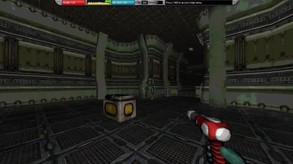
Planets, aliens, resources, upgrades, caves, mapping & documenting star systems ... seek a new home for the human race. An all-inclusive (admittedly janky) procedural space-sim made by solo developer Schmidt Workshops.
Modeled estimate, not a reported figure. How we estimate →
Prices
The United States storefront in every case, so this compares stores and not countries.
Discounts
Every price cut of more than 20% we have observed, in each market that quoted one, with this game's chart position on either side of it. These are episodes, not a model: a sale is one event, and one event cannot tell you what the next one will do.
Reviews, worldwide (the counter carries no country): 0/day in the week to Aug 10 → 0.14/day in the week after.
For scale, across Steam · Top Sellers · Brazil over the last 30 days: the 25 chart moves that followed a price cut of more than 20% went a median of 10 places towards #1, and the 2,413 moves with no price cut behind them went 2 away. One store, one chart, one country — it is the only place we have enough observations to say even that.
Prices outside the United States have been collected since 6 August 2026 and chart positions since 19 July 2026, so a cut older than that has no market to compare and a market that joined later has no history yet. Nothing here is converted between currencies.
About
Star Explorers is a game made by a single person over the course of many years - janky behavior may be experienced. You may reach out to the developer on the Steam forum or Discord server with any questions, bug reports or insults.
Linux players: If you experience an "out of memory" crash on launch, go to Properties → Compatibility and force Proton 4.2-9. This worked for me anyway...
Earth has been destroyed, and humanity must find a way to survive. Star Explorers grants players a tremendous amount of freedom and agency in how to approach the game without holding your hand, but with freedom comes responsibility and consequences. Take risks and reap the rewards in your efforts to find a new home for the human race in this open world space exploration game.
"...See, the galaxy Schmidt has created here isn't cruel. "Cruel" implies that it cares. And this galaxy is terribly, terribly uncaring..." - MagFlare – Steam User
"...This game, at its core, is about exploration, and it scratches my space exploration itch in a way that no game has since I played Starflight as a kid..." - battlescar2014 – Steam User
Planets are formed randomly, but their conditions are based on somewhat scientific factors. The size and temperature of the star they orbit, their distance from that star, the type of surface, atmosphere, and liquids present (or not) determine how a planet will look once landed on. Players will be able to land, depart and return to planets, exploring their surfaces as well as underground cave systems repeatedly, while keeping the same features intact on each visit.
Fuel, ammunition and oxygen will all have to be carefully managed if the player wants to survive the long search for an earth-like planet. While many planets will be too hot or cold, or without an atmosphere, there are also worlds of liquid methane, ammonia, sulphuric acid and more, that have developed their own unique evolutionary cycles. Each kind of alien plant, tree or animal is pieced together randomly, making for a unique experience for each player.
The Star Explorers universe is not a friendly one though, it can be cruel and indifferent to the struggles of its inhabitants. If you're not careful, you might land on a planet that's just too hot, or too cold, or enveloped in a cloud of corrosive acid, and not live to tell about it. Upgrading your space suit will open these otherwise impossible worlds to further exploration.
Exploration will allow the player to discover many things, including tools and resources that will help in further exploration. Among these are raw materials, weapons, armor upgrades and blueprints that allow you to craft helpful items. Armor upgrades will increase your space suit's resistance to heat, cold and other environmental hazards. Some weapons allow you to access areas that may be closed off to less experienced adventurers.
Star Explorers may be the first interstellar dungeon crawler. Traversing the dark, hidden places and caves is necessary to find the resources required to complete the game. Discover the crumbling remains of an ancient culture and learn the secrets of its mysterious people. In Star Explorers, exploration and investigation are rewarded with special items and locations that many players may never find. If you are someone who likes to look around every corner, then this is the game for you.
Almost everything in Star Explorers is produced generatively. From the locations of stars and nebulae, to the surfaces of planets and their features, every location is different, and every play-through offers unique challenges. Even the music heard in game is generated in real time, and is based purely on the parameters of the player's environment. Each planet, cave and other location has a unique sound-track.
Star Explorers is still in development. You can see update announcements here on the store page, and in the community hub. A version 6.0 has not officially been announced yet. However, minor updates and tweaks still happen fairly regularly.
Sums Steam only; GOG publishes no volume signal, so the true total is higher by an unknown amount.
| Store | Price | Audience | Score | Chart | Est. revenue |
|---|---|---|---|---|---|
SteamYou are here | $4.99 | 255reviews | 82% | — | $36.3K |
| $3.25−35% | 23ratings | 76% | — | not modelled |
Matched by title — a reused name can pair the wrong games. * is a critic aggregate. Prices and positions are each store's United States storefront; Epic charts worldwide. Audience and Score too, except Steam's, which is worldwide.
Engagement
Reviews
Themes across 44 recent reviews and how positive each mention is. A keyword signal, not full sentiment analysis.
Reviews
Star Explorers, developed and published by Schmidt Workshops, is a deeply systems-driven space exploration game that reflects both the ambition and the rough-edged charm of largely solo indie development. It places players in command of a spacecraft in a procedurally generated galaxy where humanity’s survival depends on discovering a new habitable world. Rather than presenting a scripted narrative or tightly guided campaign, the game embraces open-ended exploration, scientific simulation, and survival mechanics, inviting players to chart their own course through an indifferent and often hostile cosmos. The central premise is simple but compelling: Earth is gone, and it is your responsibility to find a new home among the stars. From that starting point, Star Explorers unfolds into a sprawling procedural sandbox. Star systems are generated with underlying scientific logic, taking into account stellar types, orbital distances, atmospheric conditions, and planetary composition. This pseudo-scientific framework gives exploration a sense of authenticity. Players are not just hopping between randomly skinned planets; they are evaluating environmental factors, scanning systems, and making informed decisions about which celestial bodies might be survivable. The result is a galaxy that feels unpredictable yet grounded in a consistent internal logic. Planetary exploration forms the core of the experience. After locating a promising world, players descend to its surface in first-person perspective, where survival becomes immediate and personal. Oxygen levels, environmental hazards, temperature extremes, and limited resources all shape how long you can remain on the surface. Many planets are lethally inhospitable at the outset, requiring suit upgrades or specialized equipment before they can be safely explored. This progression loop—scan, evaluate, prepare, land, survive, upgrade—creates a satisfying rhythm that rewards patience and careful planning. Combat exists within the broader exploration framework but does not dominate the experience. Hostile creatures and environmental dangers present threats, particularly in underground caves or alien ruins scattered across planetary surfaces. These subterranean spaces often contain valuable materials, blueprints, or rare resources, encouraging deeper exploration despite the risks. Weapons and tools serve practical purposes beyond fighting, allowing players to mine materials, unlock new areas, and interact with alien environments. The sense of discovery is heightened by the fact that many planetary features are procedurally generated, ensuring that each landing carries genuine uncertainty. Resource management plays a critical role in shaping the game’s tension. Fuel consumption dictates how far you can travel between star systems. Oxygen reserves limit planetary excursions. Ammunition and equipment durability affect survival odds during dangerous encounters. Poor planning can leave you stranded in deep space or trapped on a hostile world. The game does not shield players from these consequences, and part of its identity lies in its unforgiving nature. Success feels earned because failure is always possible. Progression is tied to crafting and technological advancement. As players gather materials and uncover blueprints, they gain access to improved suits, stronger equipment, and enhanced ship capabilities. These upgrades expand the boundaries of exploration, enabling access to planets that were previously too cold, too hot, or too toxic to survive. This gradual widening of survivable environments mirrors the thematic journey of pushing humanity’s frontier ever further into the unknown. Visually, Star Explorers adopts a minimalist and functional style. It does not attempt to rival high-budget space simulators in graphical fidelity. Instead, its presentation prioritizes clarity and procedural diversity. Planetary surfaces, star systems, and interiors may appear simplistic at times, but the constant variation ensures that no two discoveries feel identical. The interface and menus can occasionally feel clunky, reflecting the realities of indie development, yet they remain serviceable once players acclimate to the systems. One of the more distinctive touches is the use of procedural music generation. Rather than relying solely on static tracks, the game creates ambient soundscapes that adapt to different environments, reinforcing the feeling that each planet has its own identity. This subtle audio design contributes to immersion and complements the isolation inherent in deep-space exploration. The game’s pacing is deliberately open-ended. There are objectives, but no heavy-handed narrative guidance pushing players from one checkpoint to another. Instead, the motivation comes from curiosity and survival. The vastness of the galaxy, combined with the unpredictability of what lies in the next system, drives exploration forward. This design choice will resonate strongly with players who appreciate sandbox freedom and emergent storytelling. However, those seeking tightly structured missions or cinematic storytelling may find the lack of directed narrative less engaging. Ultimately, Star Explorers is a passion project that prioritizes systemic depth and exploration freedom over polish and spectacle. It offers a procedurally generated universe governed by scientific logic, layered survival mechanics, and meaningful progression systems. Its technical roughness and steep learning curve may deter some players, but for those willing to invest time and patience, it delivers a rewarding experience rooted in curiosity, risk, and discovery. In a genre often dominated by high-production space epics, Star Explorers stands out as a focused, uncompromising indie exploration game that captures the loneliness and wonder of venturing into the unknown. Rating: 8/10
Media

Related
Related
Price dynamics, follower growth, revenue and sales trajectories with interactive tooltips
This and every other Pro feature is free until October 20, 2026. A free account is all it takes.
Genres
Stats
All-time low is the lowest price we've recorded for this game since we started tracking it.
Languages: English**languages with full audio support
Hours played at review time, across 44 reviews with recorded playtime.
positive critical· bar length = how often the theme comes up
Love the graphics style. Love the space setting and freedom. HATE the UI layout. First off, this game needs controller support BADLY, even on mouse and keyboard the UI make next to no sense. If the controls were actually re-engineered to be even remotely intuitive I'd give this game high marks but it's near unplayable and it really feels like you spend more time fighting with the UI than anything else. This is a game I would love to just boot up and go crazy with but the control scheme is just so terrible I end up putting it down only after a short while. Unfortunate.
Sometimes, while playing this game, I'm sure this game is worth what I paid for it. Other times, not so much. Finding a towel in my starting inventory, per Towelie's instructions, and asteroids as trojans leading and trailing in gas giants' orbits? Both a plus. Random crashes and deaths? Allowing me to airlock myself into deep space without even a decompression warning? Not so much! If you're going to be a troll, be a CLEVERER troll, dev, sheesh: Add a decompression warning so I know how much I screwed up BEFORE I get spaced. *THINK.* And all of this just in the first hour of play X'D I mean, I've definitely gotten less enjoyment out of... I think I spent $3 on this game? Can't even get a proper milkshake for that much anymore. Damn inflation.
- So fun to play, rating 95/100
Idk..maybe it's Ok. I didn't find it all that brilliant.
Love this game!! Classic graphics and mechanics, brings so many memories.
Amazing music. I think it has a game too...
Зовите побегать по планете в скафандре с 0 прочности в любое время. 10 кривеньких интерфейсов из 10 Такой бы игре, да развития...
Es un juego de exploración espacial y (en menor medida) dungeon crawler bastante interesante y a buen precio, pero que mejoraría mucho con una interfaz más intuitiva
Star Explorers (not so much a dungeon crawler) is an experimental exploration/survival game, and by experimental I mean that there are interesting ideas and a strong sense of identity within the game's aesthetics (great art direction and soundtrack), but a severe lack of polish and content/gameplay mechanics. Maybe you might take issue with me not considering this a good dungeon crawler (or even part of the genre at all), so my reasoning is as follows: not only are the overwhelming majority of dungeons in this game empty/pointless, they all look and play like a cave-diving simulator. Caves are much different from dungeons because they have no design or purpose in mind, and the only thing the two share is that they are both tight, dark spaces. Caves don't have a story per se, and therefore exploring them often doesn't lead anywhere unless you're looking to merely extract resources, at which point we aren't even dealing with the concept of a dungeon anymore, but simply a hole in the ground with nothing more to it. There isn't anything wrong with focusing on caves by design, especially considering how this game takes place in a mostly uninhabited galaxy (with a tone of loneliness and dying worlds/civilizations), which is somewhat fitting for its direction. Even if it is boring to play through, a walking simulator can be interesting if the world-building and art are done right, such as in L.S.S.D. Dream Emulator for the PS1. Going beyond the cave-diving gameplay loop, every resource-gathering mechanic focuses on fueling your ship for traversal, similar to Daggerfall or even Breath of the Wild, in which traversal is more important than the actual action of the game. Once again, this approach is fine; the real problem is how this all plays out as a whole. Gameplay is janky at best, and, as already mentioned, the lack of polish severely detracts from the player experience. Not only is the entire game extremely slow, repetitive, and grindy (out of these three aspects, only "slow" could be said to be part of the game's design, as it can be seen as a way to force the player into a low-stress, contemplative state), but none of its systems interact with one another past the most superficial level (improvements made to your suit are one-time consumables that don't combine or synergize, new weapons are useless since combat is almost nonexistent, interacting with NPCs is just a means of extracting more resources, and none of them have any actual relevance to the world, etc.), everything in this game revolves around mindlessly extracting resources, it can be 'adictive' but it's never actually fun or meaningful, unfortunately. Also, the sense of novelty is very sparse at the beginning and almost nonexistent at the end. Even the endgame temples (which are, in fact, dungeons) feel like a reskin of the cave system, which means they are also designed with no sense of purpose or story. The civilizations you find in the game (both human and alien) are extremely similar and irrelevant, and the progression in the story is literally three missions, which all play out the same. Overall, this game is a surreal walking simulator with very annoying survival mechanics all around it. You might be able to put up with it, but after doing everything I can, I can tell you it's not worth it. The game never rewards you for putting in the effort to explore it, as there is almost nothing to see out there, except for one or two interesting landscapes in a galaxy full of gray and boring planets. The design choice to make a dungeon crawler entirely focused on "characterless caves" instead of proper dungeons just emphasizes the core message of this game: "the universe is empty and slowly being devoured by entropy." As interesting as this idea is, one cannot say that the game explores it past the thematic level, especially considering that the ending itself doesn't even seem to match it properly. It was worth giving it a try, but I do regret wasting my time finishing it, and definitely won't come back to it.
Selling now
See how fast this game is selling right now — estimated copies and revenue per day from recent review growth.
Players by region
Where this game's players are, estimated from review languages.
Related
| Game | Estimated lifetime revenue | Reviews | Review score | Price |
|---|---|---|---|---|
| $156.4M | 418.8K | 85% | $23.99 | |
| $474.7K | 1.3K | 93% | $14.99 | |
| — | 0 | — | — | |
| — | 0 | — | — | |
| $6M | 8.4K | 85% | $19.99 | |
| $3.7M | 5.7K | 90% | $19.99 |
Related
| Game | Estimated lifetime revenue | Reviews | Review score | Price |
|---|---|---|---|---|
| $36.3K | 340 | 83% | $4.99 | |
| $36.3K | 119 | 86% | $11.99 | |
| $36.3K | 112 | 88% | $14.99 | |
| $36.3K | 142 | 63% | $9.99 | |
| $36.3K | 222 | 99% | $6.99 | |
| $36.3K | 97 | 55% | $19.99 |