A turn-based online fantasy card game. No character leveling, no grinding, no deck building - just 100% skill-based and fast-paced card battles!
Modeled estimate, not a reported figure. How we estimate →
About
Genres
Stats
All-time low is the lowest price we've recorded for this game since we started tracking it.
Add-ons
Each DLC is estimated with the same model as a game, then summed — a modeled figure, not reported DLC sales.
Engagement
Reviews
Themes across 45 recent reviews and how positive each mention is. A keyword signal, not full sentiment analysis.
Reviews
gg click jogos
Игра Spectromancer это, по сути, арена, на которой два мага, сражаются с помощью магических карт. Жанр не нов, самая известная из подобных это Hearthstone. Разница между ними для меня в пользу Spectromancer! Набор карт для сражения дается в начале боя, элемент случайности минимален - выстрой победную стратегию из начальных условий! Нет дисбаланса в пользу тех кто "платит". Бои очень динамичные, небольшая ошибка в начале боя неизбежно закончится проигрышем, если вы играете против опытного соперника Есть кампания, не очень длинная, после ее прохождения основной режим - deathmatch Всем любителям поиска лучшей стратегии победы рекомендую попробовать!
Media

Related
Related
Price dynamics, follower growth, revenue and sales trajectories with interactive tooltips
This and every other Pro feature is free until October 20, 2026. A free account is all it takes.
Languages: English, Russian
Hours played at review time, across 45 reviews with recorded playtime.
positive critical· bar length = how often the theme comes up
简约而不简单,好玩不腻
a
十多年前玩的盗版,现在找到了补下票。游戏还是挺有意思的,不过缺点也不少,随机选牌本身是把双刃剑。
Excelente.
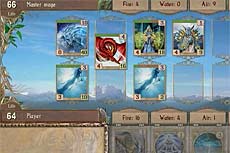
Spectromancer is a turn-based fantasy card battler developed by Apus Software in collaboration with Three Donkeys LLC and published by Three Donkeys LLC, and it remains a fascinating example of how elegant design can give a game remarkable longevity. First released in 2008, Spectromancer predates the explosion of modern digital collectible card games, yet many of its ideas still feel refreshingly distinct even today. Rather than centering itself on deck construction, grinding, or monetization hooks, the game focuses almost entirely on tactical decision-making within self-contained duels, offering a purer and more streamlined take on card combat. The heart of Spectromancer lies in its duel system. Each match begins with both players receiving a fixed set of twenty cards drawn from elemental schools: Fire, Water, Air, Earth, and a fifth element determined by the chosen mage class. These cards are not consumed when used; instead, they can be cast repeatedly as long as the player has sufficient mana, which regenerates and grows over time. This single design choice fundamentally shapes the experience, shifting emphasis away from randomness in card draws and toward careful planning, timing, and resource management. Every card is always available, making each turn a deliberate tactical puzzle rather than a gamble. Mage classes are central to the game’s depth and replayability. Each class introduces its own fifth element and strategic identity, encouraging dramatically different playstyles. Some mages excel at aggressive creature summoning, others at control, disruption, or long-term attrition. Learning how each class functions — and how they interact with one another — becomes a large part of mastering the game. Because card pools are randomized at the start of each match, no two duels feel identical, even when using the same mage, forcing players to constantly adapt their strategies rather than rely on memorized routines. Combat itself is deceptively simple on the surface but rich beneath. Players alternate turns, spending mana to summon creatures, cast spells, or manipulate the battlefield. Creatures attack automatically, targeting opposing creatures or the enemy mage based on clear rules, which keeps combat readable and fast-paced. Despite the lack of flashy complexity, decisions about when to pressure the opponent directly, when to stabilize the board, and when to conserve resources can dramatically swing the outcome of a match. Small missteps often compound over time, rewarding players who think several turns ahead. Single-player content offers a solid introduction to these systems. Campaign modes pit players against AI-controlled mages of increasing difficulty, gradually introducing new mechanics and strategies. While the AI is not flawless, it is competent enough to teach fundamentals and provide meaningful resistance, especially for newcomers. The campaign structure also helps players explore different mage classes and elemental combinations without the pressure of competitive play, making it an effective training ground before stepping into multiplayer. Multiplayer has historically been one of Spectromancer’s strongest attractions, allowing players to test their tactical skills against human opponents. Matches tend to be quick and intense, with little downtime and constant decision-making. While the game’s online infrastructure reflects its age and has had periods of technical friction over the years, its core competitive design remains compelling. Because matches are relatively short and self-contained, multiplayer encourages experimentation and repeated play without demanding long-term commitments. Visually, Spectromancer is functional rather than elaborate. The card art and interface are clear and readable, prioritizing information delivery over spectacle. Animations are minimal but effective, ensuring that players always understand what is happening on the battlefield. The audio design follows a similar philosophy, using understated music and sound effects that support concentration rather than distract from strategic thinking. While the presentation may feel dated compared to modern card games, it holds up well thanks to its clarity and cohesion. What truly allows Spectromancer to endure is how little it depends on external systems for engagement. There is no deck grinding, no complex meta driven by card acquisition, and no pressure to chase unlocks. Instead, enjoyment comes from understanding the game’s systems, reading opponents, and making smart choices under evolving conditions. This purity of design makes it especially appealing to players who value skill expression and tactical depth over progression mechanics or flashy production. In the end, Spectromancer stands as a quietly influential card game that demonstrates how strong core mechanics can outlast trends. Its emphasis on tactical clarity, class variety, and replayable duels gives it a timeless quality that continues to resonate with strategy enthusiasts. For players who appreciate thoughtful turn-based combat and want a card game that respects their time while still offering deep strategic challenges, Spectromancer remains a rewarding and enduring experience. Rating: 8/10
I had purchased before this was on Steam years ago. Decided to buy it again so I don't have to worry when my HD dies again. This is one of the best, if not underrated, card games of its era. Infinite replay value. Great sale price for all DLC.
The game is nice, but it feels very dated. Classes seem diverse and well balanced (for the most part...just don't pick golemancer). The elemental schools of magic tend to decide too much of the game (which isn't bad, but isn't good either). I feel like if the game received a visual polish up and some sfx updates, it could easily pull off 9.5/10 score. Edit: used to play it 15 years ago on newgrounds. Nostalgia factor alone isn't enough to pull me back and the older visuals repel me personally. If that's not an issue for you, then you'll enjoy the game, but as things stand right now, I'd give it 6/10 score.
Отличная игра, жаль таких больше не делают...
Selling now
See how fast this game is selling right now — estimated copies and revenue per day from recent review growth.
Players by region
Where this game's players are, estimated from review languages.
Related
| Game | Estimated lifetime revenue | Reviews | Review score | Price |
|---|---|---|---|---|
| $0 | 1.2K | 70% | Free | |
| $0 | 343 | 73% | Free | |
| $476.5K | 1.7K | 89% | $9.99 | |
| $467.3K | 1.5K | 68% | $9.99 | |
| $0 | 27 | 67% | Free | |
| $0 | 0 | — | Free |
Related
| Game | Estimated lifetime revenue | Reviews | Review score | Price |
|---|---|---|---|---|
| $82K | 326 | 90% | $7.99 | |
| $82K | 307 | 74% | $14.99 | |
| $82K | 259 | 86% | $14.99 | |
| $82K | 348 | 70% | $9.99 | |
| $82K | 376 | 78% | $6.99 | |
| $82K | 1K | 98% | $2.99 |